GLP-1 Signaling in Alzheimer's Disease Research
Gut-derived receptor shows promise for slowing Alzheimer's brain shrinkage in early trials.
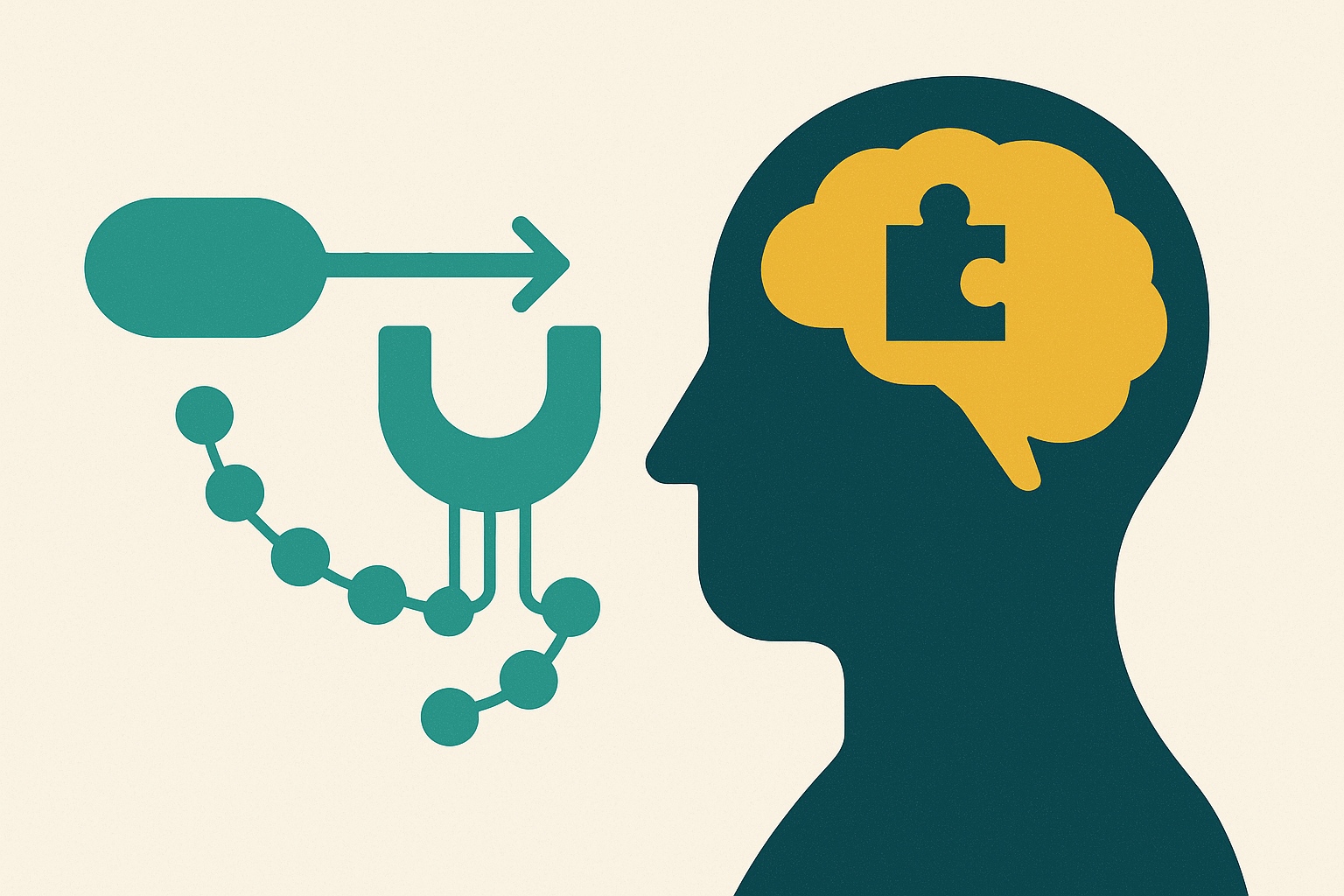
GLP-1 receptors sit throughout the human brain, in regions that Alzheimer's disease slowly hollows out. That single fact turned a gut hormone once known only for managing blood sugar into a real candidate for neurodegeneration research, and the biology behind it holds up under scrutiny. This piece walks through why the receptor overlap matters, what the trial data actually shows, and why the question of how a drug physically gets into the brain might matter as much as which drug you pick. It's not a tidy story. Some of it contradicts itself, and that's worth sitting with rather than smoothing over.
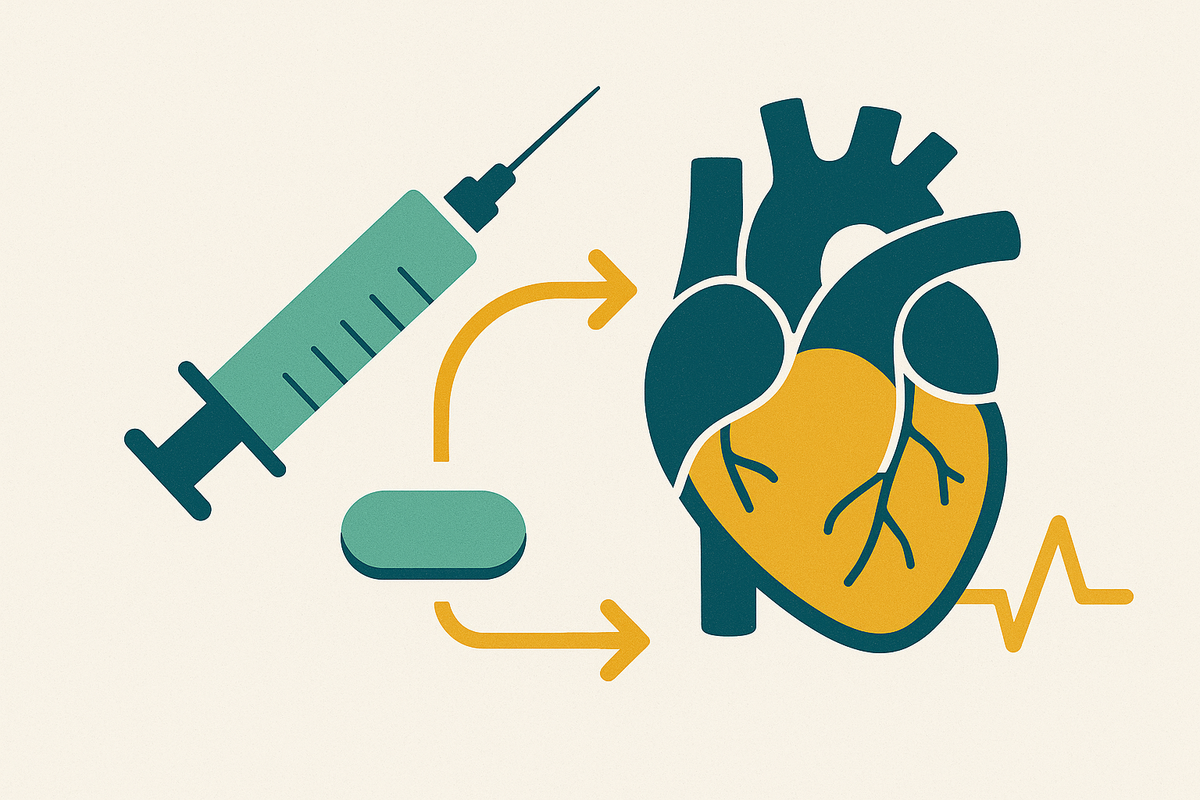
GLP-1, or glucagon-like peptide-1, started its scientific life as an incretin: a hormone the gut releases after eating that tells the pancreas to release insulin, slows digestion, and tells the brain's appetite centers you've had enough. That's the metabolic story, and it built an entire drug category around blood sugar and weight loss. But somewhere along the way, researchers mapping GLP-1 receptor (GLP-1R) expression found something that didn't fit the metabolic frame at all. These receptors cluster densely in the hippocampus, the frontal cortex, and the substantia nigra. The hippocampus and frontal cortex are exactly where Alzheimer's does its worst damage; the substantia nigra is what Parkinson's targets. Nobody studying this seriously calls that overlap a coincidence, and it's the reason GLP-1 research jumped tracks from endocrinology into neuroscience over the past decade.
The three signaling pathways that connect GLP-1 receptors to Alzheimer's pathology
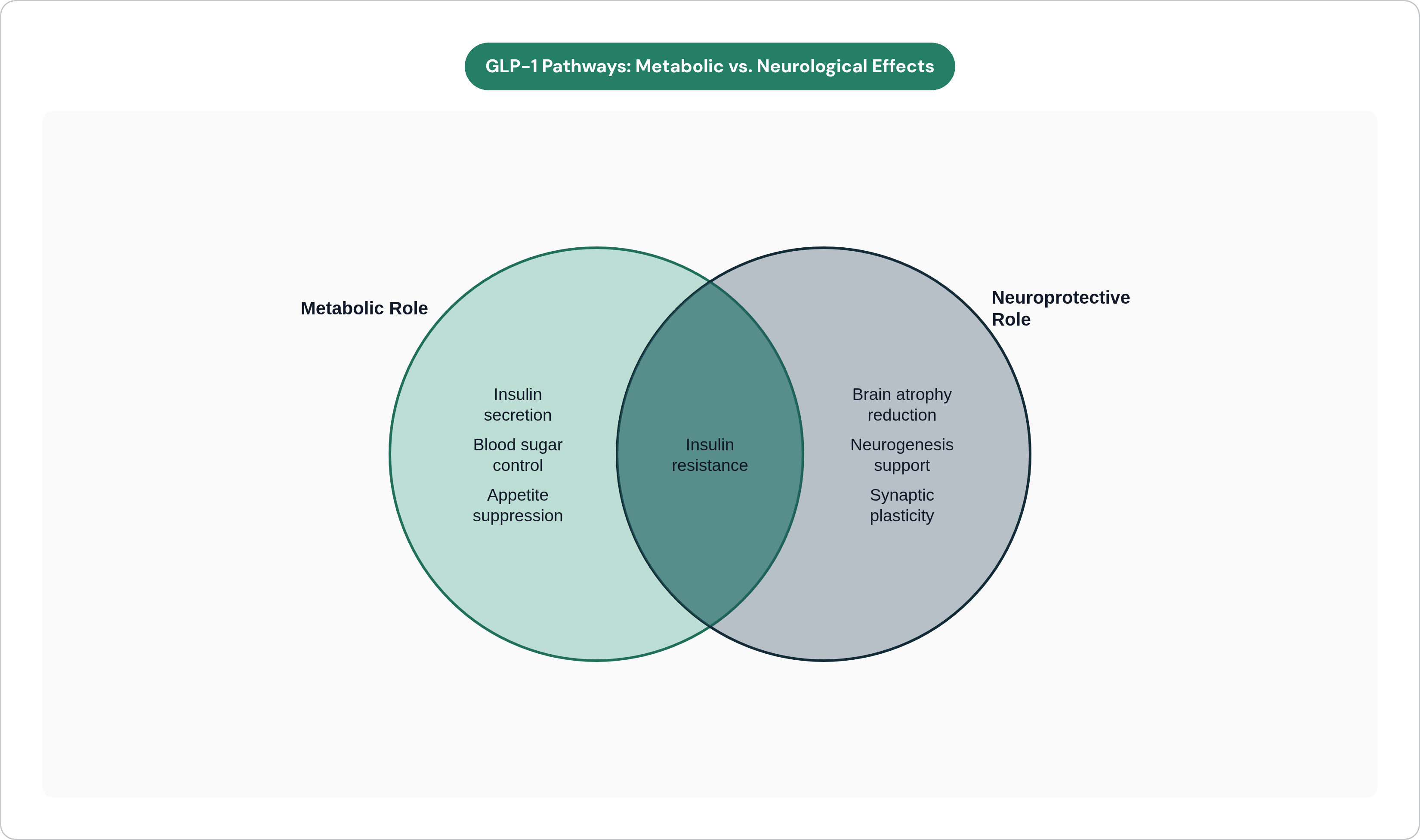
When GLP-1 binds its receptor, it sets off three separate chains inside the cell: cAMP/PKA, PI3K/Akt, and MAPK. Each one plugs into a different piece of what goes wrong in an Alzheimer's brain, and it's worth walking through them one at a time because they don't all point the same direction.
cAMP/PKA keeps neurons alive and backs up synaptic plasticity, the process by which neurons rewire connections and lock in new memories. Lose that plasticity and you lose the capacity to learn and retain, which is functionally what Alzheimer's patients go through long before cell death ever shows up on a scan.
PI3K/Akt matters for a different reason: it crosses directly with insulin signaling in the brain. Alzheimer's researchers have floated the idea of "type 3 diabetes" for years now, based on findings that Alzheimer's brains show impaired central insulin signaling, almost as if the brain itself goes insulin resistant even in patients who don't have diabetes. If GLP-1R activation props up this pathway, it offers a repair route that has little to do with amyloid plaques and much more to do with restoring a basic metabolic function neurons depend on to run.
MAPK shapes how glial cells behave, cutting the release of pro-inflammatory cytokines and easing oxidative stress. Chronic brain inflammation is one of two drivers, alongside protein buildup, that most researchers now treat as central to how Alzheimer's gets worse.
Beyond these three chains, animal studies have shown GLP-1 receptor agonists (GLP-1RAs) restoring mitochondrial activity in neurons, and that matters because energy failure inside a cell tends to come before death, not after. There's early evidence too that GLP-1R activation helps patch up blood-brain barrier integrity, which counts for something given that the barrier tends to break down further as the brain ages.
None of these three pathways touch amyloid or tau directly. They work upstream, on inflammation, insulin resistance, oxidative stress, synaptic loss. That's a real distinction, and it explains a lot of what shows up (and doesn't) in the trial data further down.
How GLP-1 actually reaches the brain, and why the answer is still contested
Here's the question that undercuts a lot of the optimism above: does an injectable GLP-1 receptor agonist actually get into the human brain in amounts big enough to matter? Researchers don't agree yet, and honestly, the disagreement runs deeper than most summaries of this field let on.
Part of the appeal of GLP-1RAs is that they might reach the brain without crossing the blood-brain barrier the traditional way. Some of these drugs appear to get in through circumventricular organs, small regions where the barrier runs naturally leakier, rather than by punching through it directly. Nobody has fully worked out the exact mechanism, and that uncertainty runs straight through the rest of the science that follows.
The literature splits. Some studies find measurable central nervous system penetration for certain GLP-1RAs. Others find little or no direct entry into brain tissue at all, which raises the possibility that a good chunk of the effects researchers see come indirectly, through peripheral pathways or vagal nerve signaling, rather than the drug acting on brain tissue itself.
Molecule matters more than drug class here. Liraglutide and lixisenatide have the strongest animal evidence for actually getting into the CNS, with consistent effects on cognition, brain inflammation, and neurogenesis across Alzheimer's models. Exenatide, by contrast, shows weaker blood-brain barrier penetration in comparable studies. That's a meaningful gap, not a footnote, and it's a big part of why the clinical trial results in the next section look as inconsistent as they do. So ask yourself: if the target sits inside the brain, is injecting a drug into the bloodstream and hoping enough of it arrives really the sharpest way to hit that target?
What the clinical trials have actually shown, a mixed and instructive record
The trial data is where the mechanistic story either earns its keep or doesn't, and so far the record cuts both ways, sometimes within the same trial.
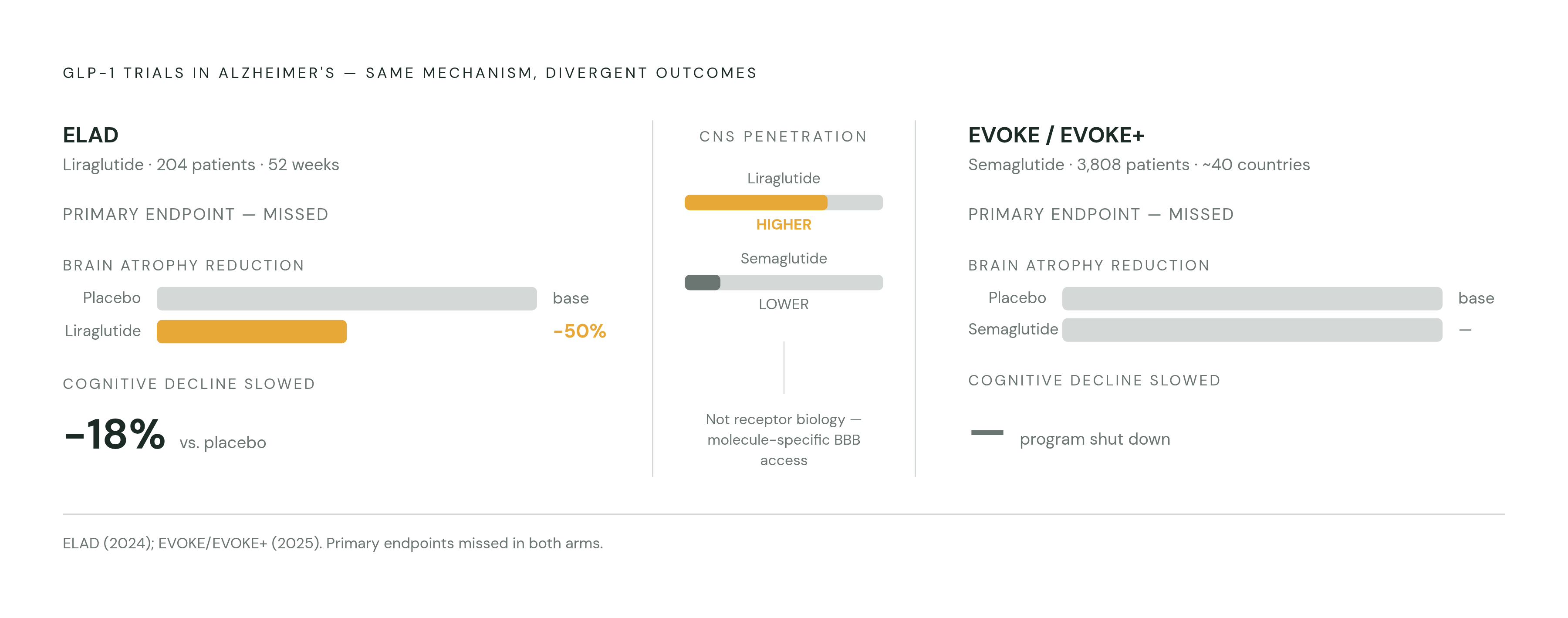
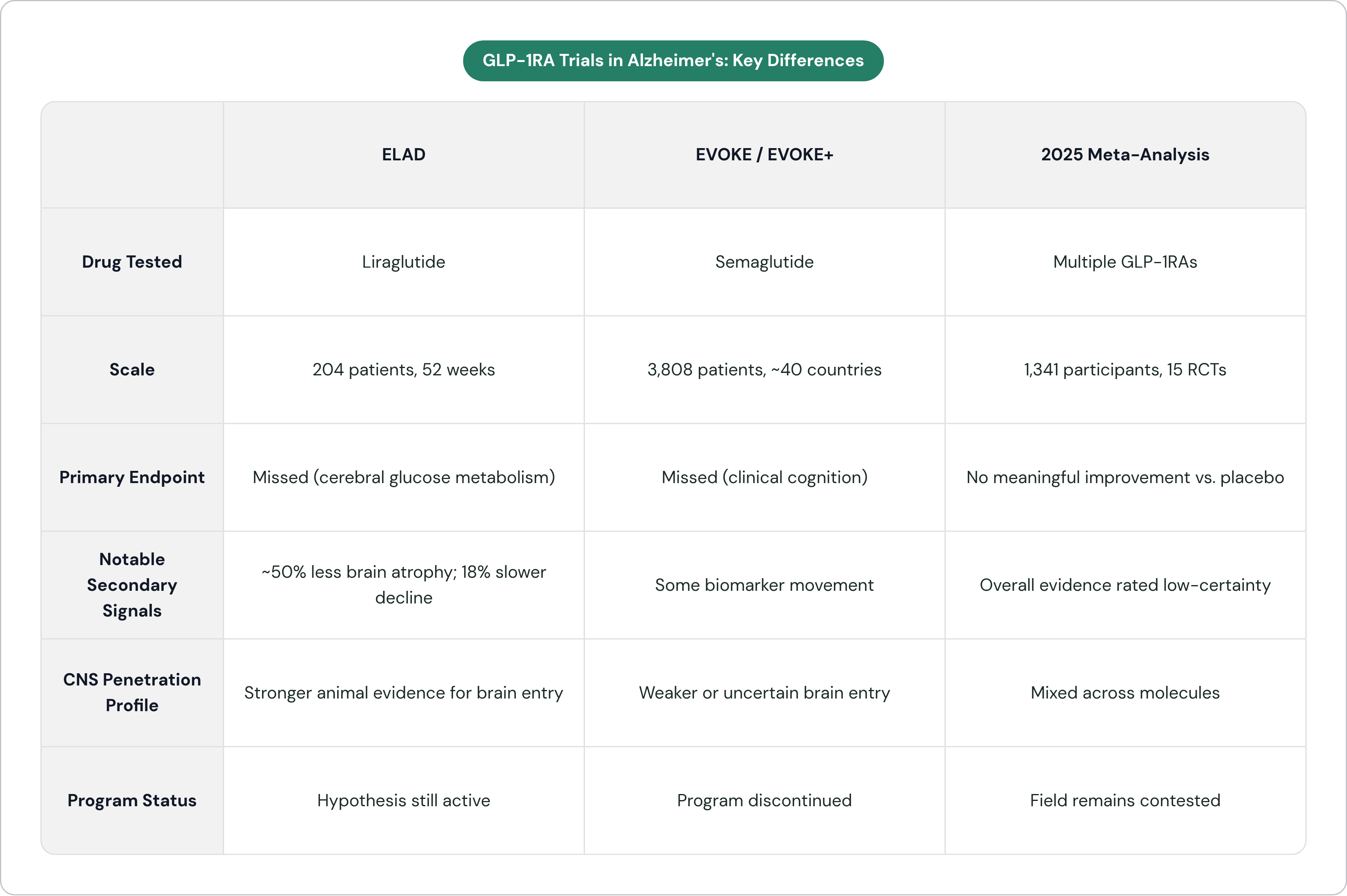
The ELAD trial tested liraglutide in 204 patients with mild Alzheimer's over 52 weeks, double-blind and placebo-controlled, led by Professor Paul Edison at Imperial College London. The primary endpoint, cerebral glucose metabolism, missed statistical significance. But the secondary findings, published in Nature Medicine in December 2025, told a different story: brain atrophy dropped by nearly 50%, and cognitive decline slowed by 18% against placebo. Edison put it plainly: "The slower loss of brain volume suggests liraglutide protects the brain, much like statins protect the heart." Read against the pathways above, this lines up with the anti-inflammatory and insulin-sensitizing mechanisms more than with amyloid clearance. A missed primary endpoint doesn't mean nothing happened; it means the trial wasn't built to catch what did.
The EVOKE and EVOKE+ trials tested semaglutide in 3,808 adults aged 55 to 85 across nearly 40 countries, in patients with mild cognitive impairment or mild Alzheimer's dementia. Despite some movement on select biomarkers, the trials didn't beat placebo on the primary clinical endpoint, and the program got shut down afterward. What separates this outcome from ELAD has less to do with receptor biology, probably, and more to do with the fact that semaglutide crosses the blood-brain barrier differently than liraglutide does. It's easy to lump every GLP-1RA into one bucket and miss why two trials built on the same broad mechanism landed in such different places.
A 2025 meta-analysis by Manolopoulos and colleagues, published in Alzheimer's & Dementia, pooled 1,341 participants across 15 randomized controlled trials and found GLP-1RAs did not meaningfully improve memory or thinking in Alzheimer's patients compared to placebo. The authors called the overall evidence low-certainty. Take that at face value and the field looks stuck.
Except observational data outside the randomized-trial framework tells a different kind of story. Large-scale U.S. patient data from Optum Clinformatics and Northwestern Medicine electronic health records show GLP-1 receptor agonists tied to meaningfully lower Alzheimer's risk compared to DPP-4 inhibitors. That link might reflect the vascular and metabolic benefits of these drugs rather than any direct effect on amyloid or tau. Neither reading cancels the other out; they're measuring different things in different populations.
So where does that leave things? The mechanistic case remains genuinely strong. The Phase 3 clinical translation isn't there yet. Molecule choice, blood-brain barrier penetration, differences in trial populations, and dosing all plausibly explain why the results scatter as much as they do. ELAD's secondary signals keep the hypothesis alive. EVOKE shows, just as clearly, that receptor engagement alone doesn't guarantee a drug does anything useful once it's in the brain.
The combination therapy hypothesis and where the field is moving
Stop treating GLP-1RAs as a stand-alone Alzheimer's drug for a moment, and ask a more useful question: what are they actually good for alongside something else?
Researchers at the Chinese University of Hong Kong, writing in Life Medicine in November 2025, proposed a phased model that pairs GLP-1RAs with anti-amyloid immunotherapy. The logic holds up once you see it laid out: anti-amyloid agents clear plaques, but plaque clearance doesn't fix the inflamed, metabolically broken environment that let neurodegeneration take hold in the first place. GLP-1RAs work on exactly that leftover environment, through inflammation and insulin resistance. The two mechanisms complement each other rather than duplicate effort, which points toward real synergy, not just a fallback plan for a drug that failed on its own.
The same receptor biology reaches well past Alzheimer's, which is itself worth pausing on. A double-blind trial presented at the 2025 MDS Congress, with 59 participants, found exenatide produced real effects on Parkinson's-related motor symptoms over nine months, tracking with the substantia nigra's dense GLP-1R expression noted earlier. GLP-1 receptors also show up in mesolimbic reward circuits, and there's preclinical and early clinical evidence that GLP-1RAs dampen reward-driven behavior by adjusting dopamine signaling. Mendelian randomization studies suggest lower risk across several psychiatric conditions tied to that same circuitry. Zoom out further and there's a broader obesity-brain axis worth naming: metabolic dysfunction in the body feeds brain inflammation, and that's the bridge that makes GLP-1 biology relevant to neurological disease even in patients without diabetes or obesity.
There's also a quieter, earlier finding worth bringing back. Studies in cognitively normal people with subjective memory complaints found that liraglutide strengthened neural connectivity inside the brain's default mode network. No immediate cognitive improvement showed up alongside it, but the connectivity change suggests brain-level effects that might just need a longer follow-up window before they show up on a cognitive test. That's a hypothesis, not a finding, and the difference matters more than it might sound like it does.
Put together, the field seems to be settling on a fairly sober take: GLP-1RAs probably aren't going to work as a stand-alone disease-modifying therapy for Alzheimer's across the board. But the multi-target mechanism, hitting inflammation, insulin resistance, and neuroprotection all at once, earns them real standing in combination treatment, or in prevention aimed at people before disease takes hold.
Why getting the drug to the right place in the brain changes the scientific calculus
Look again at what the ELAD and EVOKE split is actually telling researchers. The gap likely runs deeper than one molecule working and another failing. Systemic injection, dependent on uncertain and molecule-specific penetration into the CNS, is an inherently blunt way to hit a brain target. Some of the mixed clinical record may be less a biology problem than a delivery problem. That's a different question than the one most of this field has been asking.
Take the nose-to-brain route as an alternative. The olfactory and trigeminal nerve pathways offer a direct anatomical shortcut from the nasal cavity into the central nervous system, skipping the blood-brain barrier entirely rather than trying to cross it from the bloodstream. That matters here specifically because the hippocampus and frontal cortex, the two GLP-1R-heavy regions most tied to Alzheimer's, sit within reach of these pathways. A drug delivered this way skips the whole uncertain chain of peripheral-to-central translation that muddies the injectable data.
Getting a peptide drug through the nose isn't trivial engineering, though. GLP-1 analogs are fragile molecules; they break down fast in the nasal mucosa and don't cross epithelial tissue easily on their own. That's where nanoparticle encapsulation comes in, protecting the peptide during transit and helping it actually absorb across the mucosal lining. The formulation works here as an enabling technology in its own right, central to whether the drug reaches its target at all. Decades of nanoparticle intellectual property, including the platform behind Lionbio's work, a Columbia University spinout, are what turn this from a nice idea into something you can actually build at scale.
That raises a real question for how to read the existing trial data: if part of what separated ELAD from EVOKE was how much drug reached the brain, then the next round of useful research might have less to do with finding a better molecule and more to do with finding a better route for the molecules already shown to work. If the target sits in specific brain regions, a delivery strategy built to reach those regions directly beats relying on the bloodstream and hoping for the best. That holds regardless of which GLP-1 molecule ends up in the syringe, or the nasal spray.
What researchers and clinicians should watch as this field develops
A few open questions will decide whether this research area matures into real therapy or stalls out as an interesting, unproven mechanism. None of them have clean answers yet, and I'd be skeptical of anyone who tells you otherwise.
Does molecule-specific blood-brain barrier or CNS penetration actually explain the gap between ELAD and EVOKE? And if it does, which structural properties of a molecule predict that access? Are GLP-1RAs better suited to prevention and early intervention than to treating Alzheimer's once it's already set in? The real-world risk-reduction signal from observational data points to a different patient population than the one Phase 3 trials have targeted so far, and that mismatch deserves real digging rather than a shrug. Can the ELAD secondary signals, the reduced atrophy and slowed decline, hold up at Phase 3 scale using a molecule that demonstrably reaches the CNS, rather than one whose brain penetration stays uncertain?
The combination therapy question deserves its own trial design, built around that combined hypothesis from the start. If GLP-1RAs work best alongside amyloid-targeting agents, as the Hong Kong researchers argue, trials need to test that pairing directly, rather than testing GLP-1 monotherapy in broad, mixed populations and hoping a signal survives the noise.
Delivery innovation belongs in this conversation as a research variable in its own right, not an afterthought bolted onto the pharmacology. Intranasal and other CNS-targeted approaches are a direct, testable answer to the blood-brain barrier uncertainty that has muddied the clinical picture from the start.
There's also a practical wrinkle that tends to get left out of the mechanistic conversation: adherence. Even a proven GLP-1-based Alzheimer's therapy runs into trouble if patients don't stay on it. A 2024 Prime Therapeutics study found that 85% of patients on injectable GLP-1 drugs had stopped taking them within two years of starting. For a chronic neurological condition that needs sustained treatment over years, not months, delivery format carries real weight in whether a therapy survives contact with real patients outside a controlled trial.
The signaling science behind GLP-1 and Alzheimer's holds up; the pathways alone make that clear. What's still genuinely open is the translation, matching the right molecule, the right delivery route, and the right patient population to biology that has already told researchers where to look. I keep coming back to the same thought: the receptor knows what to do. Whether the drug ever reaches it in the right dose, in the right place, in a patient who keeps taking it, is a separate question entirely, and it's the one this field still has to answer.