GLP-1 Injection Discontinuation Rates and Their Causes
Most GLP-1 patients quit within a year, largely due to weak feedback loops.

There is a version of this story where GLP-1 receptor agonists become the most successful drug class in modern pharmaceutical history. The efficacy data support it. The cardiovascular outcomes support it. The weight-loss figures, at least in controlled settings, support it almost without qualification. What actually exists in clinical practice looks considerably different.
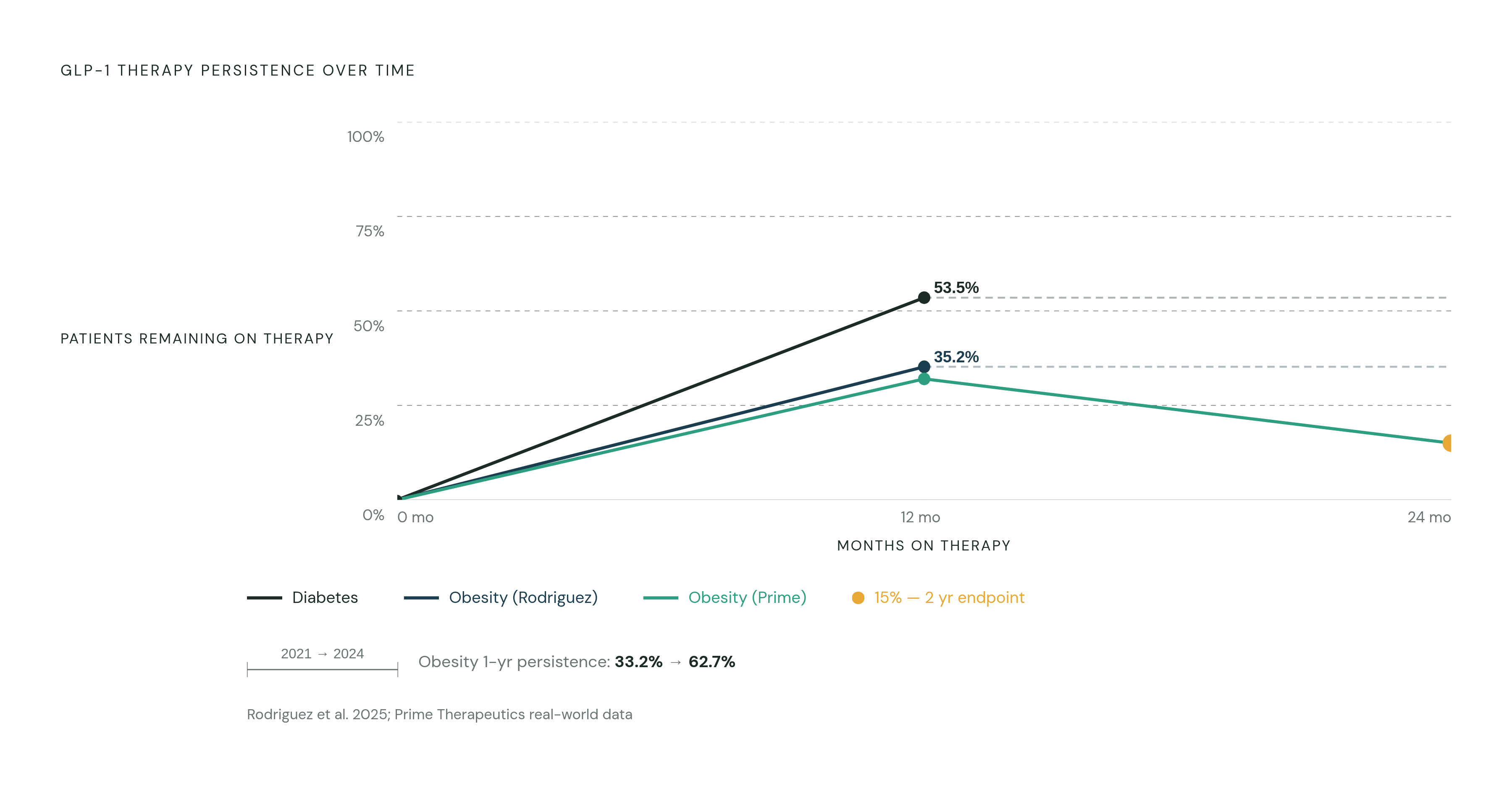
The dominant real-world outcome for patients who start GLP-1 receptor agonist therapy on an injectable regimen is discontinuation. Rodriguez et al., published in JAMA Network Open in 2025, found that 64.8% of patients without type 2 diabetes stopped within one year; 46.5% of patients with diabetes did the same. Real-world data from Prime Therapeutics put persistence among obesity patients without diabetes at 32% at one year, dropping to 15% at two years. Danish population data found that more than half of GLP-1 receptor agonist users stopped after only one year.
That roughly 18-point gap between diabetes and obesity discontinuation rates is not random variation. It reflects something structural about what each patient population has available to them as feedback, and once you see it that way, a lot of otherwise puzzling patterns start to make sense.
Diabetes patients carry a measurable, continuously monitored biomarker: blood glucose. Every A1C check, every fingerstick, every continuous glucose monitor reading provides legible evidence that the drug is doing something. The pharmacology becomes data a patient can see and act on. Obesity patients experience progress that is slower, less dramatic in the early months, and easier to doubt. Weight loss is visible, but it arrives on a timescale that tests patience, and a plateau at month three looks, experientially, a lot like failure. That is not a patient psychology problem. It is a feedback architecture problem.
The reinitiation data reinforces this interpretation. Among patients who stopped, 47.3% of those with diabetes restarted within a year, compared to 36.3% of obesity patients. Even the decision to return to therapy is harder without glycemic stakes making the cost of stopping concrete. A 1% weight increase after stopping was associated with a roughly 2.3% higher likelihood of resuming in diabetes patients and approximately 2.8% in obesity-only patients. Patients return when they feel the cost of stopping, and not before.
Early-exit data tells the sharpest version of this story. Patients who discontinued early averaged only 3.6% weight reduction; those who stopped later averaged 6.8%. The patients who left before the drug had produced a compelling outcome got the least benefit, and the least benefit meant the weakest motivation to stay. Clinical benefit reinforces persistence, which reinforces clinical benefit. Dropout interrupts that loop before it can establish itself.
The clinical trial comparison makes the scale of this problem legible. Adverse-event discontinuation in the LEADER trial was approximately 10%; in PIONEER 6, roughly 12%. Both figures are far below real-world rates. Trial participants receive structured monitoring, active encouragement, and support infrastructure that no health system delivers at scale. Remove the scaffold and persistence collapses.
One counter-signal deserves attention. More recent cohorts show meaningful improvement: one-year persistence in obesity-indicated products nearly doubled from 33.2% in 2021 to 62.7% in 2024, according to Prime Therapeutics data. Patient selection has tightened, support tools have expanded, clinician familiarity has grown. The rate is not biologically fixed. If persistence responds to conditions rather than to the molecule itself, then improving those conditions, including the conditions created by delivery architecture, should move the number further. That is where the more interesting questions live.
The Predictable Cluster of Causes That Drive Patients Off Injections
Truveta's ISPOR 2025 analysis attributed 28.2% of all GLP-1 receptor agonist discontinuations to side effects, making it the single largest driver in that dataset. Within that category, GI effects dominate: in patient-reported data, 64.4% of those who stopped cited feeling sick as a primary reason, and 45.4% cited vomiting. Nausea, vomiting, diarrhea, and abdominal discomfort vary in onset and duration across patients, arriving acutely during dose escalation for some and persisting chronically for others. Patients with prior psychiatric medication histories were approximately 12% more likely to discontinue overall, suggesting that certain subgroups face compounding pharmacological and behavioral friction simultaneously.
Cost operates as a substantial barrier for a large portion of the eligible population. List prices running into four figures per month exclude patients enrolled in Medicaid, Medicare, or who are underinsured, a demographic that by some estimates accounts for nearly two-thirds of the obesity patient population. Supply shortages in 2023 and into 2024 added an involuntary layer of discontinuation that had nothing to do with patient motivation or drug tolerability.
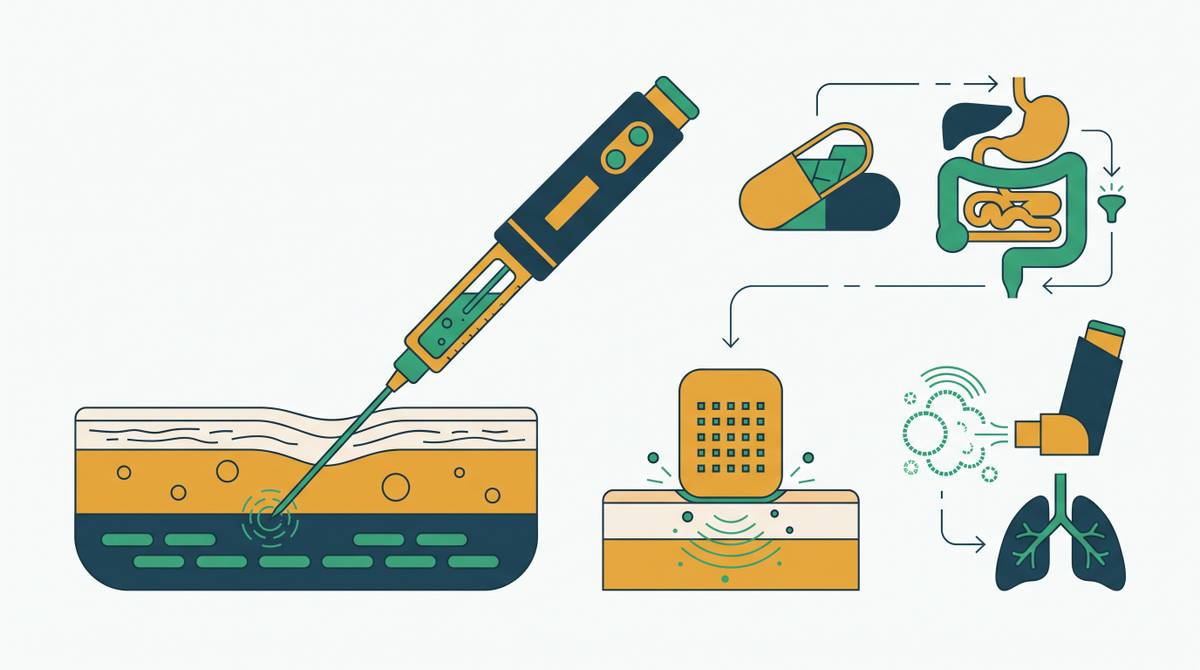
Route of administration contributes a persistent, accumulating friction that is easy to underestimate from the outside. Needle aversion is common and well documented. Refrigeration requirements create logistical demands that compound over months. Titration schedules require ongoing engagement that some patients, particularly those without robust clinical support, find difficult to sustain.
These causes do not operate in a clean cascade where removing one resolves the rest. A patient tolerating nausea through a dose escalation who then encounters a coverage gap faces two failure modes simultaneously; the combination is more likely to produce permanent discontinuation than either cause alone. Interventions targeting a single cause, whether a cost-assistance program or an anti-nausea co-prescription, remain insufficient for this reason. You can patch one hole and watch water come in through another.
How Subcutaneous Injection Amplifies the Biology's Worst Tendencies
GLP-1 receptor agonists work through overlapping mechanisms: stimulating GLP-1 receptors enhances insulin secretion, suppresses glucagon, delays gastric emptying, and promotes satiety. These mechanisms produce the drug's therapeutic value. They also produce most of its side-effect burden, because the receptors that regulate nausea and gastric motility are peripheral, and subcutaneous injection reaches them first and at high concentration.
Peptides administered subcutaneously enter systemic circulation before reaching the brain. To engage the central GLP-1 receptors that regulate appetite and satiety, peripherally administered peptides must cross the blood-brain barrier, and that barrier imposes significant transport constraints on large, hydrophilic molecules. The practical consequence is a pharmacokinetic mismatch: the dose required to generate meaningful central effects simultaneously exposes the gut, pancreas, and associated neural plexus to concentrations sufficient to trigger nausea and vomiting in a substantial fraction of patients.
Careful titration can blunt the severity of this mismatch. It cannot resolve the underlying geometry. The pleiotropic benefits of GLP-1 receptor agonists are well established across outcomes that include meaningful HbA1c reductions, substantial weight loss in clinical trials, and reductions in major cardiovascular events. But those benefits are conditional: they accrue only in patients who stay on treatment long enough to realize them. When the delivery route generates side effects that drive patients off therapy before the benefit curve arrives, the mechanism is working against itself.
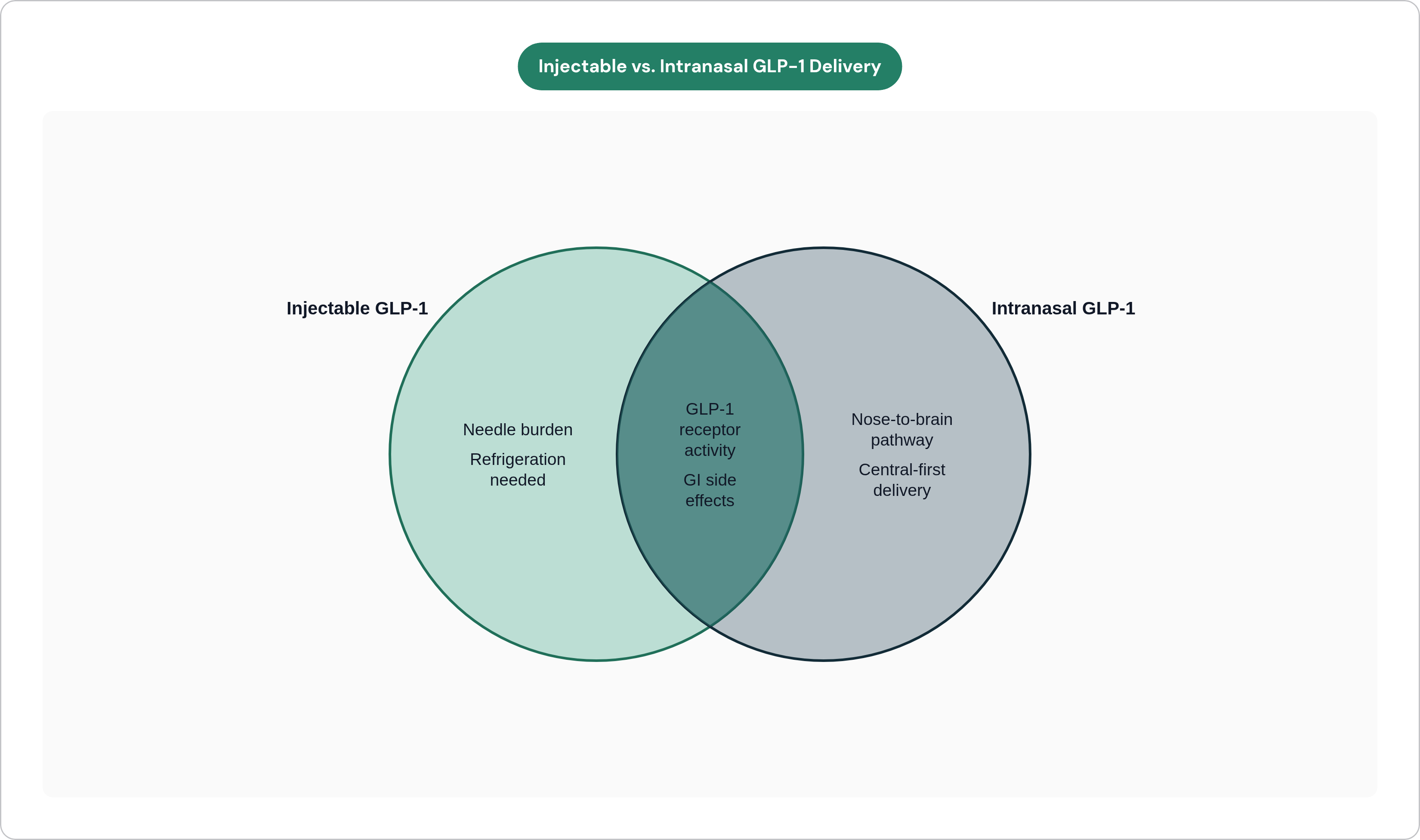
Any delivery route that reduces peripheral GLP-1 receptor activation while maintaining or increasing central delivery would reduce the nausea burden not as a matter of symptom management but as a structural consequence of different pharmacokinetics. Whether that is achievable at therapeutic doses is an empirical question, not a theoretical one, and it is the right question to be asking.
What the Market Gap Reveals About Who Current Delivery Is Failing
Approximately 42.4% of U.S. adults meet obesity clinical criteria. Roughly 2.3% of eligible patients currently receive prescription anti-obesity medication. The treatment gap is not a gap in awareness or clinical evidence; both are abundant. It is a gap in durable access, and durable access depends on patients staying on therapy long enough to constitute a treated population rather than a revolving cohort.
The GLP-1 receptor agonist market was valued at tens of billions of dollars in 2025, with projections into the hundreds of billions by 2033. The obesity drug sub-market, estimated at roughly $14 billion in 2024, is projected toward roughly $50 billion by 2030. Financial scale of this magnitude reflects the depth of unmet demand, not the breadth of satisfied patients. Injectables currently hold the dominant revenue share in the weight-loss segment, but that position reflects incumbency and first-mover advantage more than patient preference for the route.
New patient starts for leading injectable products grew 34% year-over-year in 2025, per IQVIA data. That figure is only meaningful if the fraction of those patients remaining on therapy is also growing. High-volume onboarding paired with high-volume discontinuation produces a system that is simultaneously expanding and losing patients at rates that undermine the population-level health outcomes the class was intended to achieve. The addressable opportunity is not purely in acquiring new patients; it is in closing the gap between how patients persist under real-world conditions versus controlled ones.
What the Shift Toward Non-Injectable Formulations Signals About the Field's Own Diagnosis
The FDA approved oral semaglutide tablets for obesity in December 2025. In April 2026 it approved orforglipron, the first oral small-molecule, non-peptide GLP-1 receptor agonist, requiring no food or water restrictions. Both approvals represent the pharmaceutical industry betting, with regulatory endpoints, on a thesis it has been building toward for years: route of administration is a primary driver of the access and persistence problem, and solving it is commercially and medically necessary.
Early uptake data for oral semaglutide suggested tens of thousands of weekly prescriptions in its first three weeks, consistent with substantial pent-up patient demand for non-injectable alternatives. Whether that demand translates into sustained adherence will depend partly on whether GI side effects, which follow the drug's peripheral pharmacokinetics regardless of administration form, prove more tolerable at the exposure levels oral dosing achieves. That question remains open.
The next-generation injectable pipeline is simultaneously pushing efficacy further. Triple agonist candidates have produced weight loss exceeding a quarter of body weight in Phase 3 data. Emerging combination approaches have shown mean weight losses above one-fifth of body weight in shorter trial windows. These results will raise patient expectations, which increases the psychological and behavioral cost of dropout while also increasing the urgency of retention.
What neither oral peptides nor small molecules currently address, at least not by design, is delivering GLP-1 activity preferentially to the central nervous system rather than the periphery. Both oral and injectable routes reach the brain secondarily, after systemic distribution. The field's oral pivot addresses needle burden. The peripheral-load problem underlying the GI side-effect profile remains structurally unaddressed.
The Nose-to-Brain Route as a Delivery Architecture Designed Around the Dropout Causes
The olfactory and trigeminal nerve pathways provide a direct anatomical channel from the nasal epithelium to the brain, circumventing the blood-brain barrier entirely. This is established neuroanatomy, and it has been the subject of serious pharmaceutical research for decades. The relevant question is not whether the pathway exists but whether a peptide as large and hydrophilic as a GLP-1 receptor agonist can be delivered through it efficiently and reliably at therapeutic doses. That remains an open engineering problem.
The nasal epithelium is a selective barrier, and peptides are not well-suited to passive diffusion across it. Enzymatic degradation is rapid, mucociliary clearance is continuous, and the absorption window is short. These are real constraints, not theoretical ones. Nanoparticle encapsulation addresses them in a principled way: engineered nanoparticles can protect peptide cargo from enzymatic degradation at the mucosal surface, facilitate penetration across the epithelium, and enable transport along olfactory neurons toward central targets. Companies pursuing this approach, such as Lionbio, a biotech reformulating GLP-1 peptides as a nasal-spray therapy using patented Columbia University nanoparticle IP to deliver them nose-to-brain, are building on decades of established delivery science to make that engineering concrete. The pharmacological implication, if this can be realized at therapeutic doses, is a central-first delivery profile that engages appetite-regulating receptors in the hypothalamus and brainstem at lower peripheral concentrations than subcutaneous injection requires.
The approach is scientifically grounded and mechanistically coherent; whether it translates to clinical-grade delivery at scale is the work still ahead. Beyond metabolic disease, the neurological reach of intranasal delivery extends to GLP-1 receptors implicated in addiction circuitry and in the cognitive and neuroprotective pathways associated with neurodegenerative disease, indications where the central-first distinction matters even more acutely.
The intranasal route does not replicate injectable GLP-1 therapy in a different form. It occupies a distinct pharmacological position: central-first delivery, with reduced peripheral exposure by design, no needle, no refrigeration requirement, no titration anxiety. Whether it delivers those properties at the doses required for clinical equivalence is the engineering question the field is now positioned to ask seriously.
Why Dropout Is a Delivery Engineering Problem with a Delivery Engineering Solution
The dropout pattern is not random, and it is not mysterious. It clusters in the first year. It concentrates in patients without diabetes, who lack the glycemic feedback that reinforces persistence. It is dominated by GI side effects and needle burden, both of which are properties of the delivery route rather than properties of the molecule itself.
The field has spent considerable time testing behavioral and support interventions against what is, at its root, a pharmacokinetic problem. The persistence improvement between 2021 and 2024 in obesity-indicated products confirms that the rate responds to conditions: better patient selection, improved support infrastructure, and greater clinician experience all moved it. Formulation and delivery architecture are conditions too, and they have not yet been fully optimized.
The clinical trial versus real-world gap remains the clearest signal in the available data. The molecule works when patients stay on it. The conditions of real-world use erode persistence in ways that controlled settings can mask but cannot fix at scale. A delivery platform that structurally reduces peripheral GI exposure, eliminates needle burden, removes refrigeration logistics, and delivers GLP-1 activity centrally by design addresses those conditions closer to their source than any behavioral intervention can.
The patients who could benefit from this drug class, measured against those currently reached and retained, represent a gap that commercial expansion alone will not close. For the 64.8% who stopped within a year, the question is not whether they needed the therapy. It is whether the form in which it was delivered was ever going to work for them at all.