Oral Semaglutide Bioavailability and Absorption Limitations
The gut destroys ninety percent of the drug before it reaches the bloodstream.
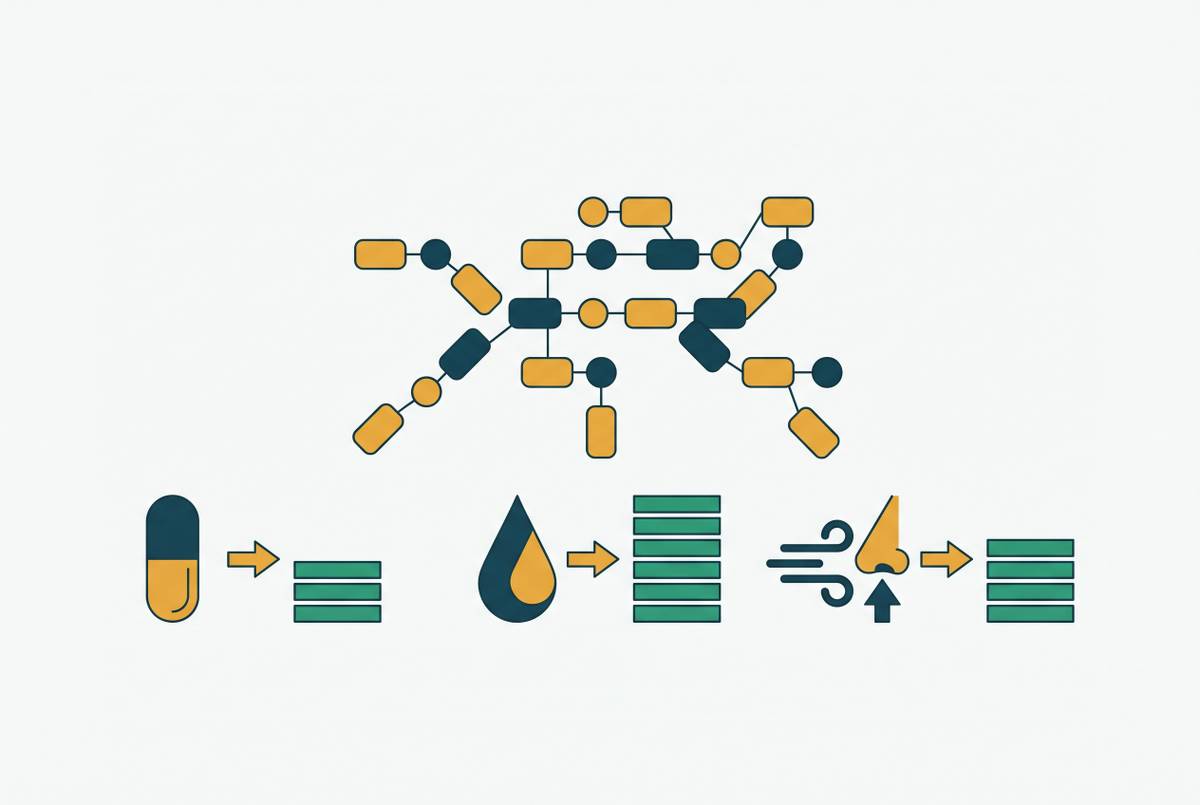
Oral semaglutide reaches the bloodstream at roughly 1% bioavailability, while injectable semaglutide, the same molecule, sits in the high eighties to low nineties percent range. I've read enough pharmacokinetic studies on peptide delivery over the years to say this plainly: that ninety-fold gap is what happens when a fragile, oversized peptide runs headlong into a gut that spent millions of years evolving to destroy exactly this kind of molecule.
Semaglutide mimics GLP-1, a hormone your intestine releases in small bursts after eating, active for maybe two or three minutes before enzymes clear it out. Turning that fleeting signal into a once-weekly injection was already one of the sharper pieces of peptide engineering to come out of the last decade. Turning it into a tablet is a different animal entirely, and the 1% figure is where you can see, in one number, exactly how far from solved that problem still is.
The biological barriers the gut puts in front of any large peptide
Three things happen to semaglutide the moment it's swallowed, and they happen more or less independently of each other. That independence is what makes the problem so stubborn to engineer around, because fixing one still leaves the other two sitting there, waiting their turn.
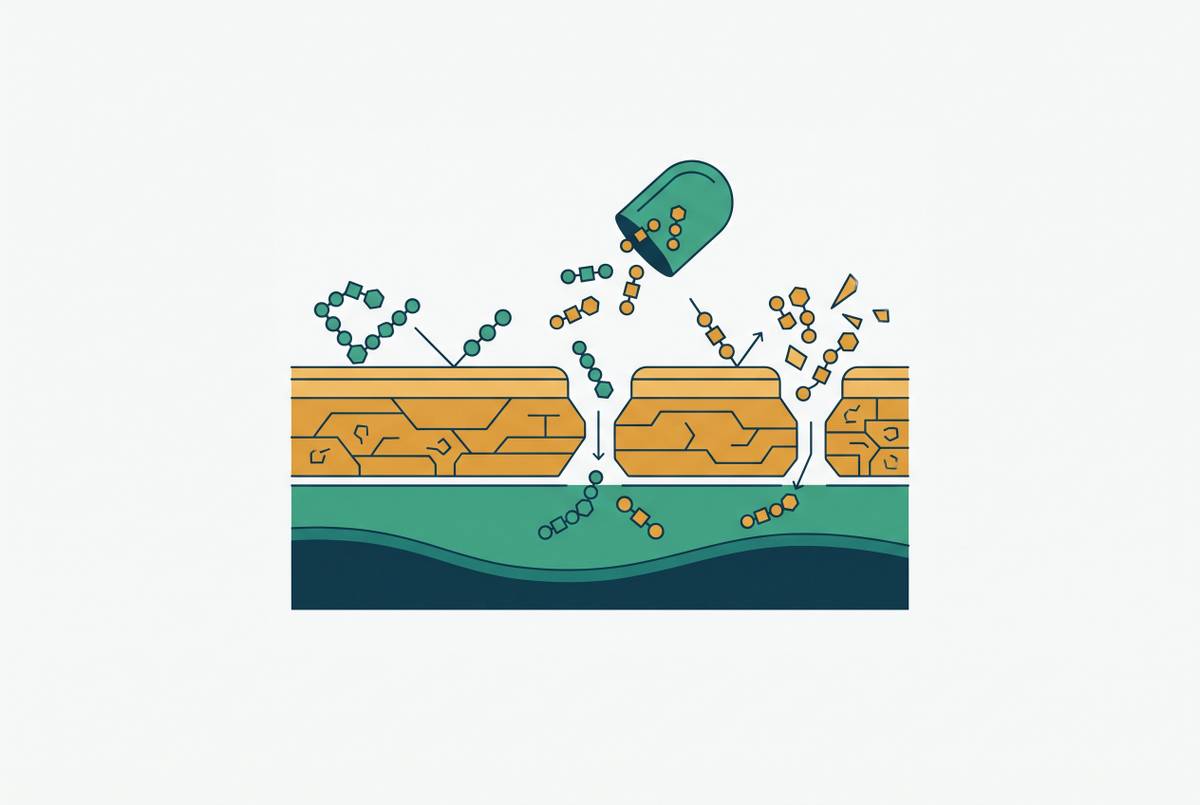
First, enzymatic degradation. Stomach acid starts hydrolyzing peptide bonds almost immediately, and further downstream, dipeptidyl peptidase-4 and a whole cast of intestinal proteases go to work on whatever survived the stomach. Semaglutide's amino acid sequence happens to make it a recognizable target for exactly this kind of breakdown, so by the time whatever's left of the molecule reaches the intestinal wall, the intact fraction has already taken a real hit.
Second, the epithelium itself gets in the way. Tight junctions between intestinal cells exist specifically to keep macromolecules out of the bloodstream, and semaglutide, at a molecular weight in the thousands of daltons, sits well above the size where passive diffusion across a cell membrane is realistic. Throw in a mucus layer that large, charged peptides move through slowly, which just gives enzymes more time to chew, and you start to see the scale of what a formulation scientist is actually up against.
Third, first-pass metabolism. Anything that does cross the epithelium doesn't go straight into general circulation. It travels through the portal vein into the liver first, where hepatic enzymes take another swing at whatever remains before it ever reaches the rest of the body.
This general problem faces every therapeutic peptide anyone has tried to make oral; semaglutide is not a special case. Semaglutide's 1% just happens to be the most visible illustration of it right now, mostly because so many people are taking the drug or asking about it.
What SNAC actually does, and where it stops working
Without an absorption enhancer, oral semaglutide's bioavailability would sit near zero. The ingredient doing the actual work in Rybelsus is SNAC, short for sodium N-[8-(2-hydroxybenzoyl)amino]caprylate, and understanding what it does, and just as importantly what it doesn't, is the whole key to the formulation.
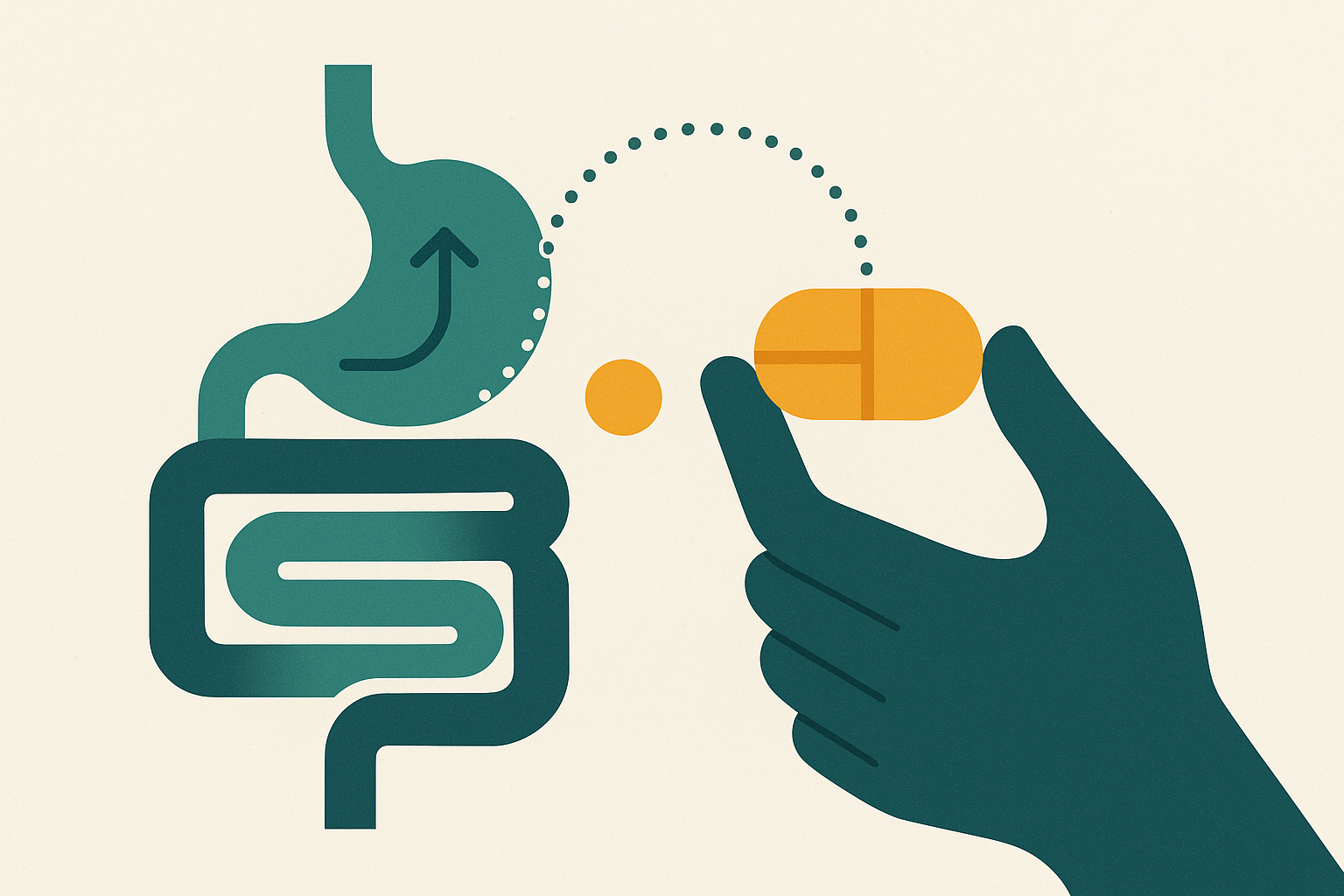
SNAC does two things. It raises the pH in a small pocket of the stomach around the dissolving tablet, shielding the peptide from acid hydrolysis for a short window, and it increases transcellular permeability of the gastric lining, making it easier for semaglutide to pass directly through stomach cells rather than around them. That second point gets less credit than it deserves. SNAC works by helping the drug punch through individual cells, a transcellular effect, rather than by loosening the tight junctions between them, which would be paracellular. That distinction explains why the enhancement is so narrow and localized, rather than some general permeability boost running the length of the GI tract.
That distinction also explains why the stomach, not the small intestine, ends up being the primary absorption site for oral semaglutide, which is unusual for an oral drug and comes with real costs attached. Gastric surface area is a fraction of what the small intestine offers, so the window is small to begin with, and the permeability boost SNAC provides reverts to baseline within roughly 30 minutes. The tablet doesn't linger in the stomach any longer than it otherwise would; SNAC widens the door briefly, without holding it open.
A 2025 pharmacokinetic study comparing oral and subcutaneous semaglutide at matched doses in healthy subjects found comparative bioavailability of just 0.66%, essentially the same story as the roughly 1% figure quoted elsewhere, told with a slightly different number. SNAC is real, and without it there'd be no oral pathway at all, but what it delivers is modest against the scale of the problem. It doesn't touch enzymatic degradation past the stomach. It doesn't account for how much gastric pH and motility differ from one person to the next. And it does nothing about the food-effect problem, which turns out to be its own considerable headache.
The food effect, dosing restrictions, and variability that follow from a gastric absorption window
If your entire absorption strategy depends on a 30-minute window in an empty stomach, anything that fills that stomach becomes a threat to the drug working at all. Food competes for the same absorption surface SNAC is trying to protect, and it speeds up gastric emptying, shrinking the window further. Liquid volume matters too, and so does whatever else the patient happens to be taking that morning.
That's why the dosing instructions read the way they do: take the tablet fasting, with exactly 120 mL of water, no more, then nothing else, no food, no other drink, no other medication, for 30 minutes afterward, every single day, with no flexibility, because the pharmacokinetics don't leave room for any.
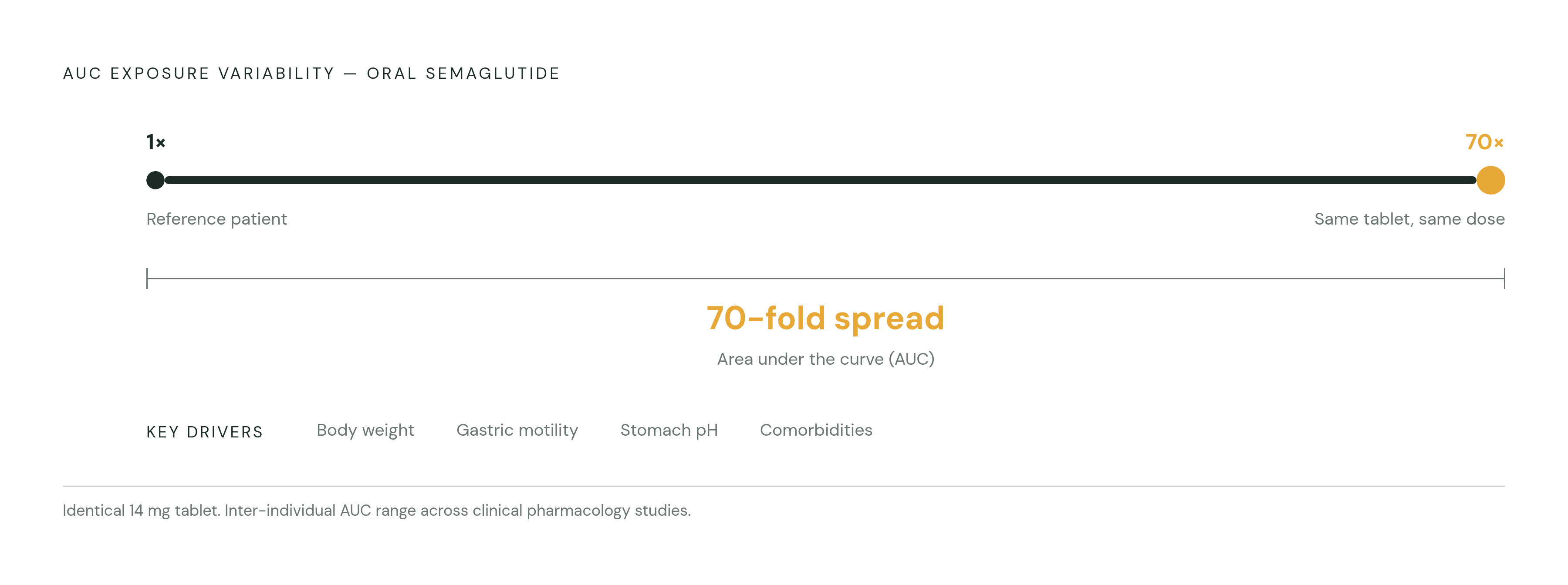
Even under ideal conditions, the variability between individuals is severe. At higher oral doses, AUC values (a measure of total drug exposure over time) differ by more than 70-fold across different people taking the identical tablet. Body weight, gastric motility, baseline stomach pH, and comorbidities all shift that number, and every one of those factors varies widely in the obesity population this drug is meant to treat. So the same pill can produce wildly different exposure in two different patients, an odd thing to accept from a drug supposedly dosed with any precision.
Dose escalation is still required on top of all this, to manage GI side effects, adding weeks of ramp-up to a regimen that already asks for daily discipline. The formulation with the least bioavailable drug ends up demanding the strictest behavioral compliance from the patient; oral semaglutide asks the most and delivers the least. That constraint is baked into the physics of gastric absorption, and it shapes whether patients actually get the clinical benefit they signed up for.
How higher oral doses partially close the efficacy gap, and what that reveals about its ceiling
If bioavailability is stuck near 1%, there's one blunt lever left: raise the dose until enough drug gets through anyway. It works, up to a point, but it trades efficacy for cost, side effects, and even more variability.
The original oral formulation, approved in September 2019, ran up to 14 mg daily. A newer formulation approved in December 2024 uses an enhanced absorption technology to hit comparable efficacy at lower doses, a genuinely meaningful iteration in tablet engineering, though it works better within roughly the same 1% ceiling rather than pushing through it.
The more striking data point comes from a trial published in The New England Journal of Medicine, where a 25 mg oral tablet, well above the original approved range, produced average weight loss of 14% to 17% over a little more than a year. That starts closing in on what injectable therapy achieves, and it's a genuinely impressive result for an oral peptide. But it carries the same caveat shadowing every dose-escalation strategy: more drug in the tablet means more exposure to that 70-fold AUC variability, and more exposure to the GI side effects that ride along with GLP-1 agonism generally.
Does 25 mg prove the bioavailability problem is solved? Not quite. It proves dose escalation can partially compensate for a fixed absorption ceiling, a narrower claim. At some dose, side effects, cost per milligram, and unpredictable exposure make going higher untenable, particularly since a fraction of patients metabolizing or absorbing differently than average could end up with dangerously high, or clinically useless, plasma levels. Escalation is a workaround, a good one, but it's still bounded by exactly what SNAC-based delivery, on its own, is capable of.
What low bioavailability costs patients in the real world
This is where the pharmacokinetics stop being an academic curiosity and start showing up in outcomes that matter to actual patients. GLP-1 adherence outside clinical trials runs well below trial-protocol numbers, and it's been a persistent problem across the whole drug class, not just the oral formulation. One-year persistence among GLP-1 initiators rose from 33.2% in 2021 to 60.9% in the first half of 2024, nearly doubling, which is genuine progress worth saying out loud. But it also means that even at the improved rate, close to four in ten patients have stopped taking the drug within a year.
Longer horizons look worse. Only 14% of patients on injectable semaglutide for obesity were still on treatment after three years. If that's the persistence curve for the injectable, with its high bioavailability and once-weekly dosing, what does oral semaglutide's daily fasting ritual do, layered on top of everything else a GLP-1 patient already has to juggle? We don't have the oral-specific three-year number, but the mechanism for concern is clear enough on its own: missing the fasting window even occasionally disrupts an already narrow absorption process, and the drug offers little forgiveness for an inconsistent routine.
The cost of dropping out early is measurable, and not small. Patients who discontinue before reaching sustained use lose substantially less weight than those who stay on treatment, and the gap is meaningful in clinical terms. None of this comes cheap, either. GLP-1 treatments approved for chronic obesity run north of $12,000 a year, so a patient who quits at month four has absorbed a meaningful cost without the clinical benefit that was the entire point of taking it in the first place.
The scale here isn't small. A nationally representative RAND survey found that 11.8% of Americans have used a GLP-1 drug for weight loss. At that scale, adherence stops being a side issue and becomes the main event. Low bioavailability and poor adherence are the same story told twice, from different angles. A formulation that demands a strict fasting ritual, delivers unpredictable exposure because of that 70-fold AUC spread, and still causes GI side effects on top of all that, is a formulation practically built to produce dropout.
The alternative non-oral routes researchers are exploring to bypass GI barriers
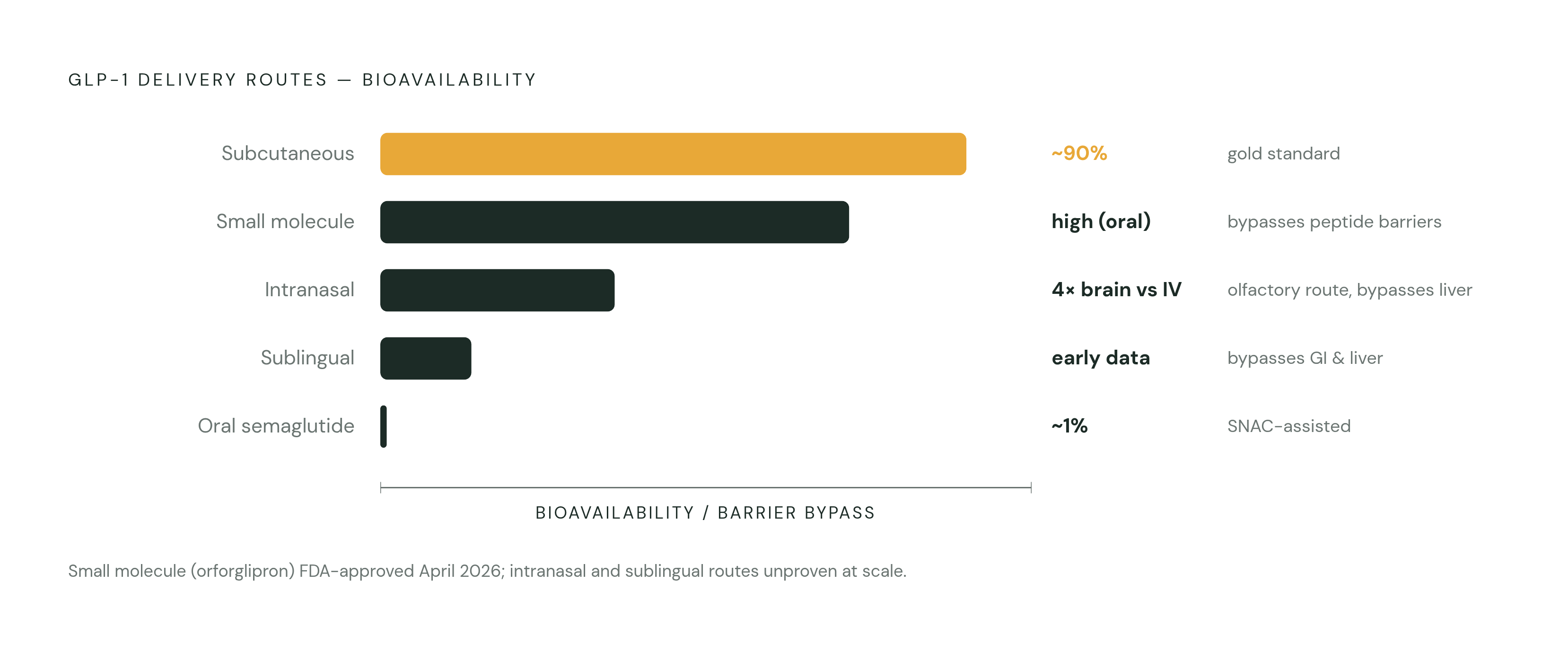
So if the gut is this hostile to large peptides, what's left? A handful of paths, each trading one set of constraints for another, and none of them yet matching the reliability of a subcutaneous injection in a form patients would actually prefer to use.
Subcutaneous injection is still the benchmark everything else gets measured against: bioavailability in the high eighties to low nineties percent range, a once-weekly dosing interval thanks to a roughly week-long half-life. The tradeoff is obvious: needles, cold-chain storage, injection-site management, all real burdens, just different ones than the oral tablet's fasting ritual.
Sublingual delivery is one alternative under investigation. Placing a formulation under the tongue routes the drug through the sublingual mucosa, heavily vascularized tissue that bypasses both the GI tract and first-pass liver metabolism entirely. Appealing on paper, but in practice, large peptides still run into permeability limits crossing oral mucosa, so this research remains early, promising rather than proven.
A more exotic approach uses milk-derived small extracellular vesicles, or sEVs, as a delivery vehicle. These can sit in the stomach for up to 18 hours, dramatically longer than the 30-minute window SNAC offers, going after the residence-time problem directly instead of working around it. A 2025 study in the Journal of Extracellular Biology found that sEV-encapsulated semaglutide and tirzepatide significantly reduced blood glucose in diabetic mouse models. A proof-of-concept worth taking seriously, though it's still mouse data, not a human trial result.
Then there's the small-molecule route, which sidesteps the peptide bioavailability problem simply by not being a peptide. Orforglipron, a non-peptide oral GLP-1 receptor agonist, demonstrated meaningful weight loss in late-stage trials and received FDA approval in April 2026. Because it's a small molecule rather than a peptide, it never faces the enzymatic and permeability barriers described earlier. It's a genuinely different drug with its own pharmacology and safety profile, not a delivery fix for semaglutide itself. The commercial world noticed fast: Septerna signed an exclusive collaboration worth up to $2.2 billion in May 2025 specifically to develop oral small-molecule GLP-1 agonists, which tells you how seriously the industry is betting on sidestepping the peptide delivery problem rather than solving it outright.
Each of these counts as real progress on some axis. None has yet delivered injectable-grade efficacy with injectable-grade reliability in a format that's actually low-burden for the patient using it.
Why the nose-to-brain route addresses what the gut cannot
There's one more route worth walking through carefully, because it skips the gut entirely rather than trying to out-engineer it. The anatomy behind that choice deserves its own explanation.
The olfactory and trigeminal nerves connect the nasal cavity directly to the brain: a physical, anatomical shortcut that has nothing to do with digestion, and one that doesn't route through the liver along the way. For a molecule like semaglutide, which has notoriously low membrane permeability and barely crosses the blood-brain barrier when circulating systemically (it also degrades quickly in blood through proteolysis and renal clearance), that direct nerve pathway is a genuinely different opportunity. The intranasal route skips the gut's enzymatic gauntlet entirely and moves drug toward brain tissue without needing systemic circulation as the middleman.
The speed is worth sitting with. Drug molecules given intranasally can typically be detected in the olfactory bulbs and related brain regions within an hour, faster central access than oral dosing offers, and it rivals or beats some injectable routes too. One study found the olfactory route improved brain bioavailability of peptides fourfold compared to intravenous delivery, an inversion of the usual assumption that injections always win.
Why does this matter for a GLP-1 drug specifically? Because GLP-1 receptors aren't confined to the gut and pancreas; they show up across multiple brain regions, including the cortex, hippocampus, hypothalamus, and amygdala. The brain is a legitimate, still largely underexplored target in its own right, not merely a place the drug happens to pass through on its way to systemic circulation. Researchers have studied intranasal delivery of GLP-1 analogs, including exendin-4, for both metabolic effects and neurological indications like Alzheimer's disease, territory that oral and subcutaneous delivery aren't positioned to reach with the same directness.
None of this works, though, without solving a smaller version of the same engineering problem the gut poses. Peptides degrade at the nasal mucosa too, and residence time there is short on its own terms. Nanoparticle encapsulation is the enabling technology that makes intranasal peptide delivery tractable: it shields the peptide from nasal enzymes, extends how long it stays put, and helps ferry it along the olfactory nerves toward the brain. Lionbio, a nasal-spray nanoparticle peptide startup, is building GLP-1 therapeutics specifically on this premise. It's the same fundamental challenge facing every route in this piece, protect a fragile molecule long enough to reach where it needs to go, just addressed here with a different carrier in a different tissue.
What the 1% bioavailability figure ultimately reveals about the next decade of GLP-1 delivery
Step back far enough and the number stops looking like a quirk specific to one tablet. The global GLP-1 receptor agonist market was valued at tens of billions of dollars in 2025 and is projected to reach well into the hundreds of billions by 2033. That's a market with enormous financial incentive to close a 90-fold gap, and every approach described here, dose escalation, small molecules, sublingual and intranasal routes, sEV encapsulation, is a different bet on how that gap gets closed, or gotten around entirely.
Injectables still hold the dominant position, with the parenteral route accounting for 69.1% of the market in 2025. The oral segment is growing faster in percentage terms, though that reflects patient and prescriber demand for convenience more than evidence that the underlying science has caught up to that demand, two different things worth keeping separate.
So what does the 1% figure actually tell us, after all this? It tells us the gap between what patients want, a pill, and what the gut's biology allows, barely a trickle of the drug they actually need, is a structural feature of trying to move a large, fragile peptide across tissue that evolved specifically to keep such molecules out, rather than a temporary engineering lag waiting on one clever fix. Dose escalation buys efficacy at a real cost. Small molecules solve the problem by declining to be peptides in the first place. Mucosal routes, sublingual and intranasal alike, remain early, mostly proof-of-concept, but at least they're aimed at the barrier itself rather than around it. The next decade of GLP-1 delivery will probably be defined by how many of these approaches mature at once, because no single one of them, on the evidence sitting in front of us today, looks capable of closing a ninety-fold gap alone.