Transdermal Peptide Delivery Research and Current Limits
Skin's molecular barriers make peptide patches far harder than researchers admit.
Peptide drugs rank among the most valuable medicines on the market, yet almost none of them can cross skin. That mismatch, between what peptides are as molecules and what the stratum corneum physically permits, is what this piece works through, and the conclusion will not comfort anyone betting on a transdermal patch solving it: skin is a poor barrier for delivering most peptides of clinical size, and the field's own data increasingly says so.
Seven of the ten best-selling pharmaceuticals worldwide are built on amino acid sequences. More than 80 peptide-based drugs are approved for clinical use, together contributing something in the neighborhood of $50 billion in annual pharmaceutical revenue. Scaling that fast, the field nonetheless remains overwhelmingly dependent on one delivery method: the needle. Why? Peptides carry three structural properties that turn almost every other route of administration into a fight against basic chemistry. They are large, and most therapeutic peptides far exceed the molecular weight of anything that crosses a biological membrane passively. They are hydrophilic, built from charged and polar residues that get repelled by lipid-rich barriers rather than absorbed into them. And they are enzymatically fragile: proteases stationed at the gut wall, the skin surface, and the nasal mucosa exist specifically to recognize and cut peptide bonds, so an unprotected peptide has a short shelf life the moment it touches a biological surface.
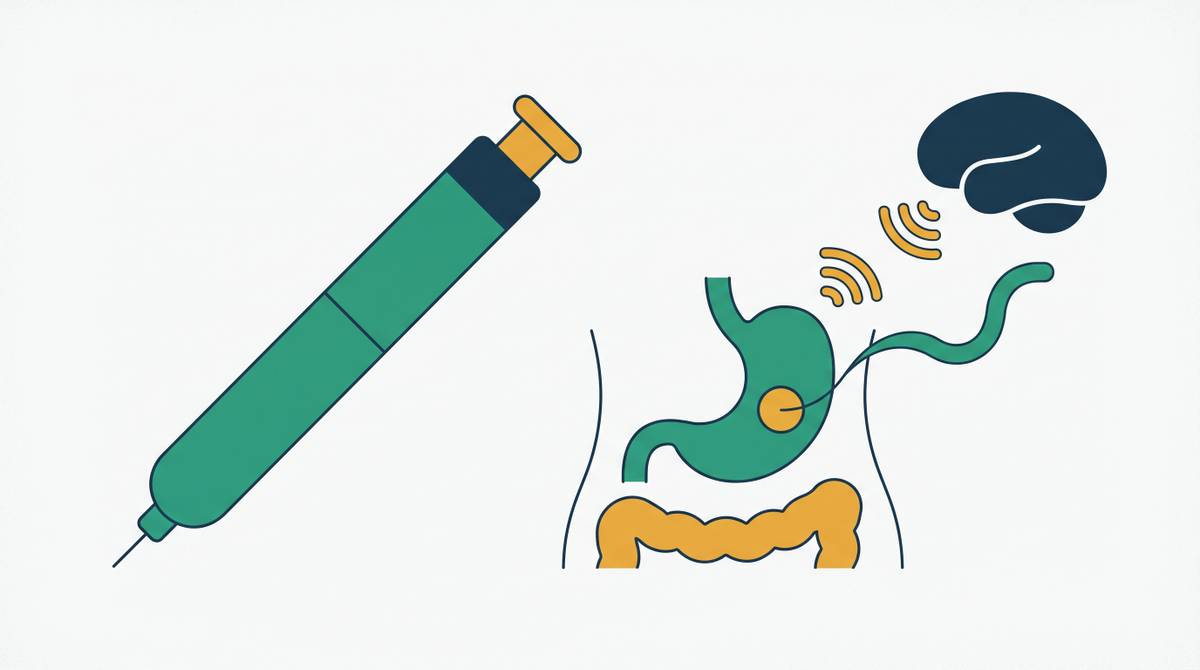
This is a molecular identity problem more than a formulation one. A better excipient does not resolve size, charge, and enzymatic vulnerability acting together. Injections sidestep all three issues at once by depositing the drug straight into subcutaneous tissue, skipping every surface barrier the body evolved to keep large molecules out. Needles have persisted as the default delivery method for peptide therapeutics even as the rest of pharmaceutical science has moved toward less invasive approaches elsewhere, largely because no alternative has matched their reliability. Yet needle burden carries a real clinical cost. Poor compliance, patient anxiety, and a delivery experience that drives people to simply stop taking their medication are a large part of why peptide therapeutic potential goes unrealized outside the clinic. So the question this piece works through becomes plain: what would it actually take to get a peptide across skin without a needle, and how close is the field to doing it?
What the stratum corneum actually is and why the 500 Dalton rule excludes virtually every peptide of clinical interest
Start with the number, because it does more work than any description of the tissue itself: 500 Daltons. That is the widely cited passive permeation ceiling for skin, the rough threshold above which a molecule, or anything larger than roughly 5 to 7 nanometers in diameter, is effectively excluded from crossing the stratum corneum without intervention. Most therapeutic peptides of clinical interest do not sit near that line. They sit well above it, often by multiples rather than by a modest margin, and this is not a gradient where a slightly larger peptide crosses a slightly smaller barrier. It behaves more like a wall. Passive permeability drops off sharply once molecular weight climbs past the threshold, and no amount of concentration gradient on the outside of the skin reliably pulls a peptide through by force of numbers.
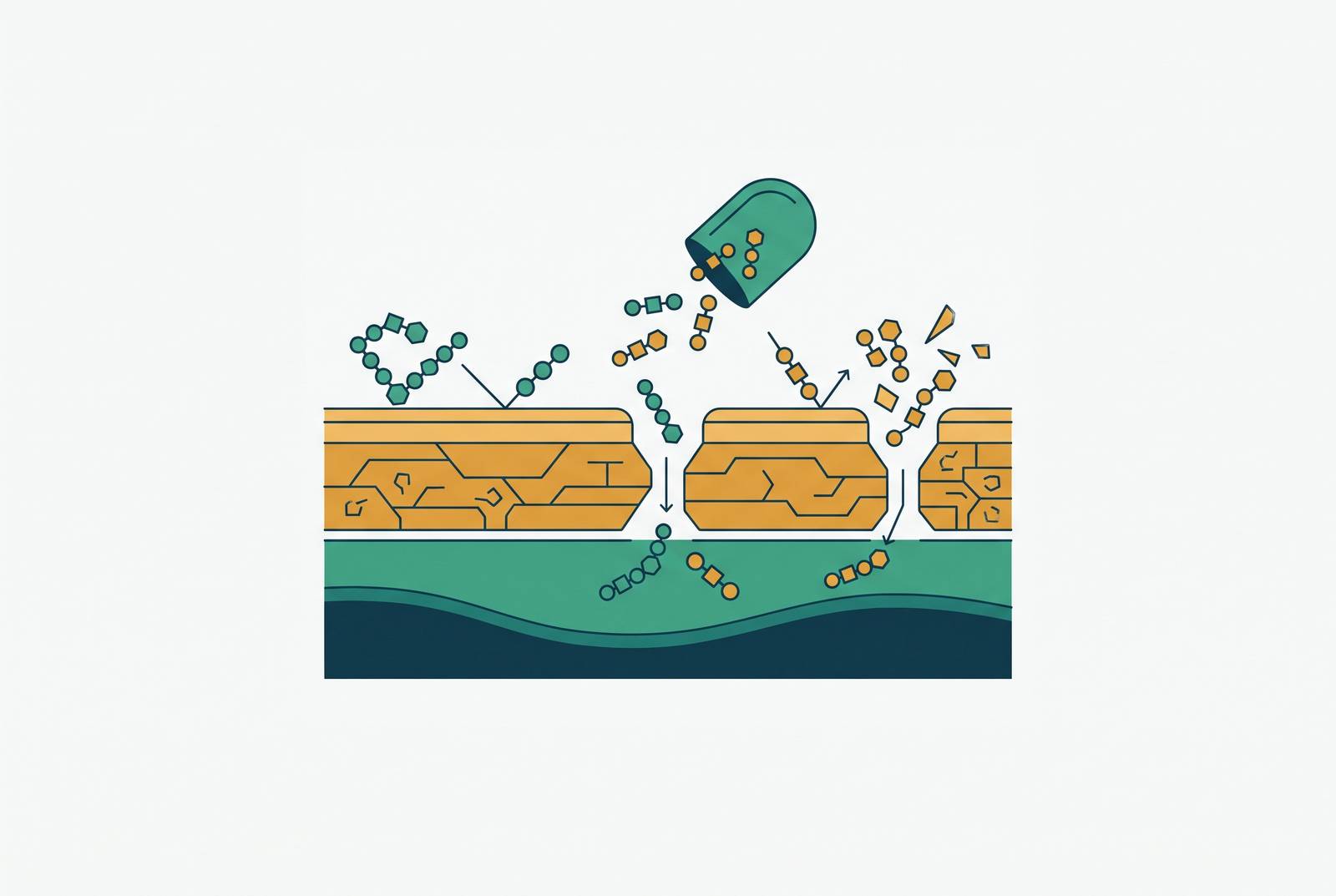
The stratum corneum itself is deceptively thin, somewhere between 10 and 30 micrometers, thinner than a sheet of paper, and thinness does not translate into fragility here. What makes the SC formidable is its architecture and chemistry. Dead corneocytes are packed tightly and embedded in a matrix of ceramide-rich lipid lamellae, creating what researchers often call a tortuous path: a maze-like route that a molecule has to navigate lipid layer after lipid layer to get through. That structure is lipophilic by design; it exists to keep water in and keep hydrophilic invaders out, which means a charged, polar peptide backbone meets resistance at essentially every step.
Even a peptide that manages to breach the SC is not through the gauntlet. Two more barriers wait beneath it. Enzymatic activity in the viable epidermis and dermis keeps degrading peptide cargo that does start to penetrate, and those deeper skin layers present their own resistance to further movement even after the SC has been crossed. The practical implication, if not an encouraging one, is that any transdermal strategy aimed at peptides has to solve the 500 Dalton mismatch directly. Tweaking pH or adding a penetration-friendly solvent does not change the fact that the molecule in question is too big and too polar for the barrier it is trying to cross. Much of what gets marketed as a transdermal peptide breakthrough is really a workaround for local skin penetration, dressed up in language that implies something closer to systemic delivery. That gap between claim and mechanism is the frame the rest of this piece works within.
The three main enhancement strategies researchers are using to breach the barrier, and what each actually achieves
Three broad approaches have emerged to work around that wall, and each solves a different piece of the problem while leaving others untouched. None of the three, on its own, gets a large peptide reliably into systemic circulation through skin. The results below sound more conclusive in isolation than they turn out to be once you ask where the peptide actually ends up, because a lot of this research measures the wrong endpoint, and the field has been slow to say so out loud.
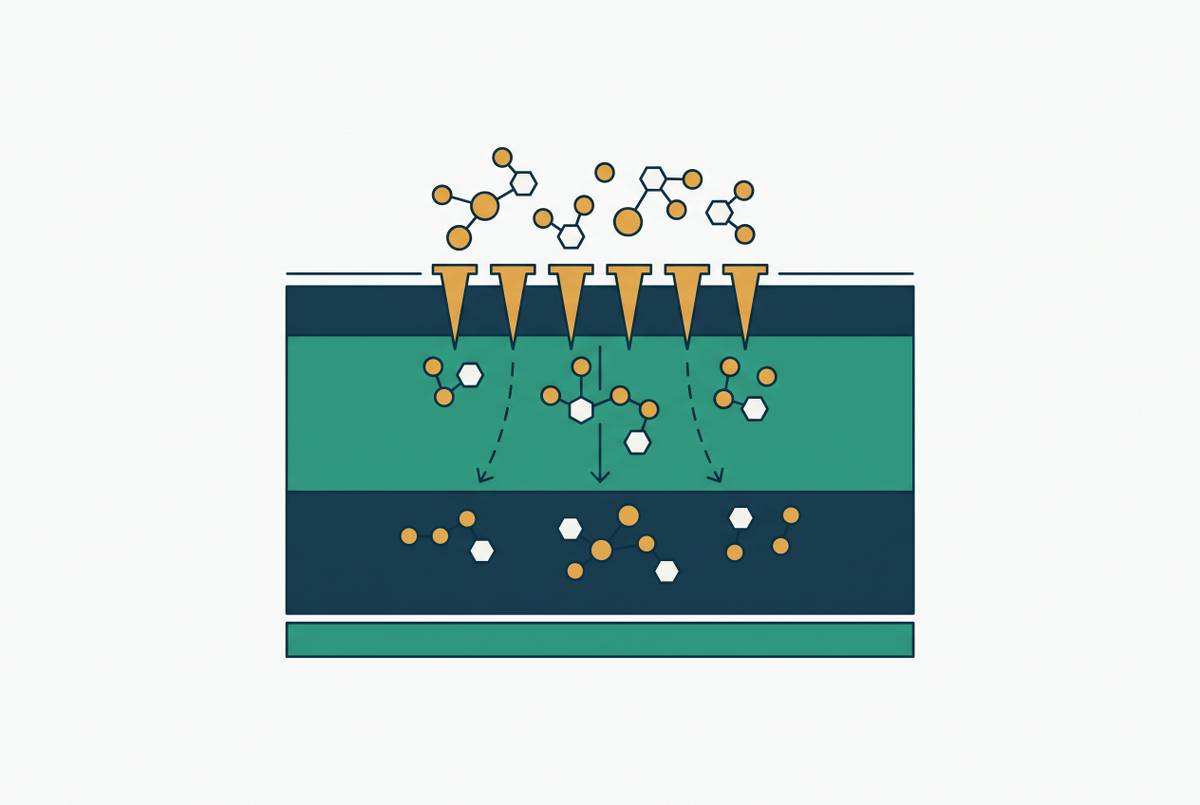
Physical enhancement methods, microneedles, ultrasound, electroporation, and laser-based techniques, share a common logic: bypass the SC rather than chemically cross it. Microneedle arrays create temporary microchannels straight through the stratum corneum, and dissolvable microneedle patches in particular have shown real promise in vaccine delivery, offering something painless and minimally invasive as an alternative to a traditional injection. Cavitational ultrasound and certain lasers generate micropores in the SC that have helped deliver high-molecular-weight therapeutics, including insulin. Electroporation takes a different physical route, using short electrical pulses to transiently disrupt the SC's lipid bilayer and increase its permeability to hydrophilic, large molecules. What ties these together, and what limits them, is device infrastructure. A microneedle patch or an electroporation unit reduces the compliance burden of a syringe without eliminating it; these methods solve needle aversion imperfectly rather than removing the delivery-device question altogether. That is a real improvement for the patient experience, and a much smaller one for the underlying physics.
Biological enhancement takes a subtler approach, using peptides themselves as the shuttle. Cell-penetrating peptides, or CPPs, exploit natural transduction mechanisms to carry cargo through membranes, and in research settings they show high transduction efficiency alongside low cytotoxicity. Skin-penetrating peptides, or SKPs, are a related but more targeted class: short sequences of 6 to 30 amino acids engineered with specific affinity for skin tissue. The evidence here is worth sitting with. The hydrophobic CPP known as MTD 1067 enabled dermal delivery of protein cargoes at 4.4 times, 18.8 times, and 32.9 times higher concentrations compared to controls, with the exact multiple depending on the size of the cargo being carried. That gradient tells its own story: the enhancement effect is real, but larger payloads remain harder to move even with a biological shuttle doing the work, which tracks with everything the 500 Dalton discussion already established. The open question is whether this enhancement translates into meaningful systemic bioavailability, or whether it mostly produces localized skin penetration that never reaches circulation in therapeutically relevant amounts. On the evidence so far, it produces mostly the latter, and that distinction is the whole ballgame for anyone hoping CPPs solve the transdermal peptide problem outright.
Nanocarrier platforms, liposomes, polymeric nanoparticles, solid lipid nanoparticles, dendrimers, and a growing list of engineered variants, take a third approach: encapsulate the peptide, shield it from enzymatic attack, and present the SC with a surface it is more willing to let through. Liposomes and lipid nanoparticles are the most clinically advanced version of this idea, and their track record delivering mRNA and siRNA therapies systemically through other routes proves the underlying platform works, at least somewhere in the body. For transdermal delivery specifically, particle size, surface charge, and how deformable the carrier is all determine whether it actually penetrates the SC or simply sits in its upper layers, going nowhere. Stimuli-responsive nanocarriers and AI-guided formulation design represent the newest layer of this work, and both remain largely preclinical.
Increasingly, these three strategies show up combined rather than alone; nanocarriers loaded directly into microneedle patches is one common pairing. That combination trend is itself the tell: no single strategy has solved the transdermal peptide problem on its own, which is exactly why researchers keep stacking them on top of each other.
Where the clinical translation gap reveals the true distance between laboratory results and approved therapies
Here is a figure that puts the whole enhancement conversation in perspective: an estimated 50 to 80 nanomedicines had reached global regulatory approval for clinical use by 2025. Set that against the volume of preclinical nanocarrier research published every year, and the gap is stark. Decades of laboratory work have produced a comparatively tiny clinical output, and that gap is structural, reflecting the difficulty of the underlying science rather than any shortage of effort.
Several forces hold that gap open regardless of route. The mononuclear phagocyte system, the body's own immune surveillance network, clears nanoparticles before they can deliver their payload in a meaningful share of cases. Manufacturing scalability is its own separate wall: formulations that behave beautifully in a small research batch frequently cannot be reproduced consistently once a manufacturer tries to scale them to commercial volume. Regulatory pathways for novel delivery platforms tend to run longer and less predictably than pathways for conventional drug forms, because regulators are evaluating not just a molecule but a delivery mechanism with its own safety profile. Peptide-loaded nanocarriers also often degrade in storage before they ever reach a patient, a stability problem layered on top of everything else.
Transdermal delivery specifically adds its own complications. Preclinical skin models, whether animal tissue or ex vivo human skin, do not perfectly replicate how the SC behaves in a living, intact human body. Bioavailability data drawn from skin penetration studies frequently measures local concentration at or near the application site, not systemic exposure, and that distinction matters enormously for any peptide meant to act somewhere else in the body. Enzymatic degradation in the viable skin layers below the SC keeps eroding whatever gains an enhancement strategy achieved getting through the SC in the first place.
Much of what gets reported as transdermal peptide success is a local-concentration finding described in terms that suggest systemic delivery, and the field has not been rigorous about separating the two. Enhancement strategies have meaningfully improved penetration depth and local peptide concentration. What they have not reliably demonstrated is reproducible systemic bioavailability for therapeutic peptides delivered through skin. That gap between local effect and systemic delivery is exactly what should push the conversation toward entirely different routes, rather than another round of refinement on the same one that has already absorbed decades of effort.
Why the nose-to-brain route offers a structurally different solution to peptide delivery rather than a marginal improvement on transdermal
The strongest argument for the nasal route comes down to a difference in underlying biology, and it is worth being direct about what that means: nose-to-brain delivery belongs to a different category of solution than transdermal delivery, and treating the two as points on the same spectrum undersells the case for the former. The stratum corneum is dead tissue, engineered by evolution to be a barrier. Nasal epithelium, by contrast, is a living, vascularized surface built for gas exchange, and it carries far higher inherent permeability to macromolecules than skin ever will. That permeability advantage comes from tissue identity itself, something researchers cannot replicate on skin with a cleverer enhancement technique.
Layered on top of that permeability advantage is an anatomical shortcut skin simply does not have. The olfactory and trigeminal nerves offer a direct conduit from the nasal cavity to the central nervous system, so a peptide delivered intranasally can, in principle, bypass both the SC's physicochemical ceiling and the blood-brain barrier in a single route. That second barrier deserves its own mention. The blood-brain barrier is a highly selective gatekeeper that restricts most therapeutic agents from entering the CNS at all, which means a peptide delivered by injection still has to cross it systemically after it enters the bloodstream. Nose-to-brain delivery routes around the blood-brain barrier neuroanatomically, using a path the body already built for a different purpose, rather than crossing it directly.
This is not a niche academic idea. The intranasal drug delivery market was estimated at $59.1 billion in 2023, and it is projected to reach $92.6 billion by 2030, growing at a compound annual rate of 6.6%. That scale reflects real clinical adoption, not just research enthusiasm.
Nasal delivery has obstacles of its own, but the character of those obstacles differs from the transdermal case. Mucociliary clearance sweeps formulations out of the nasal cavity before they can be absorbed, but viscosity modifiers and mucoadhesive polymers offer a workable engineering response rather than requiring a fundamental change to the molecule. Enzymatic activity in the nasal mucosa can degrade peptide cargo, but nanoencapsulation offers a workable countermeasure. Tight junctions and the physical diameter of olfactory neuron axons impose their own size limits on what can travel along that nerve pathway, a real constraint but a definable one, in contrast to the blunt exclusion the 500 Dalton rule imposes on skin. One illustrative data point: intranasal risperidone formulated with viscosity-modifying polymers achieved roughly 5.4 times higher brain drug exposure, measured as area under the curve, compared with oral administration in rats. That is a concrete demonstration of the CNS-targeting advantage this route offers when the formulation is engineered with intent.
Nanoparticles play a specific mechanistic role here that goes beyond simple encapsulation. They appear to enable transit along olfactory nerve pathways in a way that free, unencapsulated molecules cannot access nearly as efficiently, a meaningfully different job than the one nanocarriers are asked to do on skin. The indications this route opens, addiction, dementia, CNS metabolic signaling, are not accessible through transdermal delivery at all, no matter how sophisticated the enhancement strategy becomes. This route reaches a destination transdermal delivery structurally cannot reach. Aging populations and rising rates of Alzheimer's and Parkinson's disease are, according to the same market projections, a structural driver of demand for exactly this kind of CNS-targeted delivery system.
What GLP-1 peptides specifically reveal about the limits of transdermal delivery and the logic of alternative routes
GLP-1 receptor agonists are, by most measures, the fastest-growing drug class in medicine right now. The global GLP-1 receptor agonist market was valued at tens of billions of dollars in 2025, and it is projected to keep growing substantially over the next decade. That scale alone would make GLP-1 delivery worth examining. The more interesting question is what this drug class reveals about the limits already established earlier in this piece, and here the case against transdermal delivery is about as clear as the evidence gets: no transdermal formulation exists in this class, and the underlying chemistry gives little reason to expect one soon.
The most widely used GLP-1 peptides are large molecules, with molecular weights that sit multiple times above the 500 Dalton threshold that defines passive transdermal permeation, and they are hydrophilic and enzymatically fragile besides. GLP-1 agonists check every box that makes transdermal delivery structurally unfavorable, not as an unfortunate coincidence but as a direct consequence of the same molecular properties that make them effective peptide drugs in the first place. No transdermal GLP-1 formulation has reached clinical approval, and given everything the stratum corneum section established, that absence reads less like a research lag and more like a predictable outcome of the underlying chemistry. Anyone waiting on a GLP-1 patch is waiting on a molecule to stop being the size it is, and that wait has no end date.
What makes GLP-1 particularly worth examining through a delivery lens is where its receptors actually sit in the body. They are expressed not only in the pancreas and gut, where the metabolic story is well known, but throughout the brain: the hypothalamus, the brainstem, reward circuitry. That distribution means GLP-1's therapeutic potential was never purely metabolic; it carries a neurological dimension built into the biology from the start. Emerging research is now exploring GLP-1 agonists in the context of Alzheimer's disease and addiction, indications that depend on achieving meaningful drug concentration in the CNS, something systemic injection achieves only partially, since an injected peptide still has to clear the blood-brain barrier the same as any other systemically delivered molecule. Growing evidence suggests GLP-1 signaling in the brain mediates appetite suppression, dampens reward response, and may offer neuroprotective effects. That raises a real possibility worth sitting with: the brain may be the primary target for the next generation of GLP-1 indications, rather than an incidental one.
Put those pieces together: a large peptide, a therapeutic target that lives partly in the CNS, and a documented pattern of patient dropout tied to injection burden. The shape of the problem is clear, and so is the shape of the answer. That is precisely the combination nose-to-brain nanoparticle delivery platforms are engineered to address. What separates a credible development program in this space from a formulation experiment is usually the depth of the underlying intellectual property: platforms built on decades of foundational nanoparticle and nasal delivery research tend to look different, in both rigor and track record, from a novel chemistry proposed without that history behind it.
What remains genuinely unsolved and why the delivery innovation race is only beginning
Give the enhancement strategies covered here their due. They have produced meaningful increases in skin penetration depth for peptides of modest size, and they have shown real concept-level success in local peptide delivery: cosmetic applications, dermatological treatments, vaccine adjuvants delivered through microneedle patches. They have also built a genuine toolkit, microneedles, CPPs, nanocarriers, that keeps improving year over year in preclinical settings. This is a field with real, measurable progress behind it.
Still, what remains unresolved is specific, and worth naming plainly rather than glossing over. Reliable, reproducible systemic bioavailability for large therapeutic peptides delivered transdermally has not been demonstrated at clinical scale, full stop. The 500 Dalton ceiling reflects a physicochemical reality that enhancement strategies work around rather than through; it represents a fundamental constraint rather than a formulation problem waiting on the right excipient, and that distinction shapes what is realistic to expect from this research going forward. Scale-up difficulty, unpredictable regulatory pathways, and stability challenges persist across essentially every nanocarrier-based delivery platform currently in development, transdermal or otherwise.
Continuing to chase transdermal delivery as a general-purpose solution for large peptides looks like the wrong bet, and the field's own decades of data support that reading. The field keeps asking whether skin can be made permeable to large peptides, and the answer that keeps coming back is a qualified, hard-won no for most clinically relevant molecules. Stacking microneedles with nanocarriers does not change that verdict in any fundamental way. The more productive question, the one GLP-1 and nose-to-brain delivery both point toward, is which route offers the most favorable underlying biology for the specific peptide and the specific target in question. Skin looks like a poor fit for a molecule the size of a modern GLP-1 agonist, while the nasal cavity, with its living epithelium and its direct neural pathway to the brain, looks like a far better fit for the indications this drug class is only beginning to explore. That reframe, from fighting one barrier to choosing a more favorable one, is where the real innovation race in peptide delivery is only just getting started.