Injection Fatigue and Device Innovation in Biologic Delivery
Chronic biologic patients skip doses because the needle wears them down, not because it hurts.

Injection fatigue is a design failure biologic therapy never fixed. It's the biggest thing standing between a good drug and a patient who actually keeps taking it. The delivery model was built for occasional, acute treatment; chronic disease showed up, dosing became weekly or lifelong, and nobody rebuilt the model to match.
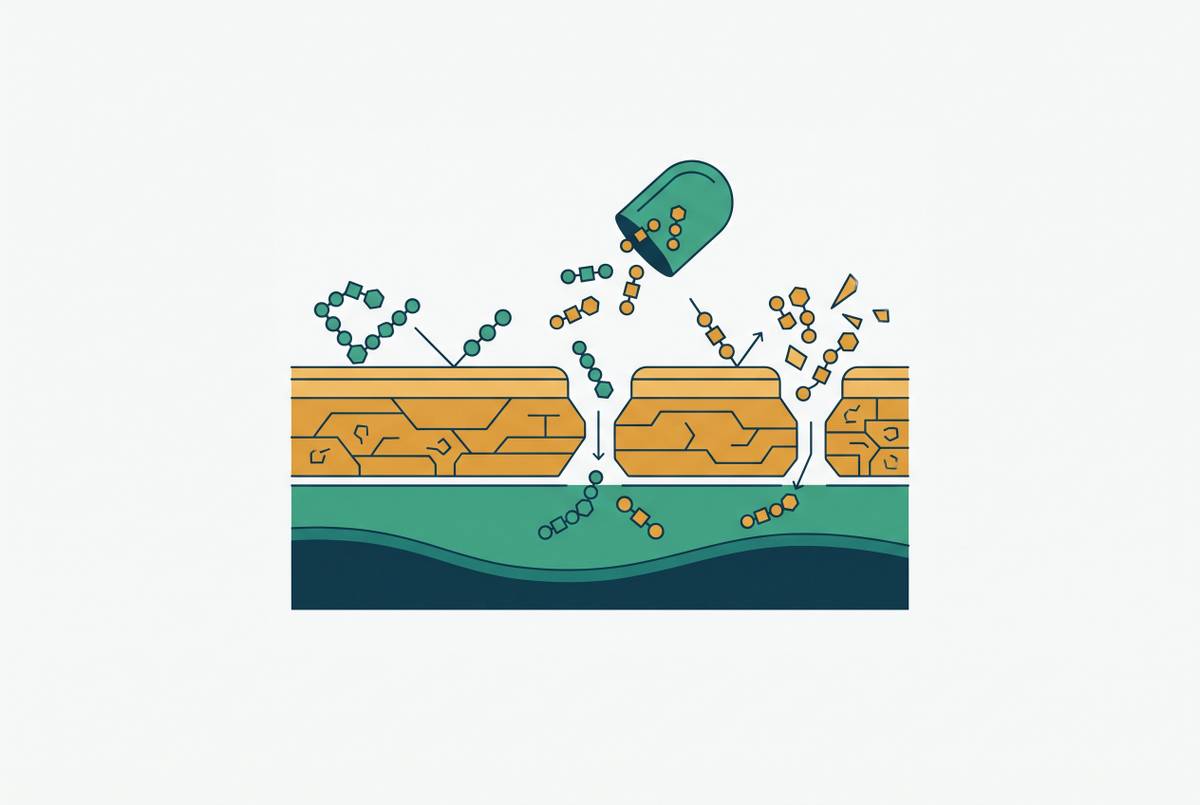
Biologics went the injectable route because oral delivery destroyed them, plain and simple. Large peptide and protein molecules get broken down by stomach acid and digestive enzymes before they ever reach the bloodstream, so the needle became the default route rather than the best one. That trade made sense when biologic therapy meant a short course for an acute flare: tolerate the needle, get better, move on. Chronic disease broke that deal without anyone bothering to renegotiate it. Weekly or daily injections for years, sometimes for life, ask something categorically different of a patient than a two-week course of something painful but finite, and the industry kept running the old delivery playbook as if the underlying commitment to the patient hadn't changed.
People lump injection fatigue and needle phobia together a lot, and mixing them up leads to the wrong fix. Needle phobia is a fear response, often present on day one, sometimes intense enough to block treatment before it starts, and it responds well to desensitization and coaching. Injection fatigue works differently, and in some ways it's meaner: it's the slow wearing-down of a patient's willingness to keep doing something unpleasant, week after week, with no end date in sight. It doesn't care how calm someone was at the start. It shows up as a quiet decision, made alone on some random Tuesday, to skip the next dose, and then the one after that.
The scale riding on this delivery model is hard to overstate. Injectable drug delivery was valued at $633.77 billion in 2024, on a path toward $1.03 trillion by 2030. That's a huge share of modern medicine, built on a delivery method that a meaningful fraction of patients quietly walk away from. The drugs got better over the last two decades, but the needle mostly stayed the needle.
How injection burden accumulates into clinical dropout
The GLP-1 class makes this concrete in a way few other drug categories do. A 2024 real-world study from Prime Therapeutics found that 85% of patients were no longer taking GLP-1 drugs two years after starting. An earlier Prime Therapeutics cohort of obesity patients without diabetes showed one-year adherence of just 27% and one-year persistence of 32%. These numbers describe the median patient.
Why does this happen? Side effects, mostly gastrointestinal, develop in 40 to 70% of patients on GLP-1 therapy, and GI issues are consistently the most cited reason people quit. One real-world study, using data through December 2024, attributed 28.2% of discontinuations directly to them. A separate patient survey spanning rheumatology and similar biologic-treated indications found that 18.4% of patients named a negative injection experience, specifically, as their primary reason for stopping, trailing only lack of effectiveness at 40.8%. Set those two figures next to each other and a pattern emerges: patients quit less because the drug fails to work than because the experience of taking it, physically and logistically, wears them down faster than the benefit builds up.
Cost piles on top. A 2024 KFF survey found that 54% of GLP-1 users reported difficulty paying for the drug. A patient managing GI symptoms from a weekly injection while also struggling to afford the next fill has two separate reasons to stop, and either one alone is usually enough by itself.
One-year persistence has climbed toward the low 60s by 2024, and that's real, mostly reflecting better titration schedules and more structured coaching programs that get patients through the rough early weeks. Fair enough, that's progress in managing a burden that still exists, and the underlying delivery problem sits almost exactly where it started.
What current autoinjector and on-body device innovation actually solves
Some of the device engineering happening right now deserves real credit. Higher-volume, higher-viscosity biologics put real mechanical strain on conventional autoinjectors, which were built to push a dose through a needle in something like 10 to 15 seconds. Getting a thicker fluid through that window without pain or tissue damage is a genuinely hard engineering problem, and spring-force autoinjector designs have made real strides on it: finer needle gauges, better control over injection speed, ergonomics that don't demand a strong grip or a steady hand, connected features like dose-logging that catch a missed dose before it becomes a missed week.
On-body wearable pumps go further still. Some deliver up to 30 mL of drug over an extended period at a controlled flow rate, which means biologics that used to require an IV infusion in a clinic can now be dosed subcutaneously, at home, with no nurse present. That shows up at the market level too: more than half of all approved injectable drugs between 2017 and 2021 were subcutaneous products, a shift device innovation made possible by letting infusion-dependent therapies migrate into self-administered formats.
The actual problem remains untouched, though. The patient still punctures skin, still manages sharps disposal, and still gets injection-site reactions, the redness and welting and occasional bruising. And in the GLP-1 context specifically, they still face the same titration-related GI side effects, because those side effects come from the drug reaching systemic circulation, not from how roughly the needle goes in. A smarter autoinjector is a genuine improvement in comfort and confidence, but the biology producing nausea and GI distress doesn't know or care how elegant the device is.
This innovation earns its keep most clearly on access. Wearable on-body devices let primary care physicians prescribe biologics that used to require specialized infusion infrastructure, a real win for patients who'd otherwise need a specialty clinic visit just to get dosed. What patients live with day to day once they're on the drug is a separate, bigger question, and later sections dig into it directly.
Oral GLP-1s as the first real route escape (and why the problem is not fully solved)
Then came the first real attempt to leave the needle behind entirely. Orforglipron, approved by the FDA in April 2026 under the brand name Foundayo, is the first oral small-molecule GLP-1 receptor agonist: no injection, no absorption enhancer, no fasting window, taken any time of day. That last detail matters more than it sounds like it should, because fasting requirements are exactly the kind of small daily friction that erodes adherence over months even when the drug itself works fine.
The efficacy data backs the milestone up. In the ATTAIN-1 trial, the highest dose of orforglipron produced average weight loss of 27.3 pounds, 12.4% of body weight, over 72 weeks, against 2.2 pounds on placebo. Compared head-to-head against oral semaglutide in the ACHIEVE-3 trial, orforglipron at 36 mg achieved an A1C reduction of −2.2%, versus −1.4% for oral semaglutide at 14 mg. That's a meaningful glycemic gap, not a rounding difference.
Orforglipron also showed higher rates of GI events and higher discontinuation than oral semaglutide in that same trial, and swallowing the drug instead of injecting it did not make the nausea go away. Oral semaglutide, for its part, carries its own friction: being peptide-based, it requires an absorption enhancer called SNAC plus a 30-minute fasting protocol before the next meal. One compliance burden traded for another, not eliminated.
So what does oral approval actually prove? It proves the field can engineer its way around the needle while leaving the deeper mechanism untouched. Systemic GLP-1 exposure, whether it arrives by injection or by pill, produces GI side effects in a large share of patients, because the exposure pathway through the bloodstream is identical either way. There's a second limitation oral formats can't touch at all, and it matters more than the first: for CNS-targeted indications, a pill that has to distribute through the whole body before a fraction of it reaches the brain is fighting the same structural constraint an injection faces. Swallowing the drug changes the route in, but where the drug ends up going once it's inside the body stays exactly the same.
The GLP-1 market's structural trajectory and why delivery will determine its ceiling
The adherence numbers above are a growth-ceiling story as much as a patient-welfare one. The GLP-1 receptor agonist market was valued at $66.4 billion in 2025, projected to reach $185.3 billion by 2033 at a 12.4% compound annual growth rate. North America holds 75.5% of that market as of 2025, and type 2 diabetes remains the largest application segment at 81.2%.
The pipeline behind that growth is chasing more receptor targets: dual agonists, triple agonists, amylin combinations, each one squeezing more metabolic effect out of the same basic mechanism. Most of these candidates are still riding the same two delivery rails, injection or systemic oral absorption, that produce the dropout numbers already on the table. A patient who discontinues at month twelve or month twenty-four contributes revenue for a short window and never reaches the multi-year metabolic outcomes that justify the therapy's cost in the first place. Poor delivery engineering doesn't just hurt the patient; it caps the addressable market from the inside, quietly, without anyone having to admit it out loud.
Oral formats have already shown they can expand that market by removing injection anxiety as a barrier and letting primary care physicians prescribe without a specialty referral. That's a real, measurable lever. At the same time, the market's growth has opened a lane for unauthorized and compounded products, which raises safety risks and chips away at trust in the category, and that risk only grows as the market expands without meaningful delivery differentiation between competitors.
Here's what the market hasn't priced in yet, at least not visibly: CNS indications, addiction and dementia among them, represent a potential second market for GLP-1 biology that could rival or exceed the metabolic market in scale. Unlocking it needs delivery built to reach the brain efficiently, a wholly different engineering problem than the one the industry has spent the last decade solving.
What GLP-1 receptors in the brain suggest about the limits of peripheral delivery
CROSSING
(limited)
EXPOSURE
40–70% of patients
nerve
nerve
Why would a metabolic drug matter for the brain at all? GLP-1 receptors aren't confined to the gut and pancreas. They're mapped across the cortex, the hippocampus, and the hypothalamus, regions that govern cognition, memory, and appetite regulation. Activating GLP-1 receptors in these areas appears to reduce neuroinflammation and oxidative stress while supporting neurogenesis, mechanisms that keep showing up in the research literature on Alzheimer's, Parkinson's, and addiction.
The addiction signal isn't small. A January 2025 study out of WashU and the VA St. Louis found that GLP-1 receptor agonist use was associated with significantly reduced risk of addiction to alcohol, cannabis, stimulants, and opioids. On Parkinson's, a double-blind, placebo-controlled trial of exenatide, 59 participants, presented at the 2025 MDS Congress, showed a significant effect on motor symptoms over nine months. Alzheimer's is murkier: GLP-1 use may lower risk of developing the disease, but a 2025 study found no slowing of progression in patients who already had it established. Timing, dose, and how much drug actually reaches the brain seem to matter more than researchers assumed going in.
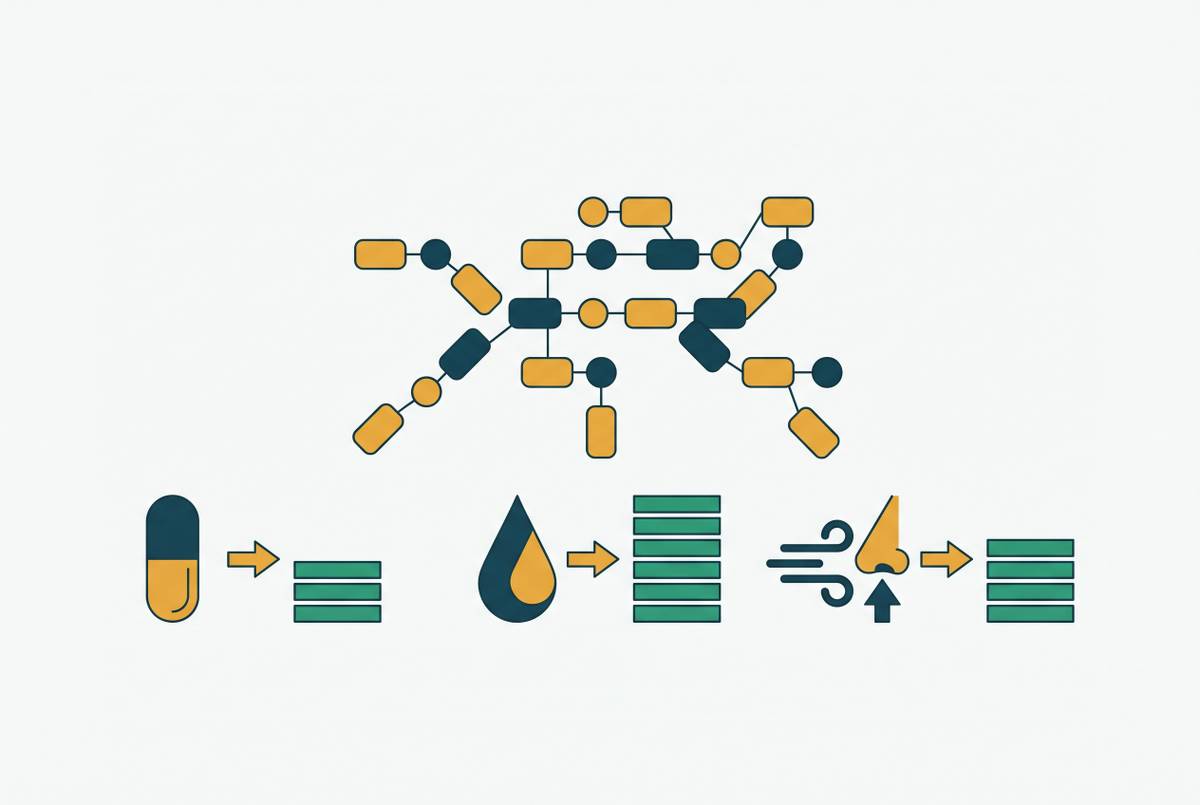
That last point matters most. Injectable GLP-1s do cross the blood-brain barrier, but the amount that gets into the CNS depends on how much drug is circulating systemically, not on any targeted delivery to the brain. And systemic exposure is exactly what drives the GI side effects covered earlier. So there's a structural conflict baked into the current model: pushing more drug to the brain means pushing a higher systemic dose, which means worse peripheral side effects. Under an injection-based or systemic-oral model, you can't turn one dial without turning the other.
Why the nose-to-brain route addresses a structural conflict that injections cannot
Is there a route that sidesteps this trade-off instead of just managing it? There is, at least on paper, in the olfactory and trigeminal nerve pathways, which offer an anatomical shortcut from the nasal epithelium straight to CNS structures, bypassing both the blood-brain barrier and general systemic circulation.
That changes the math. If a drug can reach the brain through the nose without first saturating the bloodstream, CNS exposure no longer has to ride on the back of a high systemic dose, and the GI side effects that come with that systemic load simply drop out of the equation. It's a different kind of trade-off than the one injectable and oral GLP-1s are stuck negotiating.
It also removes the needle altogether. Intranasal delivery is a departure from the injection paradigm entirely, and for a chronic, lifelong therapy, that's a fundamentally different patient experience than anything the device innovation covered earlier can offer.
None of this is easy, and it's fair to ask why not. Intranasal peptide delivery has historically underdelivered on its promise, and the nasal mucosa is a hostile environment for a peptide: enzymes there break the molecule down fast, the mucociliary escalator clears material out before it can absorb, and the epithelial lining is a poor gateway for anything larger than a small molecule. Earlier attempts at nasal peptide delivery ran straight into these walls and mostly stayed there, decade after decade. Lionbio, a nasal-spray nanoparticle peptide startup, is among the efforts now working from patented Columbia University IP to get past them.
What's changed is the emergence of nanoparticle carrier systems built specifically to solve those three problems: engineered particles that shield the peptide cargo from enzymatic breakdown, extend how long the drug sits in contact with the mucosa instead of getting swept away, and help ferry the molecule across the epithelial barrier. That's the enabling layer earlier intranasal attempts lacked. With it, the nose-to-brain route becomes a plausible way to target neurological indications, addiction, dementia, Parkinson's, where the therapeutic site is brain tissue itself, not the gut or the pancreas, and where peripheral GLP-1 exposure was never really the point to begin with.
How far device and route innovation must still travel
The picture is one of real, uneven progress. Wearable pumps moved infusion-dependent biologics into subcutaneous, self-administered formats. Autoinjectors got smaller needles, better ergonomics, connected dose-tracking. Oral small-molecule GLP-1 approval proved the needle isn't mandatory. Each of these is a genuine advance, and none of them, on its own, closes the gap.
What's still unresolved sits in three places: GI burden under systemic delivery, whether injectable or oral; needle fatigue for the patients oral formats simply can't serve, whether for efficacy or access reasons; and CNS-targeted delivery for neurological indications that peripheral dosing was never built to reach efficiently in the first place. One-year persistence climbing toward the low 60s is real progress, worth acknowledging as such. But sit with what that number actually means for a second: roughly four in ten patients have stopped taking their medication by month twelve. The burden is still very much intact, just dressed better than before.
Match the delivery architecture to where the drug actually needs to act. That's the principle, and it's easier to write down than to build. Systemic metabolic effects call for systemic delivery done well, with all the tolerability work that entails. CNS effects call for delivery that targets the CNS directly, instead of hoping enough drug survives the trip through the rest of the body first. Nanoparticle-based nasal delivery looks like a candidate for that second category, worth weighing carefully rather than assuming it's already there: an approach that could extend across multiple peptides and multiple neurological indications, provided the enzymatic and mucosal-clearance problems described above actually get solved rather than managed around.
Real long-term adherence, the kind that gets a patient through year five and year ten instead of dropping off before year two, needs more than a slightly better autoinjector. It needs a delivery experience that doesn't ask a patient to absorb needles, GI side effects, and a complicated routine, week after week, indefinitely, for the rest of their life. Some of the field is moving that way already. How much distance remains between here and there is exactly what the next decade of delivery engineering, and whatever approaches manage to close that gap, will be judged on.