GLP-1 Drugs and Parkinson's Disease Neuroprotection
GLP-1 drugs show promise for Parkinson's through multiple protective pathways in dopamine neurons.
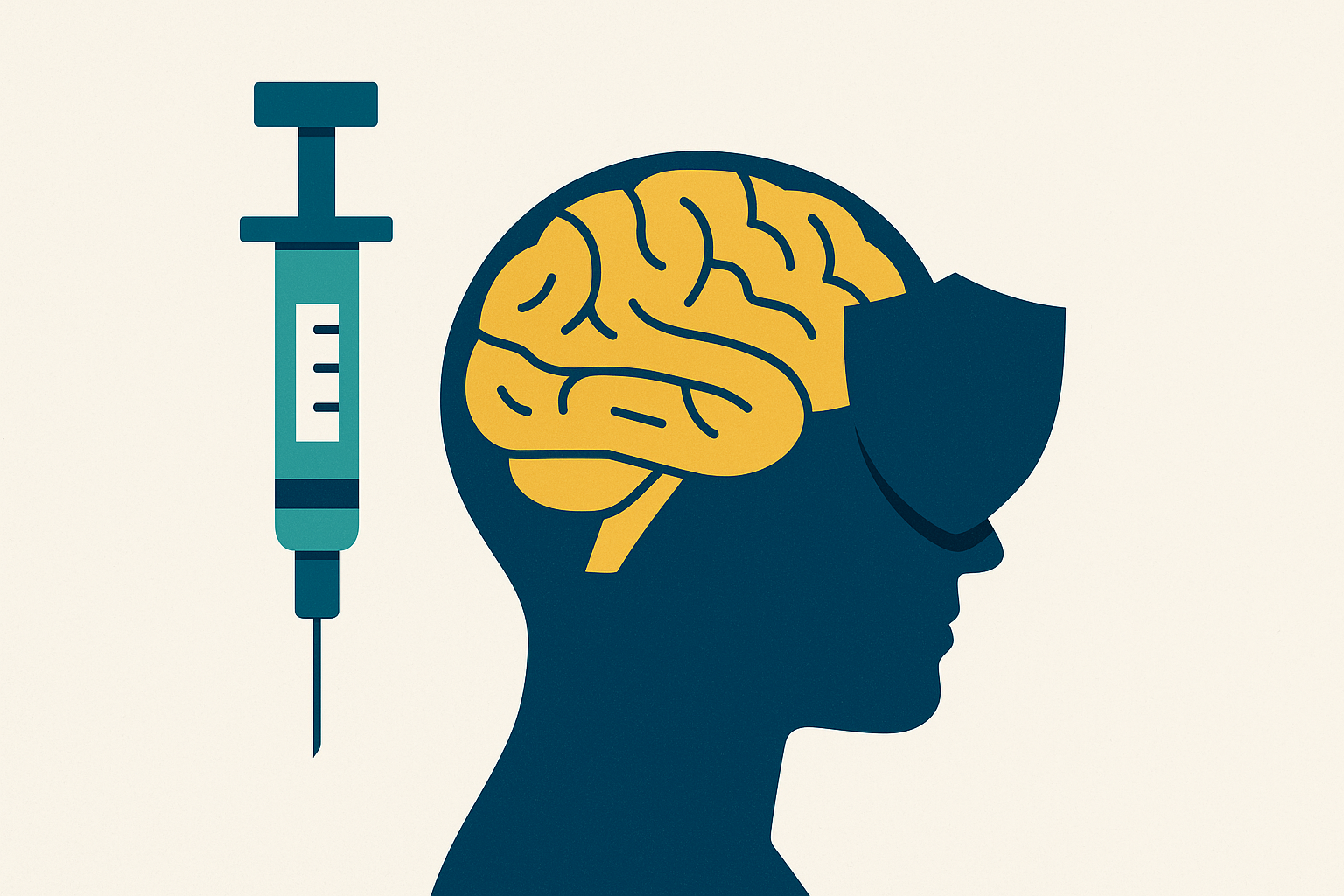
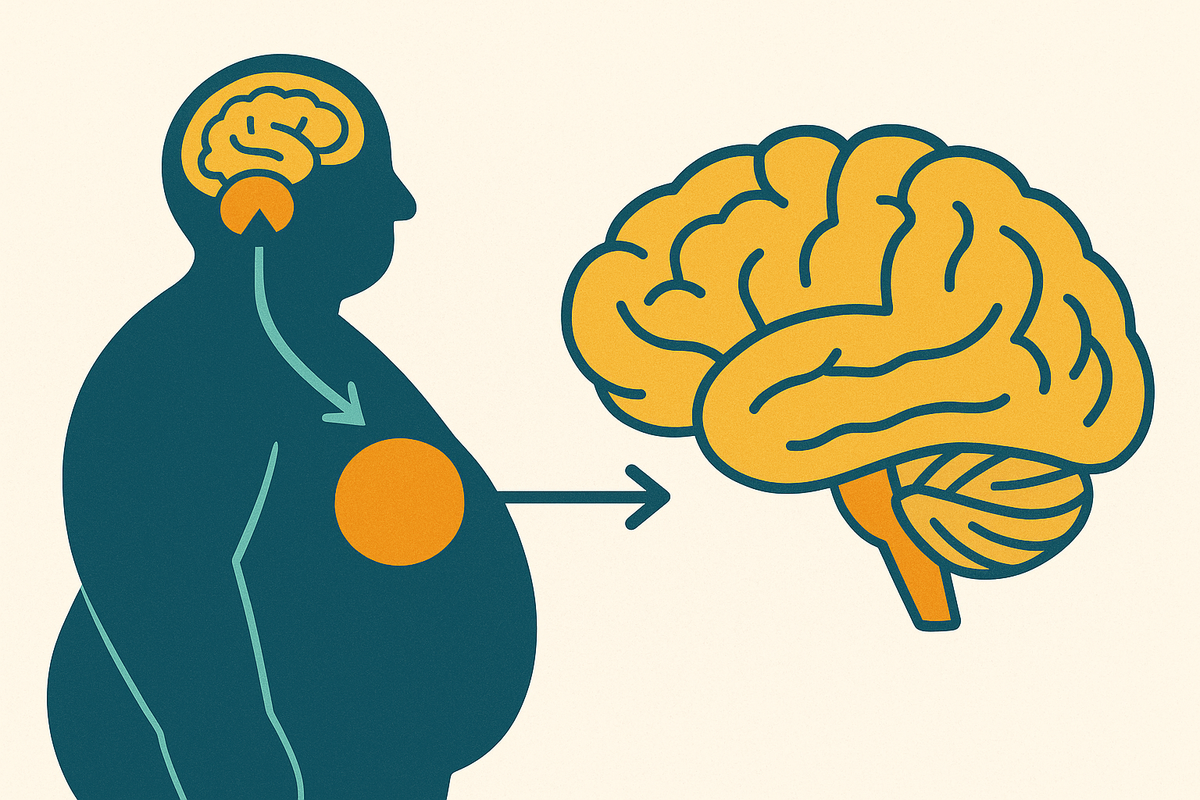
GLP-1 receptors sit on dopaminergic neurons in the substantia nigra pars compacta, the exact population of cells that dies off in Parkinson's disease. That one anatomical fact turned a drug class built for diabetes and weight loss into a real candidate for disease-modifying therapy in Parkinson's. Underneath the fact, though, the story gets messy fast, messier than either the hype or the skepticism usually lets on, and the messiness is where the real science actually lives.
Start with the receptor. GLP-1 receptor is a class B G protein-coupled receptor, and it turns up in places well outside the pancreas, including brain regions tied directly to neurodegenerative disease. The substantia nigra pars compacta matters most here; that's where dopaminergic neurons live, and their death produces the tremor, rigidity, and slowed movement that define Parkinson's clinically. GLP-1 is a peptide the body already makes, and the receptor does real physiological work in the brain long before any drug shows up, so an agonist is mostly turning up a dial that already exists.
Keep that separate from the metabolic story most people know these drugs for. Nobody designed exenatide or liraglutide with the brain in mind. Receptor distribution doesn't care what a molecule was built for, though, and if the substantia nigra is listening anyway, the question changes shape. It narrows into something more specific: what actually happens when you switch on those receptors in neurons that are already dying?
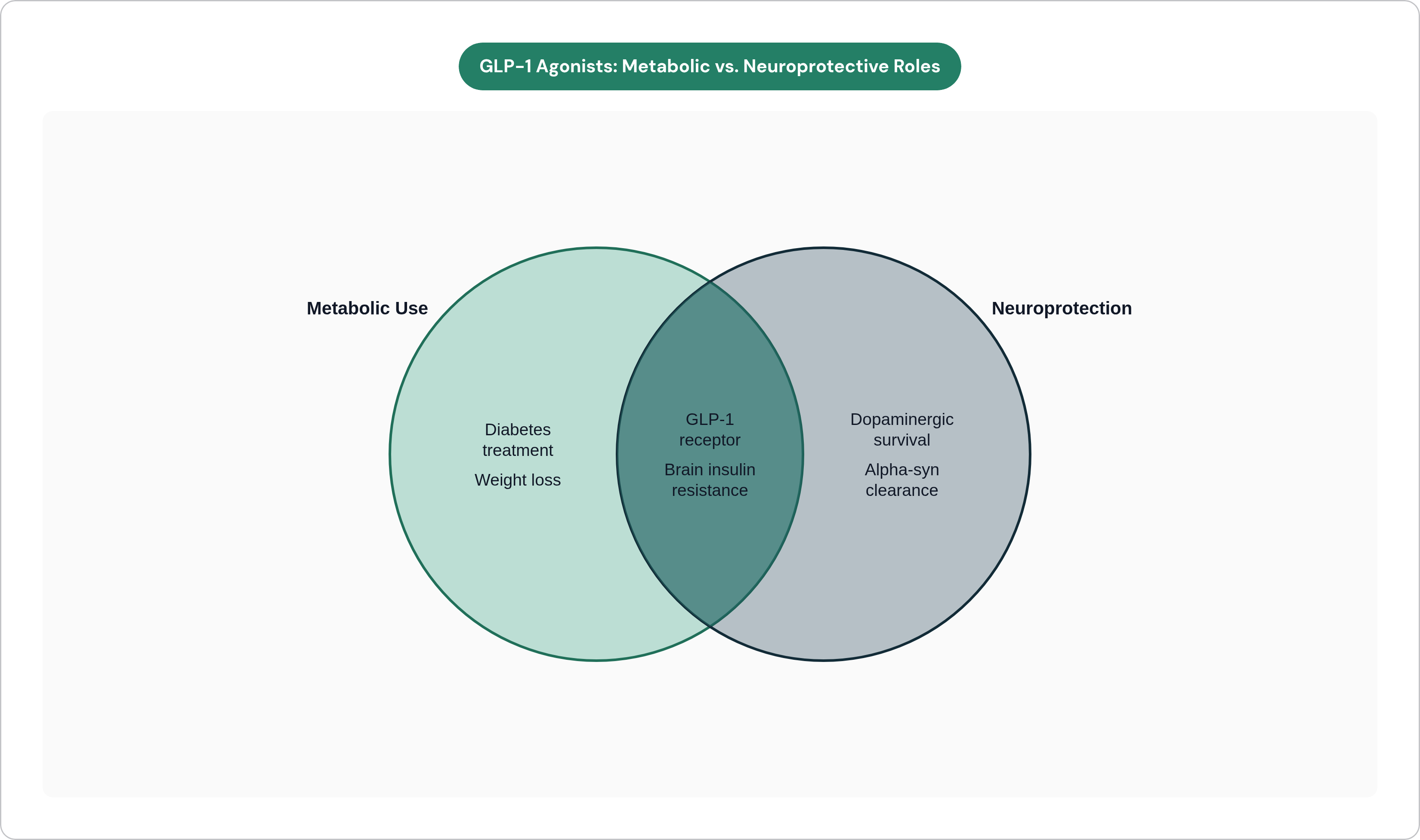
The molecular cascade from receptor activation to neuroprotection
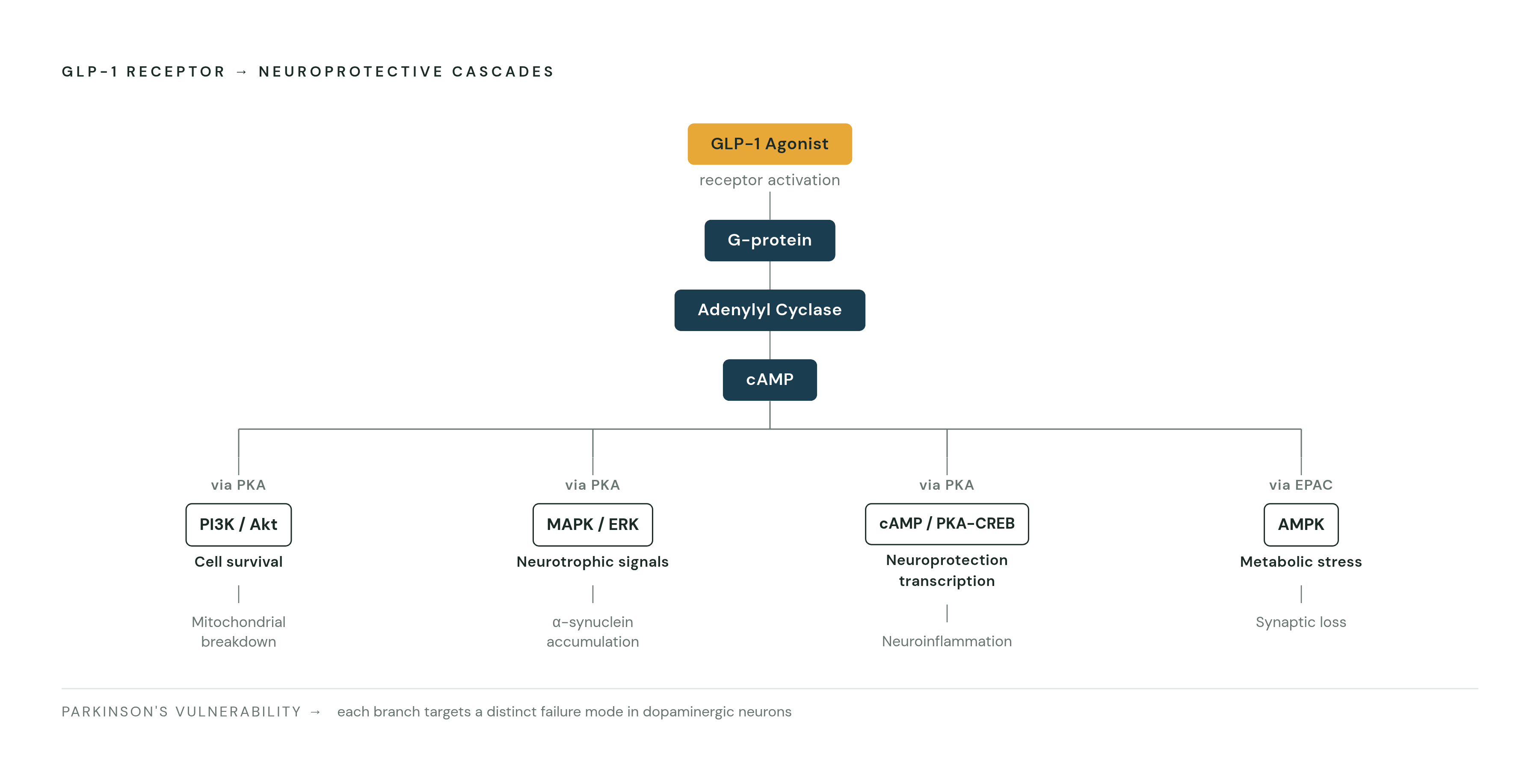
The signaling sequence is mapped out fairly well by now. Agonist binds receptor, receptor shifts shape, that activates a G-protein, which fires adenylyl cyclase, which makes cAMP. From there cAMP splits into two downstream effectors, protein kinase A and EPAC, and this is where the signaling starts lining up with actual Parkinson's biology, well past the level of a textbook cell-signaling diagram.
Four pathways branch off from that point, and it's worth naming them because each one lines up with a different way dopaminergic neurons fail. PI3K/Akt handles cell survival. MAPK/ERK carries neurotrophic signals. cAMP/PKA-CREB drives the transcription programs tied to neuroprotection, and AMPK responds to metabolic stress, which counts for a lot given how much energy these neurons burn just to stay alive. None of the four belongs exclusively to GLP-1 signaling; plenty of other receptors touch them. What's notable is that one receptor, once activated, pulls all four levers at once.
So what do those pathways build in practice? Mitochondrial upkeep, for one, since dopaminergic neurons run hot metabolically, which means anything that stabilizes mitochondria matters more here than in most other cell types. There's the clearance side too, proteostasis: misfolded alpha-synuclein is the defining lesion of Parkinson's, and better autophagy gives the cell a way to clear that protein before it piles up into Lewy bodies. There's a dampening effect on neuroinflammation as well. Chronic microglial activation in the substantia nigra used to get waved off as background noise; it now looks more like an active driver of neuron loss. Synaptic integrity holds up better too, and that matters because a lot of the functional damage in Parkinson's happens upstream of actual cell death, at the level of connections between neurons.
One thing lighter coverage of this mechanism tends to skip: none of it happens in a neuron acting alone. GLP-1 receptor signaling in astrocytes also regulates fatty acid oxidation and mitochondrial function, so whatever protective effect exists probably runs through the surrounding glial environment as much as through the dopaminergic neuron itself. That tracks, because glial dysfunction is now treated as core to how Parkinson's pathology progresses, riding alongside neuron-level damage rather than trailing behind it as a side effect.
Why do dopaminergic neurons draw the short straw in the first place? They're among the most metabolically demanding cells in the whole central nervous system, which leaves them exposed to oxidative stress, mitochondrial breakdown, and excitotoxic injury in ways most neurons simply aren't. Those are precisely the insults the four pathways above are built to counter. The strength of the argument isn't any single pathway; it's that several independent signaling routes converge on the same known weak points in the same vulnerable cell, which is a more coherent case than most neuroprotection stories manage to build.
What preclinical models show about GLP-1 agonists and dopaminergic neuron survival
Preclinical work across several different GLP-1 agonists tells a strikingly consistent story: less protein aggregation, more autophagy, better mitochondrial function, less neuroinflammation, synapses that hold together longer. That consistency, showing up across different labs and different compounds, deserves a pause.
The most detailed result comes from PT320, a slow-release formulation of exenatide, tested in the MitoPark mouse model. PT320 slowed disease progression in these animals through a traceable mitochondrial mechanism, preserving mitochondrial integrity by acting on two named proteins: Opa1, which blocks cytochrome c release by remodeling the mitochondrial cristae, and Fis1, which drives mitochondrial fission. That specificity marks the gap between a drug whose mechanism traces to identifiable molecular actors and one whose benefit stays harder to pin down.
Exenatide, liraglutide, and lixisenatide have all been run through multiple neurodegeneration models, and a finding that keeps showing up is reduced amyloid-beta plaque and tangle formation. That's relevant to Parkinson's specifically because alpha-synuclein and tau pathology overlap in certain Parkinson's subtypes. The two diseases aren't nearly as cleanly separated at the molecular level as their symptoms suggest.
There's an insulin thread worth pulling too. GLP-1 agonists that boost insulin signaling have shown benefit in Parkinson's animal models, which raises a question the field hasn't settled: is brain insulin resistance actually part of what drives Parkinson's, rather than just a comorbidity riding along in some patients? If it is, GLP-1 agonism starts looking like it's hitting something closer to a root cause than a downstream symptom.
The caveat here sets up everything that follows in the clinical section. Preclinical consistency is probably the strongest leg this whole story stands on, but turning a clean, repeatable result in a MitoPark mouse into a clear clinical benefit in an actual Parkinson's patient has been the hard part for nearly every neurodegeneration drug program that's ever existed. The mouse data holds up fine on its own terms. It just doesn't tell you the whole story, and it never has.
The clinical trials: what human data actually shows, and where it remains unresolved
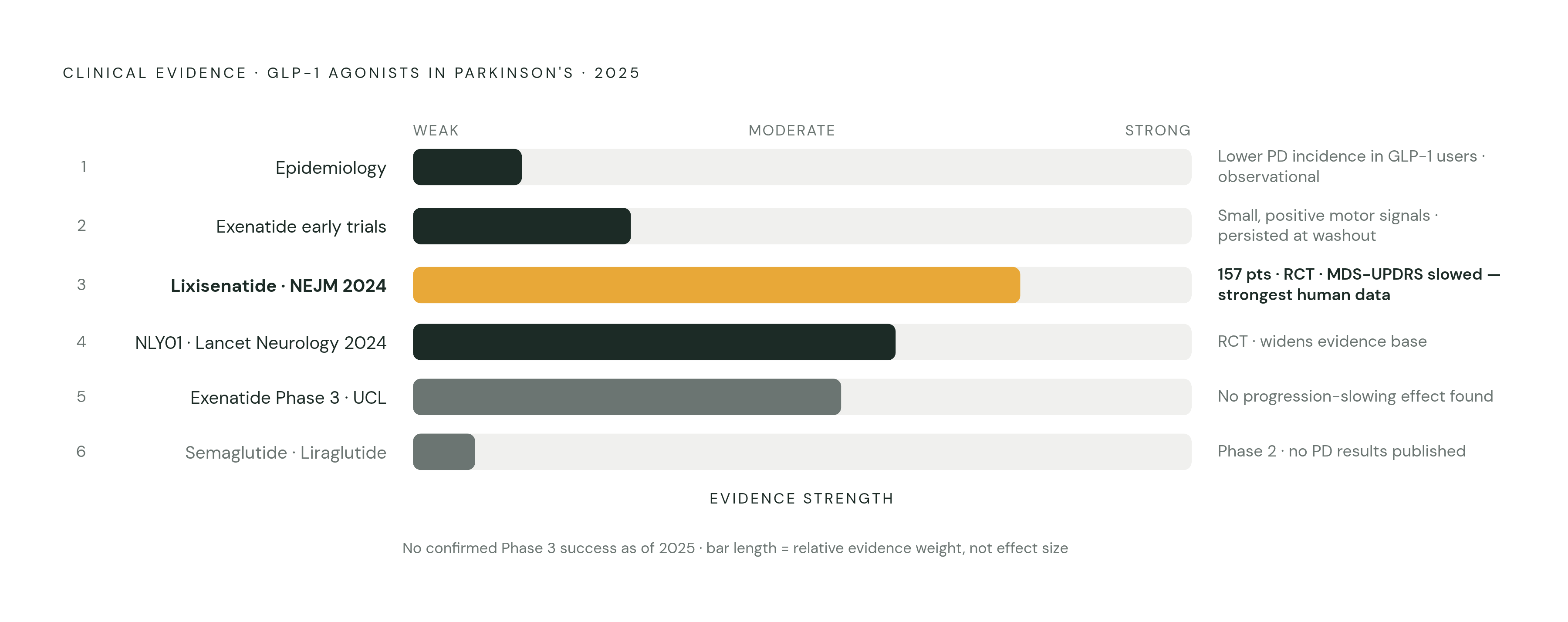
Exenatide produced the first real clinical signal in this space, and it's worth sitting with why that generated so much excitement at the time. Two earlier trials showed motor benefits, and in some cases cognitive benefits, that stuck around well after patients stopped taking the drug. That durability after washout was the key detail. Symptomatic drugs, the kind that just mask Parkinson's symptoms, don't leave effects behind once they clear your system, so a benefit that survives the drug leaving your body suggests something actually changed biologically, rather than something getting suppressed temporarily.
Then came a larger Phase 3 trial out of UCL, and it found no evidence that exenatide slowed disease progression. That's a real setback, and it took a lot of wind out of the earlier enthusiasm. Still, the gap between the early positive signals and the Phase 3 result teaches something rather than just disappointing everyone. The earlier trials were small, and small trials are prone to false positives and to overstating effect size. Phase 3 involved different dosing, a different trial length, a different patient population; any one of those variables, or some mix of them, could explain why a signal that looked real at n=20 didn't hold up at scale. That doesn't mean the biology was wrong. It means trial design in this space punishes small mistakes.
Lixisenatide gives the field its strongest evidence so far, published in the New England Journal of Medicine in 2024. The trial enrolled 157 early Parkinson's patients, randomized, double-blind, placebo-controlled, run over one year. On the primary motor outcome, measured with MDS-UPDRS Part III, lixisenatide kept symptoms from worsening relative to placebo over that year. "Prevented worsening" and "improved symptoms" point at different mechanisms entirely; a drug that improves symptoms is doing something symptomatic, while a drug that slows decline in a progressive disease is doing something closer to disease modification, which is exactly what a neuroprotection hypothesis would predict.
By conventional trial standards the primary endpoint reads as neutral. It didn't make patients better, only slower to decline. Is that a failure, though, or a mismatch between what the drug does and what the endpoint was built to catch? MDS-UPDRS Part III is a solid motor scale for what it measures, but whether it's sensitive enough to catch a slow biological rescue of dying dopaminergic neurons is a separate question the field hasn't answered yet. Safety held up in the trial, and a few secondary signals are worth watching, though not enough on their own to lean on hard.
NLY01 adds another data point: a randomized, double-blind, placebo-controlled trial published in Lancet Neurology in 2024, widening the evidence base past exenatide and lixisenatide specifically. Semaglutide and liraglutide, meanwhile, the two names most people actually recognize from this drug class, are sitting in Phase 2 trials for Parkinson's as of 2025 with no published results yet. Worth flagging on its own: the drugs everyone associates with GLP-1 agonism haven't produced Parkinson's data at all. Everything above comes from a different set of molecules entirely.
Stacked on top of the trial data is an epidemiological signal: population studies keep finding lower Parkinson's incidence among people on long-term GLP-1 receptor agonist therapy. Observational data can't prove causation by itself, since people who end up on these drugs differ from people who don't in ways that are hard to fully strip out. Still, sitting alongside the mechanism and the early trials, it adds real weight to the overall picture.
Put together, this is roughly the shape a scientific question takes right before it either gets confirmed or falls apart: consistent epidemiology, consistent mechanism, early trial hints, and still no definitive Phase 3 proof. The evidence sits somewhere between a strong confirmation and a settled failure. Honest answer: it stays there for now.
The Alzheimer's parallel: what a larger trial failure teaches the PD field
The EVOKE studies are the largest trials ever run with a GLP-1 drug in Alzheimer's, enrolling thousands of patients with mild cognitive impairment or MCI-stage dementia, followed for two years. Worth digging into, because it's the closest thing in scale and design logic to the Parkinson's trials, and the result carries a lesson the Parkinson's field can't afford to skip past.
The Phase 3 trials missed their primary endpoint. Semaglutide didn't slow disease progression, even though it moved certain Alzheimer's biomarkers in the right direction. That gap, biomarker improvement without a matching clinical outcome, keeps showing up across neurodegenerative drug development generally: a surrogate marker shifts, and the actual clinical trajectory doesn't follow it. If biomarkers were reliable stand-ins for real outcomes, this entire field would look different by now.
And here's the part that resists a clean read. Across multiple large population studies, people on GLP-1 drugs developed dementia at meaningfully lower rates than people on other diabetes medications. That observational signal was strong and consistent, yet the interventional trial, built specifically to test that signal under controlled conditions, didn't confirm it.
So what explains the gap? A few candidate explanations exist, and the truth is probably some mix of all of them rather than one clean answer. Disease stage at enrollment is a big one; EVOKE enrolled patients already at MCI or early dementia, meaning meaningful neurodegeneration had likely already happened by the time the drug showed up. Dose and trial duration are live variables too, though the deeper explanation might be conceptual: observational data captures something closer to prevention, people who happened to already be on these drugs before disease onset, while an interventional trial in symptomatic patients is really testing reversal or arrest of disease that's already established. Those are different biological questions, even though they get lumped together as if they're the same one.
What does that mean for Parkinson's? The Parkinson's trials run so far, lixisenatide included, have mostly enrolled early-stage patients, closer to that preventive window where the epidemiological signal actually seems to live. That's no guarantee of anything, but it does suggest enrollment stage might be the single most important design lever the field controls. The Alzheimer's result is a warning about what happens when that lever gets treated as secondary to dose or duration, and mostly what it does is sharpen exactly where the field needs to be precise.
Why getting GLP-1 peptides into the brain is the unsolved delivery problem underneath the clinical picture
How much of the drug given in these trials actually reaches the substantia nigra? That question doesn't come up nearly enough in coverage of this space. GLP-1 peptides are large, polar molecules, and molecules built that way cross the blood-brain barrier badly through ordinary routes. It's entirely possible the CNS effects seen in trials so far happened despite limited brain penetration, meaning partial engagement rather than the drug efficiently reaching its target.
Subcutaneous injection, the standard route for these drugs, dumps the peptide into peripheral circulation first, and whatever fraction eventually makes it to the substantia nigra is a small slice of what got injected. That matters for a neuroprotection hypothesis, because the whole cascade described earlier, PI3K/Akt, MAPK/ERK, PKA-CREB, AMPK, only fires if the receptor in that specific brain region actually gets engaged. If peripheral dosing can't reliably get enough drug there, the mechanism can be completely real and still underperform in practice, simply because the drug never shows up where it's needed.
This is where the nose-to-brain route starts looking like a real answer rather than a formulation curiosity. The olfactory and trigeminal nerve pathways offer a direct anatomical route into the CNS, bypassing the blood-brain barrier. Intranasal delivery can, in principle, reach Parkinson's-relevant brain structures more directly than a peripheral injection ever could, with the side benefit of lower exposure elsewhere in the body. That matters clinically since nausea, the top reason patients quit these drugs, comes from both gut-level effects and central mechanisms.
The catch is that peptides given intranasally need protection to survive the nasal environment long enough to reach deep brain targets, instead of degrading or getting cleared first. That's where nanoparticle carrier science becomes the piece that actually makes this work. Some groups are working on exactly this problem, building on nanoparticle delivery patents developed at Columbia University to get GLP-1 peptides to the brain via nasal spray, routing more of the dose toward brain targets while cutting peripheral exposure. Whether that approach eases the nausea problem while also raising CNS receptor engagement is still a hypothesis being tested, not a settled result, but it's the kind of engineering question the field needs someone actually working on.
For a disease sitting as deep in the midbrain as Parkinson's does, delivery route carries real weight as part of the therapeutic hypothesis itself, not a manufacturing footnote, since a drug with the right mechanism, tested at the wrong concentration in the wrong part of the brain, can fail a trial for reasons that have nothing to do with whether the underlying biology is correct.
What the convergence of mechanism, epidemiology, and early trials means for where the PD-GLP-1 field goes next
No single trial makes the case for GLP-1 agonists in Parkinson's, and no single trial should have to. The case comes from everything lining up at once: receptor density concentrated in exactly the brain region Parkinson's destroys, a mechanism running through four separate protective pathways instead of one, preclinical results that replicate across different compounds and models, a real epidemiological signal in human populations, and early clinical data that, mixed as it is, leans toward plausible rather than away from it.
The exenatide Phase 3 result stings, no way around that. It doesn't refute the underlying hypothesis, though, given how much dose, population, and trial length differed from the earlier positive studies. The lixisenatide data, all 157 patients of it, remains the strongest controlled human evidence available right now, and a neutral primary endpoint in a disease-modification trial isn't automatically a dead hypothesis. It might just mean MDS-UPDRS Part III was never built to catch the kind of effect this mechanism produces in the first place.
A handful of questions remain genuinely open, and they're the ones that will decide where this goes over the next five to ten years. Which patients actually respond, and does something like insulin resistance or diabetes status predict who benefits? What's the right window, true prevention, early diagnosis, or established disease, and does the Alzheimer's lesson about enrollment stage apply here with the same force? Which specific agonist, at what dose, through what route, actually reaches a meaningful concentration in the substantia nigra? And do dual or triple agonists, compounds like retatrutide that hit several metabolic receptors at once, do a better job against neuroinflammation and alpha-synuclein pathology than a single-target GLP-1 drug alone?
The money behind this isn't trivial either. The global GLP-1 receptor agonist market was valued at 66.4 billion dollars in 2025 and is projected to hit 185.3 billion dollars by 2033, growing at a compound annual rate of 12.4 percent. Even a small slice of that capital pointed at neurological indications specifically is a lot of scientific runway that's gone mostly untapped compared to the metabolic side that built the category in the first place.
The metabolic story for GLP-1 drugs is settled; nobody's arguing about that anymore. The open territory is neurological, Parkinson's, Alzheimer's, and increasingly addiction biology, and that's where the next decade of work on this receptor class gets written. For clinicians reading this, the practical takeaway is plain. GLP-1 agonists aren't standard of care for Parkinson's neuroprotection, and prescribing them for that purpose outside a trial isn't backed by current evidence. The biological case, receptor location, mechanism, preclinical consistency, and epidemiology taken together, is nonetheless strong enough to justify watching the Phase 2 and Phase 3 data still coming in closely.
The delivery question ties directly back into the disease-modification question too; the two are bound tighter than they look at first glance. Proving real neuroprotection in the substantia nigra may come down to getting the drug there more reliably than a subcutaneous injection currently manages, which means the next chapter of this story gets written as much by delivery science as by the pharmacology underneath it.