Needle-Free GLP-1 Delivery Routes Ranked by Clinical Readiness
Oral options now approved; patches and nasal routes still in early trials.
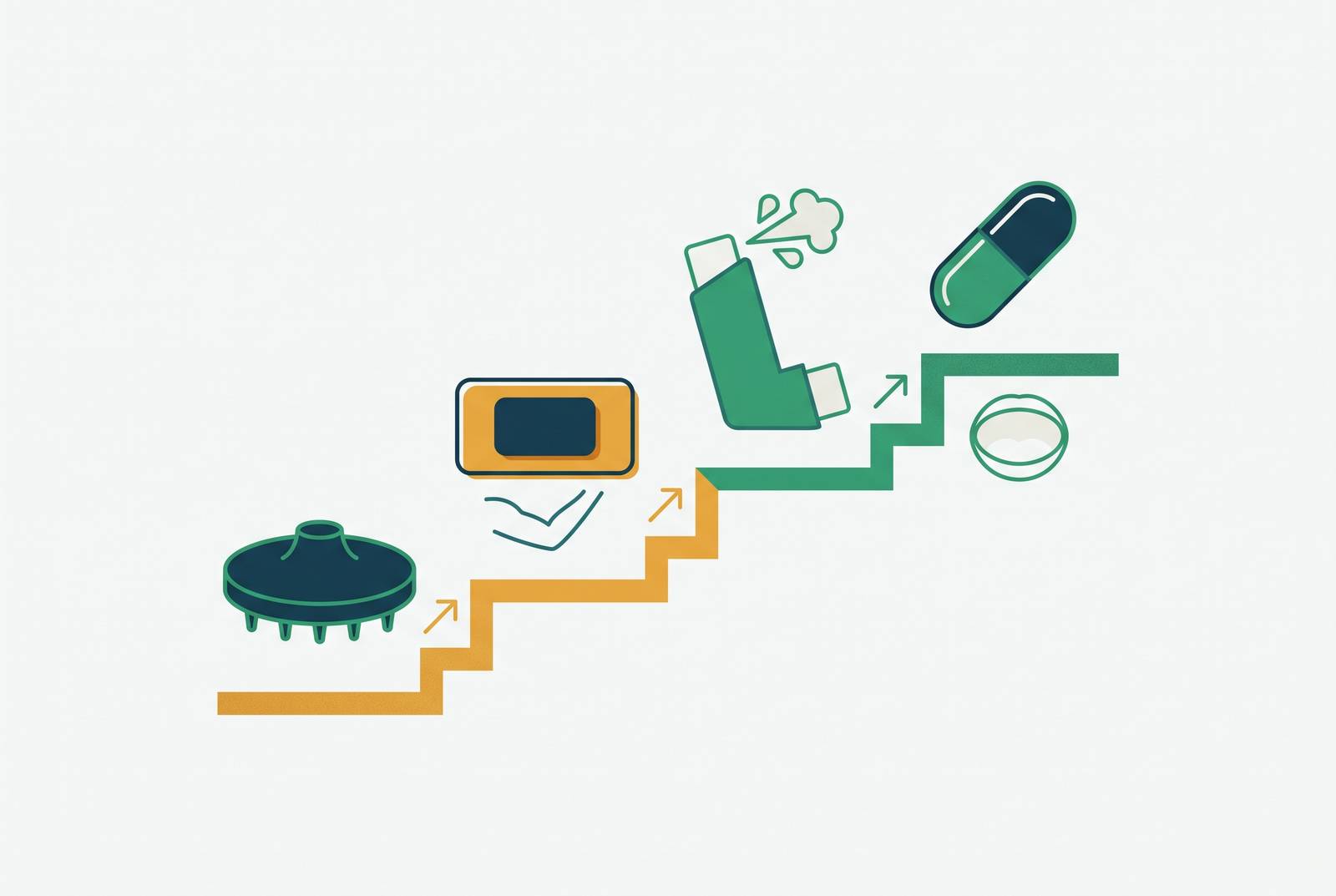
For needle-averse patients seeking GLP-1 weight treatment, oral semaglutide and orforglipron are approved oral options in the 2026 timeline described here. Microneedle patches are entering early human evaluation, while intranasal delivery remains largely a preclinical-to-translational frontier. Ranking these approaches by bioavailability, tolerability, trial stage, and remaining technical hurdles separates available treatment from promising research, without confusing readiness with which route may ultimately serve a particular patient or indication best.
Why so many GLP-1 patients stop treatment before it works
Injectable GLP-1 receptor agonists can produce substantial weight loss, yet many patients stop before they can realize the treatment’s potential. The gap is between efficacy and persistence. Injection burden, gastrointestinal side effects, and logistical friction all contribute to discontinuation, so the problem extends beyond whether the drug acts on its intended receptor. A treatment can succeed in a trial and still fall short in daily use because patients cannot comfortably or consistently continue it.
For someone deterred by injections, removing the injection may remove a barrier to treatment, but for someone who stops because of nausea, changing the route may not resolve the underlying difficulty. Gastrointestinal adverse events are a documented driver of discontinuation. A replacement for the needle must also help patients stay on treatment without adding a different burden.
The four criteria that determine where a delivery route actually stands
Bioavailability asks how much of the drug given reaches the blood. For peptide delivery, that question begins with fragility, including susceptibility to enzymatic degradation by DPP-IV and the resulting short half-life. A non-injectable formulation must address the relevant breakdown and absorption barriers. A convenient format is not enough if exposure is too low or inconsistent to support treatment.
Tolerability asks what patients have to put up with to stay on treatment. The GLP-1 class has a gastrointestinal adverse-event profile regardless of delivery route, so needle avoidance cannot stand in for evidence of better tolerance. The comparison is whether a route maintains, worsens, or could reduce that burden. Local effects, such as irritation where a patch contacts skin, introduce a separate question.
Trial stage gives the ranking its firmest basis in facts. Preclinical findings, Phase 1 evaluation, Phase 3 results, and regulatory approval represent different levels of evidence. Even a promising mechanism needs data from people. Conversely, approval establishes a level of clinical readiness that an experimental route has not yet reached.
Gastric delivery must overcome breakdown and poor absorption, skin delivery must cross an impermeable outer layer, and nasal delivery must contend with rapid clearance. These barriers differ in kind and severity. Together, the four criteria distinguish a solved formulation problem from a plausible route still awaiting clinical proof.
Oral peptide semaglutide: the only needle-free GLP-1 approved for weight management
The FDA approved oral semaglutide 25 mg for chronic weight management on December 22, 2025, with availability in early January 2026. At that point, it was the only approved needle-free GLP-1 option for that purpose. That distinction needs a date attached to it. Orforglipron’s later approval changes the number of approved oral options, but not oral semaglutide’s significance as proof that a GLP-1 peptide can be delivered without injection at clinical scale.
Its formulation addresses a specific engineering problem. Semaglutide is co-formulated with SNAC, sodium N-(8-[2-hydroxybenzoyl] amino) caprylate, to limit enzymatic breakdown and enable temporary transcellular absorption across the gastric mucosa. The stomach becomes an absorption site rather than simply an obstacle on the way to the intestine. The evidence for this approach is specific to gastric delivery of this particular peptide.
The compromise appears in administration and exposure. Oral semaglutide requires fasting administration, and its absolute bioavailability remains low compared with subcutaneous injection. Meaningful efficacy therefore does not imply equivalence at the dose level. Gastrointestinal adverse events remain consistent with the GLP-1 class, and mild dysesthesia has also been reported. For patients, the approved tablet removes an injection but preserves both a dosing routine and a need to consider tolerability.
Orforglipron: what a small-molecule GLP-1 agonist changes about the oral delivery problem
Orforglipron changes the problem by changing the molecule. It is a non-peptide, small-molecule GLP-1 receptor agonist, so it does not require SNAC, refrigeration, or a special fasting protocol. Is this the next step for oral GLP-1 treatment, or a parallel path with limited lessons for peptide formulation?
The ATTAIN-1 trial enrolled 3,127 adults with obesity over 72 weeks and reported its results in September 2025. Mean weight loss was broadly in line with other oral GLP-1 agents, with cardiometabolic improvements also reported. Those results show meaningful treatment effects. Gastrointestinal adverse events were much like those seen with the class, and five mild pancreatitis cases were reported. That signal warrants monitoring, although it did not halt the program.
The regulatory timeline changes its place in the ranking. The FDA accepted the new drug application in late 2025 and approved orforglipron as Foundayo on April 1, 2026. It therefore belongs with approved oral treatment in a map that also includes the June 2026 patch filing. Scalable manufacturing and the absence of a cold-chain requirement could broaden access, particularly in lower-resource settings. Yet its success does not demonstrate a transferable way to deliver other GLP-1 peptides, because bypassing a formulation obstacle is different from solving it.
Transdermal microneedle patches: the first needle-free route now entering human trials
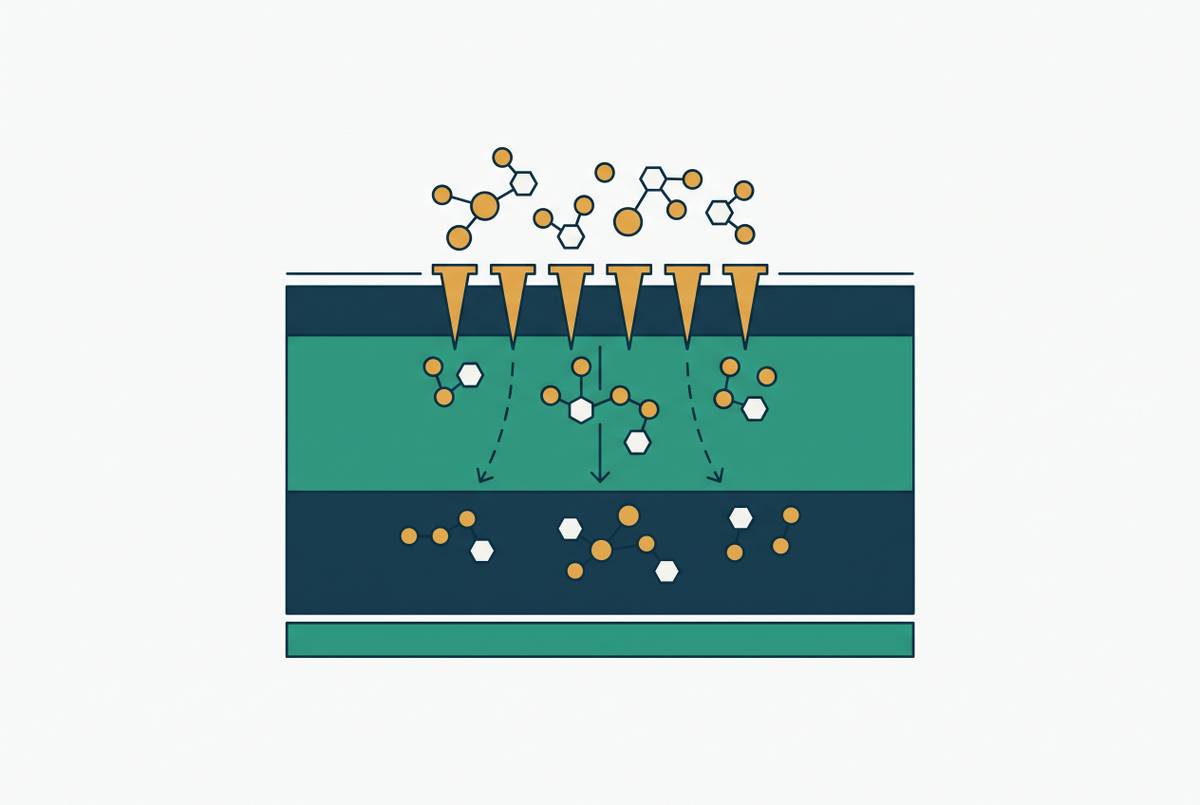
GLP-1 peptides are too large to pass through the stratum corneum without chemical penetration enhancers or physical disruption. Microneedle arrays create temporary microchannels through that outer layer, enabling peptide transport without reaching nerve-rich deeper layers. The intended advantage is less pain and infection risk than conventional subcutaneous injection. Here, “needle-free” describes an alternative to conventional injection that still requires physical intervention at the skin.
Terrestrial Bio, Inc. filed the first-in-human Phase 1 study VX-201-101, registered as NCT07673900, in June 2026. The study evaluates VX-201, a microneedle array patch that delivers semaglutide through the skin, with estimated completion in May 2027. The filing takes the approach from a preclinical proposal to a registered human study, while leaving open whether dosing has worked, how recruitment is going, and what the treatment outcomes are.
The central unknowns include the human dose-exposure relationship and local tolerability, while tolerability at scale remains a further question. Phase 1 is an early safety and exposure step. Whether transdermal bioavailability can support outcomes comparable with subcutaneous delivery remains unresolved. The patch’s position below approved oral therapies reflects that evidence gap.
Intranasal delivery: the highest biological rationale and the longest road to the clinic
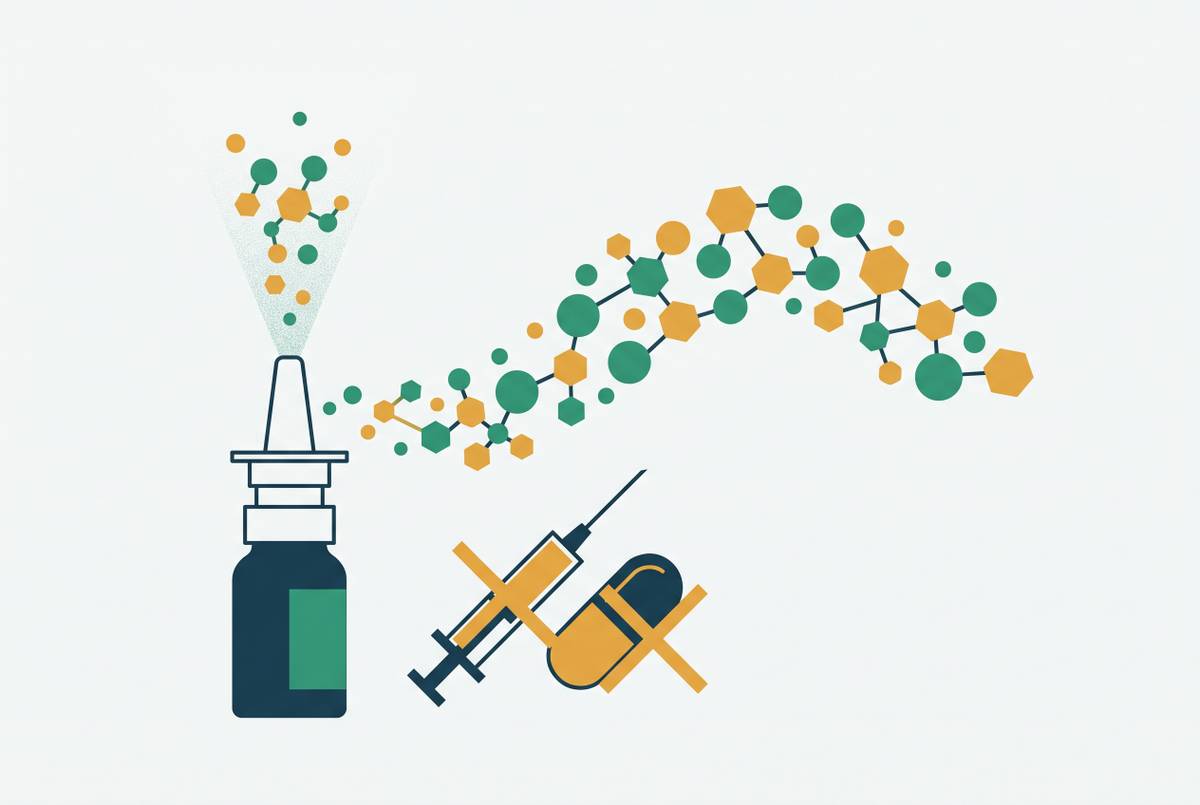
Intranasal delivery has a distinctive rationale for targeting the brain. The olfactory and trigeminal nerves provide an anatomical connection from the nasal cavity to the brain, offering a path that bypasses the gastrointestinal tract and the blood-brain barrier. Among the approaches ranked here, this makes direct CNS targeting its defining aim, distinct from reproducing systemic exposure more conveniently with a tablet or patch.
Preclinical findings give that rationale a measurable foundation. In mice, brain uptake of intranasally administered GLP-1 was more than five times higher than after intraperitoneal injection. The comparator and species are essential qualifications. This result gives researchers reason to test whether nasal delivery can reliably get enough drug to the intended tissue to be useful.
The nose is also an unforgiving delivery environment. Mucociliary clearance removes deposited drug within minutes, enzymes in the nasal mucosa can degrade peptides, and the absorptive surface is small relative to the gastrointestinal tract. Peptide physicochemical properties add further constraints. Lipid-based, polymeric-based, protein-based, and inorganic nanoparticles, together with mucoadhesive systems, are under preclinical investigation as ways to address these barriers. Foundational nanoparticle intellectual property from academic settings provides engineering infrastructure, but not a substitute for human exposure data.
The clinical history requires a careful qualification. Nakazato et al. published a human intranasal GLP-1 trial in Diabetes Care in 2014, so describing the entire route as never tested in humans would be inaccurate. Nevertheless, the field remains largely a preclinical-to-translational frontier. There is no established human dose-exposure-response curve for any intranasal GLP-1 analog in the evidence described here, making timelines for investigational new drug applications speculative. The route ranks low because much remains to be proved, even though its biology is of interest.
Why the brain is the next frontier for GLP-1 therapy regardless of delivery route
GLP-1 receptors are expressed in the hippocampus and prefrontal cortex, and more research is looking at the roles they may have in cognitive protection, addiction suppression, and mood regulation. Preclinical work links GLP-1 agonism with reduced brain inflammation, improved neuronal insulin signaling, and reduced amyloid and tau accumulation. These findings suggest mechanisms but do not establish that targeting them will improve neurological outcomes in people.
Cheng et al.’s 2025 multi-cohort analysis covered over a hundred thousand people and reported an adjusted hazard ratio of 0.90 for dementia incidence among those who used GLP-1RA. Other large observational cohorts in 2025 reported associations with lower risks of ischaemic stroke and all-cause mortality. An association between treatment use and a lower recorded risk cannot by itself show that the treatment produced the difference. It also does not identify the best delivery route.
The Phase III EVOKE and EVOKE+ trials address whether GLP-1RAs can slow cognitive decline in early symptomatic Alzheimer’s disease. Reaching the brain more directly may be strategically useful, but greater brain uptake alone cannot establish neurological benefit. A CNS-targeted program must connect formulation, exposure, and a relevant clinical outcome.
This distinction gives the ranking a forward-looking dimension. A route can be far from routine clinical use yet pose an important question that approved systemic therapies do not directly answer. For intranasal GLP-1 delivery, that question concerns whether targeting CNS receptors more directly can support neurological applications. The rationale is mechanistic, while the benefit remains to be demonstrated. Nanoparticle and mucoadhesive platforms are enabling technologies for testing that proposition.
Reading the ranking as a map: what each tier tells clinicians, patients, and researchers right now
For clinicians, the practical lesson is to separate availability from research promise. In the 2026 timeline used here, oral peptide semaglutide and orforglipron are in the approved tier, though their structures allow oral delivery in very different ways. The patch sits at early human evaluation, and intranasal delivery remains largely translational despite its published human precedent. Four approaches do not require four distinct regulatory ranks. Forcing them into separate tiers would conceal the later oral approval.
Someone deterred by injections has a different problem from someone deterred by nausea, and an oral route does not erase class-level gastrointestinal effects. Intranasal delivery is not an established weight-management alternative. Shared decision-making therefore depends on distinguishing an available route change from an experimental approach without a dependable treatment timeline.
For researchers, the June 2026 patch filing marks a clear boundary to watch. That program now needs to answer questions about human exposure and local tolerability, while intranasal development has further to go to connect its biological rationale with clinical evidence. Sublingual delivery is named among the field’s possible approaches, but the supplied evidence does not support a readiness assessment for it. A rigorous map needs room for unranked possibilities as well as ranked programs.
The longer-term question is which route suits which indication. Oral peptide delivery has established clinical feasibility, small molecules bypass part of the formulation challenge, and skin and nasal platforms are testing different ways through biological barriers. Lionbio, a nasal-spray nanoparticle biotech reformulating GLP-1 peptides as a nose-to-brain therapy for patients who abandon injections due to nausea, is one program working in that last category. Their development is therefore a set of parallel inquiries. The next useful advance will connect a route’s distinctive mechanism to evidence for the patients and outcomes it is intended to serve.
Sources
- From needles to pills: oral GLP-1 therapy enters the obesity arena
- Designing GLP-1 delivery: structural perspectives and formulation approaches for optimized therapy
- Oral GLP-1-Based Therapeutics in the Obesity–Metabolic Syndrome–Diabetes Continuum: Translational Advances, Clinical Barriers, and Emerging Strategies
- Bridging Efficacy and Adherence in Glucagon-Like Peptide-1 Receptor Agonist Therapy: The Emerging Role of Oral Agents