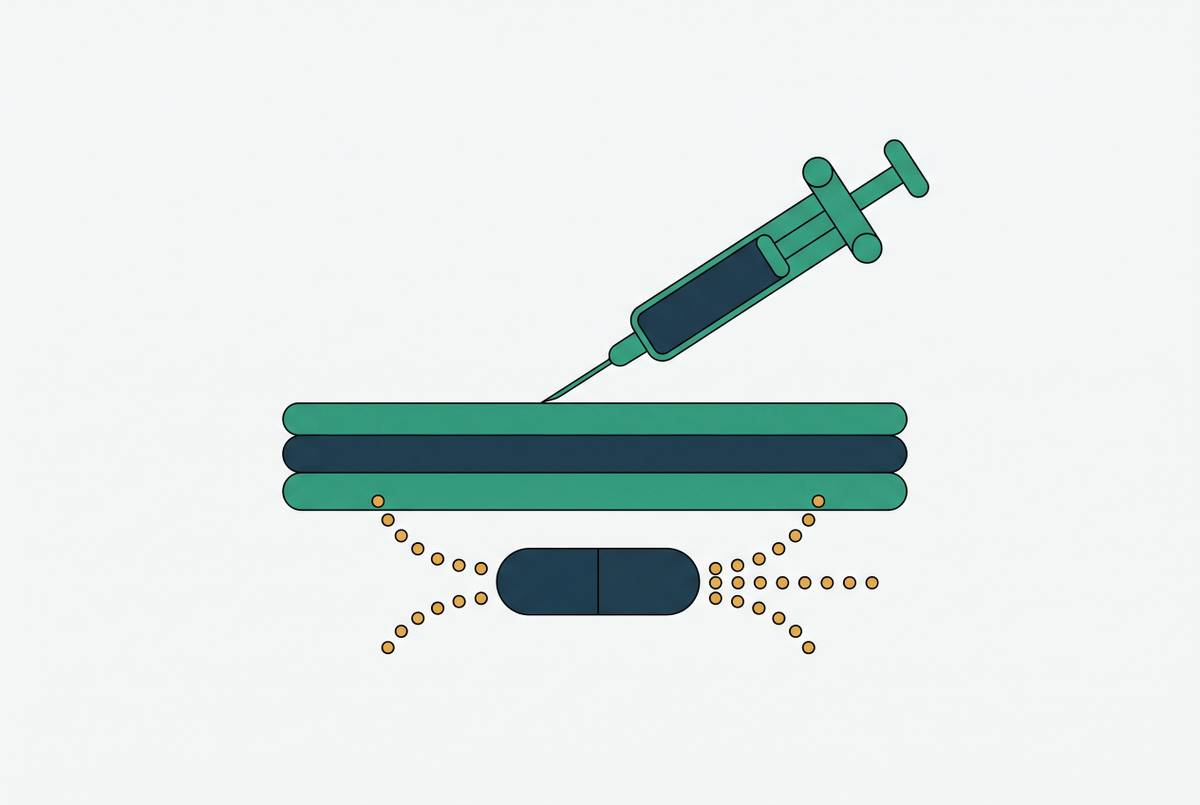
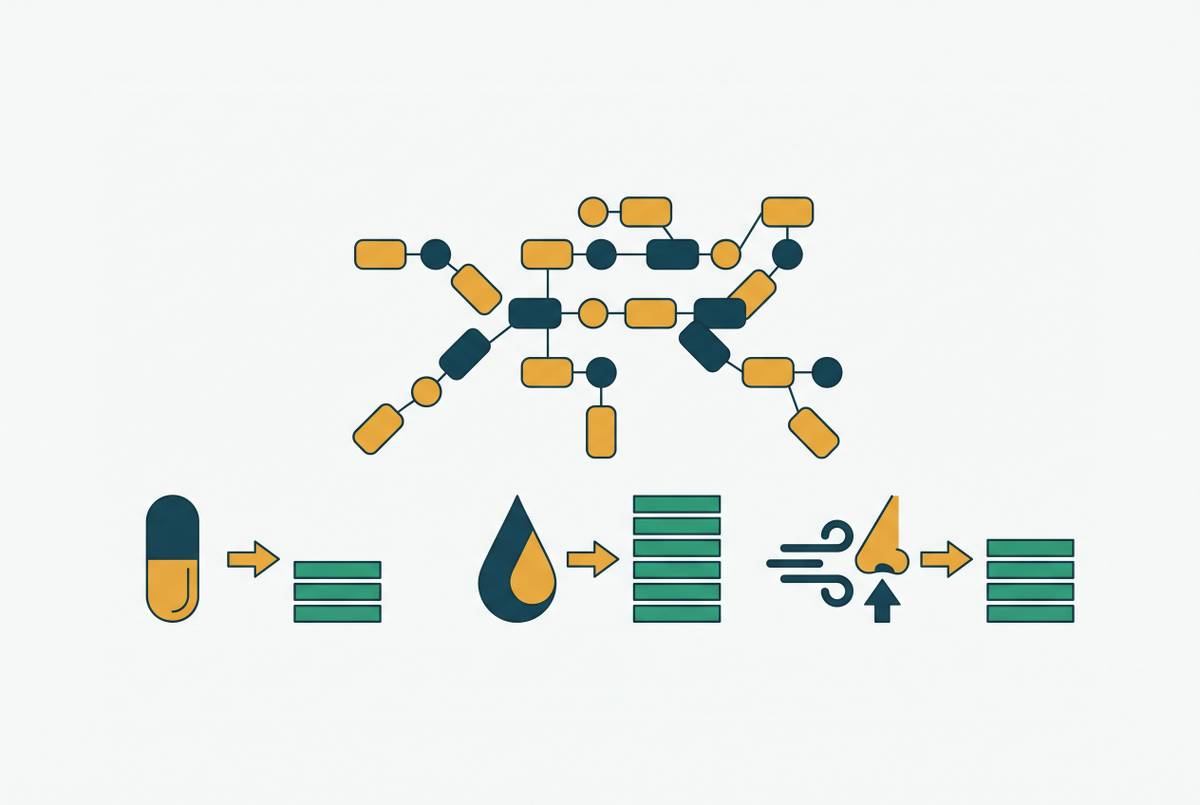
Intranasal GLP-1 Delivery as the Clinical Bridge for Needle-Averse Patients Who Fail Oral Semaglutide
A needle-free nasal spray could reach patients' brains where pills and injections both fail.
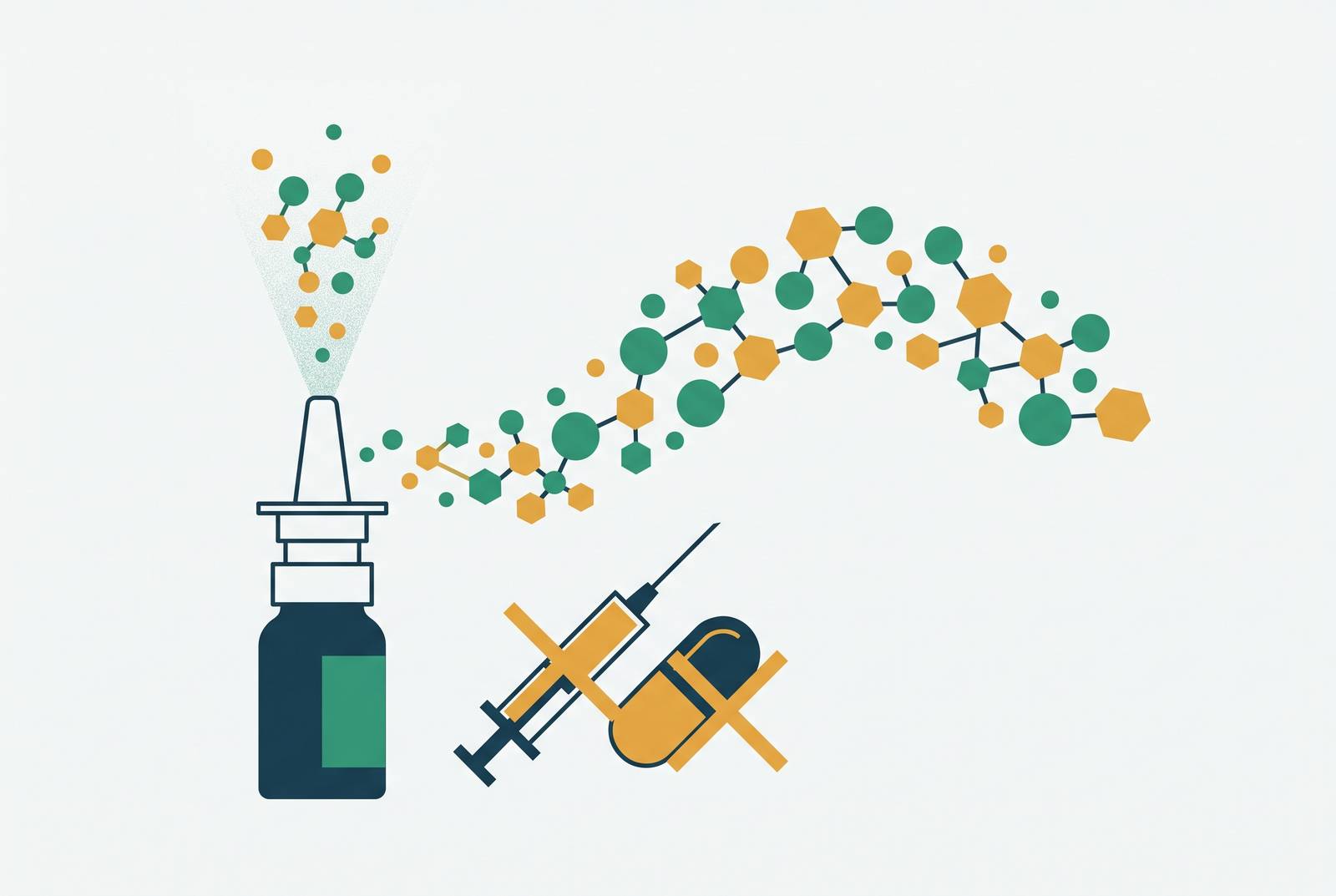
Most patients who start a GLP-1 do not stay on it long enough to see the full benefit, and the reasons are not mysterious: injections are hard to sustain for needle-averse patients, and the oral alternative, an oral tablet form of the same drug class, trades one burden for another without fixing the underlying pharmacology. This piece lays out why that happens, and it shows why patients who tried both routes and stopped are now turning to intranasal delivery with engineered nanoparticles as a serious answer.
Why patients stop GLP-1 treatment
Clinical trials make GLP-1 receptor agonists look like a settled success. Real-world prescribing data tell a rougher story of repeated early exits, each one closing off the chance that the drug had time to work.
Part of the answer is pharmacological. Trial efficacy and real-world durability are measuring two different things, and the gap between them is where patients fall out of care.
Two groups make up most of that attrition. So if injections are a dead end for one group and oral tablets disappoint the other, what is left to try?
Why oral semaglutide fails some patients
Oral semaglutide gets a peptide drug, a molecule class that normally cannot survive the gut, into systemic circulation. For patients who simply want to avoid a needle, it offers a genuine option.
The catch appears in how the drug has to be taken. Rybelsus requires a strict fasting ritual: no food, no coffee, no other medications, and no more than 120 mL (4 oz) of water, or absorption drops sharply enough to undercut the dose. If you miss the window even occasionally in daily life, you miss the drug's effect, and you end up with the same kind of early dropout seen with injections, just routed through a different failure point. Long-term cardiovascular outcome data specific to the high-dose oral formulation used for obesity are still pending, and real-world adherence data for that formulation are thin, so clinicians are prescribing it without the evidence base already built up around injectables.
Switching from a needle to a pill does not change what the drug does once it is in the bloodstream. If a patient stopped injections because the nausea was intolerable, the oral route delivers the same signal at a therapeutically relevant dose, just through a different door. Oral semaglutide swaps the needle for a fasting schedule, but the pharmacokinetic profile that causes the side effect stays the same. That is the opening for a delivery route built around a different target entirely: the brain, not the bloodstream.
How the nasal route bypasses the blood-brain barrier
The blood-brain barrier stops nearly all large biopharmaceuticals and most small molecules from reaching the central nervous system at doses that would do anything therapeutically. It is the reason systemic GLP-1 drugs, however effective peripherally, struggle to act directly on the brain circuits that govern appetite and satiety. The nasal cavity offers a way around that wall by using nerve anatomy that was never behind it.
Drath and colleagues, writing in Translational Neurodegeneration in 2025, describe two separate routes a drug can take from the nose to the brain. The first runs along the olfactory nerve: receptor neurons send projections called fila olfactoria through the cribriform plate directly into the olfactory bulb, and molecules also travel outside the cells, along the space surrounding these nerve bundles, which connects to the subarachnoid space and from there to cerebrospinal fluid. That second path explains why some peptides given intranasally turn up in CSF within minutes. The second route runs through the trigeminal nerve, which innervates the much larger area of ordinary nasal lining that a standard nasal spray reaches, and connects to the brainstem through the trigeminal ganglion, covering far more surface area than the olfactory path alone.
The evidence for this is no longer confined to animal studies. A 2025 study by Winterdahl and colleagues used PET imaging with radiolabeled oxytocin to track intranasal peptide movement in healthy human volunteers in real time, and detected brain uptake within tens of minutes of dosing. That is a meaningful advance: it moves nose-to-brain delivery from a plausible anatomical story into something observed directly in people.
One caveat has to be addressed honestly. That anatomical gap is the single biggest obstacle to translating rodent nose-to-brain results directly into human outcomes, and any program that leans on animal data has to reckon with it. The anatomy favors brain delivery when a drug can be kept in the right place long enough to use it, and engineering has to solve that holding problem next.
What nanoparticle engineering adds to intranasal delivery
Anatomy alone will not get a GLP-1 peptide into the brain. Three separate barriers stand in the way before a peptide dosed into the nose ever reaches a neuron: enzymes in the nasal mucosa break down unprotected peptides on contact, mucociliary clearance sweeps most of what is deposited out of the nasal cavity within minutes (a mechanism Khan and colleagues document in their 2024 review), and the physical properties of GLP-1 peptides themselves, their size, their polarity, their general fragility, limit how much of the drug can passively cross the epithelium even if it survives the first two problems.
Nanoparticle carriers are built to solve all three problems at once. A well-designed carrier protects its peptide cargo from enzymatic attack, sticks to the mucosal surface long enough to resist clearance, and ferries the drug across the epithelial layer through active transport mechanisms. Several carrier types are now well characterized. Solid lipid nanoparticles, built from biocompatible lipids and surfactants, allow controlled release and improve bioavailability; the literature places the effective size range for intranasal SLNs aimed at the brain between 65 and 210 nanometers. Mucoadhesive polymer systems work differently: gelatin nanoparticles use their amino and carboxyl groups to form hydrogen bonds and electrostatic links with mucin, extending how long the particle sits in the nasal cavity, and chitosan nanoparticles show similar adhesive behavior, with one murine model recording brain tissue drug concentrations 20 times higher than the oral comparator. Cell-penetrating peptides add a third mechanism: Akita and colleagues showed that pairing intranasal exendin-4 with the cell-penetrating peptide L-penetratin sharply increased how far the GLP-1 analogue distributed through the brain, and four weeks of daily dosing with exendin-4, L-penetratin, and supplemental insulin produced measurable improvement in spatial learning on the Morris water maze test, a result suggesting the CNS exposure achieved was enough to produce a functional effect, not just a detectable one.
Surface chemistry ties these mechanisms together, because a nanoparticle's outer coating decides how well it adheres to mucosa and how efficiently it crosses. None of this is simple chemistry, and none of it works by accident. But across SLNs, mucoadhesive polymers, and cell-penetrating peptide conjugates, the preclinical results point in the same direction: the engineering problems standing between the nose and the brain are specific, well-defined, and, in animal models, solvable.
What preclinical and early-stage programs have demonstrated so far
Several independent research programs are now generating evidence that nose-to-brain nanoparticle delivery of GLP-1 peptides can achieve brain exposure that injectable and oral routes do not reach, each working with a different formulation approach but converging on similar conclusions.
Lionbio, a spinout from Columbia University, has built an extensive portfolio of patented nanoparticle delivery intellectual property, with a team whose collective patent and academic citation record is substantial. Lionbio's platform is not designed as a single-indication product. You can expect the same nose-to-brain nanoparticle technology to extend into neurological indications, including addiction and dementia, where systemic GLP-1 exposure has produced epidemiological signals of benefit but not the direct CNS penetration needed to confirm a mechanism.
MetP Pharma has produced its own preclinical confirmation of the concept. A 2025 study in rats using the company's proprietary nasal technology found that intranasal semaglutide produced brain-to-plasma ratios consistently greater than 1, a result the company describes as nearly impossible to reach through subcutaneous, oral, or standard nasal dosing. Brain exposure rose proportionally with dose and appeared quickly after administration, and the company is now pursuing partnerships to move brain-targeted GLP-1 programs further through preclinical and clinical development.
Landmark Medicines Ltd., based in Loughborough, UK, announced in September 2026 that it plans to move its proprietary nasal delivery platform toward a human volunteer study, with GLP-1 receptor agonists, semaglutide among them, chosen as the first therapeutic application. Landmark plans to attend BIO-Europe 2026 in Cologne, Germany, November 9 through 11, to pursue development, licensing, and partnership discussions.
Nano PharmaSolutions Australia has already completed human testing of a related concept. Its Phase 1 APPROVE trial, a randomized, double-blind, placebo-controlled study of intranasal NT-301 in healthy volunteers, followed by an open-label comparison against subcutaneous apomorphine, finished in December 2025, making it one of the few completed human studies of an intranasal nano-formulated neuroactive peptide.
None of this is happening in regulatory darkness. Nose-to-brain delivery already has market precedent in neurology: Nayzilam, a midazolam nasal spray dosed at 5 mg, developed by Proximagen LLC and later acquired by UCB, Inc., is approved for acute treatment of seizure clusters, and Valtoco is a second approved intranasal CNS drug. Those approvals show that regulators already accept nose-to-brain delivery as a workable path for CNS-active molecules, which lowers the regulatory novelty risk facing GLP-1 programs that follow the same route.
The neurological opportunity that intranasal delivery opens and injections cannot reach as effectively
If intranasal GLP-1 delivery only fixed the problem of patients skipping or quitting their injections, it would already be worth the engineering effort described above. But the brain circuits involved in satiety are not the only ones that express GLP-1 receptors, so that opens a second line of inquiry beyond weight management.
GLP-1 receptors are present in the hippocampus, the prefrontal cortex, and the mesolimbic reward system. Large pharmacoepidemiological studies in patients with type 2 diabetes and in patients with obesity have found significantly lower rates of all-cause dementia, Alzheimer's disease, Lewy body dementia, vascular dementia, and Parkinson's disease among GLP-1 receptor agonist users. These are population-level associations, but they are strong enough to motivate direct mechanistic study.
But association is not proof of mechanism, and the clinical trial record complicates the picture. A 2025 meta-analysis of randomized controlled trials in Alzheimer's disease found that GLP-1 receptor agonists did not improve memory or cognition compared with placebo. A more careful reading, and the one the evidence favors, is that systemic GLP-1 drugs never reached the brain at concentrations high enough to test the hypothesis properly. Impaired insulin signaling in the brain is strongly linked to Alzheimer's disease, and GLP-1 receptor agonists that achieve real CNS entry have been proposed to improve insulin sensitivity locally within neural circuits. That is a hypothesis, not an established treatment effect, and it is precisely the kind of question that requires a delivery route capable of generating CNS concentrations that injections and oral tablets have not been able to produce. Intranasal delivery is the tool that would let researchers find out whether the epidemiological signal reflects a real, direct brain mechanism, rather than a claimed cure for Alzheimer's or addiction.
The strongest objection to preferential brain targeting
The central assumption behind all of this, that getting more drug into the brain is better than leaving it in peripheral circulation, has not been proven and deserves a direct challenge.
The strongest version of the objection runs like this: if the dementia risk reduction seen in GLP-1 users comes mainly from systemic improvements, better vascular health, reduced insulin resistance, lower inflammation, all of which improve through peripheral GLP-1 receptor activation, then redirecting drug exposure toward the brain and away from peripheral tissue could reduce the metabolic benefit without adding a comparable gain in the brain. The 2025 finding that GLP-1 receptor agonists failed to slow progression in patients with established Alzheimer's disease, despite strong observational signals around prevention, fits this objection well. So the protective effect may sit upstream, in metabolic improvement, and not downstream, in direct neuroprotection.
That objection is serious, but it leaves one question unanswered. But it does not explain why the GI side-effect burden, the biggest driver of real-world treatment dropout documented earlier in this piece, would stay unchanged if drug exposure shifted away from the peripheral high-plasma-concentration profile that current injectable and oral formulations produce. The nausea argument does not depend on resolving the neurodegeneration debate. It stands on its own, grounded in the pharmacokinetic mechanism Khan and colleagues describe.
The field needs data now, not conviction. Human pharmacokinetic studies need to show that nanoparticle-enabled intranasal delivery reaches CSF or CNS concentrations meaningfully higher than subcutaneous or oral comparators, at equal or lower systemic exposure. The Winterdahl PET study gives you a methodology to measure that directly, and the APPROVE trial gives you a workable clinical trial design you can build from. And longer-term adherence data are needed specifically in patients who already tried and abandoned injectable or oral formulations, because the real value of intranasal delivery as a clinical bridge is ultimately a question about sustained behavior, not only about where a drug ends up in the body.
Precedent already reduces the regulatory risk. Nayzilam and Valtoco show that intranasal CNS drugs can clear approval. The clinical validation specific to GLP-1 delivered this way has not been done yet, and that work is what separates a compelling mechanistic case from a proven therapy.
Sources
- Intranasal delivery of glucagon-like peptide-1 to the brain for obesity treatment: opportunities and challenges: Expert Opinion on Drug Delivery: Vol 21 , No 7 - Get Access
- Nose-to-brain drug delivery: from bench to bedside - PMC
- Effective nose-to-brain delivery of exendin-4 via coadministration with cell-penetrating peptides for improving progressive cognitive dysfunction
- Editorial: Intranasal Delivery of Central Nervous System Active Drugs: Opportunities and Challenges
- Oral Semaglutide Therapy Reduces Cardiovascular Events in Patients with Type 2 Diabetes: Deciphering the Soul of the Study
- From needles to pills: oral GLP-1 therapy enters the obesity arena