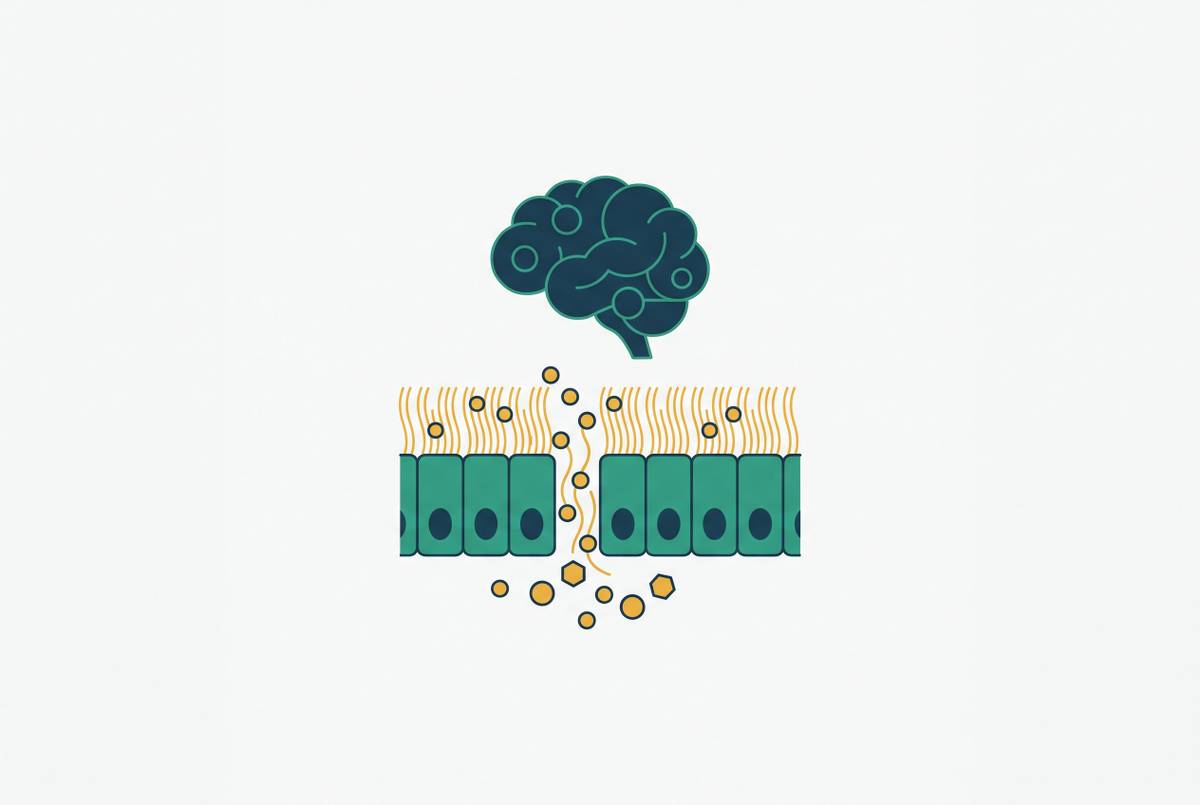
Approved Intranasal CNS Drugs and Their Delivery Mechanisms
Intranasal delivery bypasses the blood-brain barrier through direct neural pathways in the nose.

Most drugs that could treat brain disease never get the chance, because the blood-brain barrier stops them before they arrive. That single fact, more than any shortage of promising molecules, explains why so many neurological and psychiatric conditions remain undertreated. The barrier is a continuous sheet of non-fenestrated endothelial cells sealed together by tight junctions, backed by pericytes and wrapped in astrocyte end-feet. It behaves less like a filter and more like an active gatekeeper, deciding molecule by molecule what gets through and what gets turned away.
Roughly 98% of small-molecule drugs cannot cross the blood-brain barrier at meaningful concentrations, and the figure for large biologics is vanishingly small. Even a molecule lipophilic enough to slip across the endothelial membrane often meets efflux transporters like P-glycoprotein and the multidrug resistance protein family waiting on the other side, ready to pump it right back out. The barrier doesn't just block. It expels.
Peptides and other biologics face a second layer of trouble stacked on top of that. Enzymatic degradation begins once a peptide enters systemic circulation, and renal and hepatic clearance chip away at whatever survives that. The usual workaround, pushing oral or intravenous doses higher to compensate for these losses, tends to invite the systemic toxicity that limits how high a dose can safely climb. Raising the dose enough to get a therapeutic amount into the brain makes the rest of the body pay the bill.
The clinical consequence is a long list of CNS diseases poorly served because there's no reliable way to get candidate molecules where they need to go. Alzheimer's disease, Parkinson's disease, epilepsy that doesn't respond to oral drugs, treatment-resistant depression, and acute opioid overdose in field settings all sit on that list. As populations age, the incidence of CNS disease keeps climbing, which sharpens the urgency around a delivery problem that has sat unresolved for decades.
None of this makes the barrier the final word, though. Anatomy has already built a workaround into every human skull, sitting in plain view and largely unexploited by conventional pharmacology: the nasal cavity.
The nasal cavity's anatomy as a direct channel to the CNS
The nasal cavity is the only place in the human body where the central nervous system makes direct contact with the outside world. Two cranial nerve systems, the olfactory nerve and the trigeminal nerve, run from inside the nose into the brain and skull without ever routing through the bloodstream. That single anatomical fact is the reason this entire piece exists.
Take the olfactory route first, since it does most of the heavy lifting. Olfactory sensory neurons have their dendrites sitting right in the mucus layer lining the olfactory epithelium, exposed directly to whatever passes through the nasal cavity. Their axons travel up through tiny perforations in the cribriform plate, the bone separating the nasal cavity from the cranial vault, and terminate in the olfactory bulb, which is brain tissue itself. That's a continuous neural wire running from the inside of the nostril to the surface of the brain, with no blood-brain barrier standing anywhere along it. The trigeminal nerve offers a second, parallel path, relevant mostly for drugs landing in the lower and more posterior regions of the nasal cavity rather than the upper olfactory zone.
Other transport routes exist, though they matter less. Some drug absorbed in the nasal cavity enters systemic circulation through nasal blood vessels, but that path just re-exposes the drug to the blood-brain barrier it was trying to dodge in the first place, so calling it a workaround is generous. Lymphatic drainage offers a third, slower route into the CNS. At the cellular level, macromolecules cross the epithelium through clathrin-mediated endocytosis, caveolae or lipid-raft internalization, macropinocytosis, and receptor- or adsorptive-mediated transcytosis, mechanisms that matter enormously once the conversation turns to peptides and nanoparticles later on.
How much of the nose can actually be put to use this way? Less than the anatomy diagrams suggest. The olfactory epithelium, the tissue doing the real work of direct-to-brain transport, covers only about 5 to 10 square centimeters, tucked into the upper nasal cavity where a standard nasal spray doesn't reliably land. Dose volume is capped too, at roughly 100 to 150 microliters per nostril, which favors drugs potent in small amounts and works against anything that needs a bigger dose to do anything. The mucus layer covering the whole cavity gets swept away and renewed by mucociliary clearance about every 10 to 20 minutes, leaving a drug a narrow window to get absorbed before it's carried off toward the throat and swallowed.
So the anatomy hands formulation scientists a real route into the brain, wrapped around three hard constraints: small surface area, small volume, short residence time. Every approved intranasal CNS drug on the market is, in effect, a solved engineering problem against those three limits, and each one solved it in its own way.
What the approved intranasal CNS drugs demonstrate
Esketamine, sold as Spravato, is the clearest illustration of what the intranasal route can do for a lipophilic small molecule, and it deserves more credit than it usually gets for proving the concept. Approved by the FDA as a nasal spray, and in January 2025 cleared specifically as monotherapy for treatment-resistant depression in adults, esketamine reaches an intranasal bioavailability of around 48%, against roughly 8% when taken orally. That's close to a six-fold improvement just from skipping first-pass hepatic metabolism, though even at 48%, more than half the dose still never makes it through. The number on its own isn't what justifies the nasal route clinically. Speed is: esketamine needs to reach the brain fast to produce the rapid antidepressant effect that sets it apart from standard oral antidepressants, which can take weeks to do anything. A dissociative anesthetic-class compound hitting therapeutic CNS concentrations that quickly, through a nasal spray, is a proven clinical tool. It's an approved drug prescribed today for a condition where speed is the whole point.
Naloxone, marketed as Narcan, proves something closer to the opposite mechanism, but it matters just as much. The clinical requirement is brutal in its simplicity: an opioid overdose can kill within minutes, and whoever administers the reversal agent is often a bystander with no medical training and no needle. The nasal spray solves for exactly that scenario. Naloxone's case doesn't say much new about crossing the blood-brain barrier, since it's a small, favorably lipophilic molecule to begin with. What it says a great deal about is what the route can do outside a hospital, in a moving ambulance or on a sidewalk, when there's no time for anything more elaborate.
Nalmefene, a second opioid antagonist approved for intranasal delivery, adds a different kind of evidence. Its formulation includes dodecyl maltoside, a permeation enhancer, and DDM shows up in three separate FDA-approved intranasal products (nalmefene, alongside intranasal diazepam and intranasal sumatriptan formulations). That's a real formulation precedent. It means regulators have accepted, across three distinct drugs treating three distinct conditions, that a permeation enhancer can be built safely and reliably into a nasal product aimed at the central nervous system. That precedent reaches far past nalmefene itself.
Three distinct delivery mechanisms that the approved drugs collectively use
Line these three drugs up and a pattern falls out: they don't share one mechanism. They represent three different ones, and each comes with its own ceiling, one that no amount of formulation cleverness pushes past.
The first is passive permeation, driven by lipophilicity alone. Esketamine belongs here as a representative example. These are small, sufficiently fat-soluble molecules that partition across the nasal epithelial membrane without relying on a permeation-enhancing additive, which keeps the absorption pathway relatively direct. The ceiling is obvious once stated: this mechanism only works for molecules already small and lipophilic. Hydrophilic compounds, peptides, and anything resembling a macromolecule cannot cross a lipid bilayer this way, no matter how the formulation gets tweaked.
The second mechanism is permeation-enhancer-assisted transport, the DDM approach seen in nalmefene and its two enhancer-formulated siblings, intranasal diazepam (Valtoco) and intranasal sumatriptan (Tosymra). Dodecyl maltoside works by transiently increasing epithelial permeability, opening a temporary door for molecules that would otherwise be stopped cold at the epithelium. That's a genuinely useful trick, and it's now validated in three approved products rather than one, which is a meaningfully stronger claim than a single lucky approval would be. But permeation enhancers carry tolerability concerns tied to their effects on nasal tissue, and those concerns grow with repeated or long-term dosing. Fine for an emergency reversal agent or an occasional migraine treatment. Much harder to justify for a chronic CNS condition that needs daily dosing for years, and this is where the approach should probably stop being stretched further than it's built for.
The third mechanism is device-directed deposition: aiming the spray itself at the olfactory epithelium instead of relying on the drug's chemistry to do the work. Dedicated delivery devices used in sumatriptan trials are the clearest example, engineered specifically because the olfactory region sits high in the nasal cavity, out of reach for a standard spray bottle aimed straight back. Device-optimized sumatriptan delivery has produced onset data around 10 minutes, a real clinical gain owed entirely to accurate placement rather than any change in the drug itself. Even so, a better-aimed spray doesn't touch mucociliary clearance, and it does nothing to protect a fragile peptide or biologic from degrading in the nasal cavity before absorption can happen.
Three mechanisms, three separate approved drug classes, three separate ceilings. That's the frontier nanoparticle carriers are now positioned to push past, and it's worth being honest that none of the three approaches above were ever going to get a peptide across intact.
What nanoparticle carriers add that conventional formulations cannot
None of the three mechanisms above were built to deliver a peptide across the nasal barrier intact, and nanoparticle carriers exist to close that gap. Three obstacles stack up against any peptide or biologic trying to use the nasal route: mucociliary clearance sweeps the mucus layer away every 10 to 20 minutes, nasal and mucosal enzymes degrade peptides before they ever reach the epithelium, and large hydrophilic molecules simply lack the passive permeability that makes esketamine's route possible.
Lipid-based nanoparticles attack the clearance and degradation problems at the same time. Solid lipid nanoparticles, built around a solid lipid matrix, release cargo slowly and hold up better structurally than older liposomal formulations did. Nanostructured lipid carriers improve on that by mixing a liquid lipid phase into the solid matrix, which raises how much drug the particle can actually carry. Nano-emulsions, liquid droplets rather than solid particles, offer a distinct release profile suited to applications where the timing of drug availability matters. Liposomes are vesicular and highly biocompatible, and are among the more extensively studied of these carrier types. What they share shapes formulation choices more directly than what separates them: lower production cost than most biologic manufacturing, strong biocompatibility, real ability to penetrate biological membranes, and high drug-loading efficiency.
Polymeric nanoparticles take a different angle entirely, built around surface hydrophobicity, high loading capacity, and controlled release tunable by adjusting the polymer itself. Changing the polymer composition shifts the particle's surface charge, loading efficiency, and release kinetics all together, handing formulators a level of control a simple lipid vesicle doesn't offer. Chitosan-coated nanoparticles stand out as one of the most studied versions of this approach, for good reason: chitosan is biocompatible and genuinely mucoadhesive, doing the work of multiple separate additives without the tolerability concerns tied to surfactant-based enhancers like DDM. That combination is arguably the single biggest advantage nanoparticle formulation holds over the enhancer-based approach covered in the last section.
This connects straight back to the anatomy laid out earlier. Nanoparticles that reach the olfactory epithelium get taken up by the same endocytic routes available to any macromolecule there: clathrin-mediated endocytosis, caveolae internalization, receptor-mediated transcytosis. Once inside an olfactory sensory neuron, that cargo travels by axonal transport straight through the cribriform plate into the olfactory bulb, riding the same neural wire described earlier. A dissolved small molecule reaches that path through simple diffusion. A large peptide, on its own, generally cannot. The nanoparticle is what makes that door usable for cargo it was never built to fit through.
Intranasal insulin and other peptides: the clinical evidence that peptides can cross via this route
Insulin is the peptide most often cited when the question turns to whether any of this works in practice, and it's cited for a specific reason: it's a well-characterized molecule with a well-understood potency threshold, tested intranasally in research settings long enough to build a real body of evidence around CNS effects following nasal dosing. Studies examining intranasal insulin's effects on cognition and memory have tracked measurable central effects that line up with the dose reaching CNS tissue, not just plasma levels, and that distinction is the one that actually matters for a peptide claiming to reach the brain rather than just circulating in blood.
That evidence carries weight beyond insulin itself. It stands as a proof of concept that a peptide, a molecule class long assumed nearly impossible to deliver to the brain outside of direct injection, can produce measurable effects on the brain and nervous system when given through the nose. It doesn't settle every question about which peptides can make that same trip, at what dose, with what formulation support. How completely insulin's route into CNS tissue depends on enhancer-free absorption versus some degree of engineered assistance across different study designs is not resolved with the same granular detail as the mechanisms behind esketamine or naloxone, and pretending otherwise would overstate what the data shows.
What insulin's clinical history does establish, credibly, is that peptides aren't automatically excluded from the nose-to-brain route the way they're excluded from oral and intravenous delivery. That single principle underlies everything else in this piece. A small lipophilic molecule can lean on passive permeation, and a moderately-sized drug can lean on a permeation enhancer like DDM, but a peptide's best shot at reliably reaching the brain through the nose runs through some version of the encapsulation and mucoadhesive strategies covered above, not through unassisted diffusion. Betting on diffusion alone for a peptide is the mistake to avoid here.
That's the frontier this piece has been building toward since its opening section. The blood-brain barrier still excludes nearly every large biologic from conventional delivery. The nasal cavity still offers a real, anatomically direct route around it, constrained by a small olfactory surface, a strict volume ceiling, and a mucus layer that renews itself every 10 to 20 minutes. Esketamine, naloxone, and nalmefene each show a different way to work within those constraints, and none of the three mechanisms they rely on was built with peptides in mind. Nanoparticle carriers exist to close exactly that gap, and insulin's clinical record is the clearest signal so far that the gap can actually be closed. Lionbio, a nasal-spray nanoparticle peptide biotech reformulating GLP-1s as a nose-to-brain therapy to reduce the nausea that drives dropout from injectable versions, is one company working directly from that premise.
Sources
- Intranasal Drug Delivery in Neuropharmacology: Advances in Brain-Targeted Therapies and Bioethical Challenges
- Nose-to-brain drug delivery: from bench to bedside | Translational Neurodegeneration | Springer Nature Link
- Intranasal drug delivery: Unlocking the nose-to-brain route for central nervous system therapies - ScienceDirect
- The Nasal–Brain Drug Delivery Route: Mechanisms and Applications to Central Nervous System Diseases
- jnjmedicalconnect.com
- newsroom.wakehealth.edu