Early-Stage Biotechs Betting Patented Nanoparticle Platforms on CNS Peptide Indications via the Nasal Route
Startups test whether nanoparticles can deliver GLP-1 to the brain through the nose.
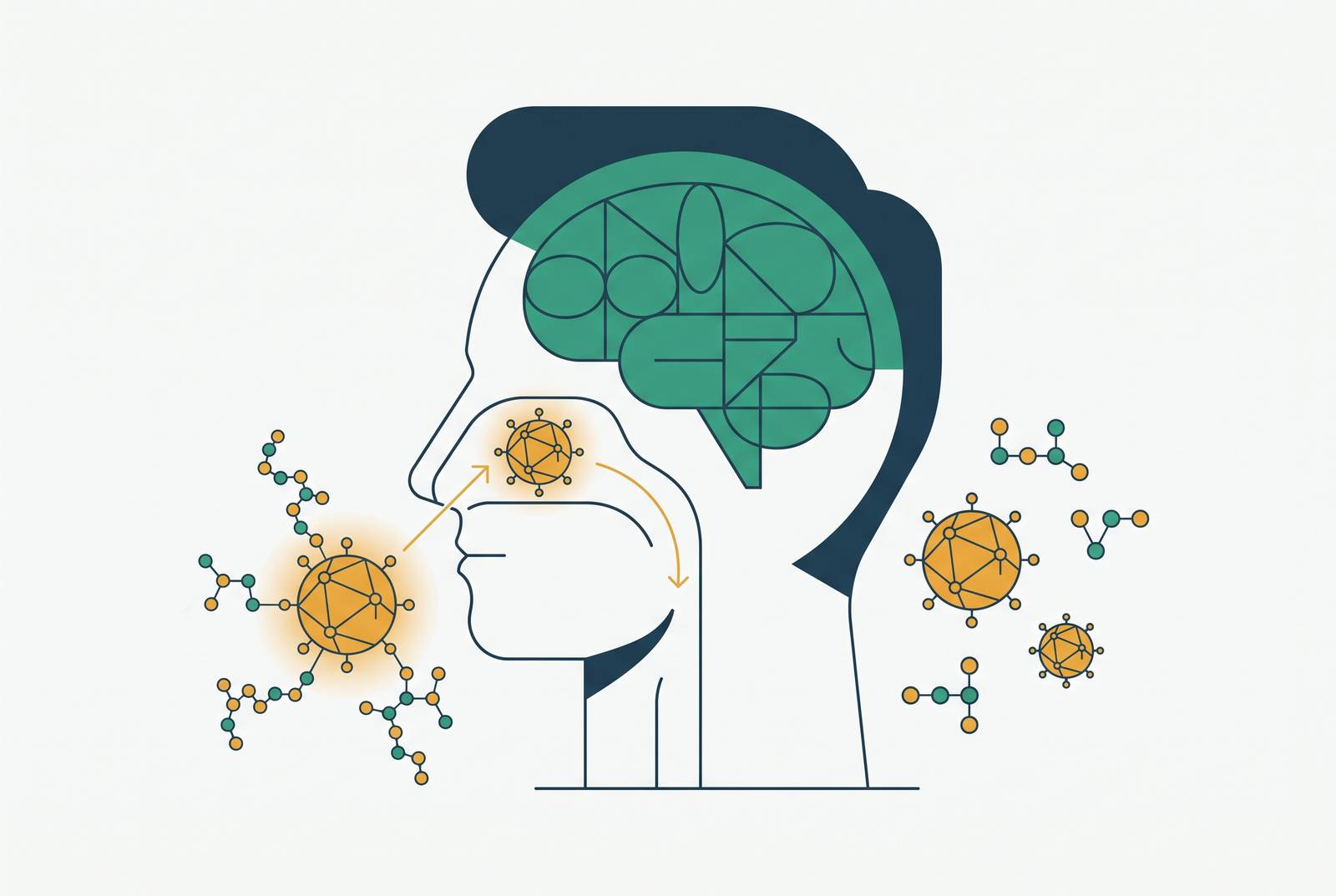
Nanoparticle nose-to-brain delivery for CNS peptide indications uses the nasal cavity’s olfactory and trigeminal pathways to bypass the blood-brain barrier. Early-stage biotechs are betting that patented carrier engineering can make those pathways therapeutically useful. The wager is coherent because it joins a delivery constraint to a neurological opportunity, but its decisive test is clinical translation.
Why the blood-brain barrier makes CNS peptide delivery a formulation problem, not just a biology problem
The blood-brain barrier protects the brain through tight junctions, efflux pumps, and selective permeability. These defenses apply to peptides regardless of potency. A molecule can engage its intended receptor yet struggle to reach that receptor from the bloodstream. A CNS peptide program must account for both what its molecule does and how much reaches the brain.
Conventional oral administration does not resolve that access constraint. Intracerebroventricular and intrathecal administration circumvent it, but their invasiveness makes them poorly suited to the long-duration treatment envisioned for many neurological indications. Systemic injection, meanwhile, exposes the body while leaving brain access dependent on what the barrier permits. The objective is not simply to administer more peptide, but to change the route by which it reaches its target.
How the olfactory and trigeminal pathways give the nasal route its anatomical logic
The nasal cavity offers direct neural connections to the CNS through the olfactory and trigeminal pathways. The olfactory route links the olfactory epithelium, olfactory nerve, olfactory bulb, and brain, allowing molecules to travel axonally. The trigeminal pathway provides parallel access to brainstem structures beyond the olfactory nerve’s reach, also bypassing the blood-brain barrier.
Nasal submucosal lymphatic drainage adds access to CNS-adjacent compartments, with potential relevance to immunological and inflammatory targets. But nasal administration can also lead to systemic absorption. That distinction is essential when interpreting a delivery study, because increased drug concentrations in blood do not establish direct neural transport. The anatomy establishes a route whose delivered dose remains to be determined. Whether a peptide takes that route depends on what happens after it lands on the nasal mucosa and before it enters the pathway.
Why bare molecules fail at the nasal mucosa and what nanoparticles are engineered to solve
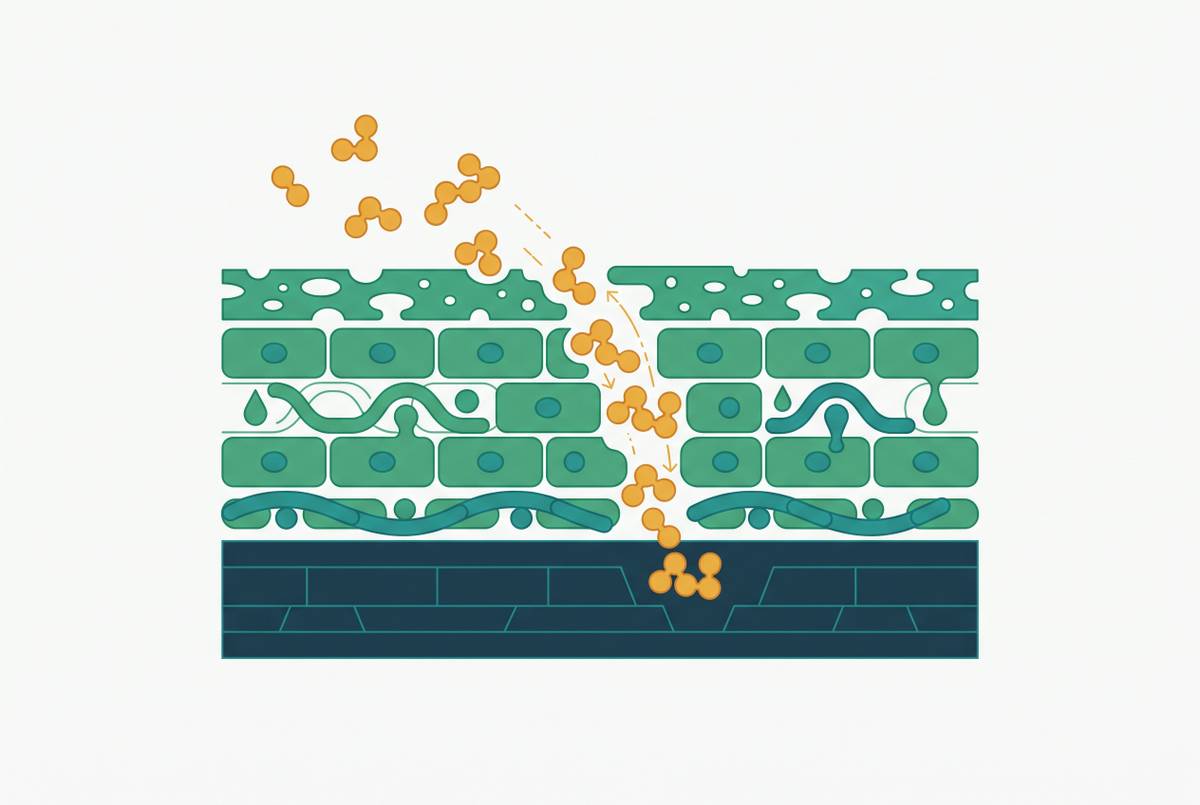
The nasal mucosa imposes its own delivery barriers. Mucociliary clearance moves material toward the nasopharynx for swallowing within minutes, while nasal enzymes degrade peptides before meaningful transport can occur. Limited volume per nostril further constrains the available dose. Concentration and retention therefore become central design variables. A peptide that is active and correctly deposited may still disappear before the neural pathways can provide useful access.
Nanoparticles are engineered to close that formulation gap. Solid lipid nanoparticles and nanostructured lipid carriers can increase drug solubility and permeation, extend drug action, and reduce enzymatic degradation. Liposomes, nanoemulsions, and niosomes offer alternative carrier approaches. Their shared purpose is to protect the payload and improve its opportunity for uptake while preserving the peptide’s receptor biology. Within this platform thesis, carrier engineering is an enabling condition.
Protection alone, however, does not determine where a carrier goes. TAT peptide-modified PLGA nanoparticles delivered a 6.5-fold higher drug quantity to the olfactory bulb than unmodified nanoparticles in an insulin delivery comparison. That result provides evidence about insulin delivery, while its relevance to GLP-1 and clinical efficacy remain to be established. It nevertheless illustrates why comparing a carrier with its unmodified counterpart is informative. Surface modification can distinguish a nanoparticle that merely shields its payload from one designed to promote entry into a neural pathway.
Why GLP-1 peptides have become the leading CNS candidate for this delivery strategy
GLP-1 receptor biology makes these receptors a promising target for the delivery strategy. These receptors occur in brain regions involved in reward, impulse control, addiction, neuroprotection, and neuroinflammation. CNS-selective delivery therefore poses a different hypothesis from systemic metabolic dosing. Deliberate brain receptor engagement would need to help treat neurological disease at an exposure profile that allows treatment to continue over time. The molecule class supplies a rationale for testing that hypothesis.
Preclinical studies across neurodegenerative conditions report reduced protein aggregation, enhanced autophagy, improved mitochondrial function, suppressed neuroinflammation, and preserved synaptic integrity. Observational pooled data also associate GLP-1 receptor agonists with reduced dementia risk, although that association does not prove prevention. Associations with reduced risks of seizures and addiction involving alcohol, cannabis, stimulants, and opioids widen the potential indication map, but do not establish efficacy for any particular CNS program.
The distinction between association and mechanism is especially important here. Better vascular or metabolic health could contribute to neurological outcomes without proving a direct effect on the intended brain target. Nasal delivery is designed to make that target engagement more direct. Its therapeutic case consequently rests on connecting a measured CNS exposure to a meaningful outcome, rather than borrowing confidence from the class’s metabolic effects.
Why injectable GLP-1 delivery is structurally incompatible with long-duration CNS indications
Long-duration neurological treatment makes persistence a core delivery requirement. Prime Therapeutics’ 2025 data, using a cohort from 2021, found that only a small fraction of patients remained persistent at three years. IQVIA’s 2025 analysis found substantial abandonment of approved GLP-1 prescriptions before a first fill, followed by additional discontinuation immediately after the first fill. These patterns are not simply patient behavior problems. They expose a mismatch between sustained treatment requirements and the experience of obtaining and taking therapy.
Cost contributes, but it does not explain everything. A national survey placed side effects second only to cost among reported reasons for discontinuation. Gastrointestinal effects and needle burden create a structural challenge for indications such as dementia and addiction that require years of consistent dosing. The persistence findings make it difficult to assume that an injectable metabolic treatment model will transfer smoothly to lifelong CNS care, with the contribution of each factor still to be isolated.
The nasal nanoparticle hypothesis addresses exposure as well as needles. Direct olfactory delivery could get enough GLP-1 into the brain while lowering systemic GLP-1 exposure and peripheral nausea. Demonstrating that potential advantage requires a product comparison. The new delivery mechanism must help patients stay on treatment as well as let them avoid a needle.
Which programs are developing nasal platforms for CNS peptide delivery in 2026
Landmark Medicines Ltd. said in September 2026 that it planned to move its proprietary nasal delivery platform toward a human volunteer study, starting with GLP-1 receptor agonists. The planned work focuses on pharmacokinetics, systemic bioavailability, dose requirements, safety, and tolerability, with candidate molecules including semaglutide under evaluation. Landmark identifies the olfactory and trigeminal pathways as a separate investigational target to pursue as the platform develops. Its formulation-agnostic approach and multiple patent filings position delivery, rather than one active ingredient, as the platform’s organizing principle.
Aptar Pharma published three international patent applications in May 2026 focused on inhaled and nasal GLP-1 delivery. Preclinical studies of liquid and powder semaglutide formulations showed substantial improvement in systemic Cmax compared with a comparable oral dose. That finding establishes improved systemic pharmacokinetics, leaving brain targeting to be evaluated separately. The work sits within Aptar’s broader biologics compatibility program, including interactions between complex biologic molecules, associated nanoparticle systems, and nasal or pulmonary devices. Further data are expected during 2026 and 2027, subject to ongoing research and publication timelines.
A Swiss preclinical program reported brain-to-plasma ratios above 1, measuring exposure in a different way. Unlike systemic Cmax, that ratio addresses the distribution between brain and plasma, although it does not establish clinical benefit. The programs should not be treated as interchangeable demonstrations of nose-to-brain delivery. Their significance is the move toward measurable pharmacokinetic claims. Separately, the nasal migraine precedent supports clinical and regulatory feasibility for nasal CNS treatment, with the efficacy of intranasal GLP-1 peptides still to be established.
Why deep patent IP, not incremental chemistry, separates credible platforms from noise in this field
The engineering variables are numerous and interdependent. Particle size, surface charge, coating chemistry, mucoadhesion, and the presence and type of cell-penetrating peptides all influence whether a formulation remains available for uptake or clears toward the gastrointestinal tract. Assessing how individual properties affect the performance of the whole carrier makes accumulated engineering knowledge valuable. Published formulations may provide a starting point without supplying a reproducible, extensible delivery platform.
Deep intellectual property protects combinations of ingredients. Patented surface chemistries, carrier architectures, and device-formulation interfaces can define a delivery mechanism that applies to more than one molecule. Landmark’s formulation-agnostic positioning illustrates that model, while Aptar approaches the same problem through the interaction between formulation and device. Patent scope, however, is not a substitute for evidence that the method works.
Decades of work on particle synthesis, surface engineering, and pharmacokinetic characterization may precede the commercial interest in neurological GLP-1 applications. That depth of research helps explain why attaching a popular peptide to a familiar carrier is only part of the work needed. A credible platform must unite protected architecture with measured delivery performance.
Why the translational failure rate in nanomedicine is the real objection to this bet, and what the nose-to-brain framing changes about it
Nanomedicine’s CNS translation record is the strongest objection. Only a select few platforms have advanced to clinical investigation, and the reported bench-to-bedside translation rate is typically less than one in ten. Divergent rodent and human BBB structures complicate extrapolation, while limited pharmacokinetic data, off-target effects, manufacturing complexity, and missing long-term studies create additional obstacles. A formulation can perform convincingly in a preclinical setting without becoming a usable medicine.
The GLP-1 neurological hypothesis also has negative evidence to confront. A meta-analysis of randomized controlled trials found no improvement in memory and cognition compared with placebo in Alzheimer’s disease. A 2025 study also found that GLP-1 therapies did not slow the course of established Alzheimer’s disease. These findings constrain the therapeutic argument. They also leave open whether the observational dementia signals come from improvements in vascular and metabolic health or from direct effects on amyloid and tau.
Much of the historical nanoparticle failure record concerns crossing an intact BBB from the bloodstream, whereas nose-to-brain delivery seeks to bypass it. CNS-selective receptor engagement with lower peripheral exposure is therefore not the same hypothesis as systemic injection. Yet a different hypothesis is not a successful one. Negative injection findings remain relevant to disease biology even if they do not establish whether nose-to-brain delivery can succeed.
Safety, manufacturing scalability, and regulatory hurdles still need to be addressed. Data from 2026 will help test that distinction through Landmark’s planned human exposure and safety work, the Swiss program’s brain-to-plasma measurements, and Aptar’s systemic pharmacokinetics. Each addresses a different part of the problem. Their value will depend on what they establish about the intended route, with CNS selectivity assessed separately from improvements in overall exposure.
What makes the nasal nanoparticle platform bet coherent as a company-building strategy, not just a scientific wager
A platform company need not depend on one neurological outcome. In principle, surface engineering developed for a GLP-1 peptide could be adapted to other peptides and targets, while the GLP-1 opportunity itself spans several distinct clinical hypotheses. Appetite regulation, dementia risk reduction, addiction, and seizure risk would still each need their own clinical programs. Shared delivery infrastructure offers a way to reuse engineering knowledge while therapeutic evidence remains specific to each indication.
There is also a possible commercial sequence before CNS efficacy. Intranasal formulations could serve patients who struggle to stay on injectable metabolic therapy before neurological programs are ready for trials. That opportunity is distinct from direct brain targeting. A platform may investigate systemic nasal delivery and CNS-selective delivery without assuming that success in the former validates the latter. Keeping those claims separate strengthens the company thesis by making its milestones intelligible.
The strategic case rests on independent foundations. The BBB constraint does not depend on GLP-1 outcomes, the nasal pathways already exist, and accumulated nanoparticle IP can support work beyond a single indication. What remains unproven is whether their combination produces safe, durable clinical benefit. Deep IP makes the wager defensible as a company-building strategy, but only delivery and outcome data can establish whether nanoparticle engineering is sufficient to turn the anatomical opportunity into treatment.
Sources
- Cell-Penetrating Peptide-Decorated Nanovectors for Nose-to-Brain Delivery: A New Treatment Option for CNS Diseases
- Advanced intranasal peptide delivery systems for improved management of Alzheimer's disease - PubMed
- Intranasal drug delivery: Pathways, challenges, and advancements in CNS targeting - ScienceDirect
- Intranasal Nano-Delivery Systems: Emerging Strategies for Central Nervous System Disease Therapeutics - PMC
- Pharmacokinetics and Pharmacodynamics of Intranasal Solid Lipid Nanoparticles and Nanostructured Lipid Carriers for Nose-to-Brain Delivery
- Intranasal Nanoemulsions for Direct Nose-to-Brain Delivery of Actives for CNS Disorders
- Intranasal drug delivery: Unlocking the nose-to-brain route for central nervous system therapies - ScienceDirect
- Glucagon-like peptide-1 receptor agonists for major neurocognitive disorders - PMC