Drugs That Can Cross the Blood-Brain Barrier
Researchers race to unlock delivery methods as barrier blocks ninety-eight percent of brain drugs.
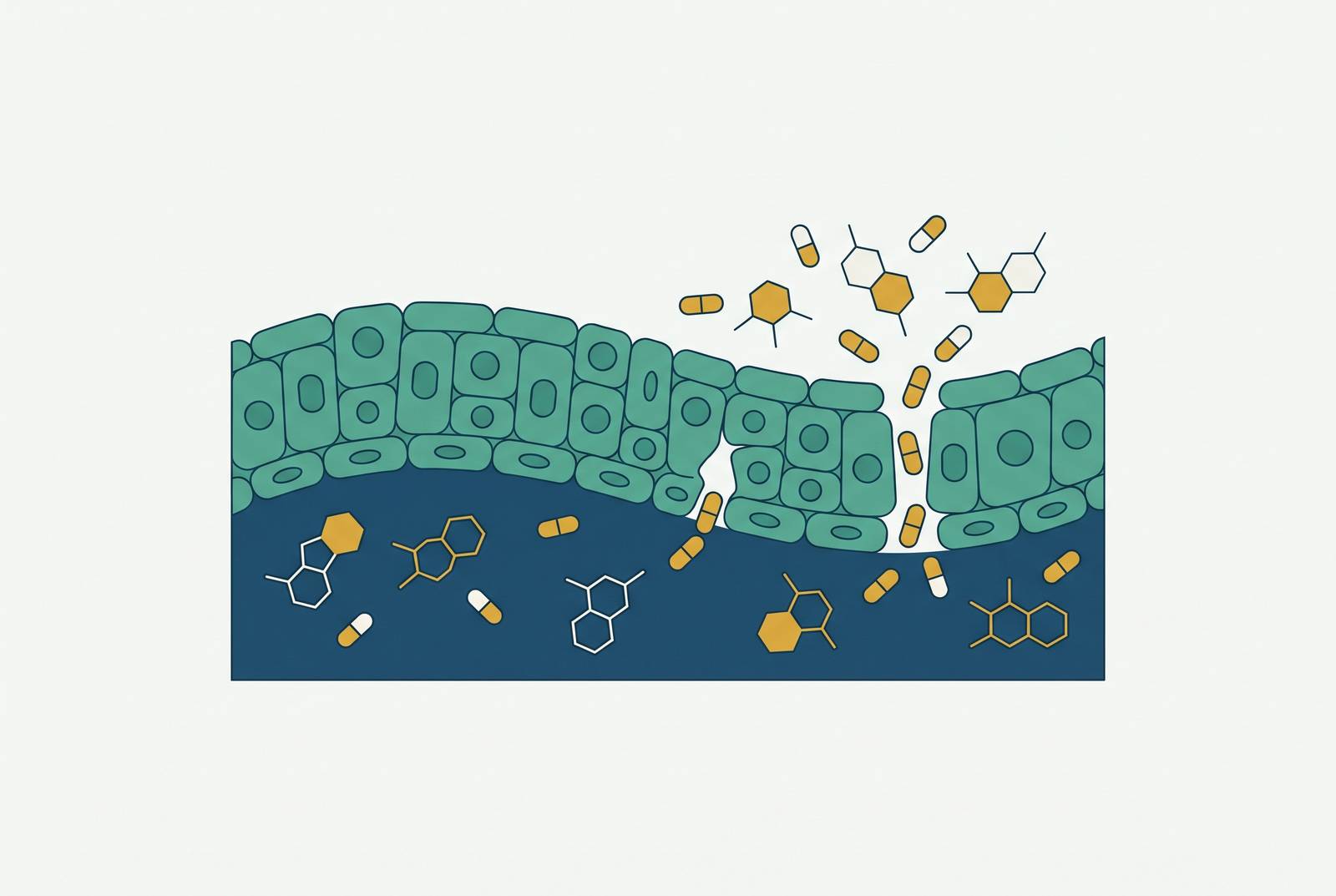
Some drugs are capable of crossing the Blood-Brain Barrier.
Why the brain is so hard to treat: the BBB as a structural problem, not a pharmacology problem
The blood-brain barrier blocks more than 98% of small-molecule drugs from reaching the brain, and intranasal nose-to-brain delivery represents one of the most promising strategies for circumventing it without breaching the barrier Advanced Drug Delivery Strategies for Overcoming Biological Barriers: Tumor Microenvironment and Blood–Brain Barrier Overcoming the Blood–Brain Barrier: Advanced Strategies in Targeted Drug Delivery for Neurodegenerative Diseases. The barrier itself is a layered structure, unlike a simple membrane such as a cell wall. It is a layered structure built from cerebral capillary endothelial cells packed together by tight junctions, wrapped in basement membranes, and reinforced by pericytes that regulate what passes through Advanced Drug Delivery Strategies for Overcoming Biological Barriers: Tumor Microenvironment and Blood–Brain Barrier Overcoming the Blood–Brain Barrier: Advanced Strategies in Targeted Drug Delivery for Neurodegenerative Diseases. Call it a seal, not a filter. It does not screen molecules by their chemical merit or their therapeutic intent.
Its purpose is protective, and on that count it does its job well: it keeps out circulating toxins, pathogens, and immune cells that would otherwise damage neural tissue. But the barrier has no capacity to distinguish a virus from a life-saving antibody, or a bacterial toxin from a peptide designed to slow neurodegeneration Advanced Drug Delivery Strategies for Overcoming Biological Barriers: Tumor Microenvironment and Blood–Brain Barrier Overcoming the Blood–Brain Barrier: Advanced Strategies in Targeted Drug Delivery for Neurodegenerative Diseases. It excludes indiscriminately. That means a drug can be chemically perfect, potent at the right receptor, clean in its side-effect profile, and still fail completely if it cannot physically get to where the disease lives Advanced Drug Delivery Strategies for Overcoming Biological Barriers: Tumor Microenvironment and Blood–Brain Barrier Overcoming the Blood–Brain Barrier: Advanced Strategies in Targeted Drug Delivery for Neurodegenerative Diseases. Delivery and molecule are the same problem, not separate problems to solve in sequence. They are the same problem.
What makes this more strange is what happens when the barrier itself starts to break down. Neurodegenerative disease often comes with BBB dysfunction: tight junctions loosen, permeability increases, the seal gets leaky. One might expect that to make drug delivery easier. It does not, reliably. Increased permeability in a diseased brain tends to complicate dosing rather than resolve it, since the barrier's failure is uneven and unpredictable rather than a clean opening a clinician can plan around.
That is the wall standing between medicine and some of the heaviest disease burdens: Alzheimer's, Parkinson's, ALS, Huntington's, and brain cancers all sit behind the same structural obstacle, each representing enormous unmet need, each gated by an identical architecture of endothelial cells and tight junctions. But researchers have not treated the barrier as immutable. Over the past two decades a distinct taxonomy of workarounds has emerged, and each one embodies a different theory of what the barrier actually is and how it can be persuaded, tricked, or bypassed.
The drug delivery market the BBB has created despite nearly half of CNS candidates still failing
That number demands attention. Nearly half of everything entering the CNS pipeline dies because the drug never arrived, not because the biology of the target was wrong.
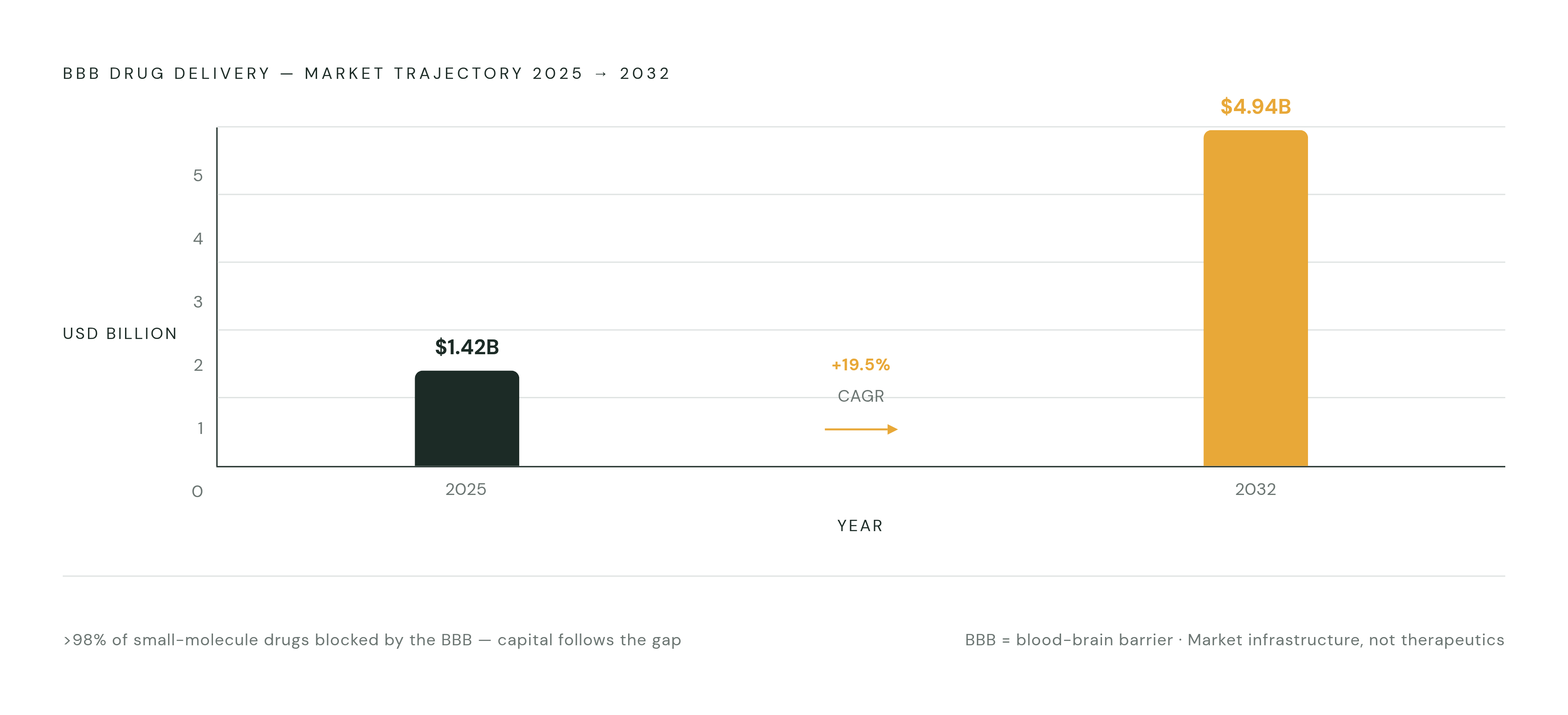
A failure rate that large does not just discourage investment, it redirects it. The Drug Delivery Across Blood-Brain Barrier Market was valued at $1.42 billion in 2025, and forecasts put it at $4.94 billion by 2032, a compound annual growth rate of 19.5% Drug Delivery Across Blood Brain Barrier Market Size & Share. That is not a market for drugs. It is a market for the infrastructure of getting drugs past a single anatomical wall, which says something about how the industry has come to view delivery: not as a footnote to pharmacology, but as its own product category with its own capital, its own IP, its own competitive landscape.
Zooming out makes the picture bigger still. The broader intranasal drug delivery space, spanning far more than CNS indications, was estimated at $59.1 billion in 2023 and is projected to reach $92.6 billion by 2030, growing at 6.6% annually. BBB-bypass through the nose is a subset of that larger economy, not its whole. It is worth asking why capital keeps flowing here at all. The answer sits in the ceiling that standard systemic dosing runs into: the BBB restricts greater than 98% of small-molecule drugs from reaching the brain Advanced Drug Delivery Strategies for Overcoming Biological Barriers: Tumor Microenvironment and Blood–Brain Barrier Overcoming the Blood–Brain Barrier: Advanced Strategies in Targeted Drug Delivery for Neurodegenerative Diseases. Capital follows engineering, and right now delivering treatment across that barrier is what engineering must solve.
So what strategies has the field actually built? They diverge sharply in philosophy: some force the barrier open, some persuade it to cooperate, and some skip it altogether. Nearly 45% of CNS-related drug candidates fail due to poor BBB penetration, according to market research cited in the Drug Delivery Across Blood-Brain Barrier Market report.
Physical methods that force the barrier open: focused ultrasound and chemical disruption
Focused ultrasound, or FUS, uses acoustic cavitation, essentially controlled microbubble oscillation driven by sound waves, to create a temporary and reversible opening in the barrier. Therapeutic molecules pass through during the window the opening creates, and the barrier reseals afterward. The appeal is obvious: a targeted breach rather than a systemic one.
MR-guided focused ultrasound (MRgFUS) adds anatomical precision by letting clinicians see exactly where the acoustic energy lands. That precision is not new to medicine.
But how far along is the drug-delivery use case specifically? Small-cohort human studies have shown that FUS combined with microbubbles can safely open the BBB in patients with Alzheimer's, Parkinson's, and ALS. Safety is established. Improved drug delivery has not yet been confirmed to produce a measurable therapeutic benefit in human patients. That gap between "we can open the door" and "opening the door helps" is the field's central unresolved question right now.
Particle size turns out to matter enormously here. University of Tokyo research measured how gold nanoparticles of different sizes crossed the barrier under FUS-induced opening: 3-nanometer particles saw a 3.4-fold increase in permeation, while 15-nanometer particles saw a 9.5-fold increase. That is a counterintuitive result if the intuition is "smaller always penetrates better." It suggests physical opening and particle engineering are interdependent variables, not separately optimizable ones.
Chemical disruption offers a different lever entirely. A 2026 MIT study in Communications Biology compared chemical BBB disruption, unfocused ultrasound disruption, and direct intra-CSF infusion, measuring how evenly each method distributed a therapeutic across the brain. Chemical and unfocused ultrasound methods produced the most homogeneous brain-wide delivery, while CSF infusion produced a meaningfully different, more localized spatial pattern. That distinction matters clinically: a disease spread across the whole brain calls for a different delivery geometry than one confined to a single region.
None of this stays theoretical. Researchers have paired FUS-mediated barrier opening directly with therapeutic agents including lecanemab and donanemab, building delivery enhancement into the trial design itself rather than validating it as a separate exercise ACS Publications. That is a meaningful shift: delivery is no longer an afterthought bolted onto an already-approved drug, it is co-designed with the therapeutic from the start.
Infrastructure produces the tension running through all of this, evident in what follows. FUS and chemical disruption both work in controlled clinical settings, but both require specialized equipment, imaging guidance, and trained staff. Neither can be self-administered at home. That constraint pushes the field toward a different class of strategy: one that works with the barrier's own biology instead of forcing a door. In November 2021, Insightec received FDA approval for a non-invasive MR-guided focused ultrasound therapy for Parkinson's motor symptoms, and in February 2024, Anthem Blue Cross Blue Shield became the first insurer to cover it, according to the Drug Delivery Across Blood-Brain Barrier Market report, a signal that the platform is moving toward therapeutic application.
Working with the barrier's own biology: receptor-mediated transcytosis, gene vectors, and antibody shuttles
The barrier is not a blank wall. It is studded with receptors for nutrients, hormones, and other molecules the brain genuinely needs, and those receptors are what receptor-mediated transcytosis (RMT) exploits. Rather than force an opening, engineered therapeutics hitchhike on transport machinery the barrier already runs for its own purposes.
Non-viral carriers, lipid nanoparticles and polymer nanoparticles chief among them, can be surface-functionalized with targeting ligands that latch onto these receptors. That is what separates "active targeting" from simple passive diffusion: the carrier is not hoping to slip through, it is presenting a molecular key that the endothelium is built to recognize.
Gene therapy has taken this logic further. AskBio's AB-1005, an AAV2-GDNF construct delivered via convection-enhanced delivery, and a Voyager/Sanofi AAV-microRNA candidate targeting SNCA using a microglia-detargeting capsid design to avoid innate immune activation, are leading gene therapy candidates ACS Publications. The Voyager construct uses a microglia-detargeting capsid design specifically to avoid triggering innate immune activation, an engineering choice that speaks to how much of gene therapy design is really about managing the immune system's reaction rather than the payload itself ACS Publications. Still, viral vectors carry a persistent limitation: immunogenicity concerns and a hard cap on cargo capacity remain unresolved, which constrains how often a patient can be redosed and how large a genetic payload can travel ACS Publications.
FUS reappears here in a different role. FUS-mediated BBB opening can enable systemic delivery of CRISPR-encoding plasmid DNA packaged in lipid nanoparticles for brain gene editing. Lipid nanoparticles carry larger cargo and provoke a weaker immune response than viral vectors, which matters directly for repeat dosing regimens where a patient needs more than one treatment cycle.
A newer design philosophy borrows from cell biology outright. Cell-membrane-coated nanoparticles and exosomes demonstrate stronger immune evasion and more tissue-specific accumulation than synthetic carriers alone, according to a recent PMC review. Call it biomimicry as a design principle rather than a single technique: instead of engineering a foreign particle to look less foreign, the particle is built out of the body's own membrane material from the start.
Every one of these strategies, though, still depends on the bloodstream as the point of entry. The therapeutic has to travel through circulation and arrive at brain capillaries before any of this receptor engagement or immune evasion can even begin. The next class of strategy abandons that assumption entirely.
The olfactory and trigeminal routes: how intranasal delivery reaches the brain without entering the bloodstream
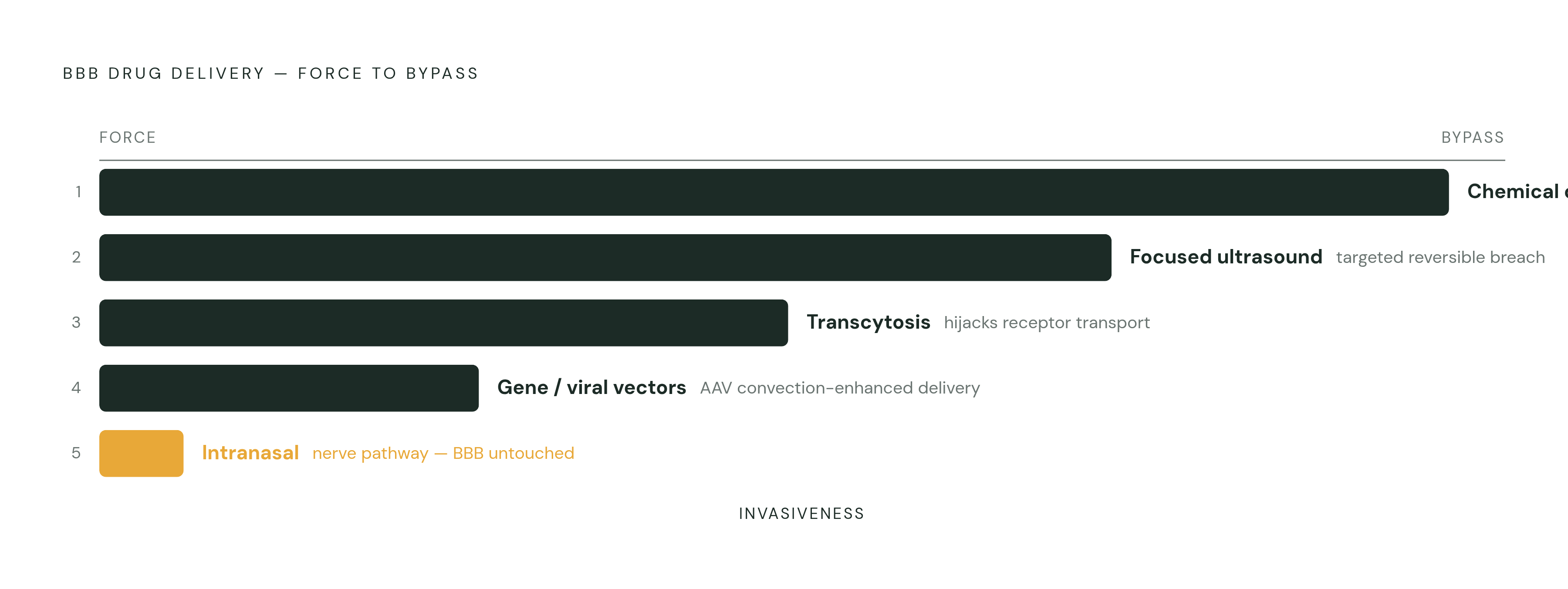
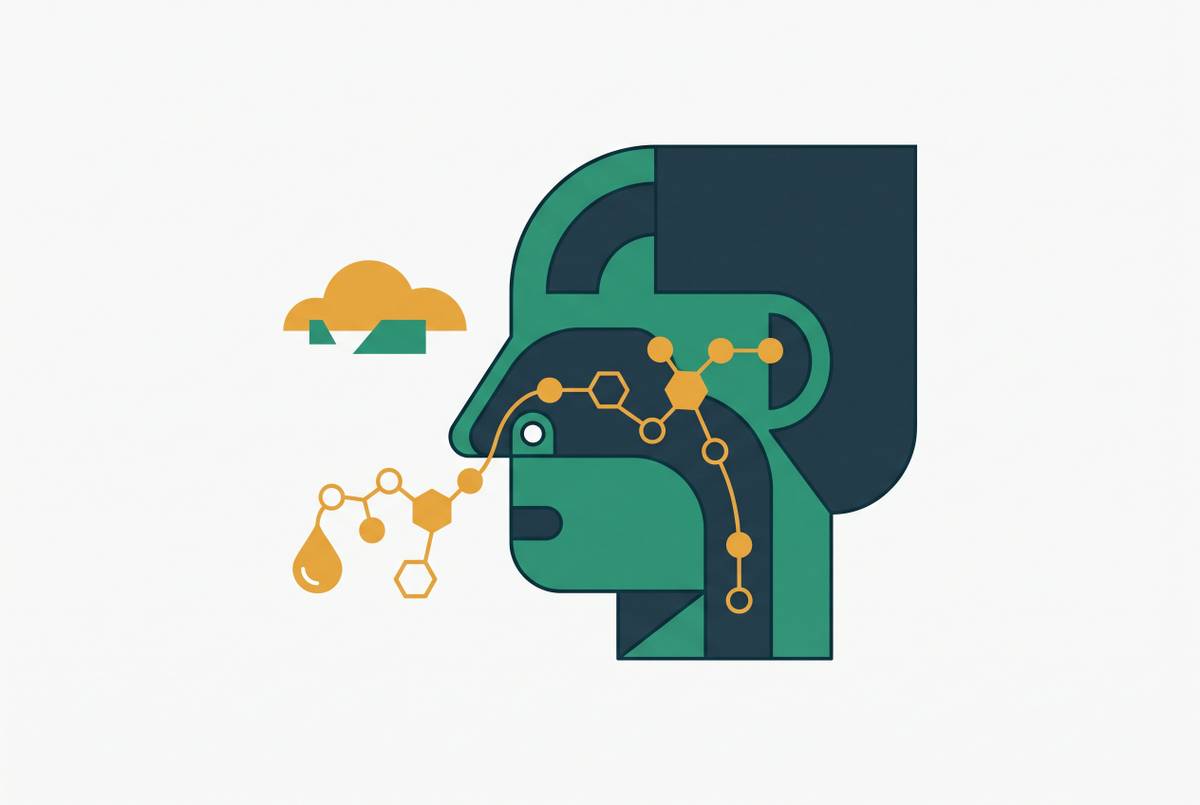
Intranasal delivery through the olfactory epithelium does not open the barrier, breach it, or negotiate with its receptors. It bypasses it entirely, sending drugs along olfactory and trigeminal nerve pathways straight to the brain, never touching the capillaries the BBB was built to guard. Every strategy in the two prior sections still treats the vascular system as the only road in. This one takes a different road altogether.
Two nerve pathways carry the traffic. The olfactory nerve runs directly to the olfactory bulb and from there into the brain; the trigeminal nerve branches out to the brainstem and other CNS regions. Neither pathway evolved for pharmacology. Both were built by evolution for sensing, smell and facial sensation respectively, and drug delivery is essentially borrowing infrastructure that was never designed for this purpose.
That borrowing matters most for large molecules. Peptides and biologics that the BBB would categorically block, no exceptions, no partial credit, can in principle reach the brain via these nerve routes without needing receptor-mediated transcytosis or any form of barrier disruption at all. The field has decided nose-to-brain delivery deserves its own bucket rather than a footnote under one of the others.
The clinical work is starting to catch up to the theory. A 2025 study tested intranasal olanzapine spray head-to-head against intramuscular injection in a single-dose, randomized, open-label design. Running a direct pharmacokinetic comparison between a nasal spray and an injectable is not something a field does when the idea is still speculative; it is something a field does when the idea is mature enough to be held to the same evidentiary standard as an approved route of administration. Intranasal delivery, according to a Frontiers in Drug Delivery review, enhances both bioavailability and therapeutic effect by leveraging these nerve pathways. But the route is not frictionless, and the obstacles it runs into deserve to be taken seriously on their own terms. The ACS Omega review from Johns Hopkins, published in August 2025, covers intranasal delivery as a distinct category alongside local delivery, BBB-penetrant, BBB-disrupting, and receptor/transporter-mediated strategies, signaling that the field treats nose-to-brain as mechanistically separate from the others.
The engineering obstacles intranasal delivery must solve: mucociliary clearance and epithelial permeation
The nose does not sit still and wait for a drug to absorb. Mucociliary clearance, the constant sweeping motion of nasal mucus toward the throat, renews the mucus layer roughly every 10 to 20 minutes ACS Publications. Anything deposited on that surface has a narrow window before it gets carried away and swallowed rather than absorbed.
That window is the binding constraint on the entire route. A formulation can be chemically perfect and still fail if its residence time on the olfactory epithelium is shorter than the mucus renewal cycle ACS Publications. Compounding the problem, the olfactory epithelium itself is a small and geometrically awkward target tucked into the upper nasal cavity, and conventional spray devices often deposit their payload on ciliated respiratory epithelium instead, missing the target tissue entirely.
Formulation science has responded with a handful of specific countermeasures. Mucoadhesive coatings anchor particles to epithelial surfaces so they resist the sweeping motion long enough to be absorbed. Ligand attachment promotes specific uptake into olfactory and trigeminal neurons rather than leaving absorption to chance. Surface engineering, more broadly, converts what would otherwise be passive deposition into active cellular internalization, building a particle that gets pulled in deliberately rather than merely hoping a drug diffuses in.
Regulation has not caught up to any of this yet. Standardized protocols for evaluating intranasal formulations and delivery devices do not currently exist at the regulatory level, and dedicated guidance for nose-to-brain (N2B) delivery specifically is something multiple sources anticipate rather than something already in place. That gap carries real regulatory weight rather than sitting as a minor administrative detail. It means every company building in this space is, to some degree, building its own evidentiary case for what "safe and effective" even means for this route.
What follows from all of this is a somewhat blunt conclusion: nanoparticle engineering is not a nice-to-have feature layered on top of intranasal delivery, it is the prerequisite for the route working at all. A bare peptide sprayed into the nose faces mucociliary clearance, enzymatic degradation, and poor epithelial permeation simultaneously. The particle carrier is what turns nose-to-brain delivery from an appealing theory into something that survives contact with actual nasal physiology.
Nanoparticle platforms as the delivery engine: what the carrier does that the drug cannot do alone
A nanocarrier earns its place by doing several jobs at once that the drug molecule cannot do for itself. It protects the payload from enzymatic degradation on the way to its target. It prolongs circulation time or residence time at the absorption site. It carries surface modifications, targeting ligands that engage specific receptors. It can facilitate active transport through receptor-mediated pathways rather than relying on passive diffusion. And it can enable controlled release, keeping CNS drug concentrations stable rather than spiking and crashing.
Cationic surface engineering adds a sixth trick: a positively charged particle surface promotes adsorptive-mediated uptake at the BBB endothelium, a charge-based interaction that works as an alternative to receptor-specific targeting. It is cruder than a targeting ligand, in the sense that it relies on electrostatic attraction rather than molecular recognition, but it is also broadly applicable across many different endothelial surfaces.
The library of carrier types is wide. Dendrimers, liposomes, solid lipid nanoparticles, polymersomes, polymer-drug conjugates, polymeric nanoparticles, peptide nanoparticles, micelles, nanoemulsions, nanospheres, nanocapsules, nanoshells, carbon nanotubes, and gold nanoparticles all appear across the current research literature, each with its own size range, surface chemistry, and cargo-carrying profile. No single carrier dominates every application; the choice depends on what is being delivered and where it needs to go.
For nose-to-brain delivery specifically, nanocarriers can bypass the BBB entirely when paired with the olfactory or trigeminal route, and a ScienceDirect review on GLP-1 nano-drug delivery systems documents this being demonstrated in preclinical GLP-1 receptor agonist studies. The platform logic extends beyond any single drug class, too. As of September 2026, reporting has covered scientists developing adipose-targeted nanomedicine that could complement GLP-1 approaches by targeting specific fat depots through an entirely different mechanism.
What separates a credible delivery platform from something that merely looks novel comes down to depth: surface chemistry, size tuning, cargo selection, and targeting ligand design all require years of accumulated engineering knowledge. A platform built on that kind of foundational depth can generalize across drug classes and indications. One that cannot is, in practical terms, a one-drug solution wearing a platform's clothing.
GLP-1 receptors in the brain enabling intranasal delivery to open neurological indications that injections cannot reach as effectively
GLP-1 receptors are not confined to the pancreas or the metabolic periphery, where most public attention has settled. They are distributed throughout the central nervous system, showing up in the hypothalamus, the hippocampus, and other brain regions. That distribution is established biology, not a speculative extension, and it opens a door that has little to do with blood sugar or appetite regulation on its own.
Mechanistically, GLP-1 receptor agonists activate the cAMP/PKA/CREB signaling pathway, which in turn boosts expression of brain-derived neurotrophic factor, BDNF. BDNF has long been studied for its role in neuronal survival and plasticity. This pathway carries implications for neurodegeneration and neuroprotection that sit well outside the metabolic indications GLP-1 drugs are known for. Repurposing GLP-1 receptor agonists for neurological conditions, including addiction and dementia, is a real possibility worth taking seriously, since brain-localized GLP-1 signaling might do therapeutic work that peripheral signaling cannot.
But how would an injectable GLP-1 drug actually reach those brain receptors in the first place? Injectable peptides largely reach the brain through circumventricular organs, specialized regions where the barrier is naturally more permeable, and through general circulation. The BBB still caps how much of the peptide accumulates in CNS tissue, no matter how the injection is dosed. The olfactory and trigeminal route offers a different profile in principle: potentially higher brain-region specificity paired with lower peripheral exposure, since the drug is not first diluted across the entire bloodstream before some fraction reaches the brain.
A 2026 ScienceDirect review on GLP-1 nano-drug delivery systems lays out how nanoparticle carriers might close this gap specifically. They can protect GLP-1 receptor agonists from enzymatic degradation, extend circulation time, and carry surface modifications that enable active transport, all of which addresses the core BBB limitation these peptides face. Nose-to-brain delivery using nanocarriers has already been demonstrated in preclinical GLP-1 receptor agonist studies, bypassing the barrier by the nerve routes described earlier in this piece rather than fighting through it.
A proof-of-concept from 2025 shows how far the biology has already gone. A Cell study engineered Lactobacillus plantarum WCFS1, a bacterial strain, as an intranasal delivery vector, designing it to release its payload specifically within the olfactory epithelium. Transport and accumulation of that payload in the brain was confirmed, and the study validated recombinant production and secretion of appetite-regulating hormones through this bacterial vector. That is a genuinely different category of delivery mechanism from a lipid nanoparticle or a liposome: a living organism engineered to manufacture and release a therapeutic exactly where the nerve pathway can pick it up. Whether that specific approach scales into a marketable therapy remains an open question. It demonstrates, concretely, that the biology of nose-to-brain delivery extends beyond synthetic chemistry. It is a design space wide enough to include bacteria, nanoparticles, and everything engineered in between, all converging on the same anatomical shortcut the barrier was never built to guard.
Sources
- Recent Advances in Nanoparticle-Based Drug Delivery Strategies to Cross the Blood–Brain Barrier in Targeted Treatment of Alzheimer’s Disease - PMC
- Overcoming the Blood-Brain Barrier for Drug Delivery to the Brain | ACS Omega | ACS Publications
- Advanced Drug Delivery Strategies for Overcoming Biological Barriers: Tumor Microenvironment and Blood–Brain Barrier - PMC
- Overcoming the Blood–Brain Barrier: Advanced Strategies in Targeted Drug Delivery for Neurodegenerative Diseases - PMC
- Drug Delivery Across Blood Brain Barrier Market Size & Share
- Engineered commensals for targeted nose-to-brain drug delivery: Cell
- Advanced Drug Delivery Strategies for Overcoming Biological Barriers: Tumor Microenvironment and Blood–Brain Barrier - PMC