Peptide Stability Engineering for Non-Injectable Formulations
Scientists engineer peptides to survive the body's defenses without injections.
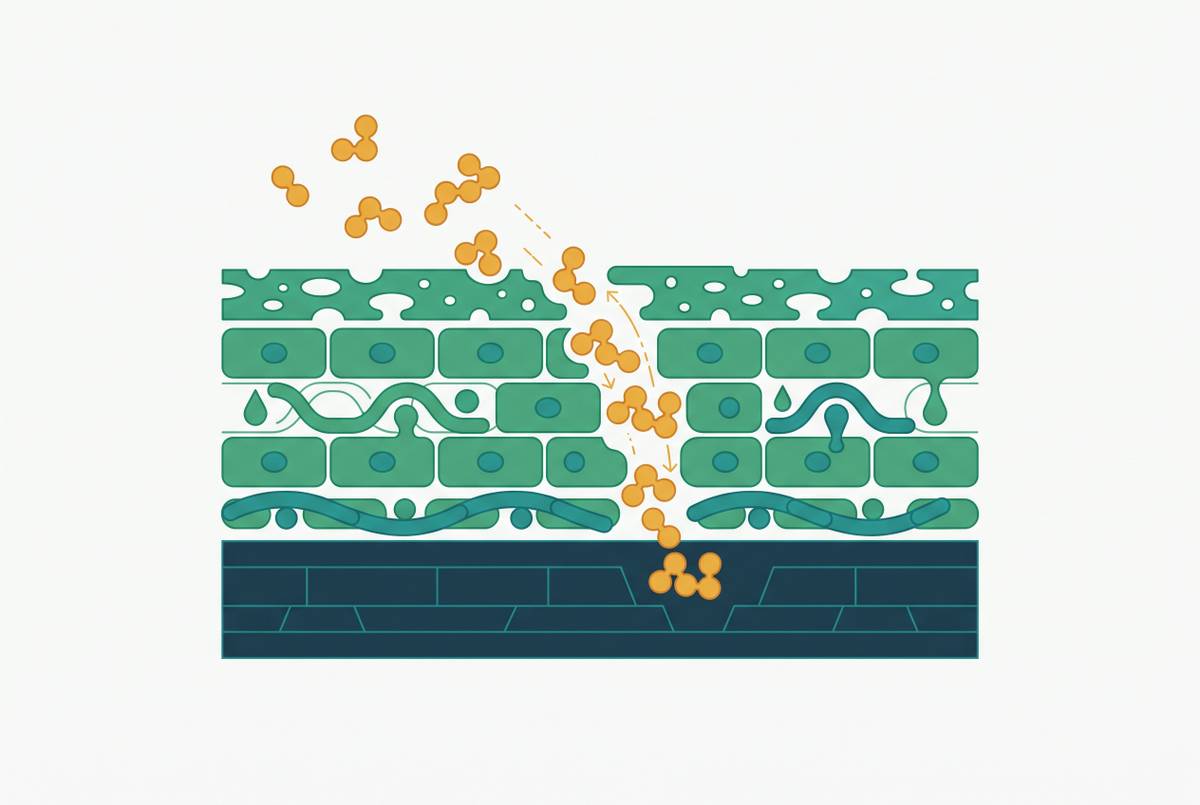
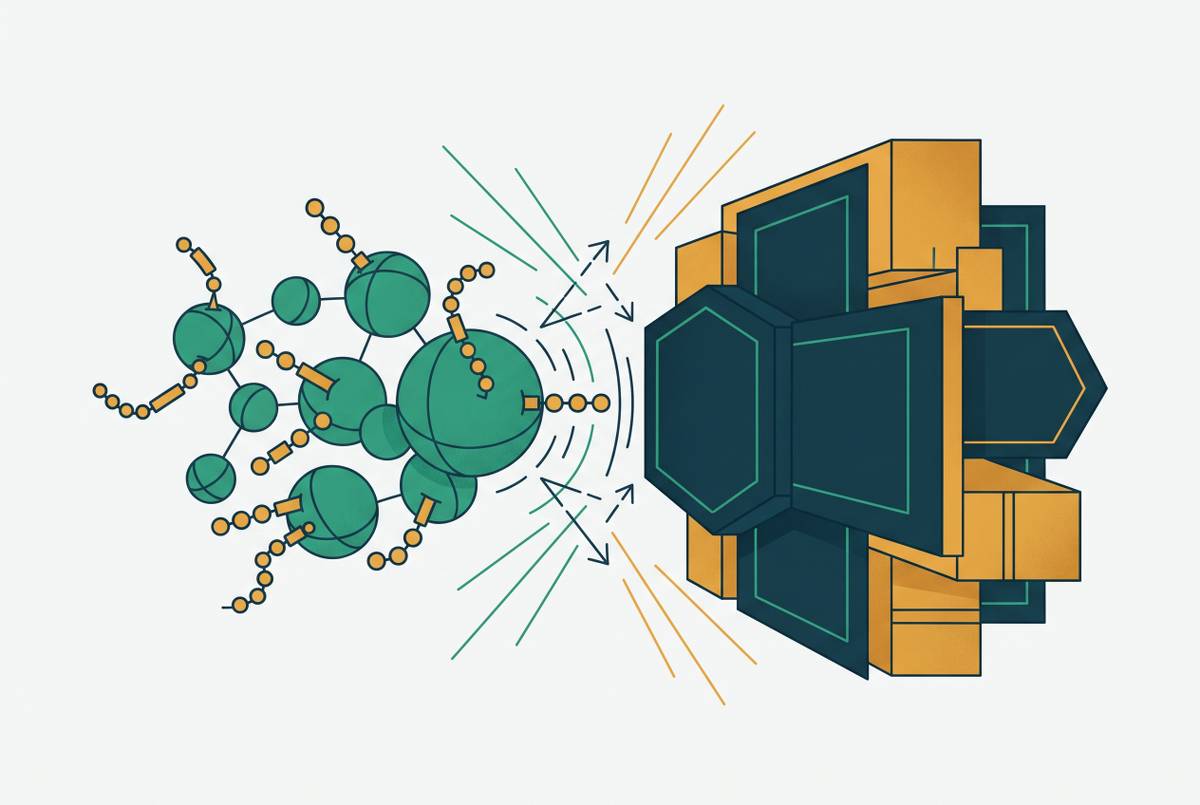
Peptides are prized in medicine for the same reason they are hard to deliver: they are built to be specific, potent, and biologically active at tiny concentrations, which also makes them chemically unstable the moment they leave a vial. The same structural precision that lets a peptide bind a single receptor with exquisite selectivity makes it vulnerable to the body's own defenses against foreign protein material. This 2026 review in the Journal of Controlled Release identifies proteolysis, renal and hepatic elimination, and receptor-mediated endocytosis as the predominant clearance mechanisms. Enzymes circulating in blood and embedded in tissue cut peptide bonds apart, the kidneys filter small molecules out of circulation almost as fast as they appear, and the liver processes anything absorbed through the gut before it ever reaches systemic circulation. Add to that the physical instability common to peptide structures, including aggregation, deamidation, and unfolding under heat or pH stress, and the therapeutic window for an unmodified peptide can close in minutes rather than hours.
That fragility, not manufacturing convention, explains why injection became the default route for nearly every approved peptide therapeutic. Subcutaneous delivery sidesteps the gastrointestinal tract and avoids first-pass hepatic metabolism entirely, handing the peptide a nearly direct path into systemic circulation. Early peptide drug development settled on the needle because it achieved near-direct systemic absorption outright, not because patients preferred it. The frustration which that trade-off created, between a formulation that works and a formulation patients will actually use, is what the entire modern wave of oral, intranasal, and other non-injectable research is trying to resolve.
Understanding these failure modes at the molecular level matters because they recur. Each non-injectable route reintroduces some subset of the same threats in a different physiological context. The GI tract combines acid, enzymes, and poor membrane permeability. The nasal cavity avoids the gut and liver but clears material through mucus flow within minutes. Transdermal delivery faces a skin barrier built specifically to keep large molecules out. None of these are separate problems requiring separate first principles: they are the same underlying biochemistry, expressed through different anatomy, and that is why the strategies developed for one route so often inform the next.
The oral route: the GI tract as a near-total barrier
Swallowing a peptide subjects it to the single most hostile sequence of barriers the body has to offer. Stomach acid denatures peptide structure before absorption can even begin, intestinal proteases including pepsin, trypsin, and chymotrypsin cut the molecule into inactive fragments, the intestinal wall is built to block large hydrophilic molecules from crossing into the bloodstream, and whatever survives all three is still subject to hepatic first-pass metabolism before it reaches systemic circulation. The 2026 Journal of Controlled Release review maps this entire gauntlet, diagramming the organs along the GI tract responsible for each stage of degradation. Oral semaglutide illustrates the scale of the problem in a single figure: its absolute bioavailability is approximately 0.8%, a number so low that absorption becomes acutely sensitive to dosing conditions, including whether the patient has fasted and how much water accompanies the dose.
Closing that gap requires engineering the peptide and the formulation at the same time. Unnatural (D-) amino acids resist proteolysis because natural proteases are stereospecific. Cyclic and bicyclic structures reduce the conformational flexibility that proteases rely on to access a cleavage site, and backbone modifications such as N-methylation or peptoid substitution make the amide bond itself less recognizable to digestive enzymes. A review in the International Journal of Peptide Research and Therapeutics places these structural strategies alongside PEGylation, glycosylation, and nanocarrier encapsulation as the core formulation toolkit available to oral peptide developers. Absorption enhancers work by transiently opening the tight junctions between intestinal cells, and pairing these enhancers with enteric coatings protects the peptide until it reaches the specific gut segment where absorption is meant to occur.
The evidence that this approach works outside the GLP-1 class comes from Merck's MK-0616, enlicitide decanoate, an oral macrocyclic PCSK9 inhibitor formulated in tablets containing the C10 enhancer. It completed a Phase III trial, and an NDA was submitted to the FDA in 2026, demonstrating that engineered cyclic peptides can achieve oral delivery in a cardiovascular indication entirely separate from metabolic disease.
The clearest demonstration of how far oral peptide formulation science has advanced arrived on April 1, 2026, when the FDA approved orforglipron, marketed as Foundayo, the first oral non-peptide GLP-1 receptor agonist that carries no fasting requirement and no water restriction. The ATTAIN-1 trial behind that approval showed meaningful weight loss sustained over 72 weeks. That approval raises the bar for what oral delivery can achieve, but it doesn't close the chapter on oral peptide tolerability. Gastrointestinal adverse events were common in both the ATTAIN-1 and ATTAIN-2 trials and drove treatment discontinuations, and the negative food effect long observed with earlier oral peptides remains poorly understood, a gap in mechanistic knowledge that could quietly erode long-term adherence.
Moving a peptide from the needle to the tablet doesn't eliminate the compliance burden so much as relocate it. Needle aversion gives way to GI tolerability concerns and the complexity of dosing conditions, a different set of burdens rather than an absence of them. The orforglipron data suggest the answer is only partial, and that formulation science still has work to do even after a molecule clears regulatory approval.
Molecular strategies that apply across non-injectable routes: engineering the peptide before it reaches the formulation
Before any delivery system gets involved, the peptide itself is usually modified at the molecular level, and these modifications apply across oral, intranasal, and other non-injectable routes rather than belonging to any single one of them. Lipid conjugation is among the most established of these strategies: attaching a fatty acid chain, such as a palmitoyl group, to a lysine residue encourages the peptide to bind non-covalently to albumin in the blood. That binding delays proteolysis by sterically blocking enzymes like DPP-IV from accessing the peptide, and it slows renal clearance by effectively increasing the molecule's apparent size, which is the mechanism behind liraglutide's extended half-life.
PEGylation and glycosylation work on a related principle: both increase the peptide's hydrodynamic radius, which reduces how readily the kidneys filter it out, while also physically shielding proteolytic cleavage sites and improving aqueous solubility. Preclinical pharmacokinetic studies of modified semaglutide formulations have shown up to a 10-fold improvement in systemic Cmax compared with a comparable oral dose, and the 2026 Springer peptide formulation review identifies PEGylation and glycosylation as among the most widely applied strategies in the field. Some peptides take stability a step further through self-assembly, forming structures that resist enzymatic attack by virtue of their own geometry. Lanreotide self-assembles into monodisperse liquid crystalline nanotubes in water, and liraglutide forms alpha-helical structures in solution, both configurations that are inherently harder for proteases to degrade than an unfolded linear chain.
The pursuit of extended time-action profiles through molecular precision has also produced dedicated drug-development platforms. MBX Biosciences, an Indiana University spinout founded by Kent Hawryluk, Tim Knickerbocker, and Richard D. DiMarchi, built its Precision Endocrine Peptide platform specifically to engineer peptide hormones with longer time-action profiles, aiming directly at the dosing-frequency and tolerability limitations that drive so much of the non-injectable research agenda.
A modification that stabilizes the peptide against degradation is worthless if it also disrupts the molecule's ability to bind its target receptor, and this constraint applies to every one of these strategies. Stability engineering is always a negotiation between protecting the peptide from its delivery environment and keeping it biologically active once it arrives. That negotiation is why peptide and formulation design are not developed in sequence, one handed off to the other, but iteratively, with each informing the other as the work proceeds. The Journal of Controlled Release review treats this integration of molecule design with formulation as a requirement, not a nicety. The vocabulary built in this section, lipid conjugation, PEGylation, glycosylation, self-assembly, extended time-action engineering, carries forward into the route-specific discussions that follow, where the question shifts from how to stabilize the molecule to how to get it across a specific anatomical barrier.
The intranasal route: a distinct set of barriers and the nanocarrier solutions designed to overcome them
Delivering a peptide through the nose avoids the gastrointestinal and hepatic barriers altogether, but that doesn't make the route simple. The nasal epithelium and the mucociliary clearance system impose their own stability and residence-time constraints, and overcoming them demands formulation engineering just as deliberate as anything built for oral delivery. The nasal epithelium functions as a selective membrane: a peptide has to cross it without being broken down by nasal mucosal enzymes and without being swept away by mucus flow before absorption can occur. That second constraint, short nasal residence time, is the dominant limitation on the entire route. Mucus clears deposited material quickly, and the absorption window closes before much of the dose has a chance to cross the epithelium.
Set against oral administration, though, intranasal delivery still has a real advantage: it avoids the harsh acidic stomach environment and first-pass hepatic metabolism entirely, which matters directly for peptides like insulin, whose oral bioavailability is negligible to begin with. Nanocarrier technology has become the primary tool for exploiting that advantage. Carriers engineered at the nanoscale with lipophilic surface character can cross the nasal epithelium more readily, and their architecture, surface chemistry, and particle size are all tunable variables that determine how efficiently a given formulation gets absorbed. One documented advance pairs mucoadhesion with depot-style release: incorporating hyaluronic acid copolymer crosspolymer, or HA-CP, into nasal formulations prolongs how long the dose stays in the nasal cavity, increases total brain accumulation, and maintains tolerability at the same time. The NanoInBrain modular hybrid biomaterial platform was built with a related goal in mind, developed specifically to bypass the blood-brain barrier via the olfactory route for central nervous system drug delivery.
Cell-penetrating peptides, or CPPs, are another permeation-enhancer class. In one study, a GLP-2 derivative conjugated with both a CPP and a penetration-accelerating sequence (PAS-CPP-GLP-2) reached the trigeminal sensory nucleus rapidly after intranasal dosing in mice, and CPP conjugation improved brain bioavailability of peptide therapeutics by 2- to 10-fold in animal models relative to unconjugated peptides. That is not a small margin, and it points to CPP conjugation as one of the more consequential tools available for routing a peptide toward the brain rather than just the bloodstream.
Industry activity suggests this engineering is already moving past the academic lab bench. On September 29, 2026, Landmark Medicines, based in Loughborough, UK, announced plans to advance its proprietary nasal delivery platform toward a human volunteer study, with GLP-1 receptor agonists selected as the initial application, and identified the olfactory and trigeminal pathways as a separate area of investigation. None of this work can proceed, however, without rigorous characterization at every formulation iteration. Techniques including NMR, circular dichroism, LC-MS, FTIR, SEC, HDX-MS, SAXS, and SPR confirm structural fidelity, conformational stability, and impurity profiles as a formulation moves from bench to candidate. The 2026 Springer review frames this characterization work as the link connecting formulation design to regulatory compliance, a reminder that nanocarrier engineering only matters if it can be proven to behave consistently batch after batch.
The nose-to-brain pathway: why bypassing the blood–brain barrier changes what GLP-1s can treat
What makes the intranasal route distinct from oral or transdermal delivery isn't just that it avoids the gut. It offers direct anatomical access to the brain through the olfactory and trigeminal nerves, bypassing a blood-brain barrier that otherwise blocks nearly all large biopharmaceuticals from entering the central nervous system. That barrier excludes most small molecules and nearly all large biopharmaceuticals, and for neurological indications, the goal isn't reaching systemic circulation. CNS bioavailability is the actual target. Injectable GLP-1 formulations illustrate the gap precisely: they reach systemic circulation reliably, but they cannot reliably achieve the brain concentrations that neurological applications require. One might argue that this single limitation is why the nose-to-brain pathway deserves attention well beyond metabolic disease.
The olfactory and trigeminal nerves carry intranasally administered peptides directly into the central nervous system within minutes, an anatomically direct route that requires no crossing of the blood-brain barrier at all. The clinical evidence tied to GLP-1 receptor agonists increasingly points toward neurological and psychiatric territory as well as metabolic control. GLP-1 receptor agonists are associated with reduced risks of seizures and reduced addiction risk across substances including alcohol, cannabis, stimulants, and opioids, and people taking these drugs show decreased risk of suicidal ideation, self-harm, bulimia, and psychotic disorders. A nationwide cohort study of older Danish patients found an 11% reduced risk of dementia among those taking GLP-1s. Vascular dementia affects millions of Americans, though many cases go formally undiagnosed, and GLP-1s reduce stroke risk while improving the metabolic conditions that directly contribute to it.
Clinical research is already organizing around this mechanism rather than around metabolic effects alone. UCSF researcher Moussawi's work centers on brenipatide, a GLP-1/GIP dual agonist designed to target craving and drug use, built on the observation that earlier-generation GLP-1s may mute the intensity of the dopamine surge that activates craving when a drug cue is encountered, a mechanism that requires action within the central nervous system itself, not just systemic circulation. For indications like these, getting meaningful drug concentrations into the brain, rather than simply into the bloodstream, is what makes a treatment work, and injectable formulations are not built to achieve it. Nose-to-brain nanoparticle delivery exists specifically to solve it.
The same nanoparticle engineering described in the intranasal section, platforms with lipophilic character and mucoadhesive surface chemistry, enables all of this. The HA-CP nasal platform increases brain accumulation, and CPP conjugation further accelerates how quickly a peptide penetrates into the central nervous system. Put together, the molecular engineering covered earlier in this piece, the nasal formulation work covered just before this section, and the clinical signals around addiction, dementia, and craving described here point toward the same conclusion: the nose may turn out to be the most direct route not just around the gut, but into the brain itself.
Sources
- Therapeutic peptides and proteins: Status and developments in drug delivery - ScienceDirect
- Fabrication of Peptide Drug Delivery Formulations and Its Characterization Techniques: A Review
- Frontiers
- Intranasal Drug Delivery in Neuropharmacology: Advances in Brain-Targeted Therapies and Bioethical Challenges - PMC
- A rationally designed polypeptide-based hybrid platform for targeted intranasal brain drug delivery - PubMed
- Systemic and brain delivery of antidiabetic peptides through nasal administration using cell-penetrating peptides