Columbia University Nanoparticle Spinout IP Versus Big Pharma Formulation Patents in Peptide Delivery
A Columbia spinout's delivery patents could outmaneuver Big Pharma's narrower formulation claims.
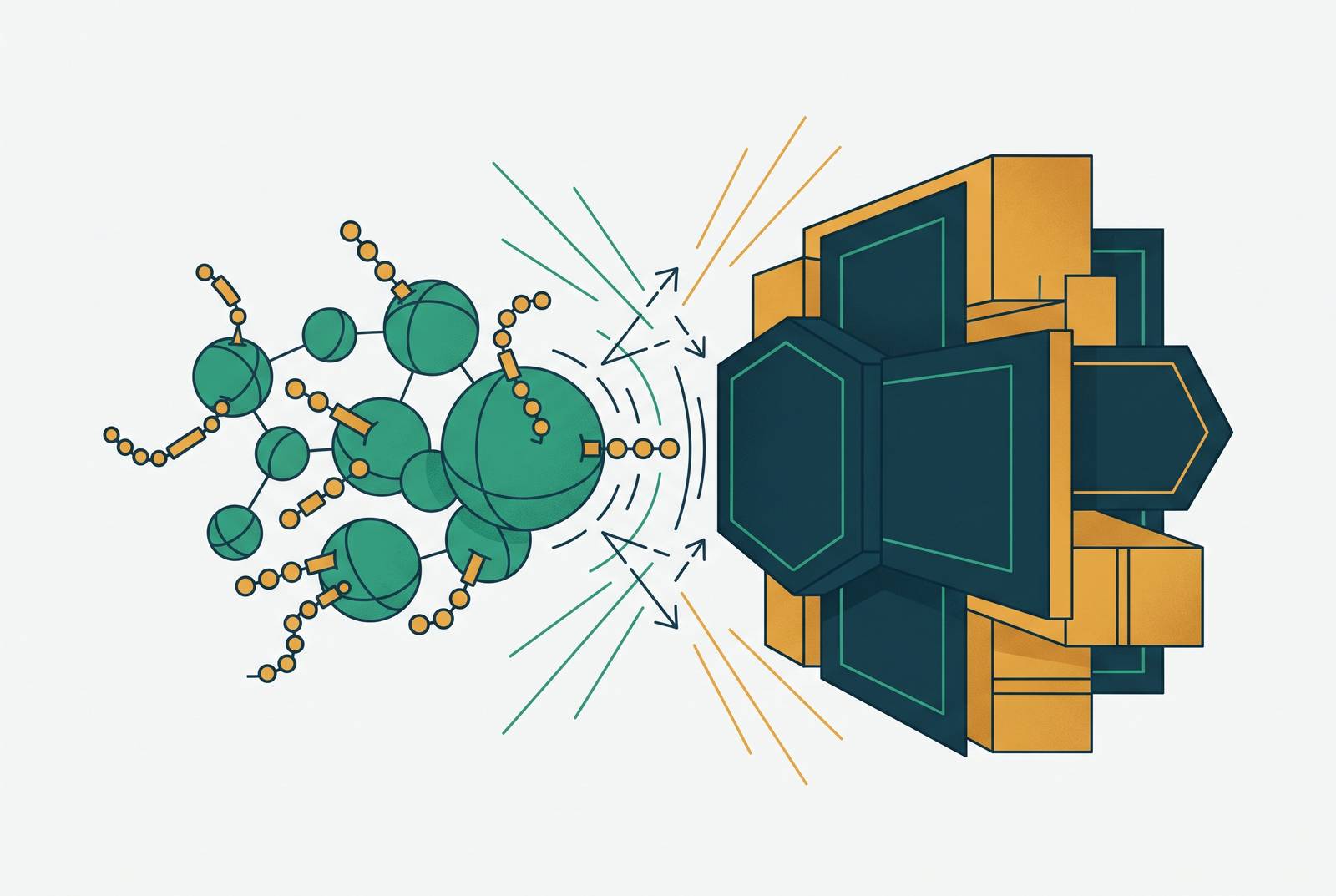
For Lionbio’s Columbia University–derived nanoparticle platform for peptide delivery, protecting the delivery architecture is distinct from protecting a particular formulation. Its preclinical intranasal GLP-1 approach draws on decades of patented nanoparticle research. The claims need to be assessed for protection of the delivery mechanism across payloads or of one composition.
Why peptide delivery is a patent battleground, not just a chemistry problem
GLP-1 biology has outgrown the delivery paradigm developed for injectable formulations. GLP-1 receptors are distributed throughout the CNS, where they influence synaptic plasticity, neuroinflammation, insulin signaling, and cellular energy management. That distribution gives researchers reasons to investigate uses beyond metabolic disease. But biological relevance does not establish that a peptide can reach the relevant target safely and reliably through its existing route of administration.
A molecule’s therapeutic potential and the means of realizing that potential are distinct assets. If access to a target depends on an engineered carrier, control of that carrier becomes consequential. The patent contest therefore concerns not only which peptide is used, but which protected structure makes its use possible.
How the subcutaneous injection model generates the compliance crisis that makes delivery IP valuable
The commercial consequence of that gap begins with adherence. Large-scale adherence data describe pharmacy abandonment and early discontinuation as substantial problems. Even an efficacious molecule has limited practical value when patients do not begin treatment or cannot sustain it. The method and frequency of injection contribute directly to that difficulty.
Nausea adds a biological constraint to the burden of administration. It affects a large share of patients receiving high-dose treatment and is a leading reason for discontinuation among those stopping because of adverse events. However, real-world dropout also reflects cost and insurance, so nausea cannot explain every interruption. A delivery change that improves tolerability would not, by itself, establish better coverage or affordability.
This distinction defines the opportunity for alternative delivery IP without overstating it. Intranasal formulations designed to reduce gastrointestinal exposure aim to change how the drug is delivered so patients have less exposure to tolerate. For the nanoparticle platform Lionbio is developing, that remains a design objective awaiting demonstrated adherence outcomes. Patents protecting a workable alternative could cover an important part of the compliance solution, but not every barrier between a prescription and sustained treatment.
What nose-to-brain delivery actually does biologically, and why raw peptides cannot do it alone
The olfactory and trigeminal nerve pathways provide routes to the brain that bypass the blood–brain barrier. In mice, GLP-1 and GLP-2 derivative peptides with functional sequences have shown rapid transport through trigeminal axons after intranasal application. That finding supports the biological pathway, but it does not show how well delivery would work in humans.
Unprotected peptides encounter enzymatic degradation, mucociliary clearance, and short mucosal residence. Nanocarriers, including lipid-based, polymeric, protein-based, and inorganic systems, are designed to overcome these barriers and sustain CNS delivery.
Intact nanoparticles favor the trigeminal route, while substances released from nanoparticles favor the olfactory route. Deposition adds another design layer, with borneol-modified lipid nanoparticle sprays showing increased olfactory deposition and bidirectional sprays and precision olfactory delivery technology further optimizing placement. These relationships explain why Lionbio’s Columbia University–derived nanoparticle platform belongs in an architecture-level discussion rather than a claim that any nasal peptide formulation can deliver directly to the brain.
How nanoparticle IP is architecturally different from Big Pharma formulation patents
Formulation patents protect real technical work. A specific composition can determine how a payload is encapsulated and released, so a narrow claim is not necessarily a weak or unimportant claim. The mRNA/LNP disputes make this clear because specific molar ratios of lipid types in the final formulation, rather than individual lipid components alone, have been central contested assets. Arbutus’s FY2025 SEC Form 10-K states that its March 3, 2026 settlement with Genevant resolved patent infringement litigation with Moderna globally, while litigation against Pfizer/BioNTech remains ongoing.
Academic nanoparticle IP tends to address particle structure, delivery mechanism, and adaptability across payloads or routes. Big Pharma formulation filings tend to protect narrower compositions tied to particular molecules, ratios, or administration contexts. Their constraint is specificity, since protection for one composition does not necessarily cover the broader delivery architecture.
Reformulation can nevertheless be a powerful defensive strategy. Moving a biologic from intravenous to subcutaneous administration can create new IP, complicate biosimilar substitution, and extend exclusivity. An intranasal reformulation can pursue similar protection, but the word “intranasal” does not by itself establish a differentiated platform. The relevant distinctions lie in the nanostructure, the route-of-administration claim, or a method of use tied to a particular indication. The words in the claims determine what is protected, whatever the platform is called.
How Columbia Technology Ventures builds and transfers platform IP into commercial development
Columbia Technology Ventures helps move university inventions into commercial development. The Bayh-Dole framework allows universities to retain title to federally funded inventions and license them exclusively. Through licensing, a company can develop technology from a university without the university having to develop the product itself. It also explains how a spinout can build on research accumulated before the company existed.
The Federal Register notice published November 20, 2024 shows how this licensing can work. It describes a contemplated exclusive, sublicensable license through which NIAID would license its rights in co-owned inventions to The Trustees of Columbia University and Columbia Technology Ventures. The notice concerns peptide and peptide microarray inventions for detecting and differentiating antibody responses to Ebola virus and other pathogens. It documents the institutional transfer process through a contemplated license for those inventions.
That distinction matters when assessing academic provenance. Under the platform model, research at a university produces foundational IP, a company licenses it, and later filings can cover specific applications and methods of use. This differs from beginning with a single reformulation filing. But Columbia’s role in licensing does not by itself show what rights any one spinout has.
Where Lionbio’s nanoparticle platform sits in this IP structure
Lionbio is a Columbia University spinout built on decades of patented nanoparticle delivery IP. Its positioning describes an extensive patent portfolio and a founding team with substantial cumulative academic citations. Those features explain its academic foundation, but research history and citations are not substitutes for patent scope. The more useful point of comparison is what its platform is designed to protect and enable.
The core design combines intranasal administration with a nanoparticle carrier intended to deliver GLP-1 peptides directly to the brain. That combination could have separate protection for its nanostructure, route of administration, and indication-specific methods of use. A formulation-only approach may protect a particular composition without extending across those layers. Lionbio’s platform positioning instead treats the carrier and delivery mechanism as the foundation on which individual therapeutic applications would be built.
That foundation is intended to extend beyond one peptide product. The platform is designed to be adaptable across peptides and neurological indications, with potential extensions into gene editing and regenerative medicine. These areas of applicability remain proposals awaiting validation in patients. Their relevance to the IP argument is that a reusable delivery architecture can support applications beyond the first payload, provided its claims actually cover those uses.
Central rather than systemic delivery aims to reduce the gastrointestinal exposure associated with nausea-driven dropout. All of this research is preclinical, so the proposed route does not establish reduced nausea, human safety, efficacy, or better retention. Lionbio is consequently a relevant case for evaluating platform-level peptide delivery IP.
How closely the proposed platform corresponds to its protected scope remains unresolved. A large portfolio may have foundational claims, application-specific claims, or both. The supplied company positioning does not identify the individual claims needed to resolve that question.
Why the neurological indications — addiction, dementia, and beyond — are where delivery IP becomes a market-defining asset
Neurological indications sharpen the distinction because CNS exposure can be a scientific constraint. Preclinical evidence links GLP-1 receptor agonists to reduced amyloid-β and tau pathology, inhibited neuroinflammation, and enhanced synaptic plasticity. A large longitudinal cohort of people with type 2 diabetes also found an association between GLP-1 receptor agonist use and reduced dementia incidence. An association, however, does not establish that the treatment prevents dementia.
The completed Phase III trials EVOKE and EVOKE+ tested cognitive decline in early symptomatic Alzheimer’s disease, but completion alone is not evidence of benefit. Current trial evidence does not support GLP-1 receptor agonists for neurodegeneration outside clinical trials. The available randomized evidence described here did not show better memory and cognition in Alzheimer’s disease than with placebo, and certainty in that finding was low.
Limited blood–brain barrier penetration, as described for liraglutide, gives researchers a reason to investigate brain-penetrant formulations. It does not prove that delivery alone accounts for the disappointing clinical results. The alcohol use disorder trial using exenatide over 26 weeks likewise failed to reduce heavy drinking days overall, with a signal confined to the subgroup with comorbid obesity. As of February 2026, the FDA has not approved GLP-1 drugs for the treatment of addiction.
Together, these findings provide a rationale for researching better CNS delivery across neurological indications through platform-level nanoparticle approaches, including Lionbio’s intranasal design.
What freedom-to-operate actually requires for a nanoparticle spinout in a crowded claim space
An intranasal platform using an existing GLP-1 peptide can encounter rights covering both the peptide molecule and nanocarrier excipients. Even with claims on a delivery architecture, a company still needs to check whether a specific implementation overlaps another party’s claims. This is where the distinction between platform ownership and freedom to develop a specific product becomes important.
The delivery claim space is also becoming more crowded. US-20260000626 describes polymeric nanoparticles for long-acting peptide delivery with less than 20% initial release. It addresses peptide micronization and nanoencapsulation using tailored solvent systems, with attention to particle size, encapsulation efficiency, and release profiles. Such claims illustrate how a delivery platform can encounter constraints at the manufacturing and release-design levels as well as at the choice of payload.
The assessment should cover foundational filing dates, what the claims cover, where they overlap with proposed compositions, and whether they cover the intended administration route and use. Earlier academic filings may supply prior art or protect a differentiated nanostructure, while a commercial implementation may still require design changes around other claims. Decades of research can therefore provide an advantage, but age alone does not establish freedom to operate. A broad platform description also leaves open whether competitors can design around the actual claims.
Why the winner of the next GLP-1 era will be decided by delivery architecture and the IP protecting it
The competitive case for delivery IP does not require treating injection as the sole cause of discontinuation. More recent 2024-cohort data show meaningfully better retention than earlier cohorts as supply shortages resolve and coverage expands. That improvement demonstrates that access conditions matter. It does not isolate an effect of delivery engineering, and it makes the remaining tolerability and administration problems more specific while leaving their importance intact.
Those remaining problems are where protected delivery architecture can become a durable competitive asset. Lionbio’s Columbia-derived platform illustrates a strategy built around foundational nanoparticle IP, an intranasal route, and proposed applications across neurological indications. The key comparison is between rights that cover one implementation and rights that cover a mechanism that many implementations depend on.
Clinicians, investors, and scientific peers should therefore evaluate peptide delivery companies on the depth, breadth, and foundational character of their delivery IP alongside their molecular assets.
Sources
- Federal Register :: Prospective Grant of Exclusive License, Inter-Institutional Agreement-Institution Lead: Peptides and Peptide Microarrays for Detection and Differentiation of Antibody Responses to Ebola Virus and Other Pathogens.
- Federal Register/Vol. 89, No. 224/Wednesday, November ...
- The Race of mRNA therapy: Evidence from Patent Landscape
- Nanocarrier-based intranasal drug delivery for enhanced neurological disorders treatment
- Nose-to-brain drug delivery: from bench to bedside