Nanoparticle Drug Delivery Systems in Approved Therapies
Approved nanoparticles solve specific delivery failures free drugs cannot overcome.
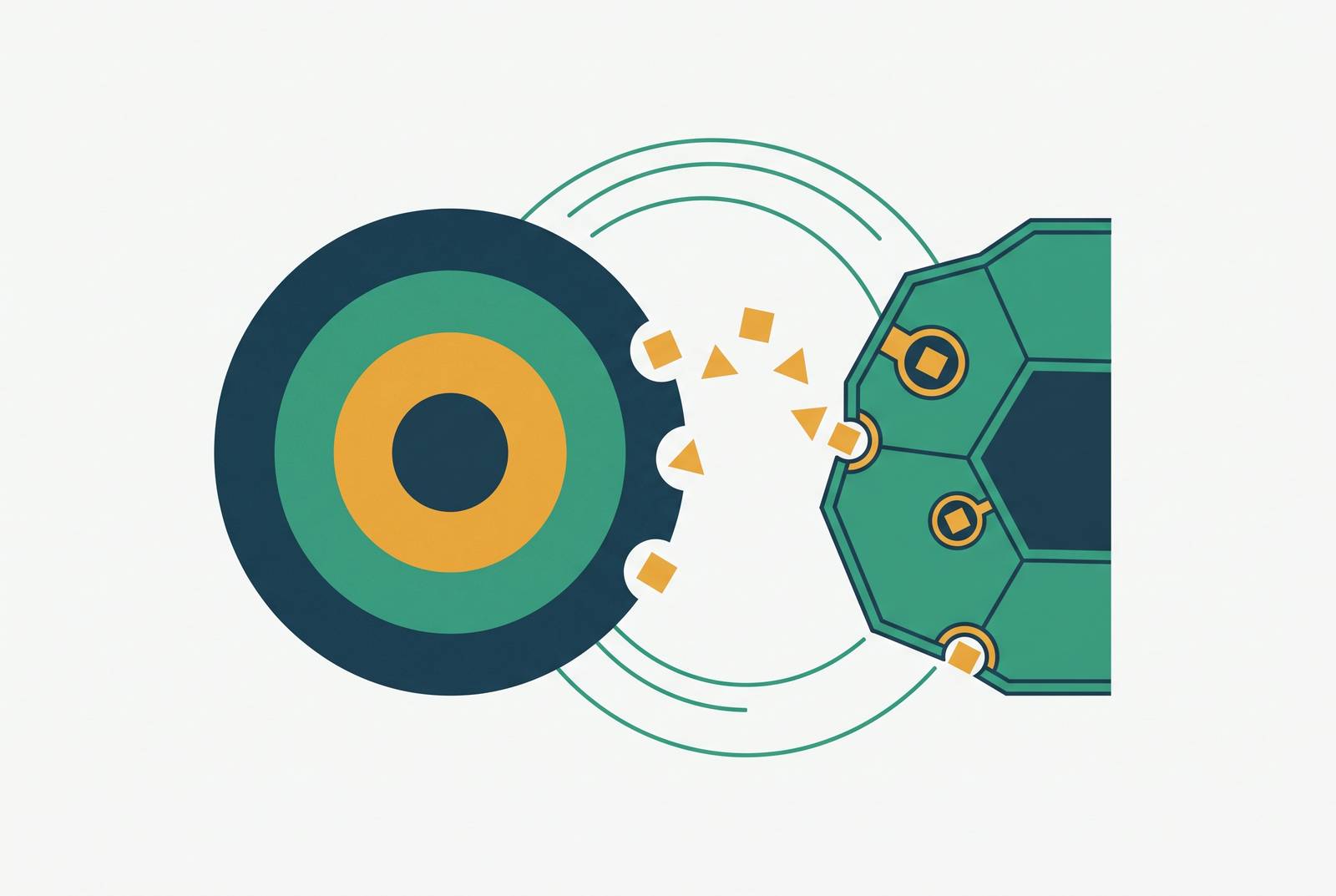
Approved nanoparticle drug delivery systems, from liposomal chemotherapy to the lipid nanoparticles behind mRNA vaccines, share a pattern: each one solved a specific, named delivery failure that the drug molecule alone could never overcome. That pattern is not incidental. It is a translational logic, tested and repeated across three decades of regulatory approvals, and it is now being pointed at problems, like the blood-brain barrier and GLP-1 peptide delivery, that conventional formulation science has never cracked.
Nanoparticle drug delivery systems and the failures of conventional formulations
Conventional drug formulations fail in fairly predictable ways. A molecule might be potent in a petri dish and nearly useless in a body, because it cannot cross cell membranes efficiently, gets cleared from circulation before it reaches its target, degrades before it dissolves properly, or produces toxicity at the doses required for effect. These are not rare edge cases confined to a handful of difficult drugs. They are the baseline pharmacokinetic reality that determines how much of any given therapeutic actually arrives where it needs to work, and how much simply circulates, degrades, or does damage elsewhere along the way.
Nanoparticle drug delivery systems, often abbreviated NDDS, exist as an engineering response to exactly that reality. The family includes liposomes, lipid nanoparticles, polymeric nanoparticles, dendrimers, and micelles, and despite their structural differences, they all function as carriers rather than as active drugs in their own right. What makes them useful is that several of their physical properties can be tuned independently: particle size, surface chemistry, how much drug they can encapsulate, and how quickly they release that payload once they arrive. Matching those parameters to the biology of a target tissue lets a molecule that failed as a free-floating compound behave very differently in the body.
Two targeting strategies do most of the work here. Passive targeting relies on the enhanced permeability and retention effect, or EPR, in which small particles accumulate preferentially in solid tumors and sites of chronic inflammation, simply because those tissues have leaky, disorganized blood vessels that let nanoparticles through and poor lymphatic drainage that keeps them there. No steering is required. Active targeting adds a second layer on top of that: ligands coated onto the particle surface bind specific receptors on target cells, giving the carrier a way to seek out tissue that passive accumulation alone would miss. Neither strategy is exotic biology. Both are mechanical consequences of particle size and surface chemistry. They can be engineered rather than discovered by accident.
Each carrier class in this family, in other words, was not built as a generic delivery vehicle. It was built in response to a specific failure mode, whether that failure was a fragile drug degrading before it reached its target or a potent drug reaching every tissue except the one it needed to reach. That distinction, solving a named problem rather than chasing a novel material, is what separates the nanoparticle systems that made it to market from the ones that stayed in journals. The rest of this piece traces how that logic played out, starting with the carrier class that proved it could work.
Doxil and the liposome proof of concept: from cardiotoxicity problem to approved oncology drug
Doxorubicin is one of oncology's most effective chemotherapeutics, and also one of its more dangerous ones. Given in its free form, it distributes broadly across the body, including into cardiac tissue, where it causes cardiotoxicity that can be severe enough to limit how much of the drug a patient can safely receive over a course of treatment. The drug worked. Efficacy was never the problem. No amount of increased dosing could fix a distribution pattern rather than a potency shortfall.
Wrapping doxorubicin in a phospholipid bilayer shell reduces how much of it reaches healthy myocardial tissue, while still allowing the liposome to accumulate at tumor sites through the EPR effect. The active molecule inside the shell never changed. What changed was the architecture around it, and that architecture altered where in the body the drug actually went. Doxil received FDA approval in 1995, becoming the first FDA-approved nanodrug and setting the regulatory precedent the rest of the field would build on.
Part of why liposomes cleared that regulatory bar first has to do with familiarity. A phospholipid bilayer is structurally similar to a cell membrane, which gave early developers a biocompatibility argument that was easier to make to regulators than an entirely synthetic carrier would have been. Once that safety case landed, liposomal formulations kept extending outward from the Doxil precedent. A 2025 review in Pharmaceutics from Mayo Clinic College of Medicine and Sciences catalogs liposomal research and approvals spanning melanoma, lung, colorectal, liver, breast, ovarian, pancreatic, and brain tumors, along with sarcoma, neuroblastoma, and leukemia. The same review points out that no liposomal formulation has yet reached market approval specifically for lung or liver cancer, a useful reminder that platform breadth does not mean universal success across every indication.
The template Doxil established has repeated itself since. Find a molecule with proven efficacy and a delivery-driven limitation, build a carrier engineered to address that specific limitation, and demonstrate that the carrier measurably changes the pharmacokinetic profile in the clinic. That template did not stay confined to liposomes carrying small-molecule chemotherapeutics. It became the blueprint for an entirely different category of payload.
How lipid nanoparticles extended the platform from small molecules to nucleic acids
Nucleic acids present a delivery problem that dwarfs anything doxorubicin posed. RNA and DNA are enzymatically fragile, getting chewed up by nucleases in the bloodstream within minutes of exposure, they are immunogenic in free form, as the immune system tends to treat naked RNA as a threat, and they cannot cross a cell membrane unassisted regardless of how stable they are outside the cell. No conventional excipient addresses all three problems at once. That is not a formulation inconvenience; it is closer to a structural impossibility for anything built on older delivery chemistry.
Lipid nanoparticles, or LNPs, are built from the same conceptual lineage as liposomes but optimized quite differently. The defining feature is the ionizable lipid component, which stays close to neutral at physiological pH, reducing immune activation while the particle circulates, and then becomes positively charged inside the acidic environment of the endosome once the particle has been taken up by a cell, which helps trigger payload release exactly where it is needed. That switch, neutral outside the cell, charged inside it, is what lets LNPs thread a needle that liposomes alone were never built to thread.
What makes LNPs particularly interesting as a platform, rather than as a single product, is their structural flexibility: the same basic architecture can encapsulate chemotherapeutics, nucleic acids, or imaging tracers, depending entirely on formulation choices made during manufacturing. In oncology, LNPs picked up traction for both therapeutic and theranostic purposes, meaning formulations designed to treat and diagnose simultaneously, with improved efficacy and lower systemic toxicity than earlier approaches.
The moment that proved the platform argument beyond oncology came from somewhere else. Moderna's mRNA-1273 and the Pfizer/BioNTech BNT162b2 vaccine both used LNP-based delivery to get messenger RNA into cells at population scale, protecting fragile RNA in circulation, delivering it intracellularly, and producing a measurable immune response in hundreds of millions of people. That is not a small footnote. A carrier class already validated in cancer, then validated again in an entirely different disease category under emergency global conditions, stops looking like a specialized oncology tool and starts looking like general-purpose delivery infrastructure.
The next extension of that architecture is already underway in personalized cancer vaccines. That is a meaningful step beyond a single formulation manufactured identically for millions of doses. It suggests the platform can flex down to individualized payloads just as readily as it scaled up to population-level ones. Personalized cancer vaccines (including BNT122 and mRNA-4157) have advanced using LNPs (mRNA-4157) or RNA-lipoplex formulations (BNT122) to deliver patient-specific neoantigens for targeted immune responses, representing a further extension of the same carrier architecture into precision oncology.
The translational logic behind each approved class
A consistent pattern appears across every nanoparticle system that has actually reached approval, visible when the specific molecules are set aside. Cardiotoxicity from free doxorubicin, enzymatic degradation of free RNA, insufficient tumor accumulation of hydrophobic chemotherapeutics: these are different chemistries and different diseases, but structurally identical problems, in that the molecule itself worked and the delivery architecture around it did not.
What did regulators actually require to approve these? Not simply proof that a carrier existed or that it behaved sensibly in a dish. The FDA and EMA both require demonstrating that the carrier changed the pharmacokinetic profile in a way that translated into clinical benefit or measurably reduced harm, backed by long-term toxicity data that accounts for age-specific vulnerabilities. That is a considerably higher bar than showing a nanoparticle is novel or clever. It has to move an outcome, not just a mechanism.
One might argue that each approval mattered only for the specific drug it covered. That undersells what actually happened. Every approval also functioned as an implicit validation of the underlying carrier architecture itself: liposomes approved for doxorubicin created a biological and regulatory precedent that accelerated subsequent liposomal formulations, and LNPs approved for mRNA vaccines created the same for nucleic acid delivery broadly. The pipeline behind that precedent is no longer thin. The EU Clinical Trials Register currently lists more than 60 nanotechnology-based compounds under active investigation, covering vaccine adjuvants and combination chemoradiation strategies among other approaches, which points to a regulatory infrastructure that has become genuinely well-traveled rather than experimental.
Since the 1980s, the number of nanoparticle-based pharmaceutical products has grown substantially, and the approvals that followed Doxil in 1995 have not been isolated events scattered across decades. They compound. Each one adds evidence to the same translational argument: identify the specific failure, engineer the specific fix, prove the pharmacokinetic change, demonstrate the clinical benefit. That argument is portable. It does not care whether the delivery failure involves a heart, a bloodstream enzyme, or, as the next section takes up, one of the most stubborn anatomical barriers in the entire body.
The blood-brain barrier as the next category of delivery failure the platform is being applied to
Brain disorders affect more than a billion people worldwide, and the single largest obstacle to treating most of them pharmacologically has nothing to do with whether an effective drug exists. The blood-brain barrier, a highly selective vascular structure, excludes the overwhelming majority of therapeutics from the central nervous system regardless of how well those therapeutics work once they get there. That is, structurally, the same problem free doxorubicin created for cardiac tissue: a molecule with genuine efficacy defeated entirely by where the delivery route sends it. Systemic injection and oral dosing both run into this wall, because both routes depend on the drug crossing the BBB from the bloodstream, and the BBB is built specifically to prevent exactly that.
The intranasal route offers something structurally different: rather than attempting to cross the barrier, it goes around it. The nasal cavity connects directly to the central nervous system through the olfactory and trigeminal neuronal pathways, giving drugs an anatomical route into the brain that never touches the BBB at all.
Two separate transport mechanisms carry a drug along that route. Intracellular axonal transport moves a drug along the trigeminal nerve itself, while extracellular perineural transport moves it through the space surrounding that nerve. How fast is that, in practice? In preclinical research, a GLP-2 derivative was detected in the trigeminal principal sensory nucleus just three minutes after intranasal administration. That number matters less as a speed record and more as evidence: it shows CNS distribution via the trigeminal pathway is a measurable, demonstrable event. The route also skips hepatic first-pass metabolism entirely, and it is non-invasive enough to suit conditions that require repeated dosing over years rather than weeks.
None of that happens efficiently without engineering help, though. Encapsulating a drug in a nanoparticle protects it from enzymatic degradation and from P-glycoprotein efflux pumps in the nasal mucosa that would otherwise push the drug back out, modulates how the particle interacts with the mucus layer it has to cross, and allows surface modifications, like mucoadhesive coatings or receptor-targeting ligands, that extend how long the formulation stays in place and how efficiently it gets taken up into the olfactory and trigeminal pathways. Size alone will not do this work. A sufficiently small particle that lacks the right surface chemistry will simply get cleared before it goes anywhere useful. The barrier being addressed here looks, structurally, like every other delivery failure this article has traced.
Nanoparticle strategies being developed for nose-to-brain drug transport
Among the carrier classes being applied to nose-to-brain delivery, polymeric nanoparticles draw the most research attention, largely because of their biocompatibility, biodegradability, and the degree to which their surface can be customized for a given payload and pathway. That customization is where the interesting engineering actually lives.
Take mucoadhesion. Jia and colleagues built multivalent bioadhesive nanoparticle clusters, referred to as BNPs-PAMAM, based on PAMAM dendrimers. The design increases how well the particle adheres to nasal mucosa, extends how long the drug stays resident in the nasal cavity, and enables sustained release timed to optimize how the drug behaves once it reaches the brain. The platform was built specifically to deliver neuroprotective agents within the narrow treatment window that follows a thrombotic event, where minutes of delay can determine outcome.
Neurodegeneration research shows a different kind of sophistication. Yang and colleagues developed dendritic poly-L-lysine nanoparticles co-loaded with BACE1 siRNA and rapamycin, an autophagy activator, and functionalized the particle surface with Aleuria aurantia lectin and the Aβ-binding peptide KLVFF, intended for intranasal delivery in Alzheimer's disease. That is a single carrier running two therapeutic payloads and two distinct targeting mechanisms at once, which says something about how far this engineering has moved past a simple drug-in-a-shell design.
Receptor choice on its own can reshape where a drug ends up. Lactoferrin receptor-modified nanoparticles have achieved drug accumulation across multiple brain regions in preclinical models, including the cerebrum, cerebellum, and olfactory bulb, which demonstrates that the ligand chosen for the particle surface directly determines the distribution pattern achieved inside the brain. The field has not settled on one physical format either. Dry powders, in situ gels, polymeric nanoparticles, and lipid nanocapsules are all under active investigation, reflecting how varied the payloads and target indications actually are.
None of this constitutes an approved therapy yet. It constitutes, more precisely, an active engineering discipline working through the same translational logic that carried liposomes and LNPs from bench to bedside, applied now to a target that conventional pharmacology has mostly had to concede was out of reach. The key design variables across all these approaches are mucosal adhesion (how long the formulation stays in contact with nasal epithelium), surface targeting (which receptors mediate uptake into neuronal pathways), payload protection (encapsulation from enzymatic degradation), and release kinetics (sustained vs. bolus delivery in the CNS).
Why GLP-1 peptides present a delivery challenge that the nanoparticle platform is positioned to address
GLP-1 receptor agonists rank among the most consequential drug classes in current medicine, with demonstrated efficacy spanning meaningful HbA1c reduction in diabetes, weight loss ranging from 7 to 24 percent in obesity treatment, and a 14 to 20 percent reduction in major adverse cardiovascular events. Those numbers are not incremental. They represent a drug class that has already reshaped how several chronic diseases get treated.
What is less widely appreciated is where GLP-1 receptors actually sit in the body. Beyond the peripheral metabolic tissues most people associate with the drug class, these receptors are expressed on neurons, glial cells, and components of the neurovascular unit, which gives the class a direct biological basis for neurological effects that peripheral dosing may not engage as efficiently as it could. Mechanistically, GLP-1 receptor agonists activate the cAMP/PKA/CREB signaling pathway to boost BDNF expression, and preclinical work suggests they can reduce neuroinflammation, support mitochondrial function, and help maintain blood-brain barrier integrity.
That raises an important question: does the dominant delivery method for this drug class actually get it there efficiently? Most GLP-1 therapeutics are delivered by injection, and although FDA-approved oral formulations now exist, both routes deliver the peptide systemically and depend on a peripheral-to-central signaling gradient to produce any CNS effect at all. That is an indirect path to the receptors doing the neurological work described above, and it comes with well-documented tolerability issues along the way.
Lining that delivery tension up against everything traced in this piece makes the shape of the opportunity hard to miss. Doxil solved a distribution problem for doxorubicin by building a carrier around it rather than reformulating the molecule itself. LNPs solved an even harder distribution problem for fragile nucleic acids the same way. Nose-to-brain nanoparticle research is now solving blood-brain barrier delivery using that identical logic: engineer the carrier, not the payload, to fix a delivery architecture that the molecule alone cannot fix on its own. A GLP-1 peptide that already works, that already has proven receptors waiting in the tissue it needs to reach, is squarely inside the kind of delivery challenge this platform has already solved more than once. Whether an engineered nanoparticle carrier ends up the way that gap gets closed remains a question for the research still underway, but the translational map for getting there is no longer theoretical. It has already been drawn, approval by approval, since 1995.
Sources
- Nanoparticle Therapeutics in Clinical Perspective: Classification, Marketed Products, and Regulatory Landscape - Desai - 2025 - Small - Wiley Online Library
- Nanotechnology-Based Drug Delivery Systems
- Lipid-Based Nanoparticles in the Clinic and Clinical Trials: From Cancer Nanomedicine to COVID-19 Vaccines - PMC
- 10290104 DOXIL® (doxorubicin hydrochloride liposome injection)
- From bench to bedside: Advancing liposomal doxorubicin for targeted cancer therapy - ScienceDirect
- The evolution of lipid nanoparticles: Paving the way for next-generation nucleic acid medicines - PMC
- Nanoparticle-Mediated Nose-to-Brain Delivery for Ischemic Stroke Therapy: Preclinical Insights
- Nanotechnology for enhanced nose-to-brain drug delivery in treating neurological diseases - ScienceDirect