The Behavioral and Psychological Spiral That Turns GLP-1 Nausea Into Permanent Discontinuation
How nausea evolves from side effect into learned aversion driving treatment dropout.

GLP-1 nausea can turn discontinuation into a behavioral spiral. Repeated discomfort can become learned aversion, weaken perceived benefit, and harden into the belief that treatment is incompatible with the patient’s body. Addressing nausea-driven dropout therefore requires attention to both the treatment experience and its pharmacological origins, while nose-to-brain delivery remains a preclinical research direction.
Why do so many patients quit GLP-1 therapy before reaching the therapeutic plateau?
A drug class celebrated for its efficacy is being abandoned at scale before its full benefits can develop. Persistence is the weak link. The JAMA Network Open cohort study found that 64.8% of patients without type 2 diabetes discontinued within one year, substantially more than patients with diabetes. By two years, most patients overall had stopped. The difference suggests that the ongoing need to treat a disease can help people stay on treatment, though it does not show why any one person stops.
Sontha et al.’s Boston University study presented at ENDO 2026 found substantial first-year discontinuation and a majority stopping by two years among U.S. adults with type 2 diabetes. The burden was not evenly distributed. Patients on Medicaid or Medicare, Black patients, and those experiencing nausea or stomach-related side effects were more likely to discontinue within a year. These patterns place nausea within a broader discontinuation problem, rather than making it the explanation for every treatment gap.
Side effects — specifically nausea — are the single most common documented reason patients stop
Gastrointestinal side effects are the most frequently reported triggers for stopping, with nausea central to that experience. The pooled STEP 1–3 trials found nausea rates in semaglutide arms nearly three times those in placebo arms. Women also experience nausea and vomiting at substantially higher rates than men, creating a demographic difference in exposure to the spiral’s first trigger.
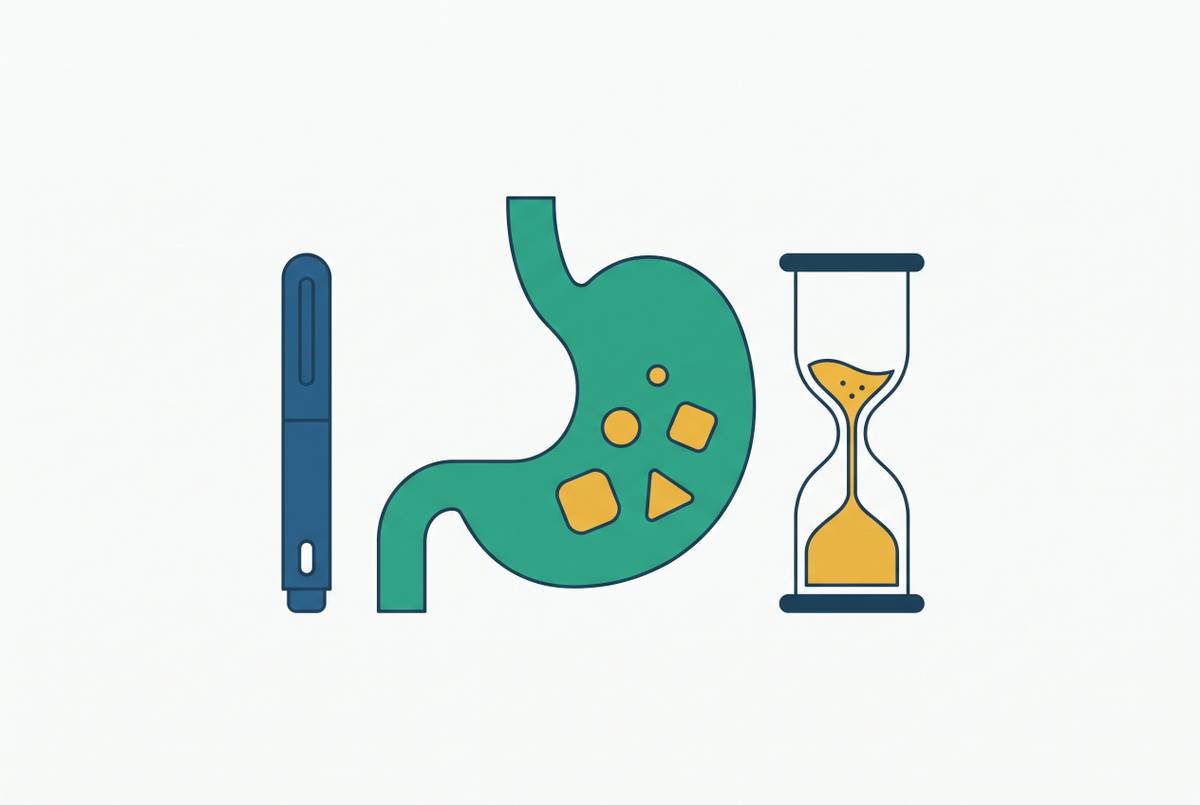
Yet nausea frequency alone cannot explain durable discontinuation. Repeated nausea may affect the patient’s willingness to continue, especially while benefit remains incomplete. A symptom that feels tolerable once can acquire a different meaning when it becomes part of the expected treatment routine. Its presence, timing, and recurrence therefore belong in the explanation. Delivery design must consider whether therapeutic exposure must also produce the exposure that initiates aversion.
Why GLP-1 nausea is so hard to separate from GLP-1 benefit — the brainstem architecture of the problem
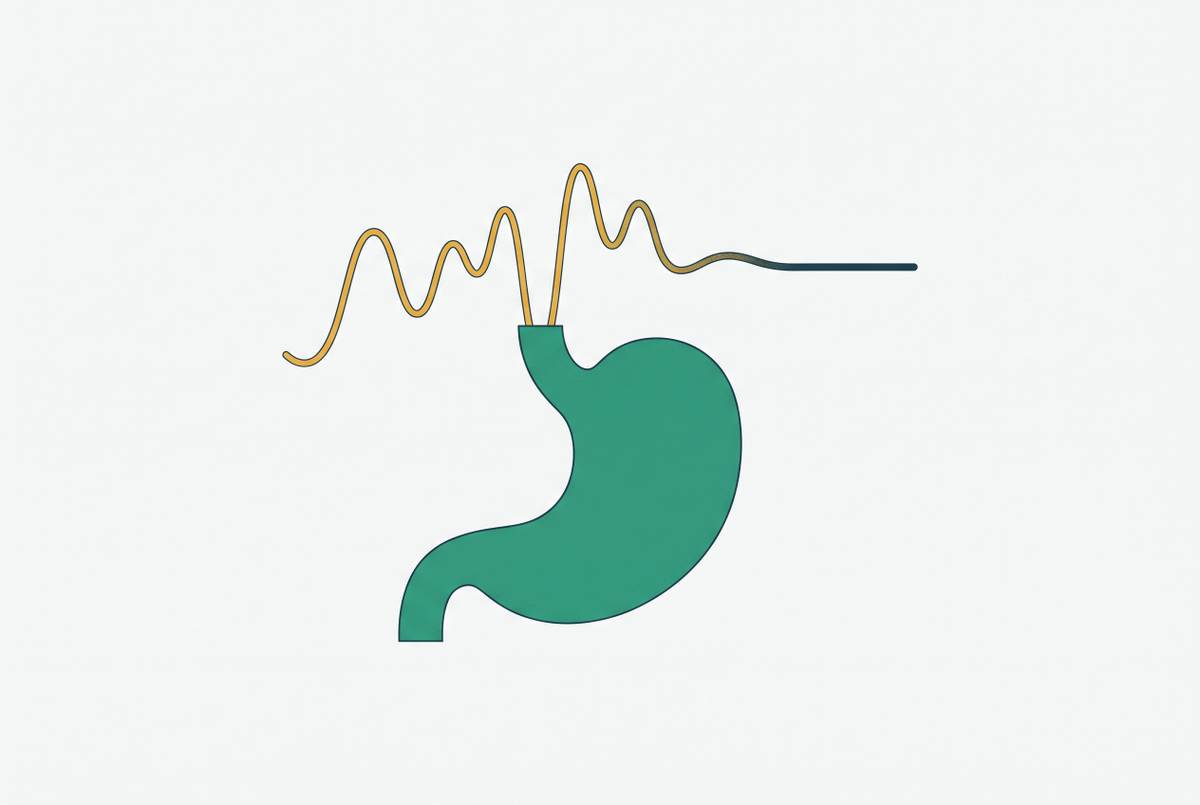
GLP-1 nausea cannot be understood as stomach upset alone, because gut signals and direct drug exposure converge in the brainstem. GLP-1 receptor agonists stimulate receptors on vagal nerve fibers, amplifying sensory signals from the gut to the brain. Circulating drug can also activate the area postrema, a brainstem region that detects chemical signals and helps generate nausea and vomiting. It sits outside the blood-brain barrier. That position makes it accessible to drug in the bloodstream.
Anatomical overlap makes separation difficult. GLP-1-responsive neurons in the area postrema contribute to both weight loss and aversive responses, while distinct circuits participate in appetite suppression and nausea. Current systemic dosing can engage both. Counseling cannot prevent that receptor activation. Research must determine how to separate beneficial signaling from aversive signaling without losing the effect that brought the patient to treatment.
University of Virginia research found that activating GLP-1 receptor neurons in the central amygdala suppressed dopamine release in the nucleus accumbens through a circuit involving the ventral tegmental area. These connected regions play a part in motivation and reward. The finding offers a possible mechanism for reports of reduced motivation and anhedonia, or diminished pleasure, but does not establish that mechanism in patients who discontinue. It does, however, suggest that nausea and a loss of motivation may make each other worse.
How nausea becomes a learned aversion that outlasts the pharmacological event
When nausea keeps coming back, the patient can learn an association that lasts after the drug’s immediate effect has passed. Animal models show that giving a GLP-1 agonist along with a new flavor leads to conditioned flavor avoidance. GLP-1-receptor-expressing excitatory neurons in the area postrema help drive this learning. The flavor becomes a warning of what follows. That distinction separates an acute adverse effect from a learned response to something that predicts it.
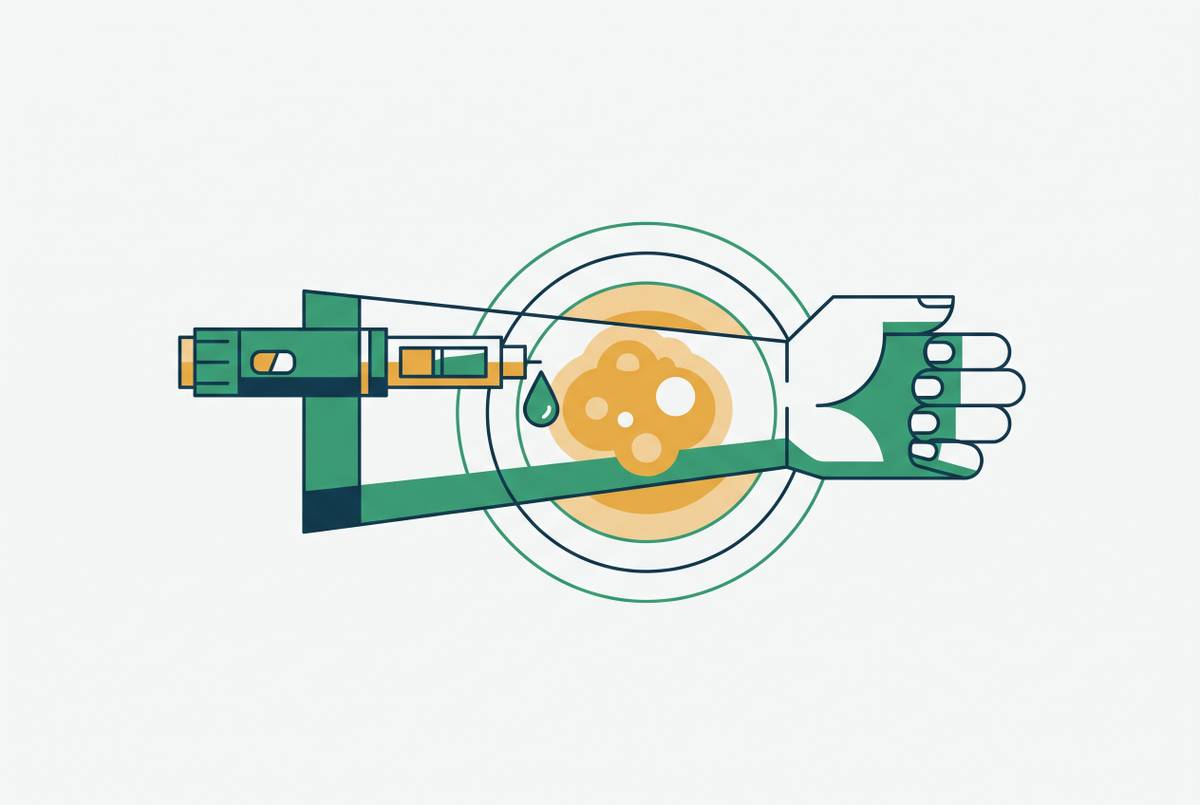
In the human treatment experience, the possible cues extend beyond flavor to the injection device, the dose day, and eating itself. Consider the injection pen on the kitchen counter. It need not be in use to bring the next dose to mind, just as Friday’s approaching injection can become a source of dread before any drug is administered. These examples illustrate the proposed conditioning pathway, rather than a measured frequency of anticipatory symptoms. The biological event supplies the association, and the treatment ritual can repeatedly recall it.
Anticipatory anxiety can then amplify the experienced severity of subsequent nausea and strengthen avoidance. Eating itself may become an uncomfortable prospect. For some patients, injections also symbolize worsening disease, adding stigma and distress to an already aversive routine. What would otherwise be a discrete dosing event acquires emotional reach across the week. At this stage, motivation must overcome not only present discomfort but the expectation of discomfort still to come.
The paradox of early success — how rapid initial weight loss accelerates dropout
Patients with the greatest early weight loss have been reported to show lower odds of twelve-month adherence than those with more modest initial loss. The association does not establish a single cause. Still, it calls into question the belief that seeing results always gives patients enough motivation to put up with adverse effects. Why might someone stop just when treatment seems to be working?
One explanation is reduced disease salience, meaning that the health threat feels less immediate. The patient feels better, but the nausea is still there. Once patients feel they have secured the early weight loss, staying on treatment may seem to offer less new reward for the same cost that keeps coming back. The patient’s interpretation can shift from enduring a temporary side effect to making a reasonable health decision.
That reframing gives the spiral another source of momentum. The thought that enough weight has already been lost can coexist with the belief that the drug is too hard on the body. There is no contradiction inside that personal account. The resulting decision can feel settled even though the physiological benefits are not independent of continued treatment.
How the spiral hardens into the conviction that the therapy simply doesn't work for that patient
By this point, saying that treatment “doesn't work” may mean that its benefits cannot justify the experience of taking it. That is a different judgment about treatment. Real nausea, visible early success, and relief after stopping can all reinforce the same conclusion that discontinuation was protective. A clinician talking about efficacy and a patient talking about tolerability may therefore be trying to answer different questions.
Truveta Research found that 21% of discontinuing patients had more than one reason documented for stopping. Multiple reasons complicate a single-cause account of dropout. The finding is consistent with discomfort, aversion, and declining perceived need accumulating together. Dealing with one reason for stopping may leave the others in place. Returning to therapy can then feel like reopening an experience the patient has already judged unacceptable.
This helps explain how discontinuation can become durable without implying that patients are irrational or permanently unwilling to reconsider. Reinitiation may feel like abandoning a decision that brought relief, as well as accepting the prospect of renewed nausea. Information alone may not resolve that conflict. The clinical implication is that this end state is not simply a knowledge gap, but a psychological structure requiring a different clinical conversation or a fundamentally different treatment experience.
What patients forfeit when they stop — and the revolving door the spiral creates
Stopping does not necessarily leave the achieved benefit in place. Weight regain can reverse the sense that treatment has completed its task and bring the original health concern back into view. The earlier decision then faces a new test. The same person who felt that nausea was too high a price to pay may think again when they see the cost of staying off treatment. Relief from adverse effects and preservation of benefit are not always compatible outcomes.
Researchers at Washington University School of Medicine and VA St. Louis Health Care System found emerging signals that GLP-1 receptor agonist use was linked to lower risks of seizures, substance addiction, and several psychiatric and neurocognitive conditions, including Alzheimer’s and dementia. They do not show that every patient receives such protection, or quantify what a treatment interruption removes. Discontinuation instead limits sustained exposure through which these possible benefits might be realized and studied.
Sontha et al.’s study found that 58% of patients who stopped restarted within two years. Even modest weight regain was associated with a meaningfully greater likelihood of resuming treatment. Stopping was therefore often not the final event. Patients can return to the treatment experience that helped drive the original departure, with the possibility of renewed nausea during reinitiation.
Why the subcutaneous delivery route is structurally implicated in producing the spiral
Subcutaneous delivery puts the drug into systemic circulation, where it can reach more than the neural targets linked to the benefits patients want. That exposure includes GLP-1 receptors on vagal nerve fibers and the area postrema, as well as accessible hypothalamic targets involved in appetite regulation. The route shapes which receptor populations the drug reaches and thus the chance that therapeutic and aversive signaling will happen together.
The timing deserves precision, because hindbrain and hypothalamic targets can be accessed in parallel. Therapeutic and aversive exposure are coupled. Can a delivery system change the balance between brain targeting and systemic exposure enough to keep the benefit while weakening the aversive signal? A different route would need to demonstrate that separation.
The injection format also supplies the visible ritual around which anticipatory aversion can form. Pharmacology and conditioning therefore meet in the same treatment experience, although neither makes dropout inevitable. This is not a criticism of current clinical practice. It is an observation that route, tissue exposure, and the meaning of dosing are connected. Changing delivery could potentially affect more than convenience, but only if it changes the relevant exposure and experience.
How nose-to-brain delivery reengineers the receptor sequence and what that means for the spiral
Intranasal GLP-1 research is testing whether more of the drug can reach targets in the brain while systemic exposure falls. The proposed advantage is a different distribution of drug, rather than a guarantee that nausea circuits will be bypassed. That remains a question for experimental testing. Because the brain has both therapeutic and aversive targets, greater brain exposure alone cannot show that patients will find the drug easier to tolerate. Regional targeting and the resulting biological response must also support the hypothesis.
MetP Pharma in Switzerland announced preclinical data in 2026 demonstrating rapid, dose-dependent brain targeting of GLP-1-based drugs with its nasal technology. A 2025 rat study reported that brain-to-plasma ratios were consistently greater than 1 after the rats were given intranasal semaglutide. Those ratios concern relative concentrations. They support further investigation of distribution. The GLP-1 evidence remains preclinical and proof-of-concept.
Winterdahl et al.’s 2025 first-in-human PET study using [¹³N]-labeled oxytocin provides related but limited context. It found that the tracer reached brain regions in amounts that could be detected but varied, and concluded that the tracer was not currently well suited to imaging central nervous system receptors through intranasal administration. Oxytocin is not a substitute for GLP-1 evidence. The result does not establish human GLP-1 delivery, efficacy, or safety.
Nanoparticle platforms are one research direction for turning the nose-to-brain concept into a reproducible delivery approach. The relevant standard is demonstrated targeting and biological performance. Human benefit has yet to be established. The scientific opportunity is nevertheless coherent, because a platform that separates useful central exposure from nausea-producing exposure could address the spiral’s initiating event while supporting research into addiction, dementia, and behavioral health. Those two goals converge at delivery, where sustained tolerability and neurological targeting may become parts of the same engineering problem.
Sources
- Discontinuation and Reinitiation of Dual-Labeled GLP-1 Receptor Agonists Among US Adults With Overweight or Obesity
- More than half of those who stop GLP-1s restart within a year
- Rates of, Reasons for, and Reactions to Discontinuation of GLP‐1 Receptor Agonists: A Narrative Review - Heisey - 2026 - Diabetes, Obesity and Metabolism - Wiley Online Library
- Adherence and Persistence with GLP-1-Based Therapies: International Real-World Evidence and the Role of Nutritional and Lifestyle Support—A Narrative Review
- Gastrointestinal adverse events associated with GLP-1 RA in non-diabetic patients with overweight or obesity: a systematic review and network meta-analysis
- JCI - The science of safety: adverse effects of GLP-1 receptor agonists as glucose-lowering and obesity medications