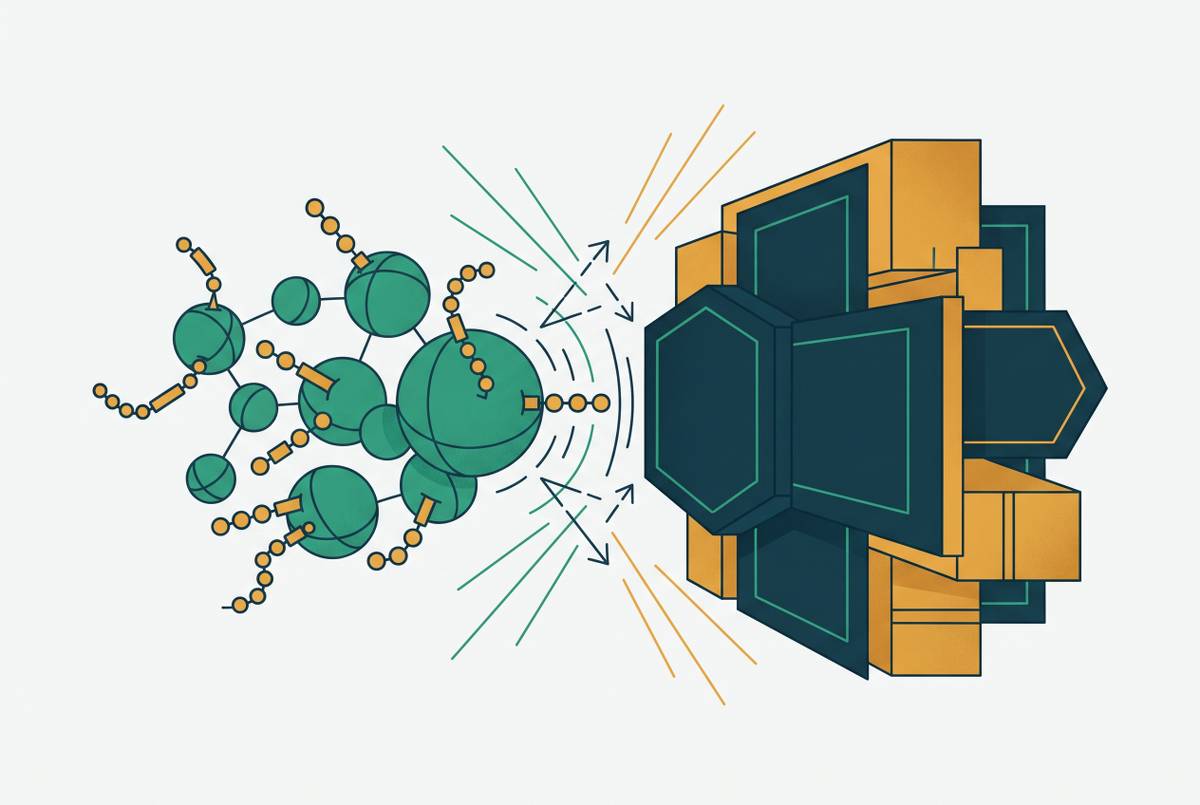
Ranking Nose-to-Brain Drug Delivery Platforms by BBB-Bypass Efficiency and CNS Indication Fit
Lipid nanoparticles lead nose-to-brain delivery, but PLGA suits demanding biologics.

Nanoparticle nose-to-brain delivery for neurological indications is best ranked by how well it combines BBB-bypass efficiency and disease fit, with brain exposure as only part of the comparison. Lipid nanoparticles offer the strongest combined starting point, while PLGA and polymeric lipid hybrids are better suited to demanding peptide, biologic, and targeting requirements. The choice depends on which platform can get the required payload to the right CNS region and keep it there for as long as needed.
Why the blood–brain barrier makes CNS drug delivery a platform problem, not a molecule problem
The blood–brain barrier restricts entry of most therapeutic agents into the CNS. Potency alone cannot solve that access problem. Oral and parenteral drugs must reach therapeutic brain concentrations after systemic distribution, a difficult requirement for most peptides and biologics.
Nose-to-brain delivery offers two anatomical routes around that constraint. The olfactory pathway passes through the cribriform plate into the olfactory bulb, while the trigeminal pathway reaches brainstem territories. Drugs deposited in the upper posterior nasal cavity can access both pathways without depending on transport across the BBB. Mucociliary clearance sweeps material toward the throat roughly every 15–20 minutes, so the platform must help the payload enter these pathways before it is swept away.
The two axes that separate meaningful platform comparisons from feature lists
BBB-bypass efficiency asks how effectively a formulation delivers drug through direct nasal pathways. The pharmacokinetic literature uses Drug Targeting Efficiency, or DTE, and Drug Targeting Percentage, or DTP, to evaluate targeting. DTP estimates the fraction of brain exposure attributable to direct nose-to-brain transport. A high brain concentration alone does not identify the route responsible.
CNS indication fit asks a different question. Can the platform reach the relevant region, accommodate the required small molecule, peptide, biologic, or nucleic acid, and deliver the necessary dose and duration? These axes can diverge. Getting drug into the wrong region efficiently may do little to help, while even the right targeting can fail if clearance removes too much drug. The ranking must therefore distinguish pharmacokinetic performance from suitability for a particular program.
How do lipid nanoparticles get from the nose to the brain, and why do they lead the combined ranking?
Solid lipid nanoparticles, or SLNs, and nanostructured lipid carriers, or NLCs, combine membrane-compatible architecture with stability and controlled release. Their structural similarity to biological membranes supports transcellular uptake at the olfactory epithelium, giving drugs access to pathways into the CNS. Biocompatibility also reduces the risk of epithelial reactions that could impair absorption. This makes lipid systems the combined-performance benchmark. Their lead reflects a balance of delivery efficiency and payload usefulness, rather than the highest reported DTE in every formulation.
That balance favors chronic neurodegenerative programs requiring sustained brain exposure. Lipid carriers can encapsulate lipophilic small molecules and, with surface modification, peptides, making them relevant to Alzheimer’s and Parkinson’s disease. Controlled release addresses duration as well as entry. But there are fewer ways to modify their surfaces than those of polymeric carriers. When a program needs more selective targeting or a difficult biologic payload, that limitation creates the case for PLGA.
PLGA polymeric nanoparticles: superior surface programmability at a modest efficiency cost
PLGA nanoparticles occupy the second tier because surface programmability can outweigh a modest loss in bypass efficiency. Intranasal thymoquinone-loaded PLGA nanoparticles showed greater brain AUC, Cmax, and half-life than intravenous administration, with DTE and DTP indicating strong direct targeting. Ligand conjugation permits active targeting, while chitosan coating can improve nasal permeability.
The CEA / Paris-Saclay group tested intranasal PLGA delivery of trastuzumab in a 2025 study. Constructs at roughly 200 nm achieved loading efficiency of about two-thirds and preserved the released antibody’s physicochemical properties and functionality. This establishes capability with a large biologic payload. It does not, by itself, establish efficacy across biologic CNS therapies.
For indication selection, that capability supports brain tumor biologics and peptide therapies for neurodegeneration. Biodegradability also supports sustained release, while surface modification provides options for targeting olfactory or CNS cell types. GLP-1 delivery to hypothalamic and brainstem targets is consequently a strong development fit. The tradeoff is greater scale-up and batch-reproducibility complexity than lipid systems.
Polymeric lipid hybrid nanoparticles: the highest measured DTE/DTP scores and the tradeoffs that come with them
Rivastigmine-DHA polymeric lipid nanoparticles produced brain AUC more than five times greater than an intranasal free-drug gel. Formulated with PLGA and Poloxamer gelling agents at roughly 160 nm, these hybrids also achieved DTE and DTP scores among the highest reported for intranasal systems. Those results explain their pharmacokinetic distinction. Their third-tier position reflects formulation burden.
The lipid shell is compatible with the epithelium, while the polymer core gives control over the structure and provides sustained release. Together, these features support longer mucosal residence, penetration, and controlled CNS release. The rivastigmine payload makes Alzheimer’s disease a direct indication fit, with Parkinson’s disease dementia and other chronic neurodegenerative conditions also relevant. Yet they are harder to manufacture reproducibly than either material alone, and regulatory characterization must cover both classes. A simpler carrier remains preferable where it already provides adequate exposure.
Nanoemulsions, liposomes, and hydrogels: established platforms with specific but bounded roles
Liposomes accommodate both hydrophilic and hydrophobic drugs, making payload versatility their principal strength. Their physical stability and mucosal residence are more constrained than those of solid-core carriers. That limits their appeal for prolonged exposure. Rapid release can nevertheless suit acute indications such as seizure or stroke, where sustained delivery is not the main objective.
Nanoemulsions improve solubility and mucosal contact for poorly water-soluble small molecules. They are simpler to manufacture than nanoparticle systems, although release kinetics are less structurally controlled. They can be a good fit for seizure, migraine, and psychiatric indications. Nayzilam, Valtoco, and Spravato demonstrate regulatory viability for nasal CNS medicines, but their approvals should not be read as validation of every nanoemulsion architecture or direct-transport claim.
Hydrogels address residence as well as payload targeting. Thermoresponsive, mucoadhesive systems change from liquid to gel on the nasal mucosa, countering clearance and supporting convenient chronic dosing. They are particularly useful as nanoparticle components, as the Poloxamer hybrid formulations illustrate. Dendrimers offer a different specialization through dense payload and targeting-ligand presentation, but manufacturing complexity and toxicity characterization limit their development relative to lipid and PLGA systems.
Exosomes and biomimetic nanocarriers: the frontier tier with a manufacturing wall in front of it
Exosomes and engineered biomimetic carriers offer unusually selective targeting opportunities, especially for cell-specific disease processes. Engineered extracellular vesicles can be decorated to target neurons, microglia, or astrocytes, while their lipid bilayers protect nucleic acid payloads from degradation. They hold much promise, but the work is still preclinical. Selectivity is not the same as translational readiness.
T7-targeted gold-iron oxide nanoparticles, or polyGIONs, delivered miR-100 and anti-miR-21 and improved overall survival rate in preclinical brain tumor models. This is strong evidence for targeted nucleic acid delivery, with its scope limited to that engineered carrier. For brain tumors, there is good reason to accept that complexity. Exosome isolation, purification, large-scale production, payload loading, and batch reproducibility remain unresolved barriers, with biological-vesicle characterization adding further difficulty. Those constraints explain why nearer-term indication matching centers on platforms further along the translational path.
How CNS indication requirements map onto the platform tiers
Parkinson’s disease favors PLGA or hybrid systems when the payload is a peptide and sustained exposure is required. Trigeminal access to brainstem territories is relevant, but regional delivery still requires demonstration for each formulation. Systemic GLP-1 trials provide an unsettled backdrop. Exenatide failed in Phase 3, NLY01 missed its primary endpoint, and liraglutide improved some non-motor outcomes but not the primary motor endpoint. LIXIPARK found less motor-disability progression with lixisenatide than placebo in Phase 2. Insufficient CNS penetration is one possible explanation for inconsistent results, and no intranasal GLP-1 receptor agonist has yet entered clinical testing.
Two Phase 3 trials of oral semaglutide in early Alzheimer’s disease, enrolling 3,808 participants, missed their primary endpoints in late 2025 despite biomarker improvements. Could greater CNS exposure change that outcome? The failure gives reason to study delivery, but it cannot show that nasal dosing will work. Wake Forest University conducted a 2025 trial combining intranasal insulin at 160 IU daily with empagliflozin, reporting cognitive, neurovascular, and immune benefits with insulin and reduced CSF tau markers with empagliflozin, without systemic hypoglycemia. This provides a translational precedent for nasal peptide therapy, while lipid or hybrid carriers fit sustained-delivery programs and PLGA fits biologics targeting tau or amyloid pathways.
Addiction presents a different regional requirement. GLP-1 receptor expression overlaps dopaminergic reward circuitry, supporting investigation of lipid or PLGA peptide delivery to mesolimbic targets. Clinical evidence remains early. Brain tumors instead justify biomimetic nucleic acid carriers when selectivity offsets complexity, or PLGA for biologics where scalable production is important. For acute seizure and migraine programs, nanoemulsions and simple lipid formulations better match the need for rapid release.
Why GLP-1 peptide delivery to the brain is the indication that will stress-test every platform on both axes simultaneously
GLP-1 peptides combine difficult payload properties with demanding regional targets. Size, stability, and clearance sensitivity complicate nasal transport, while receptors in the hypothalamus, brainstem, hippocampus, and dopaminergic circuits create distinct delivery requirements. With systemic administration, peptides have limited access to the CNS, while peripheral receptors are also exposed. A nasal formulation therefore needs more than good uptake. It must preserve the peptide and direct useful exposure toward the intended circuitry.
MetP Pharma demonstrated rapid, dose-dependent brain targeting with its proprietary nasal technology in preclinical work. Its 2025 rat study reported brain-to-plasma ratios consistently greater than 1 after intranasal semaglutide, indicating preferential CNS enrichment. That is a useful benchmark, with therapeutic benefit and regional targeting still requiring demonstration. PLGA and hybrids are the strongest candidates where peptide protection, sustained release, and surface modification are needed, while lipid nanoparticles remain suitable where the analog can be encapsulated. Success could support an adaptable architecture spanning metabolic targets, addiction, and neurodegeneration.
What patient adherence data add to the platform ranking: the non-pharmacokinetic axis that decides real-world outcomes
Targeting efficiency predicts little benefit from doses that patients do not take. Fewer than half of chronic diabetic patients adhere to their injectable insulin regimen, while one-year persistence with injected GLP-1 receptor agonists frequently falls below 60%. These figures show why route and usability belong in the comparison, especially for treatments extending over years, while providing only indirect evidence for CNS populations.
Adherence acts as a practical multiplier on delivery performance alongside DTE. An adequately efficient nasal system could outperform a less usable alternative in practice, but nasal preference alone cannot establish long-term persistence. The device is part of that equation. Bidirectional sprays and precision olfactory delivery technology aim to improve deposition, so formulation efficiency and patient-facing delivery must be evaluated together.
A practical decision framework for matching nose-to-brain platforms to CNS programs
The choice starts with payload type, then narrows according to the target region and how the drug needs to be released. Lipophilic small molecules favor nanoemulsions or lipid nanoparticles, while peptides and biologics favor PLGA or hybrids when protection and targeting are demanding. Nucleic acid programs may justify exosome or biomimetic development despite lower manufacturing readiness.
The region the drug needs to reach then determines which delivery claims need evidence. Olfactory bulb and adjacent cortical targets align with olfactory transport, whereas brainstem programs require attention to trigeminal access. Acute programs favor rapid-release formats, including approved nasal options such as Nayzilam, Valtoco, and Narcan. Chronic neurodegenerative programs instead favor sustained-release PLGA or hybrids, potentially combined with gelling agents.
GLP-1 sits at the demanding intersection of peptide protection, deeper CNS targets, chronic treatment, and usability. Meeting those needs could yield a delivery architecture for several neurological indications, but greater exposure must still lead to better clinical outcomes. Approved acute nasal medicines establish a regulatory foothold, while chronic nanoparticle programs must demonstrate that more capable delivery produces a benefit patients can sustain.
Sources
- The Nasal–Brain Drug Delivery Route: Mechanisms and Applications to Central Nervous System Diseases - Qiu - 2025 - MedComm - Wiley Online Library
- Full article: A comprehensive insight of innovations and recent advancements in nanocarriers for nose-to-brain drug targeting
- Nose-to-brain drug delivery: from bench to bedside
- Intranasal drug delivery: Unlocking the nose-to-brain route for central nervous system therapies - ScienceDirect
- Nanotherapeutics for Nose-to-Brain Drug Delivery: An Approach to Bypass the Blood Brain Barrier
- Precision nose-to-brain therapeutics: Advances in drug delivery systems and emerging preclinical models - ScienceDirect