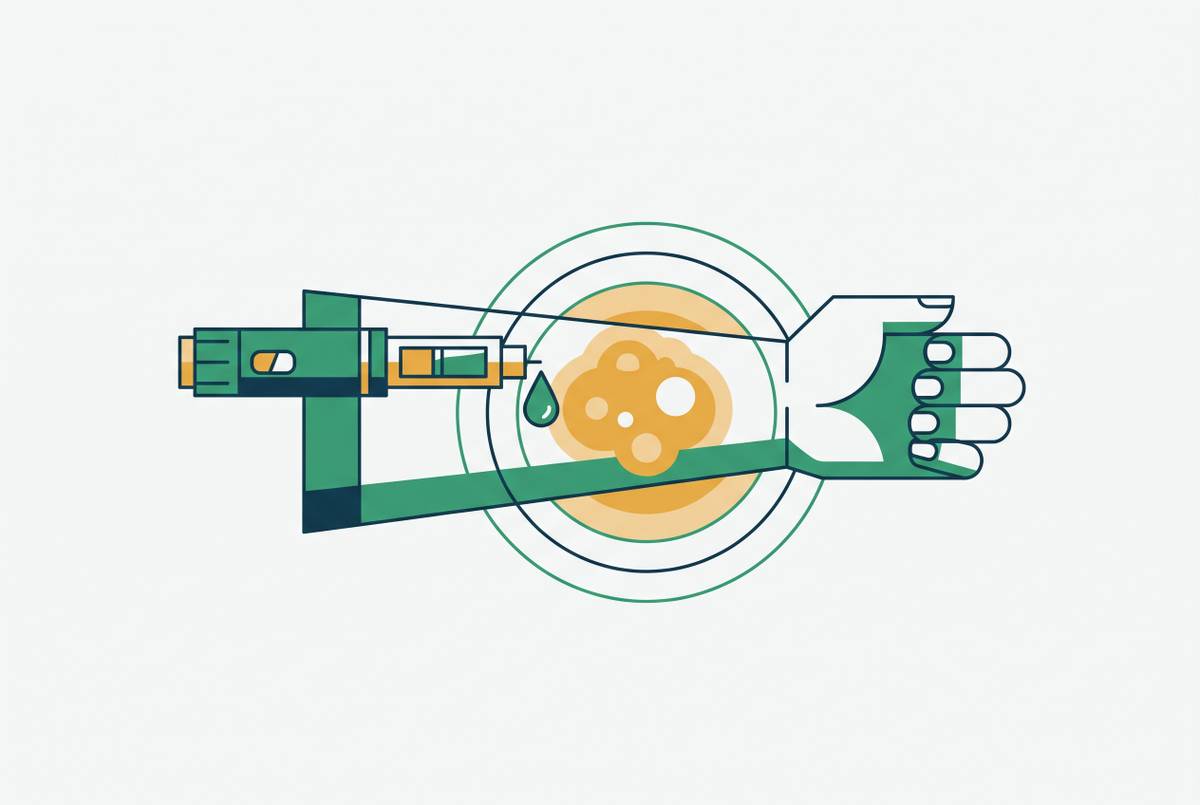
Duration and Resolution of GLP-1 Nausea and Vomiting
Most patients adapt within one to three months, but seven in ten quit before that window closes.
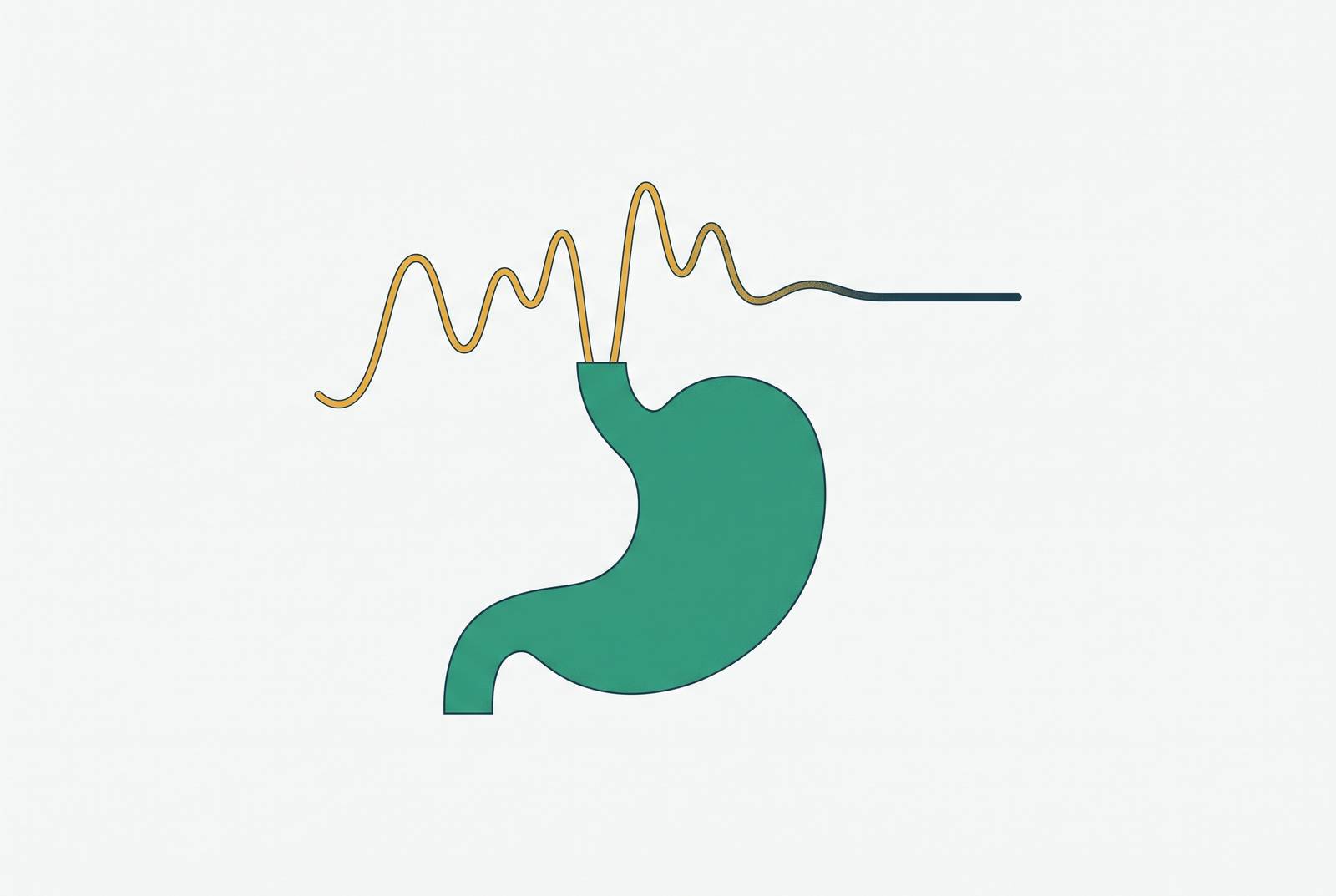
Nausea is the most common side effect of GLP-1 therapy, and it follows a predictable arc: it shows up early, peaks within the first few weeks, and fades for most patients within one to three months. That timeline is the whole ballgame. It draws the line between normal adaptation and a real signal to change course, and getting that distinction wrong is why roughly seven in ten patients who start a GLP-1 for weight loss quit within a year, most of them right before the nausea would have resolved on its own.
The scale of the problem depends on who's counting, and the gap between those counts matters as much as any single figure. Trial data for semaglutide put nausea at 44% of patients. Tirzepatide's obesity trials (SURPASS and SURMOUNT) reported 32%, consistent with a somewhat gentler GI profile relative to semaglutide at comparable efficacy. But an NIH All of Us real-world cohort tells a different story: abdominal pain topped the list at 57.6%, ahead of nausea and vomiting, tied at 23.4%. Trials measure what investigators grade on a structured form. Real-world data captures what patients complain about at home, and the two frequently point in different directions, which is itself a finding worth sitting with before trusting either number too much.
Agent choice is not a marginal variable here. It's a primary one, and treating it as an afterthought to titration is a mistake. Network meta-analyses put tirzepatide at the highest nausea and diarrhea risk among the type 2 diabetes agents, while dulaglutide and lixisenatide sit at the low end. In obesity and non-diabetic populations, a 2025 network meta-analysis found orforglipron carried the highest nausea risk of the agents evaluated. That kind of differentiation should shape which drug a patient starts on, not just how the dose gets titrated once they're already committed to one.
Most people, in fact, get through this without much trouble. Alhazmi and le Roux, writing in Frontiers in Endocrinology in 2026, estimate that 60 to 70% of patients titrate to full therapeutic dose with little or no GI difficulty. This piece is about the other 30 to 40%, the ones who struggle, a minority large enough to matter at a population level, and one that current tools still can't identify before treatment starts.
Why GLP-1s trigger nausea: the brainstem circuits involved
Nausea here is a side effect only in the loosest sense. It's an on-target consequence, the direct output of a brainstem structure called the dorsal vagal complex (DVC), the body's control center for nausea and vomiting. The DVC has two working parts: the nucleus tractus solitarius (NTS) and the area postrema, both of which take in signals from the gut and from the bloodstream.
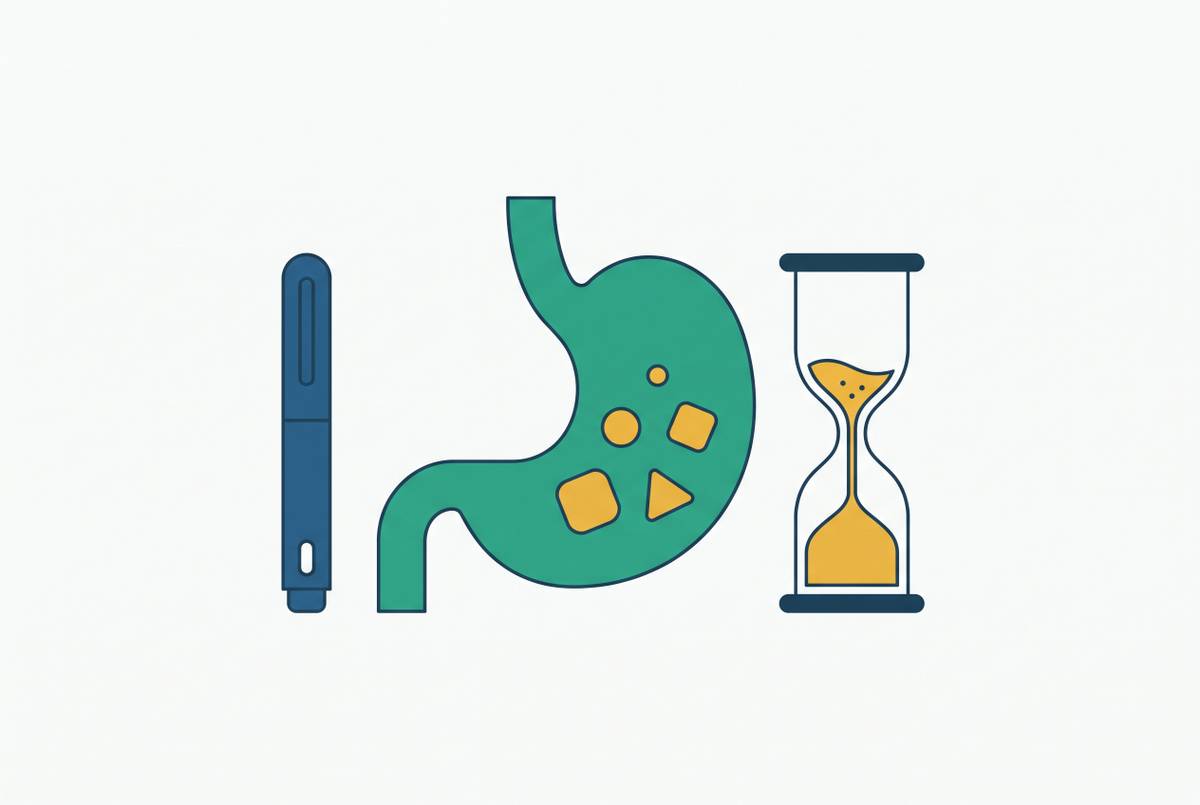
The area postrema is the piece worth sitting with, because its physiology explains most of what follows. Unlike nearly everywhere else in the brain, it sits behind a blood-brain barrier that's unusually porous, which makes it a chemosensory trigger zone: circulating drugs and hormones reach it directly, without the filtering the rest of the brain gets. GLP-1 receptor agonists exploit that access, activating the area postrema directly, and that accounts for a meaningful share of the emetic effect these drugs produce. A parallel pathway runs through the vagus nerve itself, where GLP-1 receptors sit on fibers carrying gut-to-brain signals that heighten the brain's sensitivity to what's happening in the GI tract. Layer a mechanical effect on top of both: gastric emptying slows under GLP-1 therapy, food sits in the stomach longer than it should, and that alone produces fullness and nausea through a route that has nothing to do with brain chemistry.
A study in Nature adds a detail that reframes how the field thinks about all of this. Hindbrain circuits for satiety and for aversion turn out to be anatomically separate. Area postrema GLP1R neurons respond broadly to a wide range of stimuli, while NTS GLP1R neurons are biased specifically toward nutritive signals. Why does that separation matter? Because it raises a real possibility that appetite suppression and nausea aren't as tightly coupled as they look from the outside, which would make decoupling them pharmacologically a plausible design goal rather than wishful thinking. Research has gone further in mapping the area postrema neuron populations that carry GLP-1 receptor expression alongside other receptors involved in nausea signaling, suggesting that several distinct nausea-triggering signals may converge on overlapping cell populations.
What does this mean for someone taking the drug? Nausea is not evidence that the medication is somehow "too strong" in some vague, global sense. It's a specific neural circuit firing, one that looks at least partly separable from the circuitry actually responsible for the metabolic benefit the patient signed up for.
That separability question drives one of the more interesting threads in current research: GIP co-agonism. Preclinical research has found that GIP activates inhibitory neurons in the area postrema, and those neurons suppress the nausea-promoting excitatory neurons, blocking behavioral responses to emetic stimuli in animal models. Further preclinical work has extended this finding: GIPR agonism has been shown to blunt malaise behaviors caused by GLP-1R activation in animal models while preserving the reduction in food intake and weight loss, exactly the dissociation the Nature paper hinted might be possible.
Here's the catch that has to sit right next to that finding. Clinical network meta-analyses still rank tirzepatide, a GIP/GLP-1 dual agonist, among the highest agents for GI adverse events. Whatever GIPR agonism is doing to nausea circuits in a mouse brain isn't yet showing up as better GI tolerability in the patients actually taking a dual agonist. Calling GIP's antiemetic effect an established clinical fact overstates what the evidence currently shows, and the field should resist doing that until the human data catches up to the mouse data.
The nausea timeline: what happens from initiation through dose escalation
Nausea, when it happens, arrives on a fairly consistent schedule. Onset typically begins within days of starting the drug or shortly after a dose step-up, peaks in the first two to four weeks, and eases as the body adapts. For most patients, it resolves or turns mild within roughly one to three months of continued treatment, or once titration to the maintenance dose is complete.
During titration itself, expect a small spike in nausea each time the dose goes up. Drugs.com, in guidance reviewed in 2026, notes that once an episode starts, it typically resolves within about eight days. Tirzepatide trial data backs the adaptation story at the trial level too: vomiting and diarrhea rates were dose-dependent across the 5 to 15 mg range, meaning higher doses produced more of both, while GI adverse events generally declined as patients remained on treatment.
Alhazmi and le Roux offer a comparison that clinicians managing insulin titration will recognize immediately. Nausea functions something like mild hypoglycemia does during insulin adjustments: an early warning sign that the pace needs to slow, not a reason to quit. Vomiting is the equivalent of severe hypoglycemia, a clear signal to step back to the last dose the patient actually tolerated.
None of this describes every patient. The timeline above is a population average, and a clinically important minority experiences persistent or severe symptoms straight through the escalation process, sometimes without much relief. There's no reliable way, right now, to identify who that will be before treatment starts. Symptoms tend to be worst in the days right after a dose change, after large or high-fat meals, and sometimes when the drug is taken on an empty stomach.
How dose escalation strategy shapes the severity and duration of symptoms
Slowing the escalation schedule is the single most well-supported way to reduce nausea, a finding consistent with data from network meta-analyses comparing titration approaches across GLP-1 agents. Give the body more time between steps, and both the frequency and the severity of GI symptoms drop. That's not a minor tweak available to a few patients. It's the primary lever, and it's underused, which is the real failure in most titration plans: not the drug, the calendar.
How much time, and when to hold versus when to pull back, depends on how the nausea is graded. Alhazmi and le Roux lay out a framework worth understanding in some detail. Grade 1 or 2 nausea, mild to moderate, usually resolves if the current dose is held steady for one or two additional dosing intervals rather than pushed forward on schedule. Grade 3 nausea calls for something more decisive: dose de-escalation. Vomiting similarly warrants pausing escalation rather than pushing through.
Standard trial titration schedules work fine for the 60 to 70% majority. They do not work for the 30 to 40% who struggle, and pretending otherwise, by keeping everyone on the same fixed calendar, is where a lot of avoidable dropout comes from. That group needs longer intervals between steps, or a plan built around their actual response rather than a printed schedule. Route of administration adds another layer for oral agents specifically. Oral semaglutide has low and variable day-to-day absorption, which may be part of why it carries a heavier GI burden. Orforglipron, by contrast, is a small molecule with more predictable absorption, per Alhazmi and le Roux.
When intolerance doesn't resolve no matter how slowly the dose climbs, switching agents becomes a real option, moving toward something like dulaglutide, which sits at the lower end of nausea risk, though that switch usually comes with some efficacy tradeoff. A titration schedule should be treated as a personalized process, not a protocol printed on a sheet of paper. It has to bend around what the patient is actually experiencing, or it stops doing its job.
What patients can do to reduce nausea while the body adapts
Diet does more heavy lifting here than almost anything else available without a prescription. Smaller, more frequent meals reduce how much the stomach distends at any one time, and eating slowly helps for the same reason. High-fat, greasy, spicy, or very sweet foods are worth avoiding during the adjustment window specifically because they slow gastric emptying further, compounding a problem the drug is already causing on its own.
Positioning matters more than most patients expect. Staying upright for at least 30 minutes after eating helps gastric emptying along and cuts down on reflux. Sipping fluids slowly, rather than drinking a large glass all at once, avoids overloading a stomach that's already emptying slower than usual.
Among over-the-counter options, ginger comes up often as a home remedy, and bismuth subsalicylate along with antihistamine antiemetics are both available without a prescription, per Drugs.com's 2026-reviewed guidance. On the prescription side, ondansetron (Zofran) is one option clinicians reach for to provide temporary relief, though its use should be coordinated with whoever is managing the GLP-1 prescription, not layered on independently by the patient.
Be honest about the limits here. These strategies get most people through the adaptation window, but for the minority dealing with persistent or severe symptoms, diet and behavior changes are supportive at best, not a fix, and prescriber involvement becomes necessary rather than optional. Certain symptoms call for contacting the prescriber without waiting: vomiting severe enough to prevent staying hydrated, symptoms that worsen rather than settle over two to four weeks at a stable dose, or abdominal pain that's severe or shows up in a different location than the usual GLP-1-related discomfort.
Why so many patients stop before nausea resolves, and what discontinuation costs them
Only 30% of patients who start a GLP-1 for weight loss are still taking it a year later, and GI side effects are the most commonly cited reason for stopping. That's roughly seven out of ten patients walking away, and the timing is the real tragedy: most of them quit during the exact window when the nausea was about to resolve on its own. If there's one thing this piece argues for directly, it's that the discontinuation happening at month one or two is almost never a drug failure. It's a titration failure, and it's preventable.
There's real movement in the underlying data, worth naming as genuine progress rather than dismissing. Pharmacy claims show one-year persistence nearly doubled between 2021 and 2024, climbing from 33.2% to 60.9%, pointing to better titration practices and more patient support making a measurable difference. The three-year picture is bleaker: Prime Therapeutics data puts long-term persistence at just 14%. Short-term progress hasn't solved the long-term retention problem.
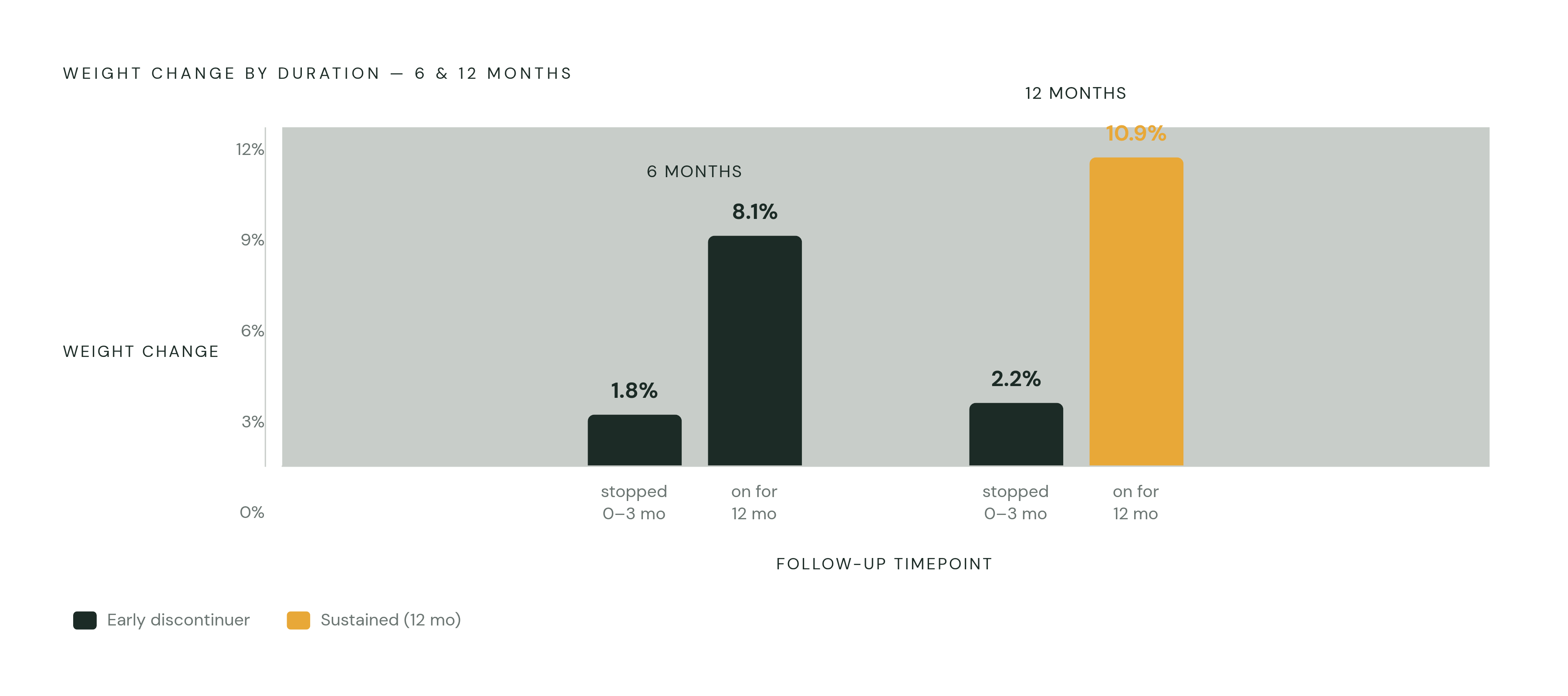
What does quitting early cost, in concrete terms? Patients who discontinued within zero to three months saw only a 1.8% weight change at six months. Those who stayed on for a full 12 months achieved 8.1%, and the gap widens further out: 2.2% versus 10.9% at the 12-month mark. Sustained users see average weight losses in the 10 to 30% range, and most of that benefit evaporates for anyone who stops early. There's no version of this math where early discontinuation is a wash. It's a near-total forfeiture of the reason someone started the drug in the first place.
Cost is part of why this matters beyond any one patient's chart. Monthly out-of-pocket cost runs around $833, and employer drug spend on weight-loss GLP-1s climbed from 6.9% of total drug spend in 2023 to 10.5% in 2025, according to benefits industry data. That's the system-level version of the same problem: paying full price for a drug and getting a fraction of the benefit, because nobody managed the first eight weeks well enough to keep the patient on it.
Emerging pharmacological approaches to making GLP-1 therapy more tolerable
The area postrema sits outside the blood-brain barrier and concentrates so many of the signals driving nausea that it's become the obvious target for drugs meant to intervene locally, without touching the rest of the central nervous system.
NG101, developed by Neurogastrx, is the clearest example. It's an oral, peripherally acting dopamine D2 receptor antagonist engineered to act specifically on the area postrema. It works because it's a substrate for P-glycoprotein, a transporter that limits its ability to cross into the central nervous system, keeping its effect localized to where the nausea signal originates rather than spreading system-wide.
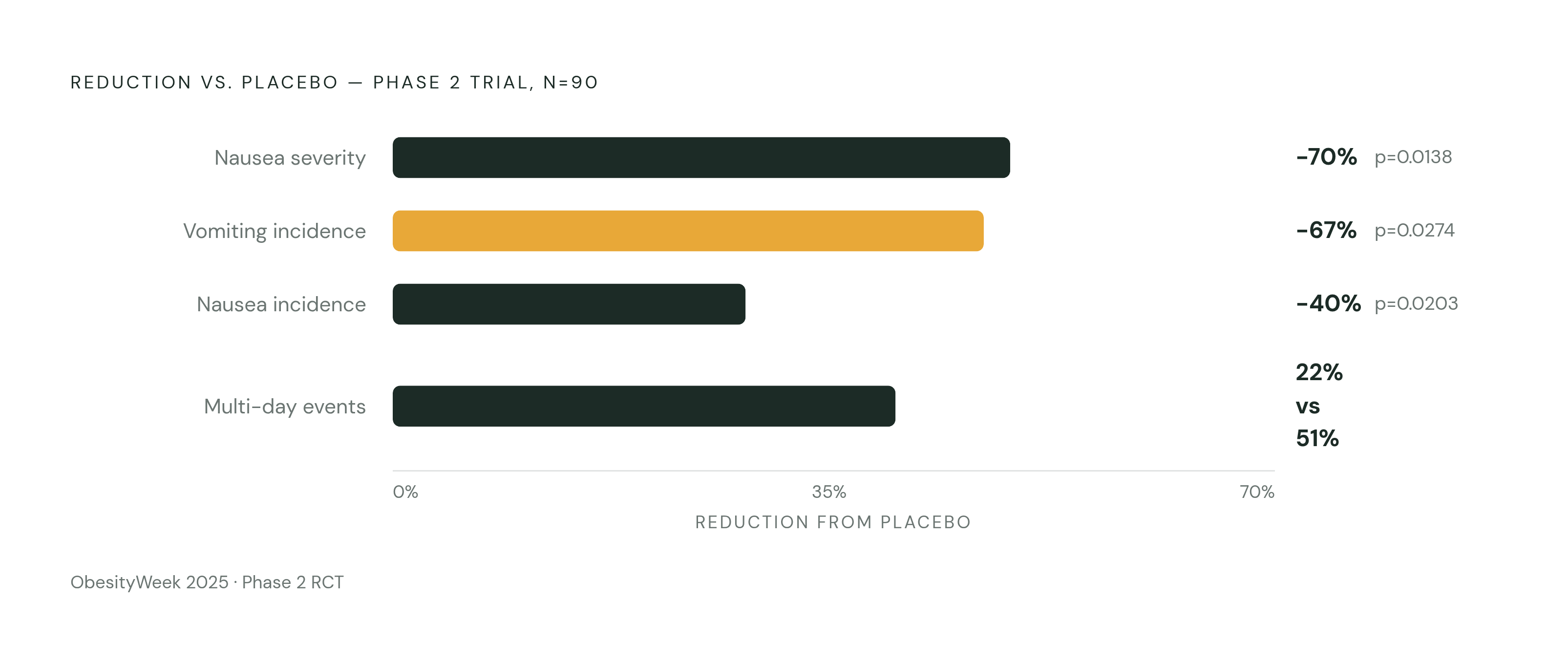
Phase 2 proof-of-concept results, presented at ObesityWeek 2025 in a randomized, double-blind trial of 90 participants, are specific enough to walk through directly. Nausea incidence dropped 40% relative to placebo (p=0.0203). Vomiting incidence dropped 67% (p=0.0274). Events lasting more than a single day occurred in 22% of NG101 participants, against 51% on placebo. Participants also reported a 70% reduction in nausea severity (p=0.0138), with no serious adverse events and no discontinuations from treatment-emergent side effects.
One detail from that trial is worth pulling out on its own: participant-reported symptom burden ran consistently higher than what investigators graded, the same gap between trial data and real-world reporting that shows up at the population level. Seeing that gap reappear in a controlled Phase 2 setting suggests it's a real measurement phenomenon, not statistical noise from a messy real-world dataset.
NG101 didn't appear to interfere with the GLP-1 agonist's own safety profile in the trial, though weight-loss outcomes weren't directly measured there, which matters because any adjunct meant to improve tolerability has to prove it doesn't quietly undercut the primary benefit. On the GIP co-agonism front, the preclinical finding that GIPR activation suppresses nausea-promoting neurons through GABA-mediated inhibition remains mechanistically distinct and genuinely interesting, but it hasn't translated into a clinical tolerability advantage. Meta-analyses of dual agonists haven't shown superior nausea outcomes so far, and that gap between mouse and clinic is worth taking seriously rather than talking past.
Zoom out, and both threads point at the same underlying question. If satiety and nausea circuits in the hindbrain really can be separated, as the 2024 Nature anatomical work suggests, then GLP-1 therapy without the emetic burden driving so much of the dropout described above might be achievable, either through adjunct drugs like NG101 or through mechanisms that intervene earlier in the signaling chain.
How the delivery route itself shapes the nausea burden, and what a different route could change
Route of administration deserves more weight in this conversation than it usually gets, and treating it as an afterthought to dose and drug class is a mistake worth correcting directly.
Oral semaglutide's sub-1% bioavailability and its day-to-day absorption swings produce sharper peaks and troughs in blood concentration than subcutaneous dosing, and those swings plausibly track with a heavier GI symptom burden, since the area postrema and vagal pathways described earlier respond to how much drug is actually circulating at a given moment. A small-molecule agent like orforglipron, with more predictable absorption, sidesteps some of that variability by design, even though its own nausea profile in obesity trials runs higher than several injectable comparators. Predictable absorption, in other words, doesn't automatically mean a gentler drug, and conflating the two is one of the easier mistakes to make when comparing agents on paper.
That tension, between formulation predictability and receptor-level nausea risk, is the crux of everything this piece has covered. The brainstem circuitry, the titration math, the discontinuation data, and drugs like NG101 are all responses to the same fact: activating the GLP-1 receptor system produces metabolic benefit and nausea through pathways that overlap heavily but aren't identical. Whether the fix comes from slower titration, better patient support, an adjunct antiemetic that spares the area postrema, or a different way of getting the drug into the body, the target doesn't change. Separate the benefit from the burden, and the 30 to 40% who currently struggle through escalation, along with the 70% who stop within a year, stand to gain the most.
Sources
- Frontiers | Comparative gastrointestinal adverse effects of GLP-1 receptor agonists and multi-target analogs in type 2 diabetes: a Bayesian network meta-analysis
- How long does GLP-1 nausea last, and how do you get relief?
- Novel drug may reduce nausea, vomiting during GLP-1 therapy
- Neurogastrx Announces NG101 Phase 2 Clinical Study Demonstrating Significant Reductions in Nausea and Vomiting Induced by GLP-1 Receptor Agonist Semaglutide - Neurogastrx, Inc.
- blog.healthverity.com
- pmc.ncbi.nlm.nih.gov
- sciencedirect.com
- Dissociable hindbrain GLP1R circuits for satiety and aversion | Nature