Dementia and Addiction Biotechs Using Intranasal Nanoparticles Ranked by Clinical Proximity and Platform Defensibility

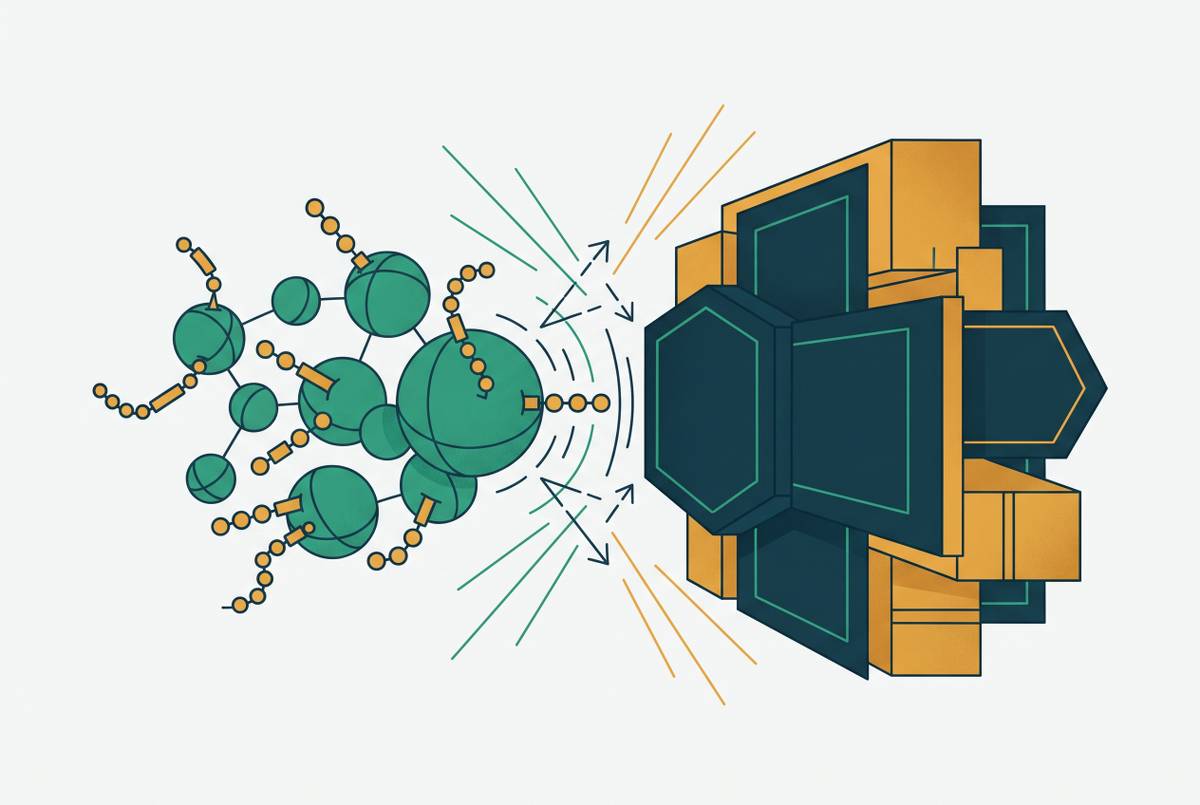
Nanoparticle nose-to-brain delivery for neurological indications uses engineered carriers to protect drugs and move them through nasal pathways that partially bypass the blood-brain barrier. Dementia and addiction programs need to be ranked on two separate tests, clinical proximity and platform defensibility. Aphios Corporation’s APH-1105 has the highest reported clinical proximity among the named intranasal nanoparticle programs, but trial progress alone does not establish the strength or reach of a delivery platform.
Why the brain is so hard to treat and what the nose changes
The blood-brain barrier excludes many therapeutic molecules before they reach their neurological targets. Peptides have an especially hard time passing through because they are large and prone to enzymatic breakdown. Systemic administration can require high doses to compensate for poor brain penetration, increasing peripheral side effects without guaranteeing useful CNS exposure. Delivery therefore requires getting enough intact cargo to the relevant brain regions.
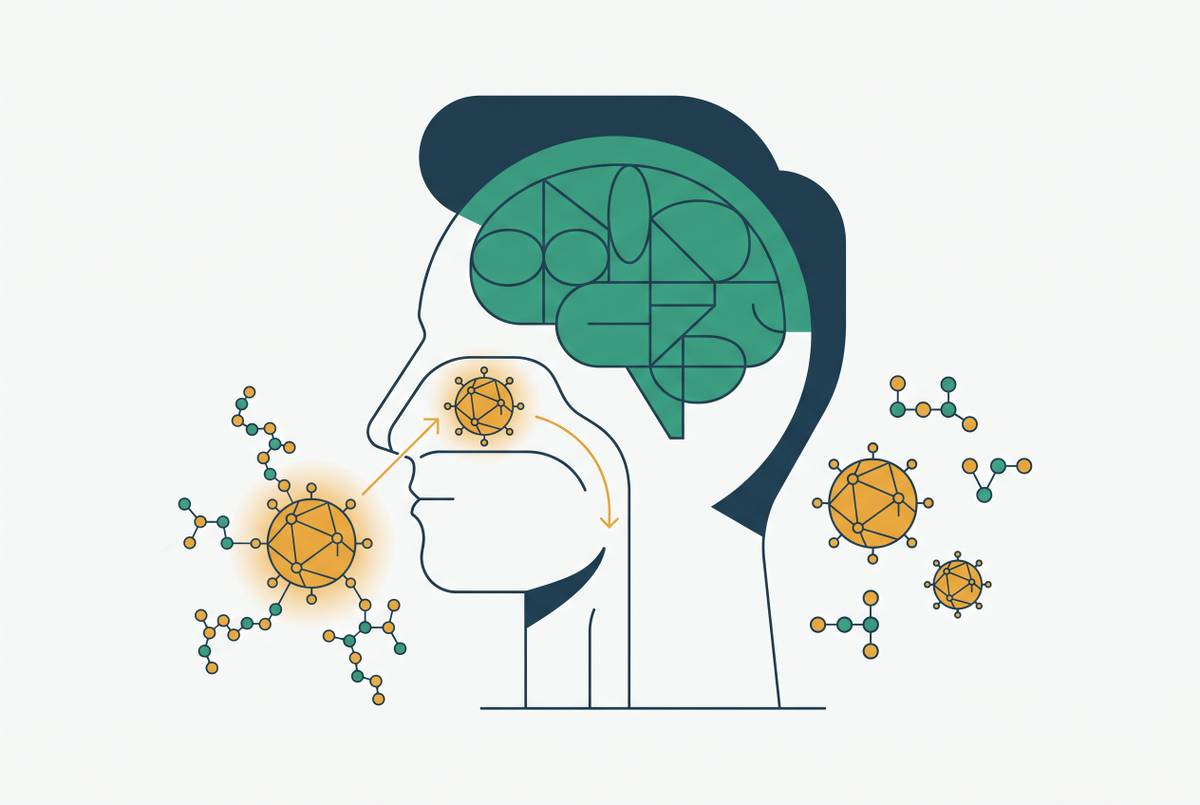
The nasal cavity offers an anatomical workaround through the olfactory and trigeminal nerve pathways, which connect it to the CNS. These pathways are not interchangeable delivery channels. The trigeminal pathway is the dominant route for intact nanoparticles, while the olfactory pathway more likely transports cargo already released from its carrier. That distinction makes release behavior part of the delivery mechanism. Nose-to-brain delivery can enhance regional CNS exposure while reducing peripheral distribution, but the route alone does not establish where a particular formulation will arrive.
Nanoparticles make fragile peptide delivery feasible by protecting cargo, prolonging its residence on the nasal mucosa, and allowing surface modifications that improve adhesion and targeting. Regional exposure is the critical qualification. Intranasal exendin, a GLP-1 agonist, achieved fourfold greater olfactory bulb bioavailability than intravenous delivery, but uptake in other brain regions was not enhanced. A result in one region cannot stand for the whole brain. This is why formulation sophistication is a genuine technical barrier, and why both clinical readiness and proprietary engineering deserve separate scrutiny.
Why GLP-1 biology has become the focal cargo for intranasal CNS programs
GLP-1 receptor agonists bring a biological rationale spanning dementia and addiction, making them focal peptide cargo for intranasal CNS development. A large 2026 analysis in the British Journal of Clinical Pharmacology found significantly lower risks of dementia, ischaemic stroke, and all-cause mortality among patients taking these drugs. GLP-1 receptors are expressed in multiple brain regions, and clinical evidence shows a negative correlation between plasma GLP-1 levels and amyloid-β burden in Alzheimer’s patients. These findings support investigation. Trials complicate the picture in a useful way.
The Phase 3 EVOKE and EVOKE+ trials of systemic/oral semaglutide failed to outperform placebo in slowing progression of early-stage symptomatic Alzheimer’s disease. The liraglutide ELAD trial, published in Nature Medicine in early 2026, reported a different result. Patients who received liraglutide lost 50% less brain tissue in memory-critical regions and had a slower decline in thinking skills than those in the placebo group. The contrast leaves an important question open. Does inadequate CNS exposure help explain disappointing results, or does the therapeutic biology differ in ways that delivery cannot resolve?
Researchers have suggested that systemic administration may fail to reach therapeutic CNS concentrations, which could help explain the EVOKE findings. That hypothesis motivates intranasal formulation work, but it remains a hypothesis. The contrasting trials do not isolate route as the decisive variable. An intranasal program must therefore establish its own exposure and therapeutic case rather than treating an unsuccessful systemic trial as evidence that nasal administration will succeed.
GLP-1 receptor agonists modulate mesolimbic dopaminergic signaling, with effects in the nucleus accumbens, ventral tegmental area, and nucleus of the solitary tract. A 2025 randomized clinical trial published in JAMA Psychiatry found that low-dose semaglutide over nine weeks reduced alcohol cravings and drinks per drinking day, but not drinking frequency. The endpoint distinction is essential to interpretation. Evidence of reduced craving is not evidence of improvement across every measure of alcohol use.
Preclinical and early clinical work also links GLP-1 medications to reduced opioid cravings, lower overdose rates in patients with opioid use disorder, and lower alcohol intoxication rates in patients with alcohol use disorder. University of Virginia researchers found that small-molecule GLP-1 agonists such as orforglipron penetrate deeper into brain structures, including the central amygdala, than larger peptide counterparts. Brain entry is only part of the task. Intranasal peptide platforms must show whether their route can give them the regional exposure they need for the treatment to work as proposed.
What nanoparticle platforms are being developed for intranasal brain delivery in CNS disorders?
Chitosan, lipid, PLGA/polylactic acid, and inorganic nanoparticles represent distinct platform approaches. Carrier class shapes regulatory risk, the scope for intellectual property, and adaptability across neurological indications before clinical milestones arrive. Chitosan nanoparticles are biodegradable, mucoadhesive, and permeation-enhancing, giving them a well-developed preclinical CNS foundation. Demonstrated cargos include galantamine for Alzheimer’s disease and rasagiline and rotigotine for Parkinson’s disease. Galantamine-loaded chitosan nanoparticles reduced amyloid-β deposition and improved nose-to-brain transport efficiency and drug half-life in preclinical models.
That breadth supports a platform argument beyond one payload. Interest in patents and established use in food and pharmaceuticals also give developers a base to build on, though neither proves that a given nasal formulation is safe or proprietary. Class familiarity is not company-specific protection. Defensibility depends on what a developer can distinguish within the class, including its formulation parameters, surface chemistry, or control of nasal residence.
Lipid nanoparticles offer a different combination of familiarity and flexibility. Their use in non-CNS applications has built regulatory experience, while functionalization may offer a way to make their targeting proprietary. A lactoferrin-functionalized lipid nanoparticle system co-administered with N-acetyl cysteine demonstrated a two-pronged amyloid-β scavenging mechanism and restoration of the brain microenvironment in Alzheimer’s preclinical models. The architecture is cargo-agnostic in principle, accommodating peptides, nucleic acids, and small molecules. However, that versatility does not establish equivalent nasal transport or brain distribution for each cargo.
PLGA/polylactic acid systems draw on a long record of biodegradability and biocompatibility in regulatory submissions. Nanoparticles composed of polylactic acid and poloxamer P188, functionalized with an amyloid-blocking peptide, demonstrated in vivo delivery from the nasal cavity to the brain. The published abstract does not establish cellular biocompatibility or neuronal internalization potential for that formulation. Evidence boundaries are part of the comparison.
Inorganic carriers, including gold, silver, mesoporous silica, and iron oxide, expose the sharpest divide between performance and translation. Intranasal gold nanorods penetrated brain parenchyma within minutes in preclinical models, spreading across central regions with minimal systemic leakage. Inorganic systems also allow imaging and therapy at the same time. Yet multi-dose longitudinal evidence of complete glymphatic clearance or non-toxic metabolic degradation is absent, and a systematic registry audit reported that 0% had entered clinical trials as of publication in 2026. Rapid penetration is not regulatory readiness.
Across these classes, proprietary differentiation rests on particle size distribution, surface charge, mucus interaction, cargo protection, targeting modification, and deposition reproducibility. The particle size range that works best is typically 100–200 nm, but performance depends on more than size. A defensibility claim becomes more specific when it explains how these parameters work together rather than relying on the reputation of a carrier category.
What clinical proximity actually measures and why most programs don't have it yet
Clinical proximity measures progress toward testing a delivery system in people. Rodent nasal anatomy differs from human anatomy, so efficient animal delivery does not reliably predict human deposition. Human nasal dose-volume restrictions also make exposure scaling an engineering problem. A strong preclinical result is a starting point. Its translational value depends on whether the formulation can work within the constraints of human administration.
The device adds to the uncertainty because the design of the spray affects the deposition pattern, droplet size, and reproducibility. Formulation and administration therefore need to be assessed together. Limited human pharmacokinetic evidence further restricts confidence about CNS exposure, distribution, and clearance for most nanocarrier platforms. These gaps help explain why the growth in preclinical evidence has led to so few clinical programs. They also make translational investment a rate-limiting variable, distinct from discovery of another promising cargo.
Early-stage status is consequently a finding. A program developing human-relevant deposition, device integration, and exposure evidence is addressing a different problem from one still demonstrating transport in animals. Both may help advance the science, but they differ in how close they are to being ready for trials. The distinction between early by circumstance and early by design rests on which uncertainties a program is organized to resolve. Clinical proximity is most informative when it reflects that work rather than merely the ambition of an announced indication.
The named programs: where Aphios, Landmark Medicines, and the broader field sit on both axes
Aphios’s APH-1105 is reported in Phase II, evaluating an intranasal nanoparticle formulation in patients with mild to moderate Alzheimer’s disease. That places it ahead on clinical proximity among the named intranasal nanoparticle CNS programs in the supplied material. Its proprietary position is less fully described. The chitosan carrier class has an established safety and IP record, but the material does not detail Aphios’s targeting modifications or particle-engineering parameters. Class-level support cannot establish the depth of its specific protection.
Landmark Medicines Ltd.’s September 2026 announcement set out plans to move a proprietary nasal delivery platform toward a human volunteer study. The company was evaluating GLP-1 candidates, including semaglutide, before final selection, placing the program at a pre-human stage at that announcement. Its stated primary aim is systemic delivery for metabolic indications. Investigation of the nose-to-brain pathway is a separate, secondary research strand, and dementia and addiction were not named as lead indications. It therefore cannot be ranked as an equivalent CNS development program.
Landmark describes its platform as formulation-agnostic and the subject of multiple patent filings. Those claims suggest extensibility, but their scope and strength are not independently established in the supplied material. Nor does the announcement establish a specific nanoparticle carrier architecture. A nasal platform seeking systemic absorption and a nanoparticle platform engineered for regional brain delivery face different evidentiary tasks.
Vivani Medical provides a brief contrast outside the intranasal field. Its NanoPortal™ technology uses long-acting subdermal implants, and NPM-139 completed first-in-human dosing in the SLIM-1™ Phase 1 trial. This represents clinical progress through another delivery modality addressing non-adherence and administration burden. It is not a nose-to-brain competitor.
The broader research field includes galantamine-chitosan, lactoferrin-lipid, and amyloid-peptide-functionalized polymer systems with preclinical in vivo nose-to-brain evidence. These programs show work on mechanisms, with trial entry and associations with named clinical-stage companies unreported in the supplied material and company platform defensibility still unconfirmed by research results and interest in patents alone. A complete ordinal ranking would overstate the evidence. The evidence allows a comparison that keeps reported clinical progress, possible platform strengths, and unconfirmed proprietary details separate.
What separates durable platform efforts from opportunistic entries in this space
A platform that can last starts with intellectual property that covers more than the first drug. Protection for particle size ranges, surface modification chemistry, and mucoadhesion can protect a delivery approach even when the choice of payload changes. Device integration may add another layer of protection because deposition reproducibility matters both to engineers and to regulators. The platform is more than its cargo. By contrast, dependence on one molecule and indication, limited patent filings, and absent published CNS-specific translational data are markers of a narrower proposition.
Cross-indication extensibility strengthens that distinction when it follows the route’s biology. The olfactory and trigeminal pathways are relevant to dementia, addiction, neuroinflammation, and neuroprotection, but access to one region does not prove access to every therapeutic target. Carrier-level longitudinal safety evidence is equally important. Organic carriers have better-characterized biocompatibility and degradation profiles, while inorganic systems face the specific unresolved clearance problem. These are structural differences in development burden.
A peptide platform needs a credible account of whether nasal delivery changes regional distribution enough to address the penetration advantage observed for smaller GLP-1 agonists. That answer could remain useful beyond GLP-1 biology because carrier engineering, device design, and nasal pharmacokinetic data can support future peptide payloads. The two ranking lenses must therefore remain distinct. Clinical proximity shows how far a program has translated its proposition, while platform defensibility shows how much of that proposition can endure beyond its first application.
Sources
- Chitosan-Based Nanoparticles for Nose-to-Brain Drug Delivery: A Real Path toward Effective CNS Therapy? - PMC
- Nose-to-Brain Inorganic Nanosystems for Alzheimer’s Disease Theranostics
- Nose-to-brain drug delivery: from bench to bedside - PMC
- Micro- and Nanosized Carriers for Nose-to-Brain Drug Delivery in Neurodegenerative Disorders
- Nose-to-brain delivery of targeted lipid nanoparticles as two-pronged β-amyloid nanoscavenger for Alzheimer's disease therapy - PMC
- Nose-to-brain delivery of an amyloid beta blocking peptide using polylactic acid-poloxamer 188 nanocarriers - PubMed