What Inhaled Insulin Taught Us About Delivering Peptides Through the Lung
Lung delivery of insulin revealed what any peptide must overcome to reach the bloodstream.
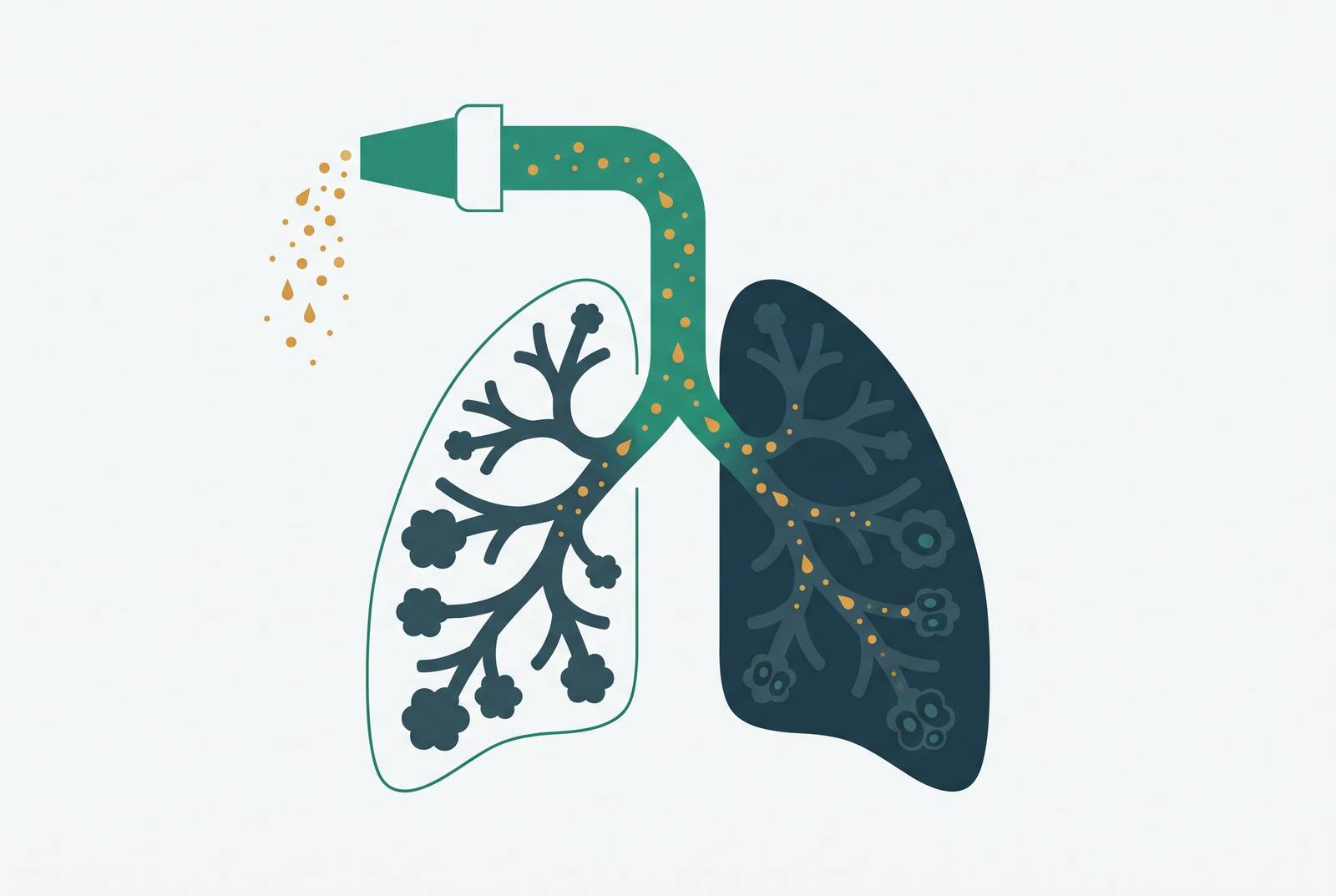
The century-long effort to deliver insulin through the lung exposed a set of engineering and biological requirements that any peptide delivered across a mucosal surface must satisfy at once: formulation chemistry, particle physics, absorption mechanics, and patient behavior. Where the lung route succeeded and where it fell short together form the clearest available map for what rigorous peptide delivery science demands, and that map now extends directly to the nasal route and its most consequential current candidate, GLP-1.
The lung as a candidate for peptide delivery
That experiment sits at the start of a hundred-year line of inquiry into whether a mucosal surface, rather than a needle, could move a peptide the size of insulin into systemic circulation. The reasoning behind it held up for decades, because the lung offers physiological conditions genuinely suited to the task. Low metabolic activity in the lung spares peptides from the kind of enzymatic degradation that destroys orally administered proteins before they reach the bloodstream, and it bypasses first-pass hepatic clearance, which can eliminate most of an injected dose before it ever reaches circulation.
Size governs how well that promise translates into absorption. Peptides and proteins below roughly 40 kilodaltons cross the alveolar epithelium within minutes, while larger molecules take hours or days to diffuse across that barrier. Insulin, at approximately 6 kilodaltons, falls near the favorable end of that range, and that is part of why researchers kept returning to it across nine decades of pulmonary delivery research. But biology only grants half the opportunity. Particle physics imposes an equally rigid constraint: particles have to measure below 3 micrometers to reach the alveoli reliably, since anything larger deposits in the upper airway and gets cleared before absorption occurs.
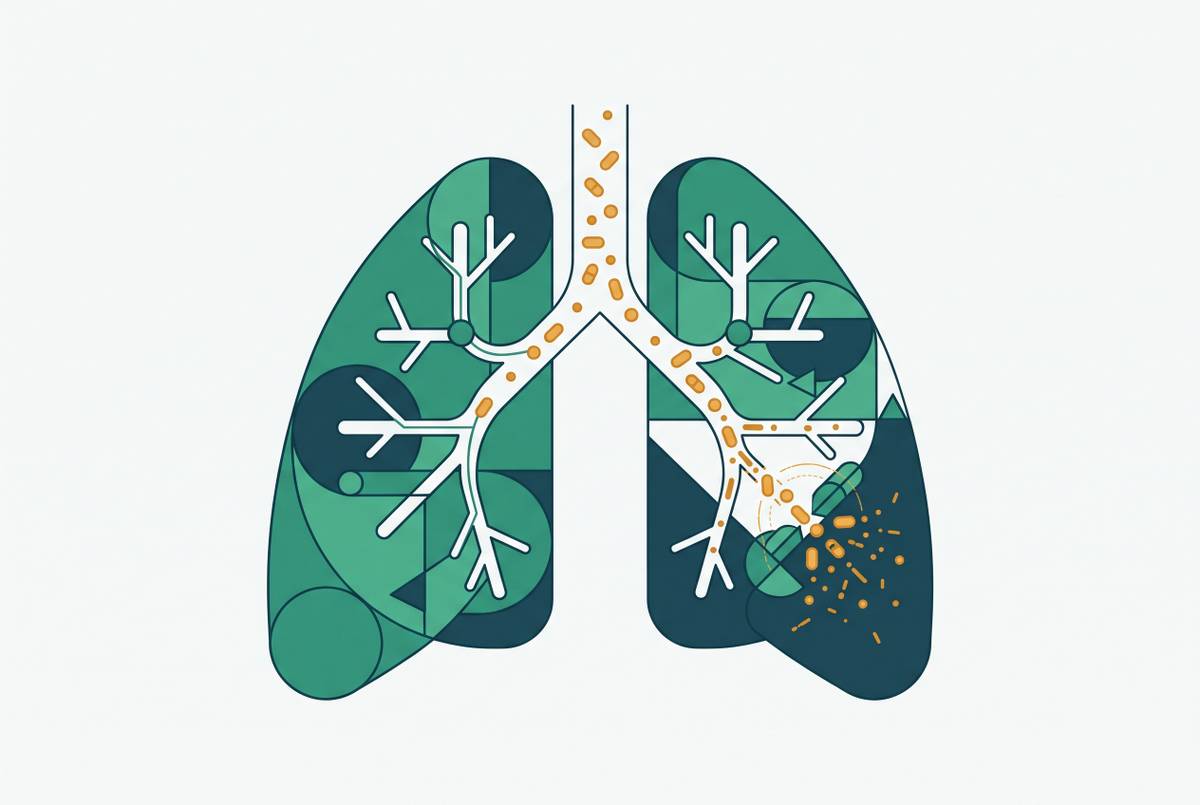
Even particles that clear that size threshold face a lung that is hospitable but far from passive. Mucociliary clearance sweeps foreign material toward the throat, alveolar macrophages engulf particles that evade that sweep, and enzymatic activity at the epithelial surface degrades what survives both. Surfactant proteins lining the alveoli add a further complication: they can trigger agglomeration of biologic particles, clumping them together in a form that macrophages recognize and consume rather than letting them pass intact into the bloodstream. The lung, in other words, presented researchers with a genuine opportunity bounded by genuine defenses, and the century that followed Gänsslen's experiment became a search for formulations precise enough to thread that needle.
What Exubera's collapse revealed about peptide delivery's non-biological requirements
Exubera reached the market with legitimate clinical data behind it, and its failure says less about the biology of pulmonary insulin delivery than about everything surrounding that biology. The product showed that clearing the biological bar is necessary, but it is nowhere near enough. A delivery system also has to pass a device test, a dosing-complexity test, and a physician-confidence test, and it has to pass all three simultaneously, because failing any one of them undermines a clinical result that, on its own, might otherwise have been strong enough to succeed.
The device itself illustrates the point. Exubera's inhaler measured approximately one foot long, too large to carry in a purse and conspicuous enough in daily use that it signaled to patients, before they even considered the pharmacology, that this was not meaningfully simpler than an injection. Prescribing it compounded the problem: physicians had to deliver patient education that exceeded what most diabetes practices could sustain day to day, and mandatory lung function tests before and during treatment added an administrative burden that suppressed uptake independent of how well the drug worked.
A safety signal entered the picture as well. Six lung cancer cases appeared among smokers using Exubera, against one in a comparator group, and the association was never established as causal. The reputational damage proved immediate and durable regardless, and it set a safety floor that every pulmonary peptide program since has had to clear, no matter what the underlying statistics eventually showed. But treating that signal as the central cause of Exubera's failure misreads the episode. The device's size, the prescribing burden it placed on physicians, and the mismatch between a high-complexity delivery platform and the organizational logic of large pharmaceutical infrastructure did more to end the product than any single safety finding. Exubera's lesson is structural: delivery-dependent therapies demand a different kind of research-to-commercialization pipeline than standard drug development, one built around the device and the patient experience as much as the molecule.
How Afrezza's Technosphere platform addressed the engineering failures
Afrezza took the lesson from Exubera and applied it directly: make the formulation do the work, rather than asking patients and physicians to absorb the complexity of an unwieldy device. The Technosphere platform, produced by MannKind, adsorbs insulin onto fumaryl diketopiperazine particles and delivers them through a compact, breath-powered inhaler. Where Exubera's device extended to roughly the size of an eyeglass case in use, Afrezza's shrank to something that fits in a pocket, eliminating the ergonomic objection that had done much of the damage to its predecessor.
The pharmacokinetic profile that resulted showed a faster onset than subcutaneous insulin, which suits a mealtime dosing need well. But the duration of action proved short, and inter-individual variability meant that dosing required frequent adjustment and, in practice, often combination with other forms of insulin to manage glucose across a full day. Safety data have also accumulated in Afrezza's favor since the Exubera era: post-2020 animal studies found no significant long-term carcinological risk tied to inhaled insulin, and a clinical trial involving 5,500 patients found that Afrezza's adverse pulmonary effects were comparable to other treatments, with the exception of irritant cough. That trial record gives the product a safety floor that Exubera never cleared cleanly in the public imagination.
One constraint remained untouched by any of this engineering progress. Afrezza requires spirometry before a patient starts treatment, and it carries a contraindication in patients with asthma or COPD, chronic lung conditions that occur often in the exact population the drug is meant to serve. The platform continues to develop: the FDA accepted MannKind's supplemental BLA for Afrezza in children and adolescents ages 4 to 17 in October 2025, based on the 26-week, open-label INHALE-1 study of 230 children and teens, and approved it for patients ages 6 and older on May 29, 2026. That approval marks the most recent chapter in the inhaled insulin story, evidence that the platform keeps evolving rather than proof that its underlying bioavailability limits have been resolved.
The bioavailability ceiling as a structural property of pulmonary peptide delivery, not a fixable defect
Afrezza's bioavailability holds at roughly one-fifth of the administered dose, with the pulmonary biologics literature reporting a relative bioavailability of 21 to 25 percent. That figure is a direct consequence of the same lung architecture that made pulmonary delivery attractive to Gänsslen a century ago and to every researcher who followed him.
Alveolar epithelial cells present an enzymatic barrier that degrades a meaningful fraction of any peptide that reaches them, while surfactant-triggered agglomeration routes a further portion of the dose toward macrophages. Mucociliary clearance, macrophage uptake, and epithelial enzymatic activity operate at the same time, and none of the three can be substantially suppressed without compromising the lung's ordinary defensive function, the same function that protects the body from inhaled pathogens and particulate matter every day. Engineering around that trio means working within it, not eliminating it.
Dose variability does not sit beside the ceiling as a separate problem; it compounds it. Deposition depth shifts with breath technique, and inhalation flow rate and lung geometry differ from one patient to the next in ways that cannot be standardized the way an injection volume can be measured and fixed. Any inhaled peptide therapy has to build dose-compensation and variability management into its clinical protocol as a permanent feature of the design, not a first-generation limitation to be engineered out in a later version. That distinction carries real weight for evaluating future programs: pulmonary delivery suits molecules where a ceiling on systemic exposure is tolerable, fast-acting mealtime insulin being the clearest example, and it suits them poorly where consistent, tunable systemic or CNS exposure is the goal. The lung can get a peptide into the bloodstream quickly. It cannot promise how much of the dose arrives, and that is not a flaw in any one formulation but a property of the organ itself.
The lung's failures mapped onto the nasal route's engineering challenges
The nasal route faces the same three barrier categories that constrained pulmonary delivery: enzymatic degradation at the mucosal surface, mucociliary clearance, and the low permeability of cell membranes to large molecules. Because of that overlap, the engineering lessons the lung produced transfer directly, and do not need to be rediscovered from scratch. A formulation scientist who understands why Technosphere particles needed to resist macrophage uptake already understands, in broad outline, why a nasal carrier needs to resist the same fate.
The nasal route inherits an identical set of surface challenges, but it is worth pursuing because it has an anatomical feature the lung simply does not. The olfactory and trigeminal nerve pathways provide a direct conduit from the nasal cavity to the brain, bypassing the blood-brain barrier. That changes what problem the nasal route is solving. The lung delivers to the bloodstream; the nose can deliver to the brain, and those are not two versions of the same target but two different destinations requiring two different kinds of engineering.
The two nerve pathways behave differently at the level of formulation design, and the difference matters for how particles need to be built. Intact nanoparticles are preferentially transported along trigeminal axons, while material already released from a nanoparticle carrier moves more readily through the olfactory pathway. A formulation designed to keep a peptide encapsulated until it reaches brain tissue is, in effect, choosing the trigeminal route; a formulation designed to release its payload near the olfactory epithelium is choosing the other. That is a design decision with direct mechanistic consequences, and it means the lessons in particle chemistry, surface engineering, and carrier design that pulmonary formulation science generated are not left behind when the target shifts to the nose. They are the starting point for the next phase of work, not a detour from it.
Nanoparticle engineering and the nasal route's barrier problem for peptides like GLP-1
Nanoparticle carriers answer the nasal route's barrier problem by the same logic Technosphere applied to the lung: let the carrier do the work of protecting the peptide and controlling where and when it releases. The nasal route adds one capability the lung never offered: it can deliver an intact peptide directly into the central nervous system. The small size and surface properties of nanoparticle carriers increase insulin permeability across the nasal mucosa significantly compared with a plain insulin solution, which demonstrates that the carrier itself performs pharmacokinetic work the bare peptide cannot do on its own.
PLGA nanoparticles and solid lipid nanoparticles extend how long a drug remains on the nasal mucosa, increase permeability across it, and improve overall CNS bioavailability, directly addressing the residence-time limitation that mucociliary clearance otherwise imposes on any unprotected formulation. GLP-1 and GLP-2 derivatives engineered with functional sequences, including cell-penetrating peptides and penetration-accelerating sequences, travel along trigeminal nerve pathways, through both axonal and extracellular routes, after intranasal application. The peptide reaches the brain by following the nerve itself, so it does not need systemic absorption followed by re-entry across the blood-brain barrier.
Why does GLP-1 matter so much as a test case for this platform? GLP-1 receptors are expressed widely throughout the central nervous system, and GLP-1 receptor agonists reach measurable brain concentrations once delivered there. Preclinical studies report reductions in amyloid-beta and tau pathology, inhibition of neuroinflammation, and enhancement of synaptic plasticity and cerebral glucose metabolism under those conditions. A pooled analysis combining cardiovascular outcome trial data from semaglutide and liraglutide, covering 15,820 patients, together with a large Danish registry cohort, found a substantially lower dementia rate among patients treated with GLP-1 receptor agonists in both data sources. That is an epidemiological signal, not proof of causation, and the field has a clear counterexample on record. The EXENATIDE-PD3 trial ran 96 weeks in 194 people with Parkinson's disease, and it found no evidence that exenatide slowed disease progression. You might think that result undercuts the entire nose-to-brain hypothesis for neurodegenerative disease. It does not, and the reason is instructive: that trial delivered exenatide by systemic injection, not through a nose-to-brain route engineered to maximize CNS exposure. A null result under those conditions says more about the limits of systemic delivery for reaching neurological targets than it says about the peptide class itself. Route of delivery and the brain exposure level it achieves are the variables that determine outcome, not the molecule alone, and that is precisely the lesson the lung's own history already established.
The nanoparticle platform behind this work is not built around a single peptide. The same architecture that protects and transports GLP-1 to the brain extends to other peptides and other neurological indications, which is what gives the approach value beyond any one molecule or any one disease target.
The unified engineering checklist that inhaled insulin built and nasal peptide delivery must now satisfy
A century of inhaled insulin research produced a specification that any mucosal peptide delivery system now has to meet, and the next generation of nasal delivery developers inherits that specification already established. Formulation chemistry has to protect the peptide from enzymatic degradation at the mucosal surface, a requirement that Technosphere's FDKP particles and nanoparticle carriers both satisfy, by different mechanisms suited to their different targets. Particle physics still governs where a formulation ends up: sub-3-micrometer particles are required for alveolar delivery, and nasal formulations need comparably precise sizing to reach the olfactory region rather than depositing harmlessly in the anterior mucosa. Clearance management remains non-negotiable, because mucociliary action will always sweep an unprotected peptide solution off the mucosal surface faster than it can be absorbed, and nanoparticle surface engineering is the tool available to counter that sweep.
Route-target matching follows directly from the biology established earlier in this analysis. The lung can deliver efficiently to the bloodstream only for small peptides under roughly 40 kilodaltons, but the nose can deliver to the brain via nerve pathways for peptides that nanoparticle carriers protect in transit. Choosing between those two routes is a design decision with mechanistic consequences, not a default setting you apply regardless of the target. Patient-behavior alignment carries equal weight: Exubera's device failure and Afrezza's spirometry requirement both show that a scientifically sound delivery system still fails if it places too much burden on the patient. Adherence functions as a pharmacokinetic variable rather than a soft, secondary concern. Safety floor clearance rounds out the list. Pulmonary delivery's permanent contraindication in asthma and COPD patients demonstrates that route-specific safety constraints have to be characterized early, because they cannot be engineered away later, and any serious nasal program owes its own analogous constraints the same scrutiny.
That last point lands with particular force for GLP-1 specifically. Injectable GLP-1 therapies carry a nausea burden and dropout rates that represent the same category of adherence failure subcutaneous insulin carried before Afrezza offered patients an alternative route. The lesson inhaled insulin leaves behind is that adherence is a delivery engineering problem, the same kind of problem that took a century to work through for the lung, and the nasal route now carries forward with a far more complete map of what needs to be solved before it can be called solved.
Sources
- Twenty years of inhaled insulin: promise, setbacks, and future directions
- (PDF) Afrezza: An inhaled approach to insulin delivery
- Beyond the Needle: Reimagining Insulin Delivery and the Evolution of Inhaled Insulins - PMC
- Pulmonary Delivery of Biological Drugs
- Pulmonary Absorption of Peptides and Proteins: Drug Delivery: Vol 2, No 1
- Formulation strategies, preparation methods, and devices for pulmonary delivery of biologics - ScienceDirect