Patent Vintage and Claim Depth Decide Who Wins the Nose-to-Brain Nanoparticle IP Race for CNS Indications
Broad early patents on nanoparticle chemistry control this emerging delivery field.

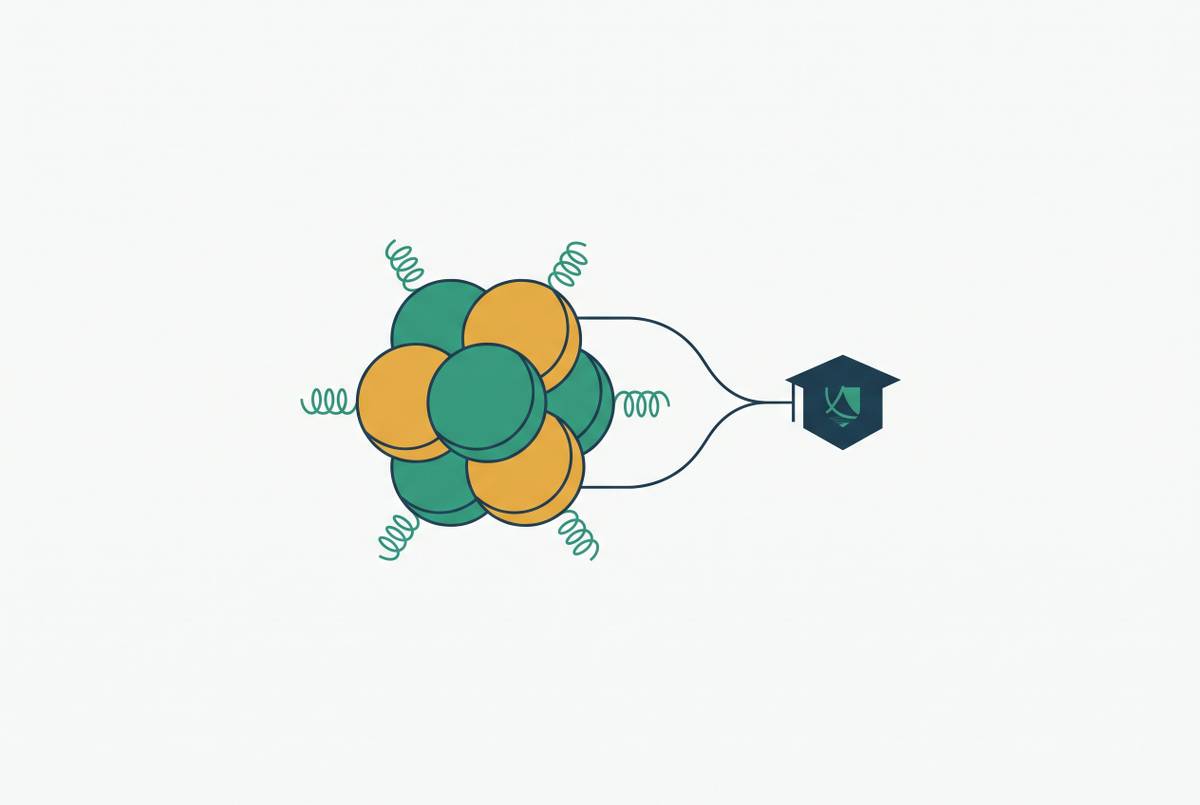
Nanoparticle nose-to-brain delivery for CNS peptide indications uses engineered carriers to protect peptides and exploit olfactory and trigeminal pathways that bypass the blood-brain barrier. Its patent contest turns on who controls the nanoparticle architecture. Early, structurally broad portfolios can define the freedom-to-operate landscape for later entrants, provided their surviving claims cover the formulations and uses being developed.
How do large-molecule peptides reach the CNS through a non-invasive nasal route?
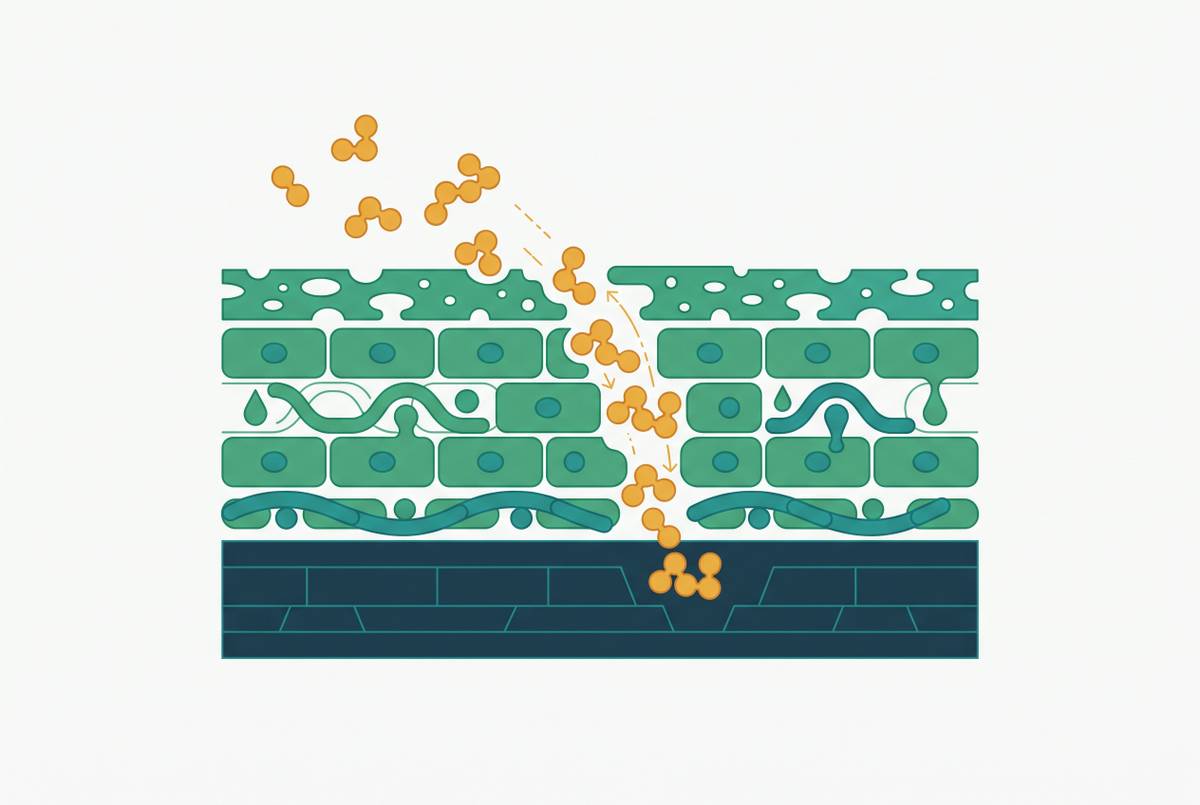
The blood-brain barrier protects the brain by restricting entry from systemic circulation, but that protection also excludes most therapeutic molecules. A drug can reach the bloodstream without reaching its neural target. The olfactory and trigeminal pathways offer a direct anatomical bypass because they connect the nasal and brain compartments.
A nasal dose can also travel through systemic absorption and lymphatic drainage, so it can take more than one path. The vascularized nasal mucosa supports rapid absorption, while the route avoids hepatic first-pass metabolism. Those advantages explain the interest, but they do not establish that a peptide will reach therapeutic concentrations in the CNS.
Why free drugs fail intranasally and nanoparticles become the necessary engineering solution
Free drugs encounter enzymatic degradation, mucociliary clearance, and limited mucosal residence time before neural transport can occur. The nasal cavity’s roughly 15 mL volume further constrains dosing headroom. Giving more drug therefore cannot simply make up for those losses. For most molecules, these barriers prevent the nasal route from producing therapeutic brain concentrations, making protection and retention central engineering requirements.
Nanocarriers meet those needs by protecting the drug, using controlled release, and interacting with nasal surfaces. Liposomes, polymeric nanoparticles, solid lipid nanoparticles, PEGylated hybrids, and protein-based and inorganic nanoparticles offer different stability and release profiles. Surface chemistry adds another degree of control. Cell-penetrating peptide decoration, for example, is intended to promote transport across the nasal epithelium and blood-brain barrier. For these engineered products, the formulation becomes inseparable from the therapeutic proposition, which makes ownership of its architecture commercially consequential.
How nanoparticle chemistry choices — chitosan, PLGA, surface ligands — translate directly into patent claim territory
Chitosan’s cationic character promotes interaction with negatively charged mucosal surfaces, extending residence time and facilitating paracellular transport. PLGA instead offers biodegradability and tunable release kinetics. Their combination can therefore serve a different function from either material alone, and formulation claims may distinguish polymer ratios, particle sizes, coatings, and release profiles. The coating is part of the mechanism.
Surface functionalization creates further distinctions within those material families. TAT polypeptide and lactoferrin can add transport or targeting functions to the underlying particle. CN118021764A, filed in 2024, claims chitosan/TAT/lactoferrin nanoparticles for cognitive dysfunction, tying a particular chemistry to a therapeutic use. Johns Hopkins University’s patent, granted December 2025, instead claims non-adhesive, brain-penetrating coated nanoparticles engineered to diffuse through extracellular space. These are contrasting design territories, not interchangeable versions of one invention. Their coexistence shows why the route alone cannot describe the relevant patent boundaries, although different design philosophies do not by themselves establish freedom to operate.
Why the 1989 Frey priority date matters — foundational claim expiry opened the field but did not flatten it
William H. Frey II’s 1989 patent established the foundational priority date for using the olfactory pathway as a CNS delivery route. Its claims have long since expired, opening the underlying route to entrants. That expiry did not erase later formulation protection. Competition then shifted from the anatomical concept to claims on specific compositions, surface modifications, and therapeutic uses.
Early second-generation applicants had less prior art to contend with, so they had more room to make broad claims on structures. Later applicants face decades of published nanoparticle science and patent disclosures that constrain what they can claim as new. Timing changes the available claim space.
However, age alone is not an enforceable right. Frey’s expired claims still count as prior art, but they no longer give the owner the right to exclude others. A freedom-to-operate assessment today checks whether a proposed architecture falls within existing composition, formulation, or method claims, since nasal delivery itself is now open to entrants. An early claim on a structure adds value when the portfolio still has rights that protect it.
What claim depth means in practice — composition-of-matter versus method-of-treatment versus formulation claims
Composition-of-matter claims concern what the invention is, including its material identity and surface chemistry. Their strategic strength is that coverage need not depend on a particular indication. Method-of-treatment claims instead concern a defined therapeutic use, such as administering an intranasal chitosan nanoparticle to treat Alzheimer’s disease. A different indication may fall outside that particular method claim. The distinction is between protecting an architecture and protecting its use.
Formulation claims define combinations such as particle size, polymer ratio, ligand, payload, and release profile. Chitosan’s presence alone is not the invention. A specific chitosan-coated PLGA system may occupy protectable territory even where the underlying materials are broadly available. These categories help explain scope, but the wording of the actual claims determines coverage.
Depth emerges when the layers overlap. Changing a ligand might avoid one formulation claim, but a composition or treatment claim could still apply. Likewise, a new indication may avoid an existing treatment claim even when a claim still protects the particle itself. A layered portfolio can therefore demand more than a local design change. That is the practical advantage that a large collection of isolated, narrow claims may lack.
How GLP-1 peptides became the indication that raises the IP stakes for every nose-to-brain nanoparticle platform
GLP-1 receptor agonists give this architecture a concrete therapeutic purpose because GLP-1 receptors occur on specific neuronal populations. That opens more paths for neurological research into addiction, dementia, Parkinson’s, and PTSD-adjacent stress disorders. Yet current subcutaneous delivery produces high plasma levels with limited direct brain exposure. Each proposed CNS use also offers a chance to make a separate method-of-treatment claim.
Adherence adds a separate commercial rationale. The Evernorth Research Institute’s 2025 data found that over 50% of GLP-1 users abandoned treatment within a year, with side effects and safety concerns, financial and insurance barriers, and adherence challenges among the leading causes. Oral formulations avoid injections but impose fasting and gastric restrictions that nasal administration avoids. Neither observation proves superior adherence for a nasal product. Reduced systemic exposure could address some tolerability concerns, but it would not by itself resolve financial barriers.
MetP Pharma AG announced preclinical results in January 2026 showing that GLP-1–based drugs reached the brain rapidly in a dose-dependent way, with brain-to-plasma ratios consistently greater than 1 in rats and low systemic exposure. Iconovo filed a patent application in May 2024 for intranasally inhaled semaglutide and selected ICOone Nasal as its delivery platform, targeting injection aversion and adherence. These examples represent different development positions. Neither announcement alone establishes broad nanoparticle-platform ownership.
What the EVOKE trial failure reveals about the CNS exposure problem — and why it reframes the IP argument for nose-to-brain delivery
The Phase 3 EVOKE trials in late 2025 involved 3,808 participants across two trials and missed their primary endpoint for Alzheimer’s disease progression. Certain Alzheimer-related biomarkers improved, raising a careful question about their divergence from the disease-progression outcome. Could systemic delivery produce biological signals without sufficient exposure in the neural circuits needed for clinical benefit?
The results permit that hypothesis but do not establish it. EVOKE did not prove that inadequate CNS exposure caused the failure, nor that intranasal delivery would succeed. Its relevance is narrower and still important. It makes brain exposure a sharper differentiating question for GLP-1 development, beyond the convenience of avoiding injections.
For patent strategy, evidence of preferential brain targeting can support an argument that a delivery architecture solves a problem left unresolved by systemic administration. MetP’s rat results are relevant to that argument, while remaining preclinical. EVOKE may also inform an inventive-step argument about the limitations of the systemic approach. Clinical failure alone, however, does not establish that a particular nasal formulation is non-obvious. The persuasive link must run through the claimed architecture and the exposure evidence.
How the current patent landscape is structured — fragmented but not flat, with material patents expired and indication claims as the contested frontier
No single assignee holds a composition-of-matter patent broad enough to exclude all competitors from nose-to-brain nanoparticle delivery. Base-material protection for chitosan, PLGA, and lipid nanoparticles is expired or narrowly claimed. The materials are not a universal tollgate. Competition instead centers on combinations, surface modifications, payloads, and indications, with different claims potentially applying to different aspects of one product.
Chinese parallel filing adds another source of indication-specific claims. The 2024 cognitive-dysfunction application illustrates that activity, while the Johns Hopkins patent occupies a contrasting non-adhesive design space. Silo Pharma took a different approach in November 2023 through an exclusive license to Medspray Pharma BV’s soft mist nasal spray technology for indications including PTSD, anxiety, Alzheimer’s disease, and anorexia. That strategy anchors protection in dispersion technology.
Fragmentation therefore does not mean equal access. A developer may need to navigate several overlapping claim layers. A comprehensive portfolio can create more points of leverage than a single device license or narrowly defined formulation claim. The structural advantage depends on the coverage those rights actually provide.
Why vintage depth — not filing volume — is the characteristic that decides which portfolio controls CNS indications long-term
Early, structurally specific disclosures shape what later applicants can protect because they enter the prior-art record before the field becomes crowded. Their influence extends beyond a patent count. A later applicant must distinguish its invention from relevant earlier disclosures, while an earlier portfolio may already encompass the architecture on which several later products depend. This is why filing volume and competitive depth are different measurements.
The strongest objection concerns durability. Broad claims may be narrowed during examination or fail when challenged, while narrow claims that are carefully written may survive. The vintage argument is that the surviving scope of early claims may still cover a wider range of formulations than a recent claim confined to one combination. Expired disclosures retain prior-art significance, but they should not be confused with current licensing rights.
Institutions with 30+ year filing histories may have a valuable starting structure, but they need layers of claims that still protect it. A publication record can show how deeply the underlying science has entered the field without proving that every later product requires permission.
The forward-looking advantage is the platform multiplier. If one nanoparticle architecture can accept different payloads, subsequent indication claims can build on it without requiring a new foundational invention. GLP-1 then becomes one application of a structure potentially relevant to other peptides, gene-editing cargo, and regenerative medicine payloads.
What a strong nose-to-brain nanoparticle IP position looks like in practice, and where platforms with deep foundational portfolios have structural advantages
A strong position combines early structural claims, layered composition and use protection, a dated scientific publication record, and an architecture capable of accepting new payloads. Each contributes something different to the portfolio. Structural claims define the particle, formulation claims protect payload-particle combinations, and treatment claims connect those combinations to CNS indications. Publications establish scientific credibility and prior-art context, while platform flexibility creates opportunities for further claims.
For university spinouts and research institutions with decades of nanoparticle work, the advantage lies in connecting those elements. Historical depth alone is not enough. The oldest relevant architecture should provide a foundation for later formulations and uses rather than remain an isolated invention with no surviving protective reach. Academic citations can indicate how widely the science has propagated, but they cannot establish claim coverage.
For CNS peptide development, the resulting assessment is concrete. Does the portfolio protect the architecture, the peptide formulation, and the proposed indication, and does its exposure evidence support the intended use? Adaptation to addiction, dementia, or Parkinson’s remains a scientific and clinical proposition. The strongest portfolios allow those uses to be pursued while making the underlying delivery system hard to design around.
Sources
- Chitosan-Based Nanoparticles for Nose-to-Brain Drug Delivery: A Real Path toward Effective CNS Therapy? - PMC
- Cell-Penetrating Peptide-Decorated Nanovectors for Nose-to-Brain Delivery: A New Treatment Option for CNS Diseases
- Intranasal Nano-Delivery Systems: Emerging Strategies for Central Nervous System Disease Therapeutics - PMC
- Nanotechnology for enhanced nose-to-brain drug delivery in treating neurological diseases - ScienceDirect
- Biopolymer Nanoparticles for Nose-to-Brain Drug Delivery: A New Promising Approach for the Treatment of Neurological Diseases
- A comprehensive insight of innovations and recent advancements in nanocarriers for nose-to-brain drug targeting