How One Founding IP Position Separates the Most Credible Early-Stage Intranasal CNS Peptide Company From the Rest
Deep nanoparticle IP from inception beats recent formulation stacks for credibility.

Nanoparticle nose-to-brain delivery for CNS peptide indications uses engineered carriers to protect peptides and exploit nasal nerve pathways that bypass the blood-brain barrier. Its central challenge is formulation. For an early-stage company that claims it can do this, the depth and vintage of its founding nanoparticle IP give more reason for confidence than a formulation stack put together recently, though neither patents nor past research prove clinical efficacy.
Why the nose-to-brain route exists but cannot be used without engineered help
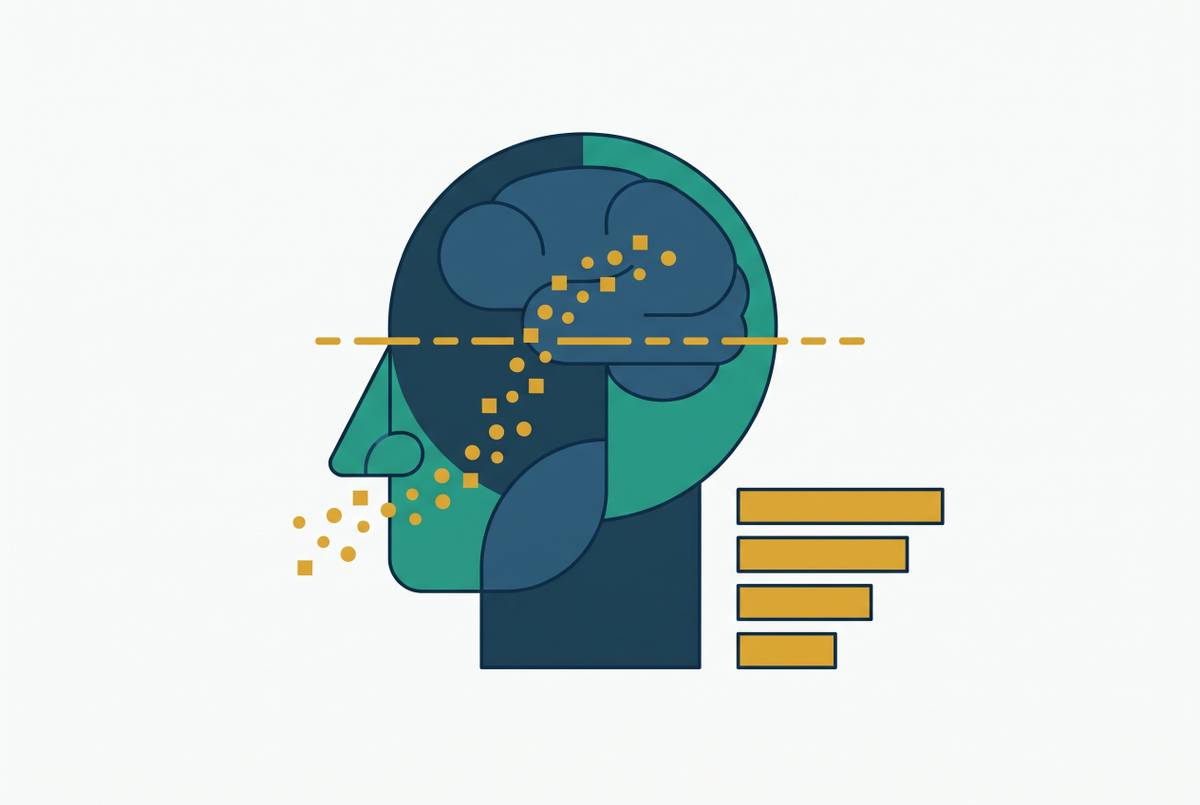
The olfactory and trigeminal nerves provide direct connections between the nasal mucosa and the brain. Olfactory receptor neurons project through the cribriform plate to the olfactory bulb, opening a route toward the hippocampus, cortex, and other regions. The trigeminal pathway serves the broader respiratory epithelium and connects to the brainstem through the trigeminal ganglion and pons, making it accessible to standard nasal sprays. These routes bypass the blood-brain barrier. That distinction is central to the delivery proposition.
Extracellular perineural transport along the olfactory pathway is the dominant fast mechanism, with molecules appearing in cerebrospinal fluid within minutes. Trigeminal perineural transport is faster than axonal transport but typically slower than the olfactory route. A peptide must stay intact and available long enough to enter one of these routes.
Mucociliary clearance removes most deposited material within minutes, while enzymes can degrade a peptide before transport begins. Human olfactory epithelium also occupies a substantially smaller share of the nasal surface than in rodents, complicating translation from animal studies. Engineered nanoparticle carriers must therefore protect the payload, extend mucosal residence, and accommodate a difficult species gap. The depth of that engineering solution is what separates an anatomical opportunity from a credible platform.
Why GLP-1 peptides specifically need direct CNS delivery, not just better systemic exposure
GLP-1 receptors are found in regions that control impulse control, reward, and cognition, which raises questions about how central receptor activation might help with addiction and neurodegeneration. Endogenous GLP-1 is produced in the nucleus tractus solitarius and acts as a neurotransmitter in reward-related regions. The target is therefore not simply circulating peptide. It is receptor engagement within the brain.
Native GLP-1 is degraded peripherally by DPP-4 with a half-life of under two minutes, sharply restricting the intact peptide available for CNS delivery. That figure should not be transferred to every engineered analogue. Even for injected agonists, though, there is still debate over whether they reach meaningful brain concentrations in humans. Better systemic exposure and better central exposure are not interchangeable outcomes.
The clinical evidence also requires a careful distinction between association and explanation. The use of GLP-1 receptor agonists has been linked to lower risks of substance use disorders, seizures, and neurocognitive disorders, including Alzheimer's disease. Comparisons with DPP-4 inhibitors sometimes favor agonists for dementia risk reduction, but the results are not consistent across analyses. Those observations support investigation of central receptor engagement. They do not establish that delivery is the sole constraint.
The strongest counterpoint is that GLP-1 receptor agonists have not consistently improved memory and cognition versus placebo in Alzheimer's disease. Could inadequate brain exposure help explain that result? It remains a hypothesis. A system delivering intact peptide through nasal nerve pathways could distinguish a delivery failure from a failure of the CNS hypothesis. That is a structurally different experiment from increasing peripheral exposure.
Why nanoparticle engineering is the non-negotiable core of any credible intranasal CNS peptide platform
Nanoparticle encapsulation addresses several barriers at once. It can protect peptides against nasal enzymes, control release, enhance mucosal permeation, and prolong residence at the absorption site. Protection alone is not enough if the formulation is gone before transport takes place. Keeping the peptide there longer also has little value if it cannot leave the carrier and reach its target.
Conejos-Sánchez et al. published the NanoInBrain platform in May 2026, reporting roughly four hours of nasal residence through a hyaluronic acid-poly-L-glutamate hydrogel depot component. The system used star-shaped poly-L-glutamate architectures with C-terminal odorranalectin conjugation for receptor-mediated mucosal permeation. It also used redox-responsive disulfide crosslinking for thiol-mediated mucin anchoring. This is an integrated molecular architecture. Its components address different parts of the same transport problem.
The design burden grows because the variables interact. Particle size, surface chemistry, mucoadhesive versus mucodiffusive behavior, and crosslinking must be tuned together, while aerosol droplet size, deposition site, device geometry, and viscosity affect delivery. A formulation must stay at the mucosa while still allowing the peptide to move through it. Success on one parameter does not establish a working delivery system.
Tokyo University of Science's CPP-modified GLP-2 work showed a derivative reaching the trigeminal sensory nucleus within three minutes of intranasal dosing in mice, with human efficacy still unestablished. It does show why a platform claim needs a research foundation deeper than the phrase “nasal peptide delivery.” Without substantial nanoparticle know-how, a company must explain how it has solved this coupled engineering problem.
What companies are developing intranasal peptide delivery, and where do the IP gaps sit?
Aptar Pharma published three new international patent applications in May 2026 focused on intranasal and pulmonary GLP-1 delivery. The applications described spray-dried and powder-processing formulation approaches supported by preclinical pharmacokinetic data. That is a device-and-formulation-oriented position. The disclosed work should not be treated as evidence of a foundational nanoparticle platform for direct CNS peptide delivery.
Insu Therapeutics represents a different route altogether. The company received a USPTO Notice of Allowance in October 2026 for buccal peptide-delivery technology applied to BuccaGLP™, its investigational buccal semaglutide formulation. Its technology is licensed from the University of British Columbia, and the company is backed by Victory Square. This supports the broader case for interest in non-injection peptide delivery. It does not make buccal delivery a substitute for a nose-to-brain platform.
The regulatory position underscores how early the CNS field remains. No nose-to-brain peptide formulation had received FDA approval as of 2026. Oxytocin and insulin remained in advanced clinical testing, while neuropeptide Y was in early-phase clinical and preclinical testing. Device patents, non-injection routes, and experimental CNS delivery need to be judged as separate categories. The named disclosures leave a technically demanding niche open, but they do not establish which company will fill it.
What makes an IP position foundational rather than assembled
A foundational position is legible in the relationship between patents and research. The first distinction is continuity. A family that spans generations of filings, experiments, and improvements can show years of work on real formulation constraints. A recent application within that family may represent an advance. By contrast, a sparse estate consisting only of recent filings provides less evidence of accumulated problem-solving.
Do they build on particle architecture, surface chemistry, and transport mechanisms, or just bring separate formulation claims into one company? Continuations and improvements are stronger signals when the associated research shows how the technology developed. A filing date cannot answer that alone. Vintage becomes useful when it identifies a continuing technical lineage.
Foundational work gains citations when other researchers use, test, or build on it, so a founding team's academic record helps show how much trust to place in its platform. Tens of thousands of citations can indicate substantial influence across a field. They do not prove that every claim was independently replicated or that a particular nasal product works. Their value lies in demonstrating an established body of science beyond the company's own assertions.
University spinout origin can connect that record to the founding IP. Academic programs that run for years put materials and methods through peer review and grant competition, and give others the chance to replicate the work independently before it is commercialized. Yet institutional origin is a signal. The estate still needs a visible connection to the challenge of delivering intact peptides through nasal nerve pathways.
Could newer materials science supersede the older foundation? That objection is legitimate, but new surface chemistries and targeting mechanisms can extend an existing particle architecture. A strong position therefore combines accumulated knowledge with continuing improvement. These criteria distinguish a research foundation from an assembled stack because they examine how the capability arose. They do not merely count patents.
Why the adherence crisis makes the IP quality question urgent rather than theoretical
The pressure for alternatives begins with patients who abandon injectable GLP-1 treatment. Nausea and gastrointestinal adverse events call for careful dose titration, and repeated injections can make treatment harder still. Trial discontinuation and real-world persistence do not describe the same experience. Side effects account for a larger share of stoppages outside trials. That gap gives delivery design consequences beyond convenience.
A CNS-directed route might change part of this burden by reducing the peripheral receptor activation associated with systemic exposure. An intranasal formulation would need to achieve useful central delivery with an exposure profile that supports the proposed advantage of reduced nausea. Reduced adverse effects remain a possibility to test.
Nor does injectable abandonment establish that every affected patient is a candidate for CNS-directed therapy. The clinical target still has to match the intended treatment. Nevertheless, the scale of discontinuation creates a substantial patient-access reason to investigate alternatives. A delivery platform that cannot protect, transport, and release its peptide will not solve that problem.
This is where patient access and commercial diligence converge. Growing interest in non-injection GLP-1 delivery increases the importance of distinguishing genuine technical depth from timely positioning. Companies with a coherent research lineage can give investors and partners more substance on which to judge translation risk. Underpowered platforms risk consuming resources without producing a usable alternative. The urgency strengthens the demand for evidence.
How foundational nanoparticle IP functions as a platform across indications, not just a single product
A nanoparticle platform is broader than its first peptide payload when its IP covers the underlying delivery architecture. Particle design, surface chemistry, and mucosal transport mechanisms can still be useful when other peptides use the same route. The next program can begin from an established engineering foundation, with further work needed to adapt it to another payload. The reusable asset is the delivery system.
Olfactory and trigeminal pathways provide access relevant to addiction, neurodegeneration, and metabolic disease. In addiction, endogenous GLP-1 may modulate reward-related responses through receptors in the mesolimbic system. Alzheimer's disease peptide therapeutics pose another application for intranasal delivery architecture. For each indication, there must still be evidence that the payload reaches the right target and helps.
The distinction changes how an early-stage company can be evaluated. The first question remains whether its proposed product works. The second is whether the founding IP supports further development beyond that product, rather than requiring a new delivery invention for every indication. A position built on 30+ years of nanoparticle research can provide evidence of that foundation through patent-family continuity and the associated research record before clinical trials begin. It cannot provide clinical proof in advance.
Vintage, citation depth, spinout origin, and patent-family continuity are therefore useful together. Their significance is strongest when all four point to the same accumulated capability and its continuing development. No named company in the disclosures here can be declared the winner on that basis alone. The credible distinction is between a company extending a demonstrated body of nanoparticle knowledge and one assembling components to meet a moment. Intranasal CNS peptide delivery demands the former's depth, whatever name appears on the company.
Sources
- Advanced intranasal peptide delivery systems for improved management of Alzheimer's disease - ScienceDirect
- A rationally designed polypeptide-based hybrid platform for targeted intranasal brain drug delivery - PubMed
- Nose-to-Brain Delivery of Therapeutic Peptides as Nasal Aerosols
- Investigation of the Transport Pathways Associated with Enhanced Brain Delivery of Peptide Drugs by Intranasal Coadministration with Penetratin
- Intranasal Nanoemulsions for Direct Nose-to-Brain Delivery of Actives for CNS Disorders
- GLP‐1 receptor agonists and reduced dementia risk: Real‐world evidence stacks up - Lam - British Journal of Clinical Pharmacology - Wiley Online Library