Liraglutide vs. Semaglutide Structural and Pharmacological Differences
Stronger binding and enzyme resistance give semaglutide a dosing edge over liraglutide.
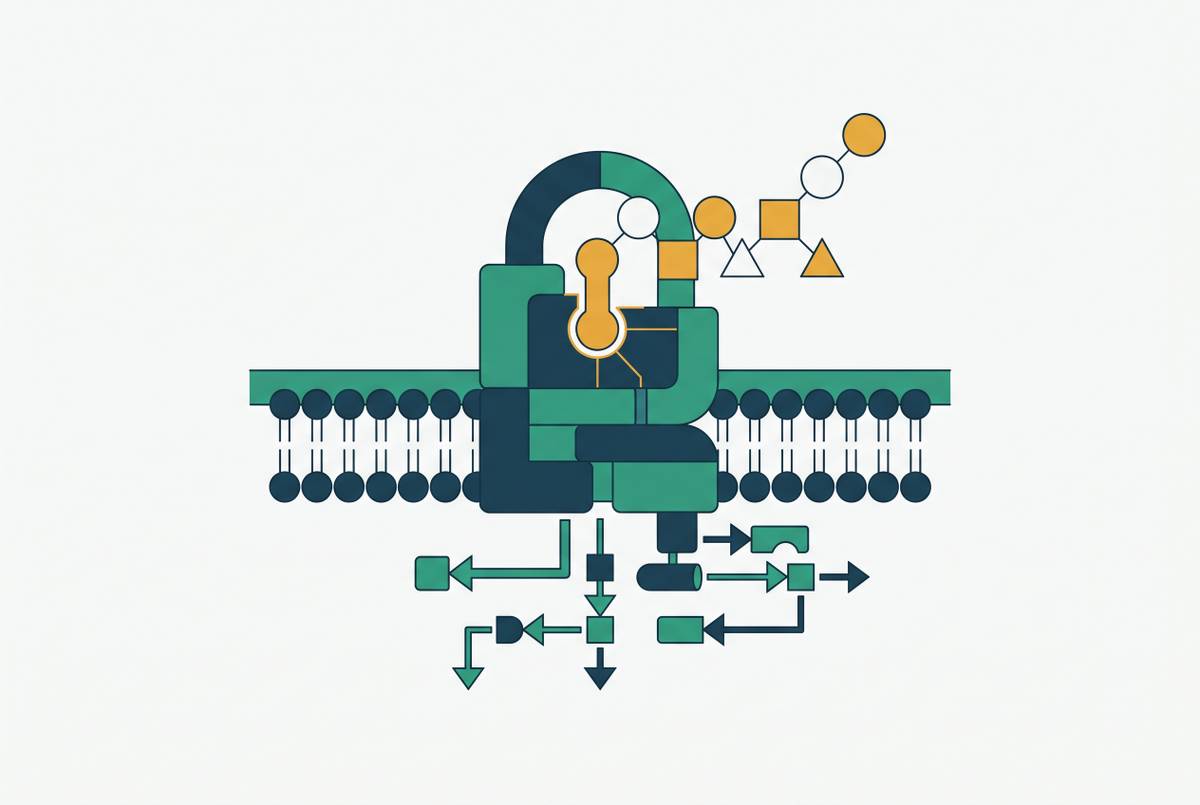
Liraglutide and semaglutide are both synthetic copies, with modifications, of a hormone the body already makes: native GLP-1, released by enteroendocrine L-cells in the gut and by α-cells in the pancreas and central nervous system. Every difference in how these two drugs behave in the body starts from changes made to that same parent molecule. Native GLP-1 works by binding the GLP-1 receptor, a G protein-coupled receptor that, once activated, triggers the adenylate cyclase pathway, raises cAMP inside the cell, and pushes pancreatic β-cells to release insulin in proportion to how much glucose is around. A 2024 Frontiers in Nutrition review lays out the rest of what that same receptor does once switched on: it blocks glucagon release from pancreatic α-cells, slows down how fast food leaves the stomach, and cuts appetite through pathways in the central nervous system. Liraglutide and semaglutide share all of this machinery, so what distinguishes them isn't whether they work the same way at the receptor, but what specific changes to the molecule's shape make one bind harder, last longer, or reach different tissue than the other.
The specific molecular engineering choices that separate semaglutide from liraglutide
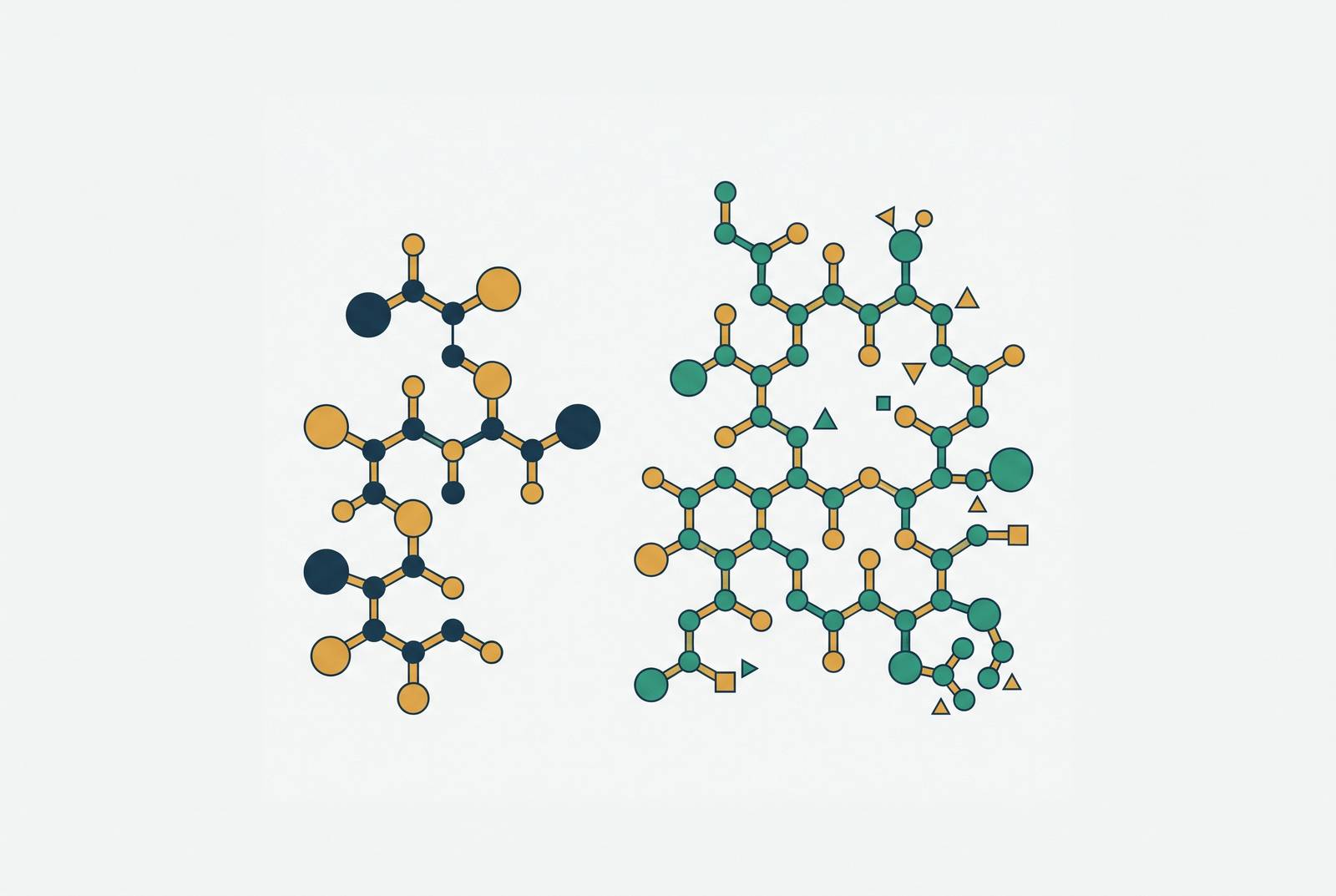
Three changes separate the two drugs from each other and from native GLP-1. Semaglutide swaps in an amino-isobutyric acid at position eight, where liraglutide instead carries a glycine substitution (native GLP-1 has alanine there). Semaglutide also carries a bigger linker molecule connecting its fatty acid chain to the peptide backbone, and that fatty acid chain itself runs longer than the one on liraglutide. The 2024 Frontiers in Nutrition review documents both the position-eight substitution and the fatty acid differences as the structural features separating the two drugs. What do these three changes actually buy the molecule? The longer fatty acid chain and the larger linker give semaglutide stronger binding to albumin, the blood protein that acts as a kind of chaperone, and better resistance to being cut apart by DPP-4, the enzyme responsible for breaking down native GLP-1 within minutes of its release. Liraglutide carries a shorter fatty acid tail that still binds albumin and resists DPP-4 to some degree, enough to outlast native GLP-1 by a wide margin, but not to the extent semaglutide does. The position-eight substitution in semaglutide adds a second, separate layer of protection against enzyme breakdown on top of what the fatty acid chain already provides. That's additive protection rather than two defenses doing the same job twice.
Semaglutide's structural protection and its longer half-life and once-weekly dosing
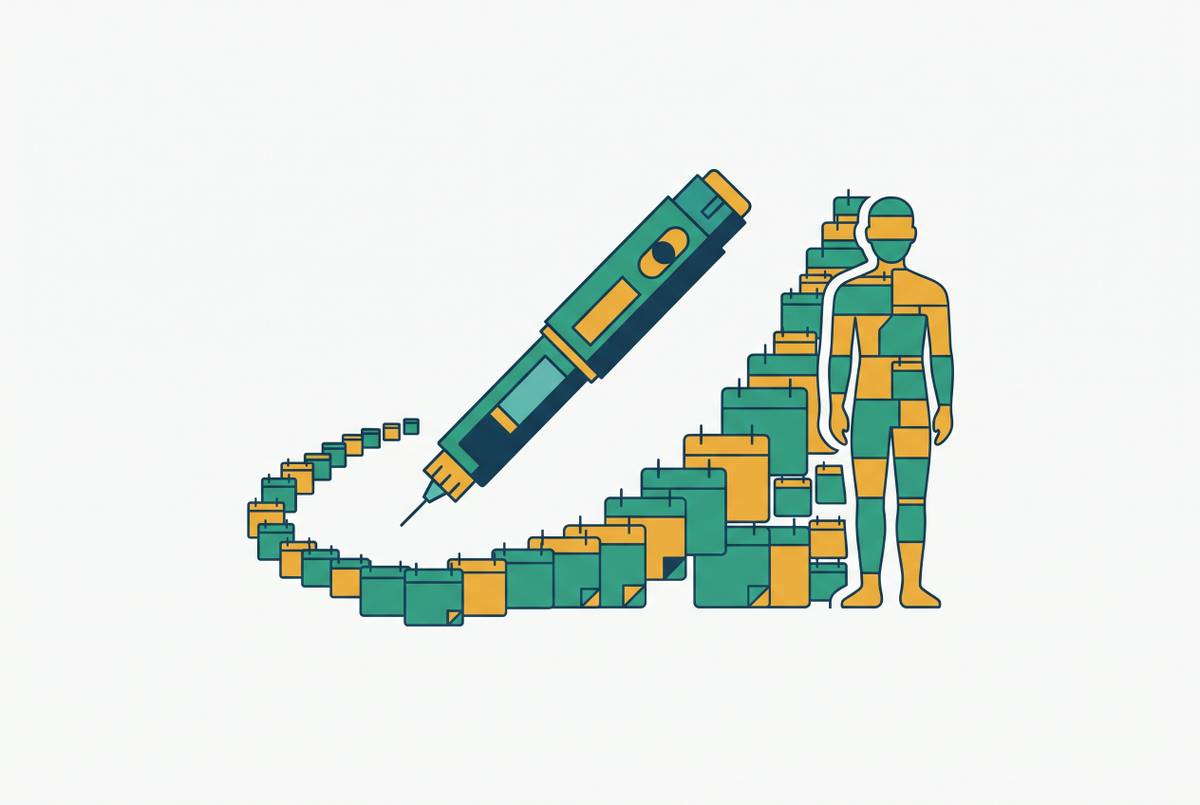
Stronger albumin binding plus better DPP-4 resistance adds up to one practical outcome: semaglutide clears out of the bloodstream much more slowly than liraglutide does. Semaglutide can be dosed once a week while liraglutide needs an injection every day, because of this difference in clearance rate. Why does this matter beyond convenience? Because the dosing schedule is a direct readout of the molecule's own structure: how tightly it clings to albumin and how well it resists being cut apart by DPP-4 are properties baked into the amino acid sequence and the fatty acid chain, not features added through a different injector pen or a different formulation buffer. Liraglutide's need for daily injection says something specific about the drug itself: the structural modifications shielding it from clearance are real but incomplete relative to what semaglutide achieves, and that incompleteness carries consequences for how reliably patients stick with treatment over months and years.
Structural choices that extend half-life and increase receptor potency and clinical efficacy
The modifications protecting semaglutide from being cleared or broken down do a second job at the same time: they also raise how tightly the molecule binds the GLP-1 receptor itself. That means semaglutide doesn't just stay in circulation longer, it engages the receptor more forcefully than liraglutide does at comparable doses. A 2025 systematic review and meta-analysis in Frontiers in Pharmacology put a number on one consequence of that stronger engagement: semaglutide lowered HbA1c by 0.56 percentage points more than liraglutide in head-to-head comparisons. That's a meaningful gap that reflects the receptor binding itself, beyond just more hours of drug exposure per week. The same analysis found that patients switched from liraglutide to semaglutide lost more weight and saw lower fasting blood sugar, so you can't chalk the HbA1c finding up to a quirk of study design. But the honest picture has an important wrinkle: that same meta-analysis found no significant difference between the two drugs in body weight or BMI change when compared directly. If receptor binding is clearly stronger, why doesn't it show a clean advantage on every metabolic measure it touches? Different outcomes depend on different combinations of receptor potency, dosing, and duration of exposure, so a structural advantage doesn't automatically show up the same way on every endpoint a trial measures. Semaglutide's edge is real and traceable to specific engineering choices, but it isn't categorical.
The nausea and tolerability burden both drugs share, and who bears it more
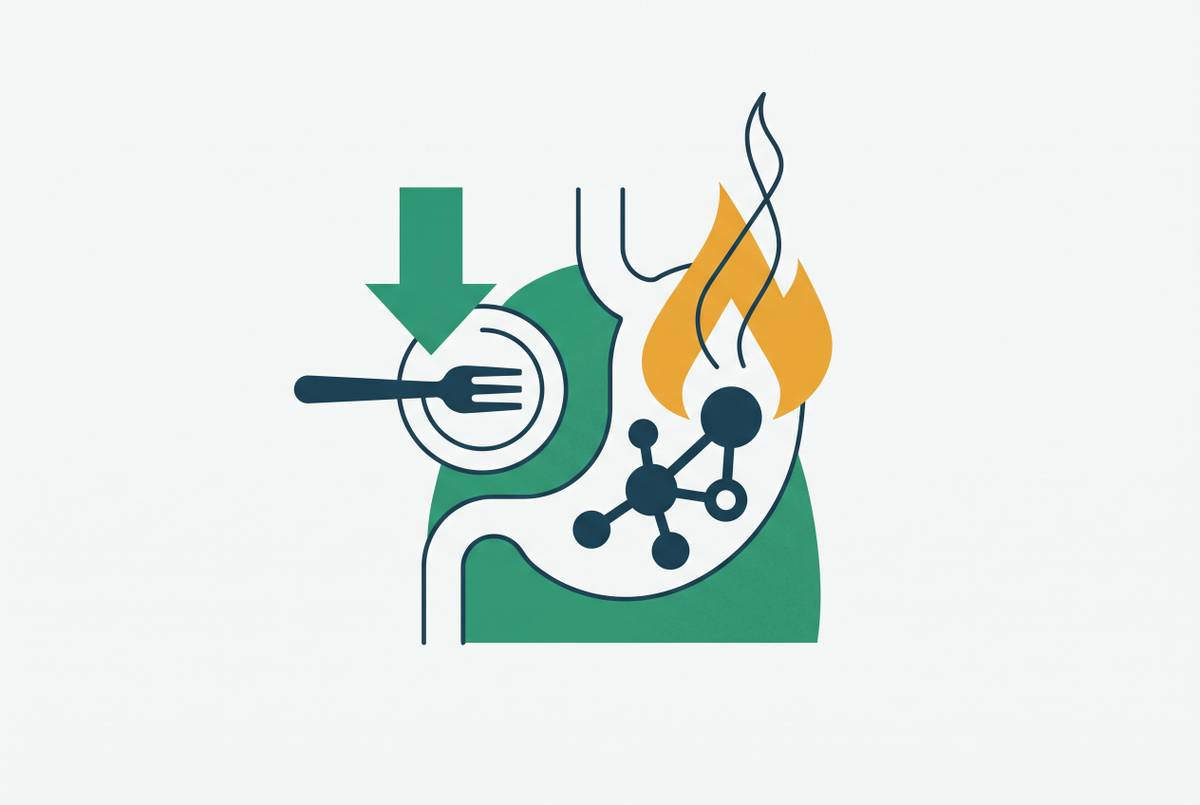
Nausea, vomiting, and diarrhea are the most common tolerability problems reported with both liraglutide and semaglutide, and they trace back to how these drugs are delivered into the body rather than to something inherent in GLP-1 biology itself. When you inject the drug subcutaneously, it goes straight into circulation and produces high plasma levels throughout the body. Peripheral GLP-1 receptors in the gut respond to that high concentration by triggering nausea and vomiting, while the smaller fraction of the dose that eventually crosses into the brain is what produces the appetite-suppressing effect patients are actually trying to achieve. Patients absorb a large systemic dose to get a comparatively modest central effect, and the GI side effects are the price paid along the way. Semaglutide's stronger receptor binding can mean more intense GI side effects at an equivalent dose, but its once-weekly schedule spreads that burden out differently than liraglutide's daily injections do. The nausea isn't eliminated in either case; it's redistributed across a different schedule. This GI burden isn't some unavoidable tax written permanently into GLP-1 pharmacology. It results from choosing an injection route that floods the whole body with drug in order to get a usable amount to the brain, and that's a specific, addressable engineering problem rather than a fixed limitation of the hormone class. Both liraglutide and semaglutide show how far structural engineering of a shared GLP-1 scaffold can reach, from receptor binding to half-life to side-effect profile. That same logic is now driving a separate question among researchers and companies: whether changing the delivery route itself, rather than the molecule, can preserve GLP-1's effect while cutting the GI burden that drives people to quit treatment. Lionbio, a nasal-spray nanoparticle biotech, is one of the groups asking that question directly, working from the premise that peripheral nausea is a consequence of how the drug gets into the body rather than a cost that has to be paid no matter what.
Why Both Molecules Struggle to Reach the Brain from a Peripheral Injection Site
Semaglutide and liraglutide both show negligible penetration into the central nervous system, and the gap between them on this point is small. Subcutaneous injection generates high levels of drug in the blood but delivers only a limited amount directly to the brain, because large peptides bound tightly to albumin cross the blood-brain barrier poorly no matter how well-engineered they are for other purposes. That limitation carries real weight given what's sitting on the other side of that barrier: cells in the hypothalamus express GLP-1 receptors abundantly, the hippocampus carries a moderate level of the same receptors, and GLP-1 itself promotes neurite outgrowth. The neurological potential bound up in this receptor biology is genuine. The delivery method used to reach it today simply isn't well matched to the target. The 2024 Frontiers in Nutrition review confirms that GLP-1 receptor agonists engage central nervous system pathways to regulate appetite, establishing brain access through this receptor system as a documented mechanism. What makes this section's point sharper than a simple knock against either drug is that the very features making semaglutide durable in the bloodstream, its large linker, long fatty acid chain, and strong albumin binding, are the same features making it less able to slip through the blood-brain barrier. The modifications that help the molecule survive in the periphery create friction exactly where it would need to pass through to reach the brain efficiently. Neither molecule solves this. Both face the identical trade-off, which is what turns delivery route, rather than the molecule itself, into the next real engineering problem to solve.
Emerging neurological applications of GLP-1 receptor agonists
Researchers are actively studying GLP-1 receptor agonists for a widening set of neurological conditions, including Alzheimer's disease, addiction, and the broader relationship between obesity and brain function, and the rationale isn't speculative guesswork. It rests on where GLP-1 receptors sit in the brain and on documented effects like neurite outgrowth. In addiction research, patients taking GLP-1 receptor agonists often report less craving and weaker responses to drug-related cues, particularly around alcohol and nicotine, and this suggests the mechanism acts on reward circuitry earlier in the addiction cycle instead of blunting reward at the moment it would otherwise hit. But the clinical record across addiction studies is mixed rather than uniform. Some human studies suggest real benefit in alcohol and nicotine use disorders. The one completed randomized controlled trial in cocaine use disorder, which tested exenatide, found no significant treatment effect. Case reports using semaglutide in cocaine use disorder have since described reduced craving, so the picture that emerges is a mechanism with genuine promise that hasn't yet been demonstrated consistently across every substance or every trial design.
The EVOKE Failure, Peripheral Delivery, and Brain Engagement
The EVOKE and EVOKE+ Phase 3 trials tested semaglutide in early Alzheimer's disease and missed their primary endpoints. Read in isolation, that result looks like a strike against GLP-1 neuroscience generally. Read against everything established in the two sections above, it looks like something narrower and more specific: evidence that pushing high plasma drug levels through subcutaneous injection simply doesn't achieve the brain exposure needed for a therapeutic effect in Alzheimer's disease. Researchers have offered several explanations rather than one, and they sit alongside each other rather than competing for a single verdict. One line of thinking points to Alzheimer's disease staging and suggests the trials may have intervened too late in disease progression for a GLP-1 agonist to change the trajectory. A second, laid out in a 2025 proposal in Life Medicine from researchers at the Chinese University of Hong Kong, argues for trials testing GLP-1 receptor agonists as maintenance therapy given after amyloid immunotherapy rather than alone, reframing the EVOKE result as a monotherapy limitation rather than a dead end for the mechanism. A third response is the delivery-route argument this piece has been building toward: if the real constraint is how much drug reaches the brain, the fix isn't necessarily a new molecule but a different path to the brain that sidesteps the blood-brain barrier. None of these three explanations rules out the others, and treating them as parallel hypotheses rather than rivals is the more intellectually honest way to read a trial failure this consequential.
Nose-to-brain delivery and the structural limitation peripheral injection cannot address
Intranasal delivery works through two direct anatomical routes, the olfactory and trigeminal pathways, both of which bypass the blood-brain barrier rather than trying to cross it. That matters because it means GLP-1 peptides delivered through the nose can reach brain tissue without first flooding the rest of the body with the high plasma concentrations responsible for nausea and GI side effects after subcutaneous injection. Research on neuropeptides shows they travel through trigeminal axons after intranasal application, though that axonal transport runs slow, somewhere between 17 and 56 hours. The faster detection of nose-to-brain delivery that shows up in some studies reflects quicker extracellular routes running alongside the nerve rather than transport inside the axon itself. For nanoparticle-formulated drugs, the trigeminal pathway appears to carry intact particles, while the olfactory pathway more likely carries material already released from its nanoparticle carrier, so the carrier you choose determines which of these two routes does the work. The gap this closes is not a minor one. Injectable GLP-1 receptor agonists today generate high plasma levels but deliver only a limited fraction directly to the brain, and this same imbalance drives the dose-limiting GI side effects discussed earlier. Intranasal delivery flips that ratio, so the drug's primary site of exposure shifts toward the brain instead of the gut. Semaglutide's stronger receptor binding and longer duration in the body show what molecular precision alone can achieve, but neither property does anything for the nausea that remains the main reason patients stop taking these drugs. The nasal route offers a different kind of engineering answer to the same problem, built around where the drug ends up rather than how the molecule itself is shaped, and Lionbio's nanoparticle-based intranasal spray is one approach pursuing exactly that premise: deliver the peptide to central nervous system targets through the nasal epithelium and sidestep the systemic exposure that produces nausea in the first place, regardless of how long the molecule's half-life runs or how potently it binds its receptor. Landmark Medicines is pursuing a related question from a different angle, building an intranasal platform meant to establish whether peptide medicines can reach therapeutically relevant levels in the brain through the nose at all, and as of September 29, 2026, the company has candidate GLP-1 molecules, including semaglutide, under evaluation ahead of choosing a final one. That a drug developer is actively testing this question with a named molecule in hand is a sign that nose-to-brain GLP-1 delivery has moved past hypothesis into active, measurable research.