GLP-1 Side Effects After Stopping Treatment
Appetite and other health markers rebound sharply within weeks of stopping treatment.
Stopping a GLP-1 does not reset the body to where it started. Appetite, blood sugar, cholesterol, blood pressure, muscle mass, and bone density all move again within weeks of the last dose, and every one of those shifts runs in reverse. This piece walks through what happens physiologically when treatment ends, why the rebound moves as fast as it does, and why obesity medicine has largely stopped treating discontinuation as a lifestyle choice at all.
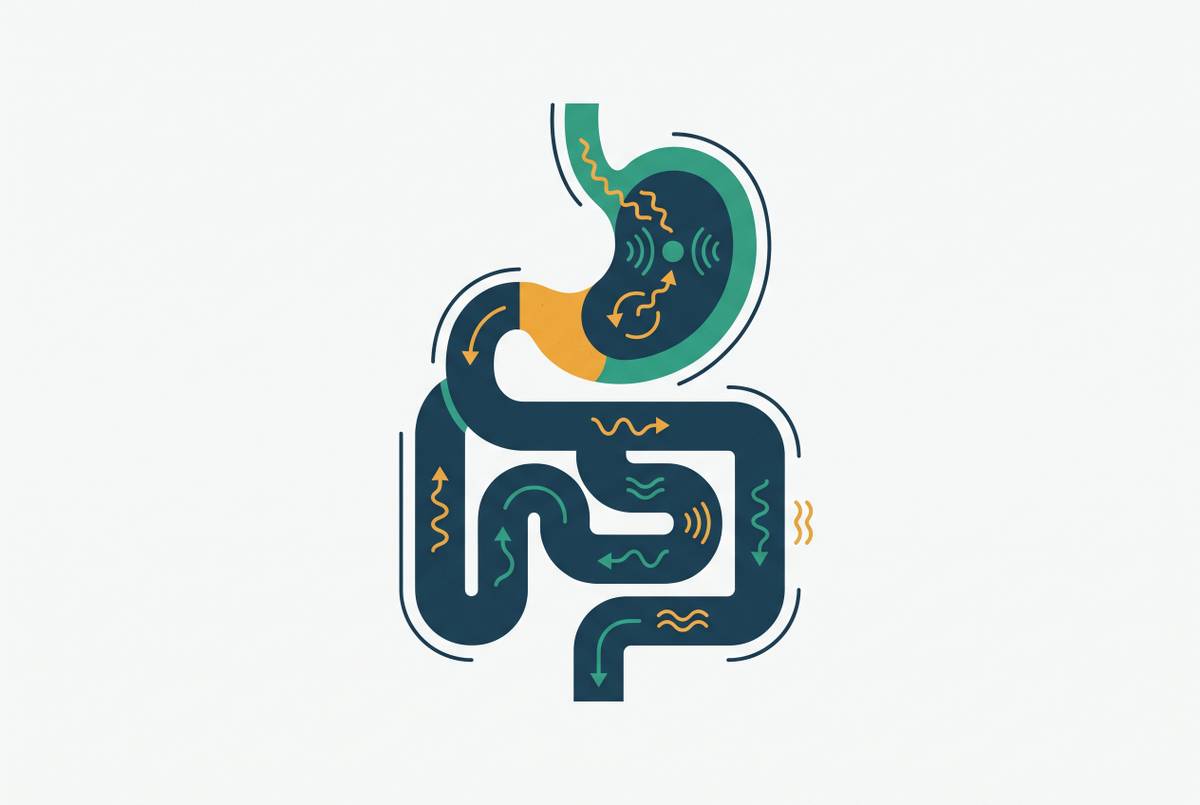
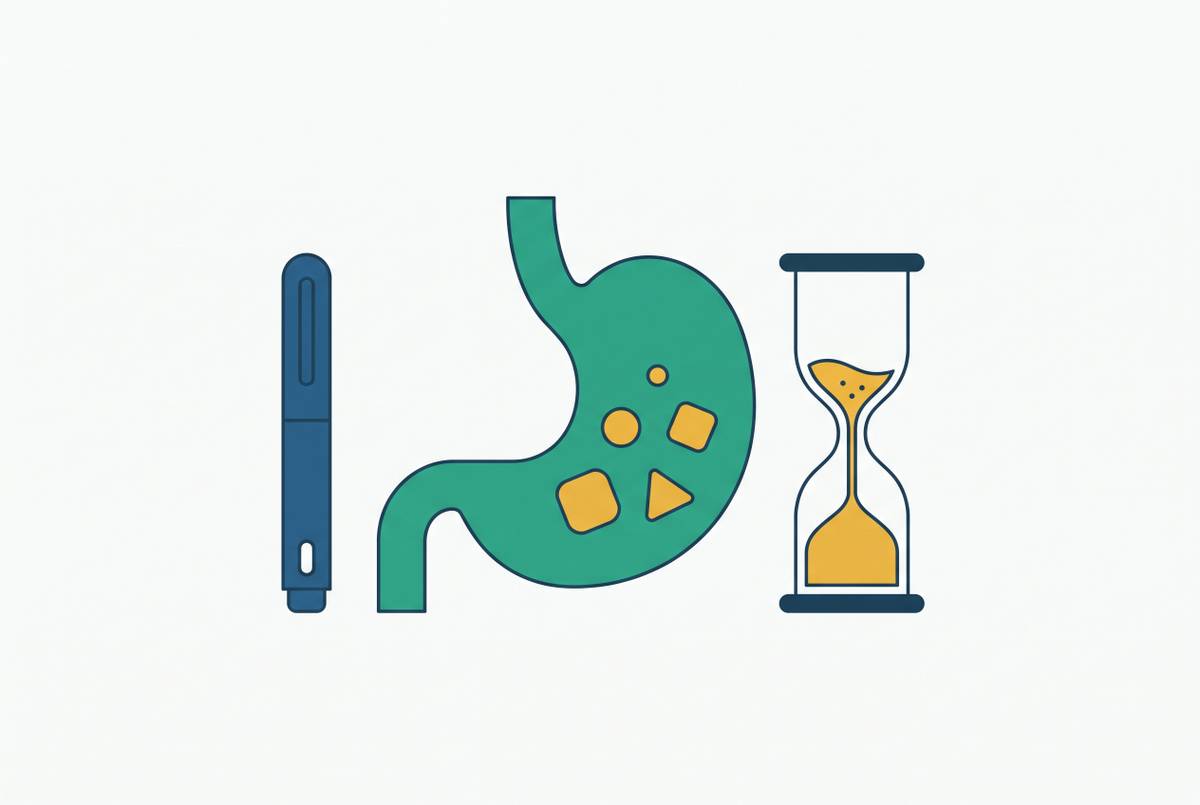
GLP-1 is not foreign to the body. It's a hormone the gut already makes in small pulses after meals. The drugs that mimic it, semaglutide chief among them, hold a receptor open at concentrations and durations the native hormone never reaches on its own. Three things happen at once during treatment: the pancreas releases insulin when food arrives, the stomach empties more slowly so fullness lingers, and the brain's hunger centers quiet down substantially. Semaglutide was engineered specifically for staying power. An amino acid swap at position 8 blocks the enzyme DPP-4 from breaking it down quickly, and a second substitution at position 34 leaves a single lysine free for a fatty acid chain to attach to. That C-18 fatty di-acid tail binds to albumin in the blood, which slows clearance through the kidneys. Three modifications, one outcome: a molecule that lingers in circulation far longer than anything the body makes on its own.
Patients on treatment often describe something more specific than "less hungry." They describe indifference to food, an absence of the mental chatter around when and what to eat next. Hold onto that baseline, because the drug isn't correcting a deficiency and leaving everything else alone. It's holding multiple hormonal systems in an altered state simultaneously, and stopping releases that hold across all of them at once, not one at a time.
How many people are stopping, and why the numbers matter
Persistence data tells an uncomfortable story. In a study tracking more than 96,000 patients, 46% of those with Type 2 diabetes and 65% of those without it discontinued within a single year. A 2025 IQVIA analysis found 15% of approved prescriptions were never filled at the pharmacy counter, and another 36% of patients stopped after just one fill. Longitudinal data from Prime Therapeutics, tracking commercially insured adults who started GLP-1 therapy for obesity without a diabetes diagnosis, found only 8.1% remained on the drug at three years.
The reasons are less mysterious than the framing around them sometimes suggests. Acute gastrointestinal side effects, nausea, vomiting, diarrhea, show up in a meaningful share of patients. Cost closes the door for plenty more, and insurers have been tightening coverage rather than loosening it. Some patients simply don't respond to the drug at all. Layer on the fact that fewer than 1% of physicians hold board certification in obesity medicine, and the picture sharpens: most patients start this drug without a frank conversation about what long-term commitment actually requires.
Here is the position worth stating plainly: treating discontinuation as an edge case, a footnote to the prescribing conversation, is where the field has gotten this wrong. If nine of ten patients who start a GLP-1 for obesity are off it within three years, what happens to their bodies afterward isn't a rare complication to mention in passing. It's the main event for most people who ever take one of these drugs.
The speed and scale of weight regain after stopping
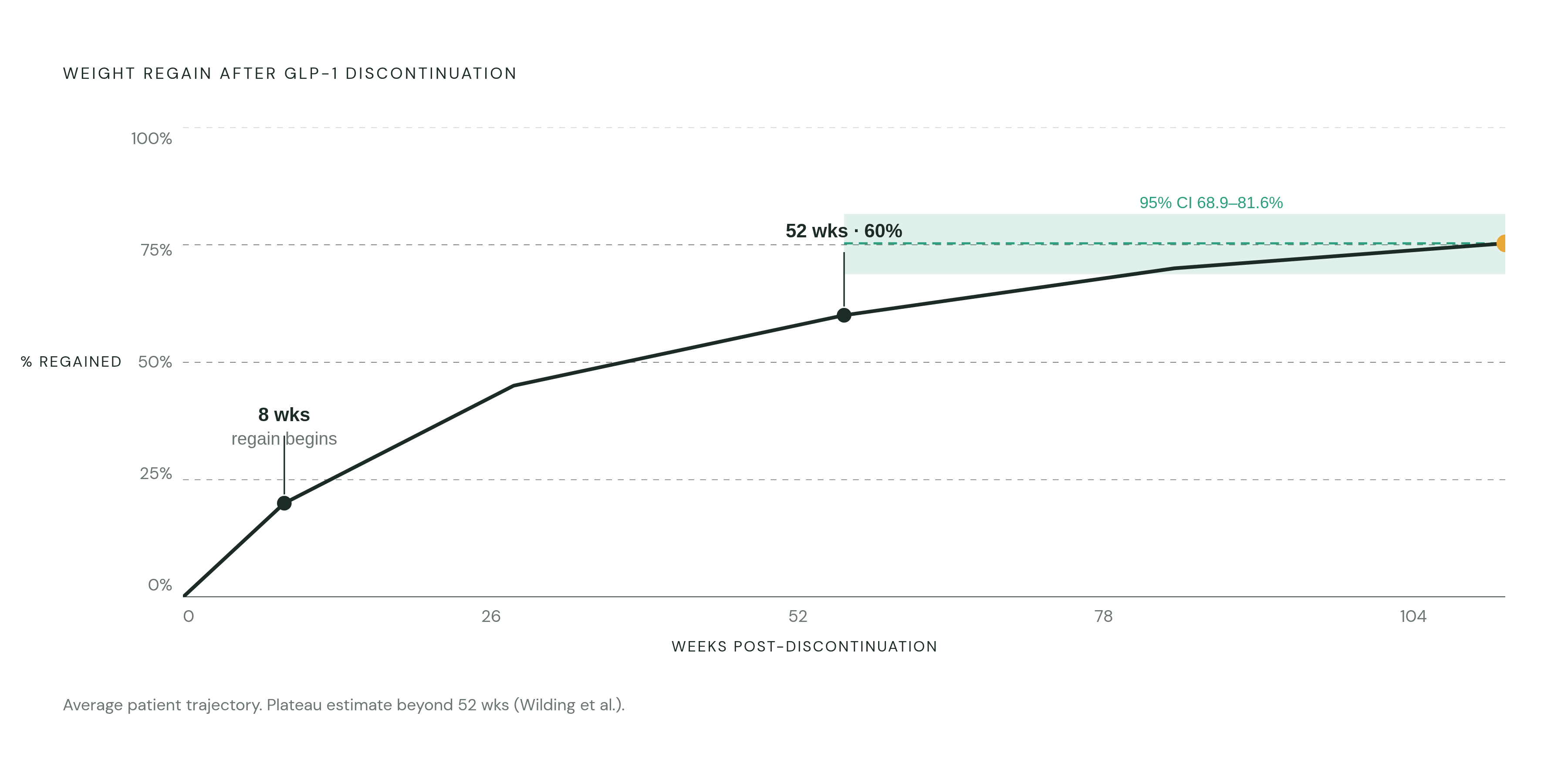
The regain does not wait long. Houston Methodist, reporting on a BMC Medicine study, put meaningful weight regain as early as 8 weeks after the last dose. That's not a slow drift back toward baseline. It's a fast reversal, and it starts before most patients have settled into the idea that treatment is even over.
A 2026 nonlinear meta-regression published in eClinicalMedicine, part of The Lancet family, pooled six randomized controlled trials covering 3,236 participants and found patients regained 60% of their treatment-phase weight loss within one year of stopping. Beyond 52 weeks, the regain trajectory was estimated to plateau at 75.3% of the weight originally lost (95% CI 68.9 to 81.6). That figure is an average across a population, not a guarantee for any one patient: some people regain less, some regain all of it and then some, and the spread around that average is wide enough to matter clinically.
A JAMA Internal Medicine study published in November 2025 followed 308 people on tirzepatide for 36 weeks, then randomized them to either continue the drug or switch to placebo for 52 more weeks. Among those switched to placebo, a large majority regained a substantial portion of their initial weight loss within the year.
The drug itself shapes how hard the rebound hits, and this is where the data stops being subtle. A 2025 meta-analysis in Cureus, pooling 36 studies, found semaglutide associated with the steepest regain after discontinuation (mean difference of -5.15 kg), with exenatide next (-3.06 kg), and liraglutide and orlistat showing markedly smaller rebounds (-1.50 kg and -1.66 kg respectively, for liraglutide and orlistat in that order). The more powerful the suppression during treatment, the sharper the snapback once it's removed. Anyone advising a patient on which drug to start without mentioning that tradeoff is leaving out the part of the conversation that matters most once treatment ends.
None of this happens uniformly, and that's precisely why the average is a misleading place to stop reading. Dr. Laura Choi of Houston Methodist has pointed out that patients with a longer history of weight cycling, losing and regaining repeatedly before ever touching a GLP-1, tend to rebound faster once they stop. The 75.3% plateau is a useful anchor for expectations, but it sits on top of considerable individual variance, and that variance is where the clinical conversation actually needs to happen.
Why appetite and food noise come back so forcefully
Patients on these drugs consistently describe something beyond reduced appetite: a quieting of what's come to be called "food noise," the background hum of thinking about the next meal, negotiating with cravings, tracking hunger throughout the day. That noise doesn't fade gradually when the drug stops. For many patients, it comes back loud, and it comes back fast.
Why does this happen? GLP-1 receptor stimulation in the hypothalamus, the brain region central to hunger regulation, ends once the drug clears the system. Central anorexigenic signaling, the brain's appetite-suppressing circuitry, downregulates relatively soon after that stimulation stops. The satiety machinery that had been dialed up during treatment resets toward its pre-treatment sensitivity, and hunger reasserts itself accordingly.
Dr. Choi frames it this way: "We're talking about a very complex balance of different types of interactions of neurotransmitters and centers in your brain that elicit hunger... it's really about how a brain experiences hunger that affects our drive to go find food and eat it." That reframes what's happening as neurochemistry resuming its default operation, not a patient's resolve giving out. This might be the single most misunderstood part of the entire discontinuation story. Nobody is failing here. A system is doing exactly what it was built to do once the pharmacological override lifts.
The gastric piece follows a similar arc. Digestion, slowed deliberately by the drug during treatment, speeds back up once that effect lifts, so patients feel hungry sooner after eating, sometimes noticeably so. The hormonal picture doesn't snap back cleanly either. Multiple hormonal signals shift gradually after cessation rather than snapping back cleanly, which means the early withdrawal period is a system in flux, not a switch flipped back to its original position. Behavioral hunger tends to show up before patients have consciously registered that physiological shift, which is part of why the rebound so often feels sudden, even blindsiding, rather than gradual.
Metabolic and cardiovascular markers that reverse alongside weight
Weight is the visible marker, but it isn't the only one moving. Researchers tracking patients after discontinuation have found cardiovascular risk, blood sugar control, cholesterol, and blood pressure all deteriorating roughly in step with the weight regain, not on separate timelines of their own.
The eClinicalMedicine meta-analysis, conducted by researchers at National Taiwan University, Chang Gung University, and Chung Shan Medical University, quantified the rebound directly: HbA1c climbing, blood pressure rising, lipid parameters worsening, all after the drug stopped. For patients with Type 2 diabetes specifically, blood glucose rises can bring back excessive thirst, frequent urination, fatigue, and dehydration. For these patients, glucose control after stopping can be genuinely difficult to manage, since the metabolic system has adapted around the drug's presence and now has to readapt around its absence.
Research tracking patients after discontinuation consistently finds weight regain and metabolic decline moving together, not independently. The more weight regained, the more the cholesterol and blood sugar gains made during treatment tend to erode. That coupling matters: it's one process showing up in multiple readouts at once, a different and more serious claim than saying several things happen to get worse around the same time.
The size of the rebound appears tied specifically to what the drug was doing while active, not simply a return to whatever baseline existed before any intervention. Stopping a GLP-1 does not behave like stopping a diet. It behaves like withdrawing a chronic medication from a chronic disease, a point the next section leans on directly.
The metabolic picture after discontinuation is still being mapped, and that ongoing research is itself a reason to treat stopping as a clinical event deserving attention rather than a shrug.
What happens to muscle and bone during treatment, and the risk that persists after stopping
Weight loss on a GLP-1 is not fat loss alone, and this is the part of the story that gets the least attention relative to how much it should worry people. Research across multiple randomized controlled trials has found that a significant portion of total weight lost on GLP-1 receptor agonists and dual GIP/GLP-1 agonists is lean mass, not fat.
The specifics vary by drug, and the variation is the point that matters most here. A DXA substudy from the SURMOUNT-1 trial, published by Look and colleagues in Diabetes, Obesity and Metabolism in 2025, found tirzepatide reduced total lean mass by 10.9% over 72 weeks. A phase 2 trial by Hansen and colleagues, published in eClinicalMedicine in 2024, found 52 weeks of once-weekly semaglutide reduced hip bone mineral density by 2.6% and lumbar spine density by 2.1% relative to placebo, alongside increased bone resorption with no compensatory increase in new bone formation. Liraglutide, notably, achieved comparable weight loss without the same lean mass toll. Lumping semaglutide and liraglutide together in a single "GLP-1s do this to muscle" sentence is exactly the kind of imprecision that misleads patients: this drug class is not monolithic, and the difference between agents is not a footnote.
Clinicians have compared the scale of lean mass loss on semaglutide and tirzepatide to what someone might otherwise accrue over a decade or more of normal aging, compressed into 52 to 72 weeks. That lands hardest for older adults and anyone already dealing with sarcopenic obesity, where muscle loss and excess fat coexist in the same body. GLP-1 receptor agonists do appear to preserve the quality of the muscle that remains, reducing fatty infiltration and supporting fiber function, even while reducing the total quantity of lean tissue. The picture resists a tidy verdict in either direction.
The real risk shows up after stopping, and it's the part patients hear about least. Patients who lost lean mass during treatment and then regain weight afterward tend to regain it predominantly as fat, so body composition can end up worse than before treatment ever started, even if the number on the scale looks identical. A three-year study of adults aged 70 to 79 found those in the highest quintile of protein intake lost nearly 40% less lean mass than those in the lowest quintile. Protein above 1.2 grams per kilogram of body weight per day, spread across meals, paired with resistance training and regular aerobic activity, is the mitigation strategy most consistently raised alongside these findings, and it's the one piece of this whole picture actually within a patient's control.
Why obesity medicine frames stopping GLP-1s as a clinical discontinuation event, not a lifestyle choice
An analogy has become close to standard among obesity medicine specialists: stopping a GLP-1 is like stopping a blood pressure medication. The underlying condition doesn't go into remission because the pill stopped. The biology reasserts itself on its own schedule, regardless of what the patient intends. That's the correct frame, and it's not up for debate given the evidence above: weight regain at 60% within a year, muscle and bone loss that doesn't fully reverse, metabolic markers moving in lockstep with the scale. That's what a chronic disease relapsing looks like on paper, and calling it anything softer misrepresents what's actually happening.
Meghan Salamon, a dietitian at the Mass General Hospital Weight Center, put it plainly in Harvard Health reporting from March 2026: "GLP-1s act in the same fashion [as blood pressure medications]. Someone stopping these medications doesn't have the same control over their obesity." Angela Fitch of Knownwell frames the shift in similarly structural terms, arguing the field needs "to just really think about it as a chronic disease... to make sure that we try to keep that patient in ongoing treatment." Joshua Neal, an MD at MUSC Health, is more direct still: "These are meant to be indefinite medications." Susan Gasparino, MD, MPH, at University of Rochester Medicine, grounds the whole framing in one sentence: "The most important thing to understand is that obesity is a chronic, relapsing disease."
The 2025 Cureus meta-analysis backs this with data rather than clinical opinion alone, concluding that weight regain after stopping anti-obesity pharmacotherapy is common, varies by drug, and that sustained, long-term treatment is what managing obesity as a chronic disease actually requires.
What does it mean, practically, to tell someone they may need to take a drug indefinitely? Ethan Lazarus, an obesity medicine physician in Colorado, doesn't soften this much: "Usually what I will communicate to patients is that these drugs are indicated by the FDA so that you could be on it for the rest of your life." He also stresses giving patients real agency inside that framing, rather than presenting indefinite treatment as the only acceptable path.
A further wrinkle hasn't been resolved. Some obesity medicine physicians worry that cycling on and off a GLP-1 repeatedly could make long-term weight management progressively harder each time, essentially training the body toward a more stubborn rebound with every cycle. Kevin Hall, formerly a senior investigator at the NIH, has flagged this concern while being candid that the data to confirm or rule it out doesn't exist yet. The long-term consequences of stop-start use are an open question, not a settled one, and anyone claiming otherwise is ahead of the evidence.
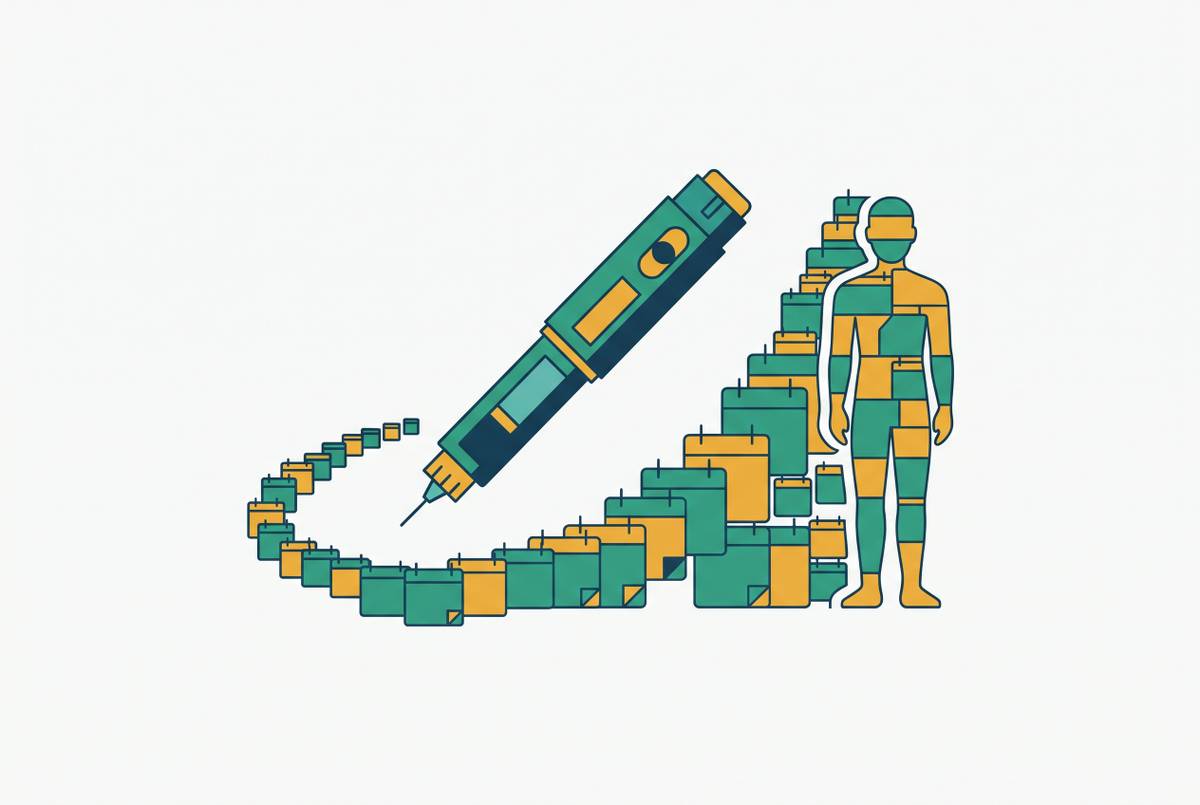
A middle path is taking shape in clinical practice, and it deserves more attention than either extreme currently gets. Dr. Mitch Biermann at Scripps Clinic has published findings suggesting that gradually spacing doses out, moving from weekly injections to every other week, can maintain much of the treatment benefit while softening the all-or-nothing dynamic that seems to drive the sharpest rebounds. Early results suggest a meaningful share of patients can tolerate that kind of tapering without losing ground entirely, which makes it a more defensible default than indefinite full-dose use on one end or abrupt discontinuation on the other.
What patients can actually do when stopping is unavoidable
Everything above points to one starting principle: the rebound is biology reasserting itself, not evidence that a patient failed at something. That distinction matters clinically, because patients who understand the mechanism are better positioned to plan around it, rather than blaming themselves when hunger and weight both return on schedule.
Tapering, where financially and medically feasible, beats abrupt cessation, and it isn't close. Salamon's guidance in Harvard Health's March 2026 coverage is straightforward: ask the prescribing physician whether lower doses or intermittent dosing are an option before stopping altogether, rather than going from full dose to nothing in a single step. Going cold turkey off a drug that's been holding three separate hormonal systems in an altered state is the least defensible way to stop, and it's still the most common one, largely because insurance denials force the decision rather than a physician making it deliberately.
Nutrition can partially, though not fully, stand in for what the drug was doing pharmacologically. Protein above 1.2 grams per kilogram of body weight daily, spread across meals and drawn from lean meat, poultry, fish, soy, and dairy, helps preserve lean mass directly and carries the highest thermic effect of any macronutrient, meaning the body burns more energy digesting it relative to fat or carbohydrate. Soluble fiber, found in oats, beans, apples, citrus, and barley, slows gastric emptying in a way that echoes what the drug was doing, and it stimulates the gut's own endogenous GLP-1 release, offering a modest, food-based nudge toward the same signaling pathway the drug had been amplifying artificially. Healthy fats, olive oil and avocado among them, round out a plate built to extend fullness rather than chase it.
None of this replaces what a GLP-1 receptor agonist does at pharmacological concentration, and no amount of protein timing changes that basic fact. But layered onto a tapering schedule, honest counseling about the chronic nature of obesity, and real attention to muscle and bone, these are the tools available right now for a discontinuation event that is coming, sooner or later, for most patients who ever start the drug in the first place.