Sublingual and Buccal Peptide Delivery Feasibility
Sublingual and buccal routes hit a permeability wall that formulation cannot solve.
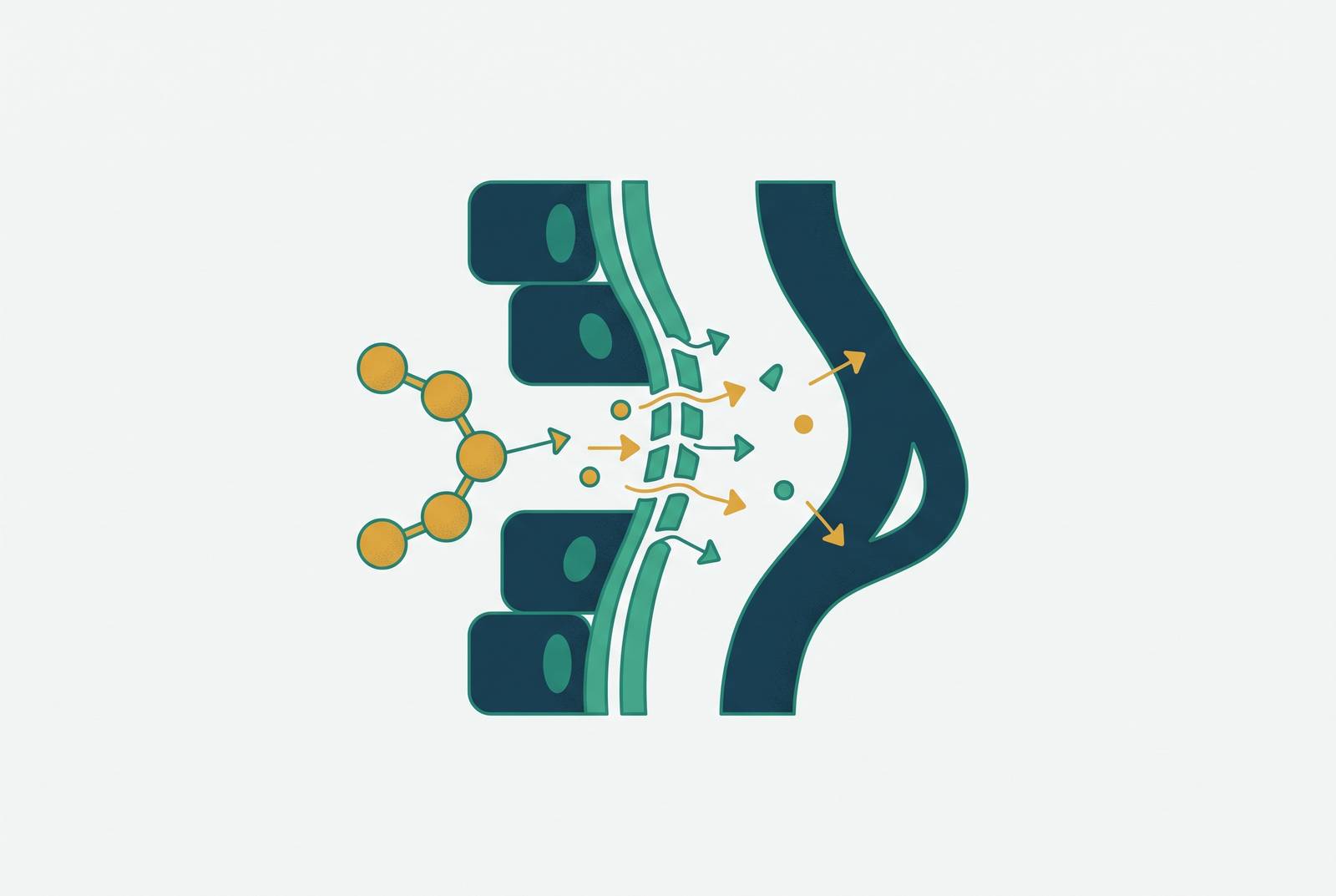
Peptide drugs have a delivery problem that a century of engineering hasn't solved, and sublingual and buccal routes are the latest attempt to get around it. They do solve two real obstacles, gastrointestinal degradation and first-pass liver metabolism, but they hit a separate wall made of permeability, dose volume, and enzyme activity. That wall is the actual subject of this piece, and the claim worth stating up front is this: for large, hydrophilic peptides like the GLP-1 class, sublingual and buccal delivery is very likely a dead end, not a delay. The nasal route, not further formulation cleverness in the mouth, is where the real ceiling gets pushed.
Peptides are fragile in a way small-molecule drugs simply are not. Swallow one, and it meets proteolytic enzymes, a stomach environment acidic enough to denature most proteins, a mucus layer built to trap and clear foreign material, and an intestinal wall that's nearly impermeable to anything large or water-loving. Oral peptide programs have chased solutions for over a hundred years: enteric coatings, enzyme inhibitors, permeation enhancers, nanoparticles, even ingestible mechanical devices. Most have failed, and not for lack of trying. A 2026 analysis in Frontiers in Drug Delivery by Niazi lays out three recurring failure patterns: exposure infeasibility, where bioavailability is so low and half-life so short that no dosing schedule produces a therapeutic level; variability-driven regulatory failure, where absorption swings too widely between patients to clear bioequivalence standards; and dose escalation into toxicity, where reaching an effective dose means crossing into GI harm before crossing into efficacy, often with manufacturing costs that sink the program anyway. Niazi's point is worth sitting with: the barrier isn't a shortage of formulation ideas. It's a mismatch between what peptides physically and chemically are, and what the oral route can accommodate.
That mismatch matters more every year. Protein-based drugs are growing at roughly 20% annually, more than double the pace of the pharmaceutical market overall, based on figures in the biomedicines literature. The search for a non-injectable route isn't academic. It's an attempt to catch up with a drug class that's already outrunning the delivery infrastructure built for it.
What the oral mucosa actually offers: anatomy of the sublingual and buccal regions
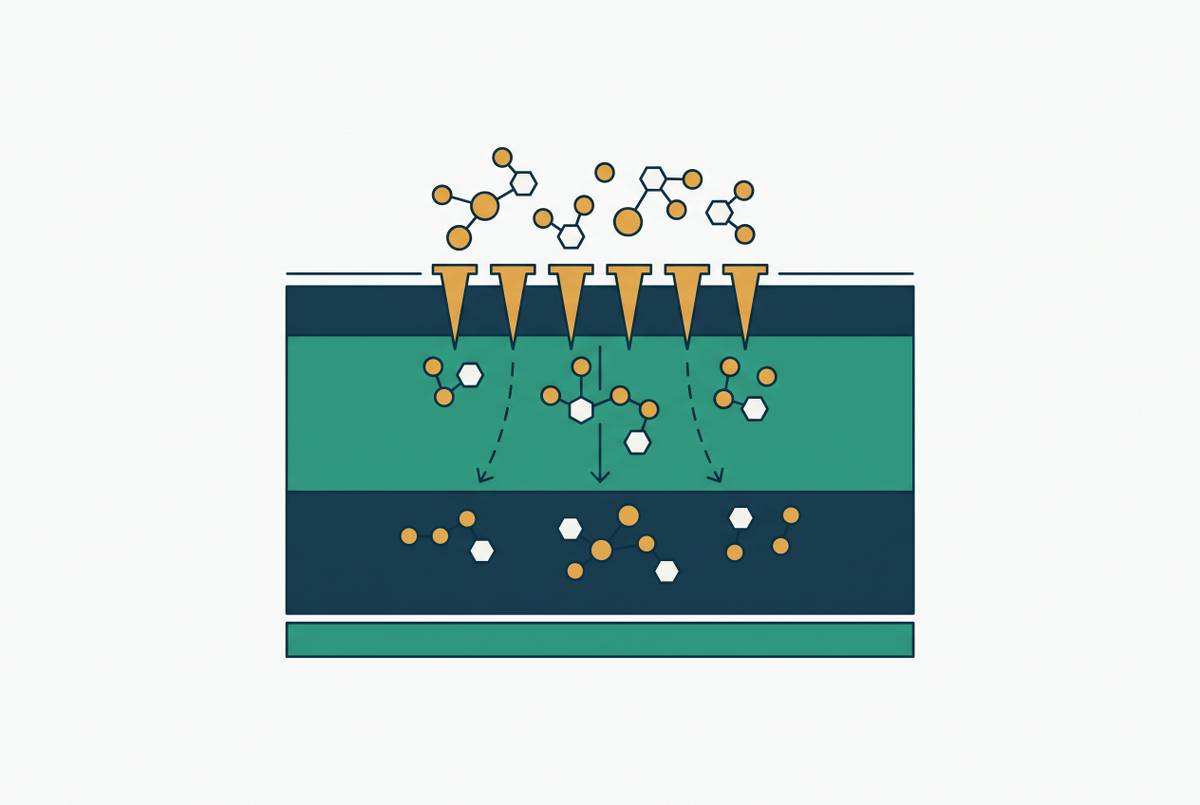
Two regions inside the mouth get lumped together in casual conversation but behave quite differently under a microscope. Sublingual mucosa sits under the tongue and along the floor of the mouth. It's thin, well-supplied with blood vessels, and permeable enough that drugs placed there can reach systemic circulation relatively quickly, for the right molecule. Buccal mucosa, the lining of the cheeks and lips, is thicker and less permeable, but its surface stays put, which makes it a better platform for anything meant to sit in place and release slowly.
Both regions share one genuine advantage: rich vascularization means whatever crosses the epithelium enters systemic circulation fast, and venous drainage from this area partially bypasses the portal vein. That's the mechanism that spares a drug from hepatic first-pass metabolism, the process by which the liver strips down a large share of an orally swallowed dose before it ever reaches the bloodstream. Combine that with skipping the GI tract's enzymatic gauntlet entirely, and it's easy to see why researchers keep circling back to the mouth as a delivery site.
The trade-off between the two regions comes down to speed versus dwell time. Sublingual mucosa moves too much, structurally, to hold a sustained-release film in place for hours. Buccal mucosa can. Neither is a defect, exactly, more a design constraint that shapes which formulation approach even makes sense for a given drug. This isn't new territory: nitroglycerin, several opioids, and various peptide and hormonal therapies were investigated for sublingual and buccal delivery during an exploratory phase running from 1983 to 1993, according to a 2025 review by Bahraminejad and Almoazen in Pharmaceutics. The anatomy has been known and worked on for four decades. That's a long runway for a route that still hasn't produced a wide range of marketed peptide products through this route, and that gap between how long the field has studied this and how little has shipped is itself worth noticing.
The barriers that the anatomy does not solve
Anatomy explains why the mouth looks attractive. It doesn't explain why so few peptide products have actually made it through. Three barriers sit between a promising mechanism and a marketable drug, and a fourth, size, makes all three worse.
Saliva is the first problem. It's constantly produced, constantly swallowed, and constantly washing whatever's placed under the tongue or against the cheek away from the absorption site before it has time to work. Sublingual formulations are especially exposed here, given how thin and unprotected that mucosal surface is. Second, the mouth has its own enzymatic activity, aminopeptidases and endopeptidases that, while different from the stomach's arsenal, are perfectly capable of chewing up a peptide before it crosses the epithelium. Third, the epithelium itself is compact and lipid-rich, exactly the kind of structure built to block large, water-loving molecules from passive diffusion.
Then there's a constraint formulation chemistry can't touch at all: volume. The oral cavity is small, and there's a hard physical ceiling on how much excipient, how much permeation enhancer, how much bulk material can sit under the tongue or against the cheek without falling out, dissolving too fast, or becoming intolerable to hold in the mouth. Oral semaglutide tablets are co-formulated with roughly 400 mg of a permeation-enhancing agent, SNAC, alongside 7 to 14 mg of peptide, and even in the comparatively spacious stomach, that combination yields less than 1% bioavailability. If the stomach, with far more room to work with, struggles to push a peptide across the gut wall at that dose of enhancer, the sublingual space, which physically can't hold anywhere near that excipient mass, is fighting a steeper version of the same losing math.
Molecular size compounds all of this. Small peptides, a handful of amino acids, can sometimes diffuse across mucosal membranes on their own. Larger therapeutic peptides face a permeability penalty that worsens, not improves, as molecular weight climbs. Most GLP-1-class peptides are both large and markedly hydrophilic, which is exactly why this drug class sits at, or past, the practical ceiling for oromucosal absorption. Niazi's 2026 route-triage framework treats buccal delivery as a legitimate destination for peptides that don't work through classical oral dosing, but only when the peptide's own pharmacology cooperates. It's a fallback for the right molecule. It is not a fallback for every molecule oral delivery happens to reject, and treating it as one is where a lot of development time gets wasted.
What oral semaglutide's SNAC mechanism reveals about oromucosal limits
Oral semaglutide, approved in 2019 for type 2 diabetes, is the clearest proof that a peptide can be delivered non-invasively at real commercial scale. Its mechanism is worth examining closely, because it draws a boundary line that applies directly to sublingual and buccal delivery, even though semaglutide itself isn't dosed that way.
SNAC works by locally raising pH in the stomach, protecting the peptide from degradation, and by transiently loosening the transcellular pathway so more of the molecule crosses. That's a stomach-specific trick, and it doesn't generalize cleanly to other mucosal tissues. Even with roughly 400 mg of SNAC riding alongside the peptide in each tablet, bioavailability still comes in under 1% per dose.
So why does the drug work at all clinically? Because semaglutide's half-life runs close to 168 hours, about a week, so the drug accumulates in the bloodstream across repeated dosing even when each individual dose barely gets absorbed. The pharmacology is doing the heavy lifting, not the formulation. In December 2025, the FDA approved a 25 mg oral semaglutide tablet for weight management, and the OASIS 4 trial behind it reported mean weight loss of 16.6% at 64 weeks. That's a notably higher dose than the 7 to 14 mg range used for diabetes, reflecting how much more systemic exposure the weight-management indication needs, and the tablet still leans on roughly 300 mg of SNAC to get there.
Niazi's 2026 analysis calls this a "boundary case rather than platform validation," and that phrase deserves more attention than it usually gets. Semaglutide sits at a rare intersection: an ultra-long half-life, high potency at low absolute doses, and a therapeutic window wide enough to tolerate variable absorption. Most peptides don't sit anywhere close to that intersection. If a tablet sitting in the stomach, with hundreds of milligrams of permeation enhancer to work with, still barely clears 1% bioavailability, the sublingual or buccal cavity, with a fraction of that space and excipient allowance, faces a harder version of the same math, especially for peptides whose half-lives run in hours rather than days and simply can't accumulate the way semaglutide does.
Formulation strategies researchers are actively using to push past the permeability ceiling
None of this has stopped researchers from pushing at the ceiling, and a 2025 review of oromucosal films on PubMed lays out where most of that effort is concentrated. Three broad categories dominate the literature.
Permeation enhancers, bile salts, fatty acids, surfactants, work by temporarily disrupting the lipid structure of the epithelium so larger molecules can slip through. The open question is reversibility: does the membrane recover fully afterward, or does repeated use cause cumulative damage to mucosal tissue? Still being worked out. Mucoadhesive polymers, chitosan, carbopol, and HPMC among the most studied, go after the salivary washout problem directly by sticking to the mucosal surface and buying the drug more contact time. Multilayer film architectures separate the drug-loaded layer from a protective or adhesive layer, so release can be directed one way, toward the mucosa, instead of diffusing uselessly into saliva.
The more interesting recent development combines nanoparticle encapsulation with these mucoadhesive films, tackling enzymatic degradation and permeability at the same time instead of picking one problem to solve. Nanoparticles bring advantages plain solutions or gels don't have: tunable surface chemistry, adjustable mucoadhesion, controlled release timing, physical protection for the peptide payload as it crosses the mucosa. One data point makes the case well: chitosan nanoparticles carrying exendin-4, a GLP-1-class peptide, showed absorption enhanced 4.7-fold in MDCK cell monolayers and 2.0 to 2.78-fold across rat intestinal segments, compared with the free peptide alone. That's a real jump, and it suggests nanoparticle encapsulation is doing genuine mechanistic work rather than marginal tinkering.
Other approaches lean less on chemistry and more on hardware: microneedle patches, jet injectors, ultrasound-enhanced delivery. These widen the range of peptides that can plausibly be delivered this way, but they trade away the exact simplicity that made oromucosal delivery attractive in the first place, a patient placing a film under the tongue rather than operating a device. Cell-penetrating peptides, short amino acid chains, offer a different angle: encapsulated inside nanoparticles, they can ferry the therapeutic payload across epithelial cells through a biological mechanism rather than a purely physical one. For a specific niche, low-dose vaccines and certain hormones, solid lipid nanoparticles or strong penetration enhancers already show real feasibility, marking out a dose range where the route clearly works. Bahraminejad and Almoazen's 2025 review calls 2010 through 2025 an "innovation and integration" phase: nanoparticles, multilayered mucoadhesive systems, pediatric fast-dissolving films, and vaccine delivery platforms have all broadened considerably. What hasn't kept pace is the number of approved peptide products actually reaching the market through this route, and that mismatch between research volume and product output is the tell.
Where sublingual and buccal delivery is realistically viable and where it is not
Line up enough of these programs side by side and a pattern shows up fast. The peptides that succeed sublingually or buccally tend to share four traits: small to moderate size, so the permeability penalty stays manageable; high potency, so a therapeutic effect is achievable at the tiny absolute dose the mouth can hold; a long half-life, so low per-dose absorption still accumulates into a therapeutic level over time; and a wide therapeutic window, so absorption variability doesn't tip a patient into toxicity or under-dosing.
Large, hydrophilic peptides that need high systemic exposure and low patient-to-patient variability sit on the opposite end of that spectrum. Most GLP-1-class peptides, in their natural form, land squarely there, which is exactly why so much of the formulation literature on this route amounts to working around a mismatch rather than solving it. The historical record backs this up: certain low-dose peptides have shown greater viability through this route, a pattern consistent with Bahraminejad and Almoazen's 2025 survey of the field. It's the larger, higher-dose peptides that keep running into the same wall, over and over, across two decades of research.
That wall has two parts, and neither has a clean formulation fix. Dose volume is structural: the sublingual space cannot physically hold the excipient mass that stomach-based delivery gets away with. Variability, the swing in how much drug different patients actually absorb, hasn't been tamed by any current approach, and that matters enormously for chronic disease drugs where regulators expect predictable exposure from one dose to the next. Niazi's 2026 negative-selection framework offers a useful way to think about this: identifying pharmacologically incompatible peptides early saves years of wasted development. Buccal delivery, in that framework, is a legitimate triage destination for the right molecule, never a universal fallback for whatever oral delivery couldn't handle. Formulation innovation, nanoparticles, multilayer films, cell-penetrating peptides, can expand that viable range incrementally. It can't override the underlying pharmacology. The drug has to meet the route halfway. The route can't be stretched to meet the drug, no matter how many new film architectures get published.
How the intranasal route handles what sublingual and buccal cannot
So where does that leave large peptides that don't fit the sublingual or buccal profile? The nasal route offers a genuinely different set of anatomical tools, not a variation on the same theme.
Nasal epithelium is thinner and more permeable than buccal tissue, and the olfactory and trigeminal nerve pathways running through the nasal cavity offer a direct route to the brain that oral mucosal tissue simply has no equivalent for. Intranasal delivery can reach therapeutic plasma concentrations within minutes, and like buccal and sublingual routes, it sidesteps GI degradation and first-pass metabolism, but it adds a CNS-targeting capacity the mouth doesn't have access to at all. A preclinical study of intranasal risperidone, formulated with poloxamer 407 and HPMC, found brain drug exposure, measured as AUC, roughly 5.4 times higher than an oral solution of the same drug, a gap that reflects the direct nose-to-brain pathway rather than anything achievable through systemic absorption alone.
That advantage extends to peptides specifically. Orexo AB, announcing in September 2025, reported that its powder-based AmorphOX intranasal semaglutide formulation achieved roughly a sevenfold increase in plasma concentration compared to an oral tablet, based on median values from preclinical in-vivo data, though subcutaneous injection still outperformed both. Sevenfold over oral is a meaningful jump, and it suggests the nasal route is closing more of the bioavailability gap for GLP-1-class peptides than sublingual or buccal formulations have managed so far. Part of that comes down to dose form: a nasal spray deposits its payload directly onto highly permeable olfactory tissue without contending with the excipient-volume ceiling that limits anything placed under the tongue.
The commercial numbers reflect that momentum. The global intranasal drug delivery market was estimated at $59.1 billion in 2023 and is projected to reach $92.6 billion by 2030, a compound annual growth rate of 6.6%. Nanoparticle platforms, lipid-based, polymer-based, surface-modified, are being applied to intranasal formulations for largely the same reasons they're tested in oromucosal films: stabilizing the peptide and improving permeation. But the nose-to-brain pathway is the piece that changes the conversation entirely for neurological and CNS-metabolic indications, addiction treatment, dementia, appetite regulation centered in the brain rather than the gut. That's not a formulation improvement layered onto the same mechanism. It's a structurally different option, one sublingual or buccal delivery cannot access no matter how sophisticated the film architecture gets.
What the feasibility ceiling means for peptide delivery development going forward
Sublingual and buccal delivery are real, measurable progress over swallowed oral peptide dosing. Skipping GI degradation and a meaningful share of first-pass liver metabolism are genuine wins, not marginal ones. But the ceiling imposed by permeability, dose volume, and absorption variability is a ceiling. It is not a launchpad for indefinite expansion into every peptide class still waiting for a needle-free option, and treating it as one is the mistake that keeps showing up across the literature reviewed here.
The strongest near-term opportunity sits with small, potent peptides, long-acting hormones, and low-dose vaccines, categories where the physical limits of the oral cavity happen to line up with what the drug actually needs to work. For large, hydrophilic, high-dose peptides, the GLP-1 class being the most consequential example on the market today, oromucosal delivery keeps running into constraints that no formulation trick so far has dissolved. That's not a failure of effort: decades of enteric coatings, enzyme inhibitors, mucoadhesive polymers, and nanoparticle platforms testify to how much engineering has gone into this problem.
Nanoparticle integration into oromucosal films looks like the most promising direction for the next several years, partly because so much of the underlying nanoparticle intellectual property, built for oral and injectable peptide stabilization over the past two decades, transfers directly into this context. But whether that's enough to move large GLP-1-class peptides across the ceiling is genuinely still an open question, and the more honest bet, based on the sevenfold gains already showing up in intranasal semaglutide data, is that the field's real future for those molecules runs through the nose rather than under the tongue.
Sources
- Oral delivery of peptides and proteins: pharmacokinetic boundaries, negative selection, and route triage
- Frontiers | Oral delivery of peptides and proteins: pharmacokinetic boundaries, negative selection, and route triage
- Sublingual and Buccal Delivery: A Historical and Scientific Prescriptive
- Oromucosal films for peptide delivery: formulation strategies using permeation enhancers and polymers - PubMed
- Oromucosal films for peptide delivery: formulation strategies using permeation enhancers and polymers | Drug Delivery and Translational Research | Springer Nature Link
- Overcoming Oral Cavity Barriers for Peptide Delivery Using Advanced Pharmaceutical Techniques and Nano-Formulation Platforms - PubMed
- Full article: Transmucosal drug delivery: prospects, challenges, advances, and future directions
- diabetesjournals.org